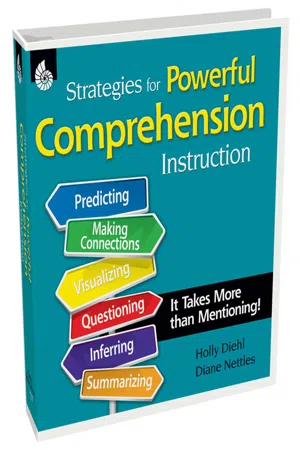
Understanding text is key to students' learning success! This notebook, developed for grades K-8, provides explicit instructions for teaching six fundamental comprehension strategies; predicting, making connections, visualizing, questioning, inferring, and summarizing. Great for novice, experienced, and content-area teachers, this resource includes templates and tools as well as instructions on how to incorporate these strategies into a core curriculum. This resource is correlated to College and Career Readiness other state standards.
eBook - PDF
Strategies for Powerful Comprehension Instruction
It Takes More Than Mentioning!
- 298 pages
- English
- PDF
- Available on iOS & Android
eBook - PDF
Strategies for Powerful Comprehension Instruction
It Takes More Than Mentioning!
About this book
Information
Table of contents
- Cover
- Credits
- Page 3 - Table of Contents
- Page 4 - Table of Contents Cont.
- Page 5 - Table of Contents Introduction
- Page 6 - Introduction
- Page 7 - What Is Reading Comprehension?
- Page 11 - Research
- Page 11 - How Do Good Readers Comprehend?
- Page 12 - How Do These Strategies Help Students?
- Page 13 - Best Practices
- Page 13 - The Interrelated Nature of the Six Comprehension Strategies
- Page 14 - How Can I Teach Comprehension?
- Page 14 - How Explicit Instruction Works
- Page 15 - A Model of Comprehension Instruction
- Page 16 - How Can I Create an Effective Reading Program?
- Page 16 - How Can I Organize Effective Comprehension Instruction?
- Page 19 - Embed Comprehension Instruction in Realistic Reading Settings
- Page 19 - Explain and Model the Strategy
- Page 20 - Support Students as They Try the Strategy
- Page 20 - Release Instructional Support
- Page 21 - How to Use This Notebook
- Page 21 - Planning Instruction
- Page 22 - Summary of Each Section
- Page 24 - Pulling It Together—Help Your Students Use All the Strategies Simultaneously
- Page 31 - Wrapping Up and Moving Forward
- Page 32 - Four Squares of Reflection
- Page 33 - Appendices/Teacher Resources
- Page 36 - Standards Correlations
- Page 37 - Standards Correlations Chart
- Page 39 - About the Featured Authors
- Page 41 - Strategy 1: Predicting
- Page 42 - What Is Predicting?
- Page 45 - How Can I Teach My Students to Make Predictions?
- Page 45 - Embed Comprehension Instruction in Realistic Reading Settings
- Page 48 - Explain and Model the Process of Making Predictions
- Page 54 - Support Students as They Try Making Predictions
- Page 57 - Release Students as They Gain Confidence
- Page 59 - Assessing Students’ Ability to Make Predictions
- Page 59 - Wrapping Up and Moving Forward
- Page 60 - Four Squares of Reflection—Predicting
- Page 61 - Scaffolding to Meet the Needs of Struggling Readers
- Page 61 - Scaffolding to Meet the Needs of EnglishLanguage Learners
- Page 62 - Appendices
- Page 62 - Teacher Resources
- Page 62 - Appendix 1.1: Poster: Making Predictions Strategy (Fiction)
- Page 63 - Appendix 1.2: Template for an Explicit Model of Making Predictionswith Fiction
- Page 64 - Appendix 1.3: Poster: Making Predictions Strategy (Nonfiction)
- Page 65 - Appendix 1.4: Template for an Explicit Model of Making Predictions withNonfiction
- Page 66 - Appendix 1.5: Checklist for Assessing Predicting Abilities with Fiction
- Page 67 - Appendix 1.6: Checklist for Assessing Predicting Abilities with Nonfiction
- Page 68 - Student Resources
- Page 68 - Appendix 1.7: Bookmarks: Clues That Help Me Make Predictions inFiction and Clues That Help Me Make Predictions in Nonfiction
- Page 69 - Appendix 1.8: Accordion-Style Prediction Chart
- Page 70 - Appendix 1.9: Booklet-Style Prediction Chart
- Page 71 - Appendix 1.10: My Prediction Chart
- Page 72 - Appendix 1.11: Making Predictions Chart
- Page 73 - Strategy 2: Making Connections
- Page 74 - What Does It Mean to Make Connections While Reading?
- Page 76 - How Can I Teach My Students to Make Connections?
- Page 77 - Embed Comprehension Instruction in Realistic Reading Settings
- Page 80 - Explain and Model the Process of Making Connections
- Page 89 - Support Students as They Try Making Connections
- Page 91 - Release Students as They Gain Confidence
- Page 94 - Assessing Students’ Ability to Make Connections
- Page 94 - Wrapping Up and Moving Forward
- Page 95 - Four Squares of Reflection—Making Connections
- Page 96 - Scaffolding to Meet the Needs of Struggling Readers
- Page 96 - Scaffolding to Meet the Needs of English Language Learners
- Page 98 - Appendices
- Page 98 - Teacher Resources
- Page 98 - Appendix 2.1: Poster: Making Connections Strategy (Fiction)
- Page 99 - Appendix 2.2: Template for an Explicit Model of MakingConnections with Fiction
- Page 100 - Appendix 2.3: Poster: Making Connections Strategy (Nonfiction)
- Page 101 - Appendix 2.4: Template for an Explicit Model of Making Connectionswith Nonfiction
- Page 102 - Appendix 2.5: Checklist for Assessing Making Connections Abilitieswith Fiction
- Page 103 - Appendix 2.6: Checklist for Assessing Making Connections Abilitieswith Nonfiction
- Page 104 - Student Resources
- Page 104 - Appendix 2.7: Bookmarks: Clues That Help Me Make Connections in Fiction andClues That Help Me Make Connections in Nonfiction
- Page 105 - Appendix 2.8: Accordion-Style Making Connections Chart
- Page 106 - Appendix 2.9: Booklet-Style Making Connections Chart
- Page 107 - Appendix 2.10: My Making Connections Chart
- Page 108 - Appendix 2.11: How I Make Connections Chart
- Page 109 - Strategy 3: Visualizing
- Page 110 - What Is Visualizing?
- Page 112 - How Can I Teach My Students to Visualize?
- Page 112 - Embed Comprehension Instruction in Realistic Reading Settings
- Page 115 - Explain and Model the Process of Visualizing
- Page 124 - Support Students as They Try Visualizing
- Page 127 - Release Students as They Gain Confidence
- Page 130 - Assessing Students’ Ability to Visualize
- Page 130 - Wrapping Up and Moving Forward
- Page 131 - Four Squares of Reflection—Visualizing
- Page 132 - Scaffolding to Meet the Needs of Struggling Readers
- Page 133 - Scaffolding to Meet the Needs of English Language Learners
- Page 134 - Appendices
- Page 134 - Teacher Resources
- Page 134 - Appendix 3.1: Poster: Visualizing Strategy Poster (Fiction)
- Page 135 - Appendix 3.2: Template for an Explicit Model of Visualizing with Fiction
- Page 137 - Appendix 3.3: Poster: Visualizing Strategy Poster (Nonfiction)
- Page 138 - Appendix 3.4: Template for an Explicit Model of Visualizing with Nonfiction
- Page 140 - Appendix 3.5: Checklist for Assessing Visualizing Abilities with Fiction
- Page 141 - Appendix 3.6: Checklist for Assessing Visualizing Abilities with Nonfiction
- Page 142 - Student Resources
- Page 142 - Appendix 3.7: Bookmarks: Clues That Help Me Visualize in Fiction andClues That Help Me Visualize in Nonfiction
- Page 143 - Appendix 3.8: Accordion-Style Visualizing Chart
- Page 144 - Appendix 3.9: Booklet-Style Visualizing Chart
- Page 145 - Appendix 3.10: My Visualizing Chart
- Page 146 - Appendix 3.11: Visualizing to Remember Chart
- Page 147 - Strategy 4: Questioning
- Page 149 - What Is Questioning?
- Page 151 - How Can I Teach My Students to Ask Questions?
- Page 151 - Embed Comprehension Instruction in Realistic Reading Settings
- Page 154 - Explain and Model the Process of Questioning
- Page 163 - Support Students as They Try Questioning
- Page 166 - Release Students as They Gain Confidence
- Page 169 - Assessing Students’ Ability to Ask Questions
- Page 169 - Wrapping Up and Moving Forward
- Page 170 - Four Squares of Reflection—Questioning
- Page 171 - Scaffolding to Meet the Needs of Struggling Readers
- Page 172 - Scaffolding to Meet the Needs of English Language Learners
- Page 174 - Appendices
- Page 174 - Teacher Resources
- Page 174 - Appendix 4.1: Poster: Questioning Strategy (Fiction)
- Page 175 - Appendix 4.2: Template for an Explicit Model of Questioning with Fiction
- Page 178 - Appendix 4.3: Poster: Questioning Strategy (Nonfiction)
- Page 179 - Appendix 4.4: Template for an Explicit Model of Questioning with Nonfiction
- Page 181 - Appendix 4.5: Checklist for Assessing Questioning Abilities with Fiction
- Page 182 - Appendix 4.6: Checklist for Assessing Questioning Abilities with Nonfiction
- Page 183 - Student Resources
- Page 183 - Appendix 4.7: Bookmarks: Clues That Help Me Ask Questions with Fictionand Clues That Help Me Ask Question with Nonfiction
- Page 184 - Appendix 4.8: Accordion-Style Questioning Chart
- Page 185 - Appendix 4.9: Booklet-Style Questioning Chart
- Page 186 - Appendix 4.10: My Questioning Chart
- Page 187 - Appendix 4.11: Questions I’m Asking Chart
- Page 189 - Strategy 5: Inferring
- Page 191 - What Does it Mean to Infer While Reading?
- Page 195 - How Can I Teach My Students to Infer?
- Page 195 - Embed Comprehension Instruction in Realistic Reading Settings
- Page 200 - Explain and Model the Process of Inferring
- Page 207 - Support Students as They Try Inferring
- Page 208 - Release Students as They Gain Confidence
- Page 212 - Assessing Students’ Ability to Infer
- Page 213 - Wrapping Up and Moving Forward
- Page 214 - Four Squares of Reflection—Inferring
- Page 215 - Scaffolding to Meet the Needs of Struggling Readers
- Page 215 - Scaffolding to Meet the Needs of English Language Learners
- Page 216 - Appendices
- Page 216 - Teacher Resources
- Page 216 - Appendix 5.1: Poster: Inferring Strategy (Fiction)
- Page 217 - Appendix 5.2: Template for an Explicit Model of Inferring with Fiction
- Page 218 - Appendix 5.3: Poster: Inferring Strategy (Nonfiction)
- Page 219 - Appendix 5.4: Template for an Explicit Model of Inferring with Nonfiction
- Page 220 - Appendix 5.5: Checklist for Assessing Inferring Abilities with Fiction
- Page 221 - Appendix 5.6: Checklist for Assessing Inferring Abilities with Nonfiction
- Page 222 - Student Resources
- Page 222 - Appendix 5.7: Bookmarks: Clues That Help Me Infer in Fiction andClues That Help Me Infer in Nonfiction
- Page 223 - Appendix 5.8: Accordion-Style Inferring Chart
- Page 224 - Appendix 5.9: Booklet-Style Inferring Chart
- Page 225 - Appendix 5.10: My Inferences Chart
- Page 226 - Appendix 5.11: Inferences Clues Chart
- Page 227 - Strategy 6: Summarizing
- Page 228 - What Is Summarizing?
- Page 230 - How Can I Teach My Students to Summarize?
- Page 230 - Embed Comprehension Instruction in Realistic Reading Settings
- Page 233 - Explain and Model the Process of Summarizing
- Page 242 - Support Students as They Try Summarizing
- Page 245 - Release Students as They Gain Confidence
- Page 247 - Assessing Students’ Ability to Summarize
- Page 248 - Wrapping Up and Moving Forward
- Page 248 - Four Squares of Reflection—Summarizing
- Page 249 - Scaffolding to Meet the Needs of Struggling Readers
- Page 249 - Scaffolding to Meet the Needs of English Language Learners
- Page 251 - Appendices
- Page 251 - Teacher Resources
- Page 251 - Appendix 6.1: Poster: Summarizing Strategy (Fiction)
- Page 252 - Appendix 6.2: Template for an Explicit Model of Summarizing with Fiction
- Page 254 - Appendix 6.3: Poster: Summarizing Strategy (Nonfiction)
- Page 255 - Appendix 6.4: Template for an Explicit Model ofSummarizing with Nonfiction
- Page 256 - Appendix 6.5: Checklist for Assessing Summarizing Abilities with Fiction
- Page 257 - Appendix 6.6: Checklist for Assessing Summarizing Abilities with Nonfiction
- Page 258 - Student Resources
- Page 258 - Appendix 6.7: Bookmarks: Clues That Help Me Summarize in Fictionand Clues That Help Me Summarize in Nonfiction
- Page 259 - Appendix 6.8: Accordion-Style Summarizing Chart
- Page 260 - Appendix 6.9: Booklet-Style Summarizing Chart
- Page 261 - Appendix 6.10: My Summarizing Chart for Fiction
- Page 262 - Appendix 6.11: My Summarizing Chart for Nonfiction
- Page 263 - Additional Resources
- Page 264 - Planning for Strategy Instruction with a Curriculum Guide or Basal Reading Series
- Page 273 - Planning for Strategy Instruction with a Scripted Program
- Page 277 - Conclusion
- Page 279 - Appendices
- Page 279 - Teacher Resources
- Page 279 - Appendix 7.1 Template for Enhancing the Suggestions in a Basal Reader Manual (for the Questioning Strategy)
- Page 280 - Student Resources
- Page 280 - Appendix 7.2 Bookmark: Stop-Point Thinkmark
- Page 281 - Appendix 7.3 Using All the Reading Strategies Checklist
- Page 282 - References Cited
- Page 285 - Bibliography of Children’s Literature
- Page 291 - Contents of Teacher Resource CD
- Thank You Page
Trusted by 375,005 students
Access to over 1.5 million titles for a fair monthly price.
Study more efficiently using our study tools.
Frequently asked questions
Yes, you can cancel anytime from the Subscription tab in your account settings on the Perlego website. Your subscription will stay active until the end of your current billing period. Learn how to cancel your subscription
No, books cannot be downloaded as external files, such as PDFs, for use outside of Perlego. However, you can download books within the Perlego app for offline reading on mobile or tablet. Learn how to download books offline
Perlego offers two plans: Essential and Complete
- Essential is ideal for learners and professionals who enjoy exploring a wide range of subjects. Access the Essential Library with 800,000+ trusted titles and best-sellers across business, personal growth, and the humanities. Includes unlimited reading time and Standard Read Aloud voice.
- Complete: Perfect for advanced learners and researchers needing full, unrestricted access. Unlock 1.5M+ books across hundreds of subjects, including academic and specialized titles. The Complete Plan also includes advanced features like Premium Read Aloud and Research Assistant.
We are an online textbook subscription service, where you can get access to an entire online library for less than the price of a single book per month. With over 1.5 million books across 990+ topics, we’ve got you covered! Learn about our mission
Look out for the read-aloud symbol on your next book to see if you can listen to it. The read-aloud tool reads text aloud for you, highlighting the text as it is being read. You can pause it, speed it up and slow it down. Learn more about Read Aloud
Yes! You can use the Perlego app on both iOS and Android devices to read anytime, anywhere — even offline. Perfect for commutes or when you’re on the go.
Please note we cannot support devices running on iOS 13 and Android 7 or earlier. Learn more about using the app
Please note we cannot support devices running on iOS 13 and Android 7 or earlier. Learn more about using the app
Yes, you can access Strategies for Powerful Comprehension Instruction by Holly Diehl,Diane Nettles in PDF and/or ePUB format, as well as other popular books in Education & Teaching Methods for Reading. We have over 1.5 million books available in our catalogue for you to explore.