- 386 pages
- English
- ePUB (mobile friendly)
- Available on iOS & Android
About this book
This book provides technological and socio-economic coverage of renewable energy. It discusses wind power technologies, solar photovoltaic technologies, large-scale energy storage technologies, and ancillary power systems. In this new edition, the book addresses advancements that have been made in renewable energy: grid-connected power plants, power electronics converters, and multi-phase conversion systems.
The text has been revised to include up-to-date material, statistics, and current technology trends. Three new chapters have been added to cover turbine generators, AC and DC wind systems, and recent advances solar power conversion.
-
- Discusses additional renewable energy sources, such as ocean, special turbines, etc.
-
- Covers system integration for solar and wind energy
-
- Presents emerging DC wind systems
-
- Includes coverage on turbine generators
-
- Updated sections on solar power conversion
It offers students, practicing engineers, and researchers a comprehensive look at wind and solar power technologies. It is designed as a reference and can serve as a textbook for senior undergraduates in a one-semester course on renewable power or energy systems.
Frequently asked questions
- Essential is ideal for learners and professionals who enjoy exploring a wide range of subjects. Access the Essential Library with 800,000+ trusted titles and best-sellers across business, personal growth, and the humanities. Includes unlimited reading time and Standard Read Aloud voice.
- Complete: Perfect for advanced learners and researchers needing full, unrestricted access. Unlock 1.4M+ books across hundreds of subjects, including academic and specialized titles. The Complete Plan also includes advanced features like Premium Read Aloud and Research Assistant.
Please note we cannot support devices running on iOS 13 and Android 7 or earlier. Learn more about using the app.
Information
Part C
System Integration
13 Energy Storage
- Electrochemical battery
- Flywheel
- Compressed air
- Superconducting coil
13.1 Battery
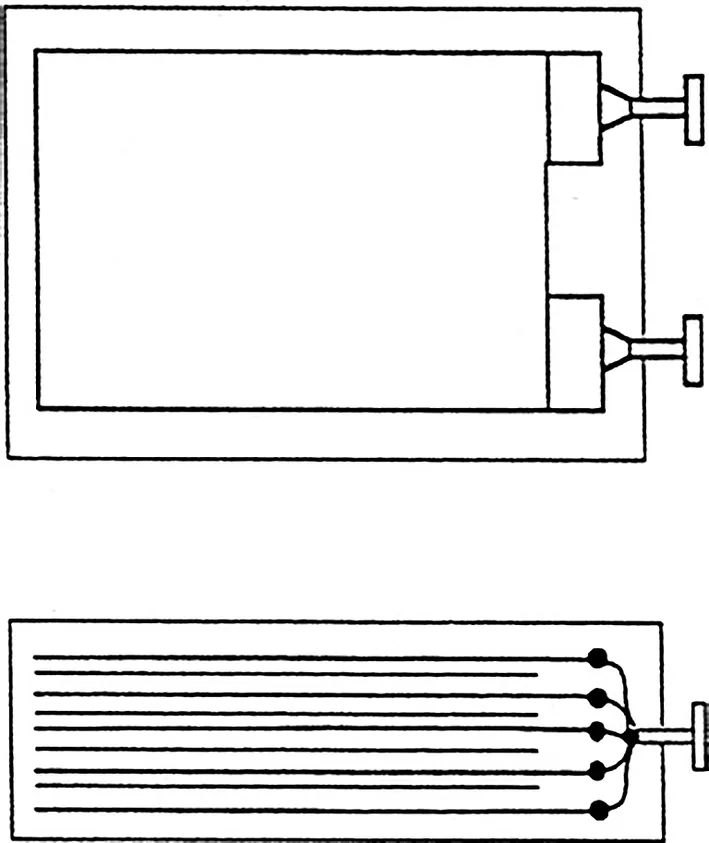
The primary battery, which converts chemical energy into electric energy. The electrochemical reaction in a primary battery is nonreversible, and the battery is discarded after a full discharge. For this reason, it finds applications where a high energy density for one-time use is required.The secondary battery, which is also known as the rechargeable battery. The electrochemical reaction in the secondary battery is reversible. After a discharge, it can be recharged by injecting a direct current from an external source. This type of battery converts chemical energy into electric energy in the discharge mode. In the charge mode, it converts the electric energy into chemical energy. In both modes, a small fraction of energy is converted into heat, which is dissipated to the surrounding medium. The round-trip conversion efficiency is between 70 and 80%.

Table of contents
- Cover
- Half Title
- Title Page
- Copyright Page
- Dedication
- Table of Contents
- Preface
- Acknowledgements
- Author Biographies
- List of Abbreviations and Conversion of Units
- Glossary
- Part A: Wind Power Systems
- Part B: Photovoltaic Power Systems
- Part C: System Integration
- Part D: Ancillary Power Technologies
- Index