understand the key methods used by archaeologists to locate and define sites
identify some strengths and limitations of the most important techniques
suggest appropriate methods for locating and exploring sites in particular circumstances
establish your own system of note-taking for the course.
Archaeologists use a wide range of reconnaissance techniques to locate archaeological sites and to investigate sites without excavating them. Some archaeologists predict that future advances in these non-invasive, and non-destructive, methods may see them emerge as an alternative to excavation. Reconnaissance techniques are also used to map evidence of human activity in the landscape. The appropriate methods in each case will relate to the time and resources available as well as the particular case being investigated.
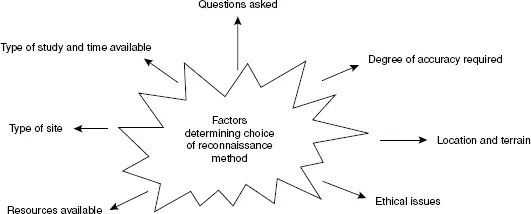
Figure 1.1 Factors influencing the choice of reconnaissance method
KEY SKILL
Successful note-taking
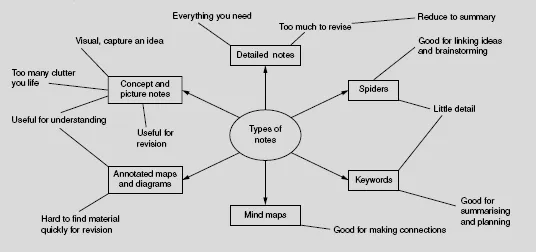
Right from the first day of your archaeology course you should be taking and filing notes on what you have learnt. You have probably already developed your own style of note-taking but it is worth considering alternative forms of note-taking depending on what is required of you and the purpose of the information you are recording. For example, the type of information you need to record as the raw material for a major essay is likely to be very different from what is required to remind you of the meaning of a concept. It is as easy to accumulate too many notes as too few. The acid test is whether they are useful for their purpose. As Figure 1.2 makes clear, different styles of notes are appropriate to different situations.
Figure 1.2 The strengths and weaknesses of different types of notes
Detailed written notes may be necessary when you are working from library texts on a major project. If you take notes from texts you always have access to, such as The Archaeology Coursebook, then you are wasting your time. What you want instead are brief notes which remind you of key points and direct you to places in your texts where the detail is. Try to experiment with a range of notes when preparing for discussion, revising and planning. Many people learn better from visual notes than they do from dense written passages. You may be one of them. We have used these types of notes throughout the text. You can find examples on the following pages:
Spider diagram
Mind map
Flow diagram
Target diagram
Force field diagram
Picture or concept notes
Keyword notes
Grids
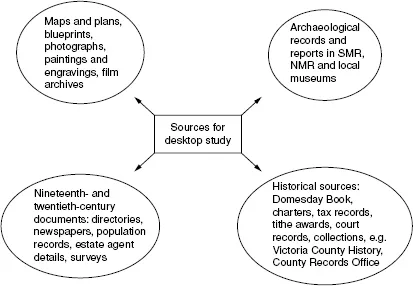
Figure 1.3 Sources commonly used for desktop study
Every year hundreds of new sites are located. Some are spotted from the air or even from satellites in space, others through the discovery of artefacts by metal detectorists. Quarrying, dredging and peat cutting all regularly produce unexpected finds while some of the most important have come about completely by chance.
The discoveries of the body of Otzi the Ice Man by skiers and of the Altamira cave art by children are classic examples. So too was the discovery of the Neolithic tomb at Crantit in Orkney, which was found when a digger fell through the roof!
Equally, some sites were never ‘lost’ to begin with. Stonehenge and the Pyramids were well known before the development of archaeology and many of the buildings of the last 200 years are still in use. Other named sites were documented by historians and located by using written sources. Schliemann's discovery of Troy is the classic example but many historic battlefields also fall into this category. In addition, a considerable number of new discoveries are made during the exploration of known sites.
Where archaeologists are actively trying to locate or explore sites through research or ahead of development there are four broad and complementary categories of methods that they use:
desktop study
surface survey
geophysical or geochemical survey
aerial survey
In addition there are a range of newer techniques, most of which can be labelled remote sensing.
DESKTOP STUDY
As its name suggests, this is an office-based investigation using existing records. Some archaeologists, usually concerned with shipwrecks, aircraft or the investigation of historical individuals, continue to use written sources to track down or identify particular sites. More generally, most excavations and all research in Britain today begins with a search of information that has already been recorded. The majority of these investigations are part of the planning process and their purpose is to determine whether there are likely to be archaeological remains which might be threatened by development (
see p. 111).
Desktop study involves researching maps and historical or archaeological documents including aerial photographs about the area under investigation. If they are not in private hands, these are most likely to be held in planning departments, county records offices, local Sites and Monuments Record (SMRs) or the National Monuments Record (NMR) offices.
http://www.english-heritage.org.uk
Historical documents
A diverse assortment of documents may be of value to the archaeologist. These will vary by county, area and period. In most parts of the country known documents are archived or recorded in the County Records Office. In many areas, useful sources have also been catalogued in a volume of the Victoria County History (VCR) which is often the first resource researchers turn to. Only a fraction of early records have survived and those that have need translation and interpretation. Amongst the potential range available, the following categories are important.
Legal documents. Records of ownership such as Anglo-Saxon charters or court records of disputes often included physical description of boundaries and occasionally land use. Wills and inventories which can be linked to particular buildings can provide lists of contents which provide clues to function.
Tax records. These are particularly valuable in helping to identify landowning units and their economic uses. The Domesday Book is the best known but later tax surveys and tithe awards are often of more direct use.
Economic records. Order and sales books are invaluable to industrial archaeologists while nineteenth-century directories are useful in exploring functions of buildings. Estate agents’ bills are increasingly being preserved to record changes in important buildings.
Pictorial records. Paintings, engravings and photographs can be of value both in identification and in tracing changes. They are particularly valuable when studying standing buildings. Archives of aerial photographs (APs) such as the RAF surveys of Britain in the 1940s are key documents in tracing landscape change in the last sixty years and are often the onl...
Table of contents
Cover Page
The Archaeology Coursebook
Title Page
Copyright Page
Figures
Index of skills
Acknowledgements
Illustration Acknowledgements
Introduction
Part One: Understanding Archaeological Resources
Part Two: Studying Themes in Archaeology
Part Three: Examination Success and Beyond
Appendix: Answers and Mark Schemes
Glossary of Terms and Abbreviations
Bibliography
Trusted by 375,005 students
Access to over 1.5 million titles for a fair monthly price.
Study more efficiently using our study tools.
Frequently asked questions
Yes, you can cancel anytime from the Subscription tab in your account settings on the Perlego website. Your subscription will stay active until the end of your current billing period. Learn how to cancel your subscription
No, books cannot be downloaded as external files, such as PDFs, for use outside of Perlego. However, you can download books within the Perlego app for offline reading on mobile or tablet. Learn how to download books offline
Perlego offers two plans: Essential and Complete
Essential is ideal for learners and professionals who enjoy exploring a wide range of subjects. Access the Essential Library with 800,000+ trusted titles and best-sellers across business, personal growth, and the humanities. Includes unlimited reading time and Standard Read Aloud voice.
Complete: Perfect for advanced learners and researchers needing full, unrestricted access. Unlock 1.5M+ books across hundreds of subjects, including academic and specialized titles. The Complete Plan also includes advanced features like Premium Read Aloud and Research Assistant.
Both plans are available with monthly, semester, or annual billing cycles.
We are an online textbook subscription service, where you can get access to an entire online library for less than the price of a single book per month. With over 1.5 million books across 990+ topics, we’ve got you covered! Learn about our mission
Look out for the read-aloud symbol on your next book to see if you can listen to it. The read-aloud tool reads text aloud for you, highlighting the text as it is being read. You can pause it, speed it up and slow it down. Learn more about Read Aloud
Yes! You can use the Perlego app on both iOS and Android devices to read anytime, anywhere — even offline. Perfect for commutes or when you’re on the go. Please note we cannot support devices running on iOS 13 and Android 7 or earlier. Learn more about using the app
Yes, you can access The Archaeology Coursebook by Jim Grant,Sam Gorin,Neil Fleming in PDF and/or ePUB format, as well as other popular books in Social Sciences & Archaeology. We have over 1.5 million books available in our catalogue for you to explore.