![]()
Introduction to applied cognitive psychology | 1 |
David Groome |
1.1 APPLIED COGNITIVE PSYCHOLOGY
Cognitive psychology is the study of how the brain processes information. More specifically, it is about the mental processes involved in acquiring and making use of the knowledge and experience gained from our senses, and also those involved in planning action. The main processes involved in cognition are perception, learning, memory storage, retrieval and thinking, all of which are terms used in everyday speech and therefore already familiar to most people. Various types of information are subjected to cognitive processing, including visual, auditory, tactile, gustatory or olfactory information, depending on the sensory system detecting it. However, humans have also developed the use of symbolic language, which can represent any other form of information. Thus language constitutes another important type of information that may be processed by the cognitive system.
All of these various aspects of cognition have been extensively studied in the laboratory, but in recent years there has been a growing interest in the application of cognitive psychology to situations in the real world. This approach is known as applied cognitive psychology, and it is concerned with the investigation of how cognitive processes affect our behaviour and performance in real-life settings. It is this research that provides the subject matter of this book.
1.2 EARLY COGNITIVE RESEARCH
The earliest experiments in cognitive psychology were carried out over a century ago. Cognitive processes had long been of interest to philosophers, but it was not until late in the nineteenth century that the first attempts were made to investigate cognitive processes in a scientific way. The earliest cognitive psychologists made important discoveries in fields such as perception (e.g. Wundt, 1874), imagery (Galton, 1879), memory (Ebbinghaus, 1885) and learning (Thorndike, 1914). This early work was mainly directed at the discovery of basic cognitive processes, which in turn led to the creation of theories to explain the findings obtained. New techniques of research and new experimental designs were developed in those early days, which were to be of lasting value to later cognitive psychologists.
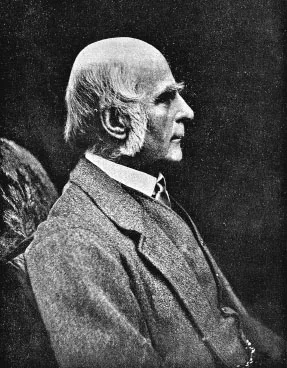
Figure 1.1 Portrait of Francis Galton, 1908.
Source: Wellcome Library, London. Wellcome Images.
A few of the early researchers did in fact try to investigate cognitive phenomena in real-world settings. For example, Francis Galton (1879) tested people’s memory for events they had experienced in the past, using retrieval cues to help remind them of the occasion. This was probably the first scientific study of what is now known as ‘autobiographical memory’ (see Chapter 7), and indeed one of the first studies of cognition of any kind to be carried out in a real-world setting.
Hermann Ebbinghaus (1885) carried out some of the earliest scientific experiments on memory, which were mainly concerned with investigating basic laws and principles of memory. However, Ebbinghaus also discovered that learning was more effective when practice sessions were spaced apart rather than massed together. Subsequently, spaced learning came to be widely accepted as a useful strategy for improving the efficiency of learning, which can be applied in real-life learning situations (see Chapter 6 for more details). However, despite a few examples of this kind where research led to real-life applications, the early cognitive researchers were mostly concerned with pure research, and any practical applications of their findings were largely incidental.
Hugo Munsterberg (1908) was possibly the first to suggest that cognitive psychologists should consider the real-life applications of their findings, but many years were to pass before this approach would become widespread. Frederic Bartlett (1932) also argued that cognitive research should have relevance to the real world, and he was critical of previous memory researchers such as Ebbinghaus who had performed experiments on the rote learning of meaningless test items. Bartlett pointed out that these methods and materials bore little resemblance to those involved in real-life memory tasks, and he suggested that cognitive researchers should make use of more naturalistic experimental designs and test materials.
Bartlett’s research involved memory for stories and pictures, which were of more obvious relevance to memory performance in real life, such as the testimony of courtroom witnesses (see Chapter 7). This emphasis on the use of more naturalistic test procedures and materials was to have considerable influence on the future of cognitive psychology.
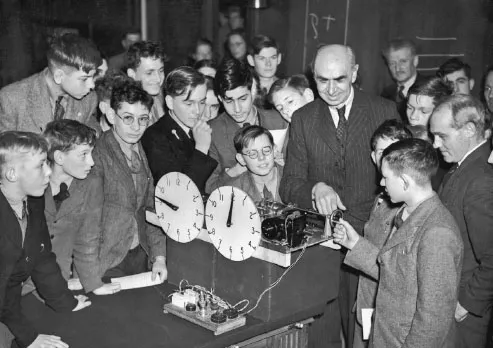
Figure 1.2
Sir Frederic Bartlett demonstrating a model to children at the Royal Institution in 1949.
Source: Copyright © Keystone/GettyImages.
1.3 POST-WAR DEVELOPMENTS IN APPLIED COGNITIVE PSYCHOLOGY
The Second World War provided a major catalyst to the development of applied cognitive psychology. The war produced dramatic improvements in technology, which placed unprecedented demands on the human beings who operated it. With the development of complex new equipment such as radar and high-speed combat aircraft, the need to understand the cognitive capabilities and limitations of human operators took on a new urgency. Consequently the cognitive performance of pilots, radar operators and air traffic controllers emerged as an important area of study, with the general goal of maximising operator performance and identifying performance limitations to be incorporated into equipment design.
One of the first psychologists to work on applications of cognitive research during the Second World War was the British psychologist Norman Mackworth, who investigated the ability of radar operators to remain vigilant over long periods. He found that there was a steady decline in signal detection over time, with average detection rates falling by 10–15 per cent after only 30 minutes of watching a radar screen (Mackworth, 1948).
Another British psychologist in the forefront of this new wave of applied research was Donald Broadbent, who had trained as a pilot during the war and thus had first-hand experience of the cognitive problems encountered by pilots. Broadbent became interested in investigating the information-processing capabilities of human beings, and more specifically their ability to deal with two or more competing perceptual inputs (Broadbent, 1958). He investigated this by presenting his subjects with a different input to each ear via headphones, a technique known as ‘dichotic listening’. Broadbent was thus able to establish some of the basic limitations of human attention, and he was able to apply his findings to assisting the performance of pilots and air traffic controllers who often have to deal with two or more inputs at once. Broadbent (1980) argued that real-life problems should ideally provide the starting point for cognitive research, since this would ensure that the research findings would be valid (and possibly useful) in the real world.
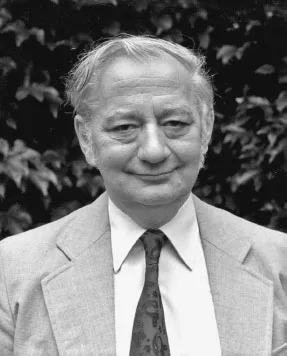
Figure 1.3 Donald Broadbent.
Source: photo courtesy of the MRC Cognition and Brain Sciences Unit.
1.4 LABORATORY VERSUS FIELD EXPERIMENTS
Although applied cognitive research is intended to be applicable to the real world, this does not necessarily mean that it always has to be carried out in a real-world setting. Sometimes it is possible to re-create real-world situations in the laboratory, as in the case of Broadbent’s research on divided attention described above. However, in more recent years there has been debate about whether cognitive psychology should be researched ‘in the field’ (i.e. in a real-world setting) or in the laboratory. Neisser (1976) argued that cognitive research should be carried out in real-world settings wherever possible, in order to ensure what he called ‘ecological validity’. By this Neisser meant that research findings should be demonstrably true in the real world, and not just under laboratory conditions. Neisser pointed out the limitations of relying on a body of knowledge based entirely on research performed in artificial laboratory conditions. For example, we know from laboratory experiments that people are subject to a number of visual illusions, but we cannot automatically assume that those same illusions will also occur in everyday life, where such simple geometric forms are rarely encountered in isolation but tend to form part of a complex three-dimensional visual array.
Neisser was not just concerned with applied cognitive research, as he felt that even theoretical research needed to be put to the test of ecological validity, to ensure that research findings were not merely created by the artificial laboratory environment.
Neisser’s call for ecological validity has been taken up enthusiastically by many cognitive researchers over the past 35 years. However, as Parkin and Hunkin (2001) remarked, the ecological validity movement has not achieved the dramatic ‘paradigm shift’ that some had expected. One reason for this is the fact that field studies cannot match the standards of scientific rigour that are possible in laboratory studies. For example, Banaji and Crowder (1989) argued that field studies of memory have produced few dependable findings because there are so many extraneous variables, which are outside the control of the experimenter. Indeed, there may be important variables affecting behaviour in real-life settings that the experimenter is not even aware of. Banaji and Crowder conclude that research findings obtained in a real-world setting cannot be generalised to other settings because the same variables cannot be assumed to apply. Although Banaji and Crowder directed their attack primarily at memory research, the same basic criticisms apply to other aspects of cognition researched in the field. In response to this attack on applied cognitive research, Gruneberg et al. (1991) pointed out that applied research can often be carried out under controlled laboratory conditions, as for example in the many laboratory studies of eyewitness testimony. Another possible way to address the problems of uncontrolled variables in real-life settings is to combine both field and laboratory research directed at the same phenomenon (Baddeley, 1993). This has been achieved with topics such as eyewitness testimony and cognitive interviews, which have been investigated both in controlled laboratory experiments and in actual police work. This two-pronged approach offers the possibility of comparing the findings of field studies and laboratory studies, and where we find agreement between lab and field studies we have more reason to find the results convincing.
Figure 1.4 Ulric Neisser.
Source: Photo courtesy of Sandra Condry.
Neisser’s (1976) call for ecological validity in cognitive research is widely regarded as having been the starting point for the rapid increase in applied studies since that time. However, Kvavilashvili and Ellis (2004) pointed out that ecological validity and applied research are not the same thing and do not always go together. They suggested that ecological validity requires research findings representative of functioning in reallife settings, and generalisable across a range of such settings. However, this does not necessarily mean that such research must be performed in the field, and it is entirely possible to achieve ecological validity with research carried out in a laboratory setting. It is also quite possible for studies carried out in real-world settings to lack ecological validity. For example, a study performed on a very narrow and unrepresentative participant group, or in a very unusual and specific setting, might fail to generalise across a range of real-life situations.
1.5 THE AIMS OF APPLIED COGNITIVE PSYCHOLOGY
There are arguably two main reasons for studying applied cognitive psychology.
First, there is the hope that applied research can produce solutions to real problems, providing us with knowledge and insights that can actually be used in the real world. A second benefit is that applied research can help to improve and inform theoretical approaches to cognition, offering a broader and more realistic basis for our understanding of cognitive processes.
Sometimes a phenomenon observed in real life can actually provide the inspiration for a new research initiative. For example, Colin Cherry was intrigued by the way that we can somehow focus our attention on one particular voice or conversation even when we are in the middle of a noisy party, surrounded by other equally loud conversations. Cherry wanted to know how we are able to focus on one input and shut out all of the others. Cherry (1953) called this the ‘cocktail party problem’, and he went on to investigate it by means of laboratory techniques in which headphones were used to present competing input to each of the two ears.
In some cases, applied and theoretical cognitive research have been carried out side by side and have been of mutual benefit. For example, laboratory research on context reinstatement has led to the development of the cognitive interview (see Chapter 8), which has subsequently been adopted for use in police work. Context reinstatement occurs when the context and surroundings in which an event took place are re-created (either by returning to the original setting or by trying to imagine the original setting) to help with memory retrieval later on. The application of these techniques by police interviewers has generated further research, which has in turn fed back into theoretical cognitive psychology. Thus ...