In recent years, the process and outlet for public speaking has grown with digital progressions such as TED talks and Facebook Live. Purposeful Communication in a Digital Age, 2nd Edition, provides a practical, step-by-step approach to developing and delivering effective speeches. Offering supplementary articles, case studies, and interviews with key leaders within the text and online, this is an all-in-one resource for the traditional, online, or hybrid classroom. The new edition devotes focus to presenting in the digital world, addressing both traditional and contemporary forms of presentation, and specifically directs students on seeking out credible sources when conducting research. Its eResource features video speech examples, classroom exercises, an instructor manual, and a quiz bank.
- 260 pages
- English
- ePUB (mobile friendly)
- Available on iOS & Android
eBook - ePub
About this book
Information
CHAPTER 1
Communicating Clearly
Chapter Outline
• Understanding Communication
• Communication Breakdowns
• Listening
• Getting Started
• Ethics in Communication
• Industry Insider
Many students enrolled in public speaking classes are not especially thrilled about the prospects of standing in front of audiences and delivering speeches. In fact, I am quite sure many in my public speaking courses would rather jump into an ice cold river than walk the 15 steps to the podium at the front of the class. And that is completely understandable. I remember how much I disliked delivering speeches in college too. I was extremely nervous at the podium at first and was sure the whole class could see my shaking hands.
Public speaking, like most activities, hinges on the idea that the more you do it, the better you become. And the act of speaking—and learning to do it well—is worth the pursuit, especially as it is a key trait that separates successful business leaders, politicians, humanitarians, and educators from the masses. It could be said that your willingness to take a public speaking course and work on your abilities already represents a vital trait that has predetermined you toward success. The process isn’t always fun or stress-free. But I promise you, at the end of this text and your course, you will find some of your stress and worry unneeded and you will be a better leader, job interviewee, community member, and citizen, all because of your willingness and understanding of how to speak to audiences.

FIGURE 1.1
Nearly all leaders in society, regardless of how much wealth and success they have created, speak in front of audiences to continue to evolve society. Speaking well in front of audiences truly is one of the biggest assets we can have as a human.
Nearly all leaders in society, regardless of how much wealth and success they have created, speak in front of audiences to continue to evolve society. Speaking well in front of audiences truly is one of the biggest assets we can have as a human.
Source: JStone/Shutterstock.com

FIGURE 1.2 The more we speak in public, the more natural and enjoyable the process becomes.
Source: Gregory Reed/Shutterstock.com
Understanding Communication
To obtain a better understanding of the speech communication process, we need to first be aware of five elements that are always involved: a speaker, a message, a channel (through which the message is sent), an audience, and a response. Each time a speaker communicates a message to others, these elements are present. In speaking situations, these elements interact with each other.
Speech communication process: The act or process of sending and receiving a message, involving five elements: a speaker, a message, a channel (through which the message is sent), an audience, and a response.
A simple speech situation can be summarized as follows:
1. A speaker wishes to communicate an idea. (I want to sell you a DJI drone.)
2. The speaker encodes the idea in a message. (I organize my thoughts on its useful attributes.)
3. The message is sent through a channel to an audience. (I present to you how great the new DJI drone is.)
4. The audience receives and decodes the message. (You watch my presentation and you also think it looks useful and fun to own a drone.)
5. The audience responds to the message. (You go out and buy your very own DJI drone.)
As you can see, the communication process is multifaceted. In order to better understand it, consider each of the five elements in the process separately.

FIGURE 1.3 As society evolves there are always new technologies that need to be understood through presentations given to audiences who are interested.
Source: Tatiana Dyuvbanova/Shutterstock.com
Speaker
In the previous model, the process of communication begins with a speaker who wants to communicate an idea or some ideas about a drone. The image that the audience has of the speaker affects the message. Those in the audience who perceive a speaker as being a person of competence and truthfulness are most likely to believe what the speaker says. On the opposite side of that equation, speakers who seem to have thrown together information quickly or who come across as less credible are often not even listened to.
Message
The second element in the communication process is the message. To ensure that the listener attends to the message and understands it, the speaker must encode it in language that is both interesting and clear. Emphasis, variety, and descriptive language help make material interesting. Words that are specific and familiar help make a message clear. There is no benefit to using words and vocabulary that the audience doesn’t understand as that does nothing to convey the message you want to send.
Channel
The channel is the means through which a message is transmitted. In a modern view, the channels for messages to travel through are vast and continuously growing. Facebook, Skype, Snapchat, Twitter, and Reddit all allow messages to be passed from one individual to another as do sign language and ancient smoke signals. In the speaking situation, multiple channels can be involved. Messages can be transmitted through hearing, seeing, smelling, tasting, and touching channels. If you are talking about coffee beans, and the smell of the Colombian beans fills the room, it isn’t just the verbal message that is conveying the information.
Audience
Without an audience, communication does not take place. A person stranded on an island can put a note in a bottle or stand on the shore screaming for help; however, unless someone reads the note or hears the screams, nothing will be accomplished. This emphasizes the fact that all communication by a speaker must be directed to an audience.
In a communication event, the elements of communication flow from one to another and become part of a process. Examining the steps involved in a communicative act will help you better understand this process. This model demonstrates how the communication process works.
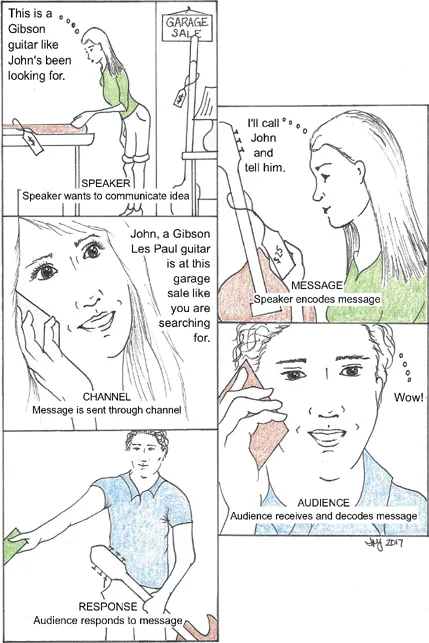
FIGURE 1.4 Looking at how two people communicate to take an action helps to reinforce the speech communication process.
Source: Jennifer M. Jaster
How Communication Works
See Figure 1.4.
Response
The success or failure of communication is determined by audience response. Your goal with speaking in front of an audience is to make an impact on them. Whether the audience decides to buy a product, understands the implications of tax cuts, or finds the process your family uses to make chicken soup rewarding, it is all part of a response that you have given to the audience. It is also the audience’s reward for giving you their undivided attention.
Communication Breakdowns
A communication breakdown occurs because of a failure in the communication process. If you invite a friend to your house for a Friday night party and they show up Thursday night, the message you gave was either inaccurate or misunderstood. If you fail to hear your instructor announce that the next course session has been called off because you were daydreaming, you might be the only class member present on that day. Communication breakdowns occur at some point during the speech situation. Perhaps the speaker has failed to analyze the audience correctly. Maybe the message has been encoded in technical terms that the audience cannot understand. Or it might be that the microphone the speaker is using significantly distorts the message and no one in the back of the room can hear the presentation. Any of these factors can result in a breakdown of communication.
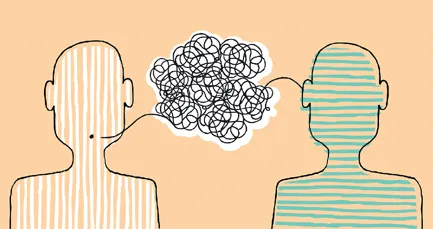
FIGURE 1.5 Ideas don’t always go from one person to another seamlessly. Sometimes obstacles get in the way.
Source: Diego Schtutman/Shutterstock.com
Communication breakdown: A failure in the communication process traced to one of the five elements in the process.
Listening
To get the audience to listen to what you are saying, you have to first...
Table of contents
- Cover
- Half Title
- Title Page
- Copyright Page
- Table of Contents
- Preface
- New to this Edition
- Chapter 1 Communicating Clearly
- Chapter 2 A Podium and a Purpose
- Chapter 3 Analyzing the Crowd
- Chapter 4 Speech Anxiety
- Chapter 5 Supporting Your Speech
- Chapter 6 The Introduction and Conclusion
- Chapter 7 Preparing the Content of Your Speech
- Chapter 8 The Informative Speech
- Chapter 9 The Persuasive Speech
- Chapter 10 Speaking Online
- Chapter 11 Technology Works for You
- Index
Trusted by 375,005 students
Access to over 1.5 million titles for a fair monthly price.
Study more efficiently using our study tools.
Frequently asked questions
Yes, you can cancel anytime from the Subscription tab in your account settings on the Perlego website. Your subscription will stay active until the end of your current billing period. Learn how to cancel your subscription
No, books cannot be downloaded as external files, such as PDFs, for use outside of Perlego. However, you can download books within the Perlego app for offline reading on mobile or tablet. Learn how to download books offline
Perlego offers two plans: Essential and Complete
- Essential is ideal for learners and professionals who enjoy exploring a wide range of subjects. Access the Essential Library with 800,000+ trusted titles and best-sellers across business, personal growth, and the humanities. Includes unlimited reading time and Standard Read Aloud voice.
- Complete: Perfect for advanced learners and researchers needing full, unrestricted access. Unlock 1.5M+ books across hundreds of subjects, including academic and specialized titles. The Complete Plan also includes advanced features like Premium Read Aloud and Research Assistant.
We are an online textbook subscription service, where you can get access to an entire online library for less than the price of a single book per month. With over 1.5 million books across 990+ topics, we’ve got you covered! Learn about our mission
Look out for the read-aloud symbol on your next book to see if you can listen to it. The read-aloud tool reads text aloud for you, highlighting the text as it is being read. You can pause it, speed it up and slow it down. Learn more about Read Aloud
Yes! You can use the Perlego app on both iOS and Android devices to read anytime, anywhere — even offline. Perfect for commutes or when you’re on the go.
Please note we cannot support devices running on iOS 13 and Android 7 or earlier. Learn more about using the app
Please note we cannot support devices running on iOS 13 and Android 7 or earlier. Learn more about using the app
Yes, you can access Purposeful Communication in a Digital Age by Jason Schmitt,Arthur Koch in PDF and/or ePUB format, as well as other popular books in Personal Development & Digital Marketing. We have over 1.5 million books available in our catalogue for you to explore.