Sociology of Religion is a collection that seeks to explore the relationship between the structure and culture of religion and various elements of social life in the United States. This reader is an ideal standalone course text and can also serve as supplement to the text written by the same author team, Religion Matters (Routledge, 2010). Based on both classic and contemporary research in the sociology of religion, this new, third edition highlights a variety of research methods and theoretical approaches to studying the sociological elements of religion. It explores the ways in which religious values, beliefs and practices shape the world outside of church, synagogue, or mosque walls while simultaneously being shaped by the non-religious forces operating in that world.
eBook - ePub
Sociology of Religion
A Reader
- 424 pages
- English
- ePUB (mobile friendly)
- Available on iOS & Android
eBook - ePub
About this book
Information
Section I
Changing Contexts
Reading 1
America’s Changing Religious Landscape: Overview
The Christian share of the U.S. population is declining, while the number of U.S. adults who do not identify with any organized religion is growing, according to an extensive new survey by the Pew Research Center. Moreover, these changes are taking place across the religious landscape, affecting all regions of the countiy and many demographic groups. While the drop in Christian affiliation is particularly pronounced among young adults, it is occurring among Americans of all ages. The same trends are seen among whites, blacks and Latinos; among both college graduates and adults with only a high school education; and among women as well as men.
To be sure, the United States remains home to more Christians than any other countiy in the world, and a large majority of Americans -roughly seven-in-ten - continue to identify with some branch of the Christian faith. But the major new survey of more than 35,000 Americans by the Pew Research Center finds that the percentage of adults (ages 18 and older) who describe themselves as Christians has dropped by nearly eight percentage points in just seven years, from 78.4% in an equally massive Pew Research survey in 2007 to 70.6% in 2014. Over the same period, the percentage of Americans who are religiously unaffiliated - describing themselves as atheist, agnostic or “nothing in particular” - has jumped more than six points, from 16.1 to 22.8%. And the share of Americans who identify with non-Christian faiths also has inched up, rising 1.2 percentage points, from 4.7% in 2007 to 5.9% in 2014. Growth has been especially great among Muslims and Hindus, albeit from a very low base.
… Even as their numbers decline, American Christians – like the U.S. population as a whole – are becoming more racially and ethnically diverse. Non-Hispanic whites now account for smaller shares of evangelical Protestants, mainline Protestants and Catholics than they did seven years earlier, while Hispanics have grown as a share of all three religious groups. Racial and ethnic minorities now make up 41% of Catholics (up from 35% in 2007), 24%
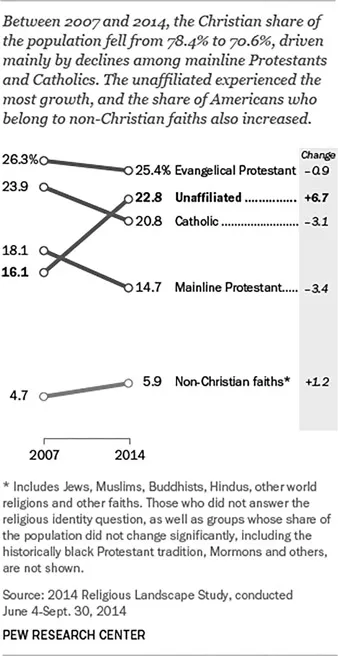
Figure 1.1 Changing U.S. Religious Landscape
Table 1.1 Christians Decline as Share of U.S. Population; Other Faiths and the Unaffiliated Are Growing
| 2007 | 2014 | Change* | |
| % | % | % | |
| Christian | 78.4 | 7O.6 | −7.8 |
| Protestant | 51.3 | 46.5 | −4.8 |
| Evangelical | 26.3 | 25.4 | −0.9 |
| Mainline | 18.1 | 14.7 | −3.4 |
| Historically black | 6.9 | 6.5 | - |
| Catholic | 23.9 | 20.3 | −3.1 |
| Orthodox Christian | 0.6 | 0.5 | - |
| Mormon | 1.7 | 1.6 | - |
| Jehovah’s Witness | 0.7 | 0.8 | - |
| Other Christian | 0.3 | 0.4 | - |
| Non-Chrciian faiths | 4.7 | 5.9 | +1.2 |
| Jewish | 1.7 | 1.9 | - |
| Muslim | 0.4 | 0.9 | +0.5 |
| Buddhist | 0.7 | 0.7 | - |
| Hindu | 0.4 | 0.7 | +0.3 |
| Other world religions** | <;0.3 | 0.3 | - |
| Other faiths** | 1.2 | 1.5 | +0.3 |
| Unaffiliated | 16.1 | 22.8 | +6.7 |
| Atheist | 1.6 | 3.1 | +1.5 |
| Agnostic | 2.4 | 4.0 | +1.6 |
| Nothing in particular | 12.1 | 15.8 | +3.7 |
| Don’t know/refused | 0.8 | 0.6 | −0.2 |
| 100.0 | 100.0 |
* The “change” column displays only statistically significant changes; blank cells indicate that the difference between 2007 and 2014 is within the margin of error.
** The “other world religions” category includes Sikhs, Baha ’is, Taoists, Jains and a variety of other world religions. The “other faiths” category includes Unitarians, New Age religions, Native American religions and a number of other non-Christian faiths.
Source: 2014 Religious Landscape Study, conducted June 4–Sept 30, 2014. Figures may not add to 100% and nested figures may not add to subtotals indicated due to rounding.
PEW RESEARCH CENTER
PEW RESEARCH CENTER
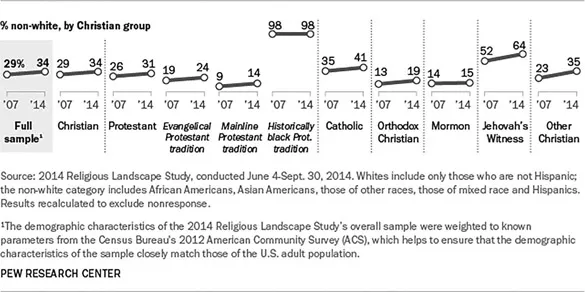
Figure 1.2 Increasing Racial and Ethnic Diversity Within Christianity
of evangelical Protestants (up from 19%) and 14% of mainline Protestants (up from 9%).
…While many U.S. religious groups are aging, the unaffiliated are comparatively young – and getting younger, on average, overtime. As arising cohort of highly unaffiliated Millennia Is reaches adulthood, the median age of unaffiliated adults has dropped to 36, down from 38 in 2007 and far lower than the general (adult) population’s median age of 46.1 By contrast, the median age of mainline Protestant adults in the new survey is 52 (up from 50 in 2007), and the median age of Catholic adults is 49 (up from 45 seven years earlier).
These are among the key findings of the Pew Research Center’s second U.S. Religious Landscape Study, a follow-up to its first comprehensive study of religion in America, conducted in 2007.
Because the U.S. census does not ask Americans about their religion, there are no official government statistics on the religious composition of the U.S. public. Some Christian denominations and other religious bodies keep their own rolls, but they use widely differing criteria for membership and sometimes do not remove members who have fallen away. Surveys of the general public frequently include a few questions about religious affiliation, but they typically do not interview enough people, or ask sufficiently detailed questions, to be able to describe the country’s full religious landscape.
The Religious Landscape Studies were designed to fill the gap. Comparing two virtually identical surveys, conducted seven years apart, can bring important trends into sharp relief. In addition, the very large samples in both 2007 and 2014 included hundreds of interviews with people from small religious groups that account for just 1% or 2% of the U.S. population, such as Mormons, Episcopalians and Seventh-day Adventists. This makes it possible to paint demographic and religious profiles of numerous denominations that cannot be described by smaller surveys. The most recent Religious Landscape Study also was designed to obtain a minimum of 300 interviews with respondents in each state and the District of Columbia as well as to represent the country’s largest metropolitan areas, enabling an assessment of the religious composition not just of the nation as a whole, but also of individual states and localities.
The latest survey was conducted in English and Spanish among a nationally representative sample of 35,071 adults interviewed by telephone, on both cellphones and landlines, from June 4-Sept. 30, 2014. Findings based on the full sample have a margin of sampling error of plus or minus 0.6 percentage points. The survey is estimated to cover 97% of the non-institutionalized U.S. adult population; 3% of U.S. adults are not reachable by telephone or do not speak English or Spanish well enough to participate in the survey.
Even a very small margin of error, when applied to the hundreds of millions of people living in the United States, can yield a wide range of estimates for the size of particular faiths. Nevertheless, the results of the second Religious Landscape Study indicate that Christians probably have lost ground, not only in their relative share of the U.S. population, but also in absolute numbers.
In 2007, there were 227 million adults in the United States, and a little more than 78% of them – or roughly 178 million – identified as Christians. Between 2007 and 2014, the overall size of the U.S. adult population grew by about 18 million people, to nearly 245 million. But the share of adults who identify as Christians fell to just under 71%, or approximately 173 million Americans, a net declin...
Table of contents
- Cover
- Half Title
- Title
- Copyright
- Contents
- Preface
- Introduction
- Section I Changing Contexts
- Section II Evolving Content
- Section III Patterning Diversity
- Section IV Seeing Consequences
Trusted by 375,005 students
Access to over 1.5 million titles for a fair monthly price.
Study more efficiently using our study tools.
Frequently asked questions
Yes, you can cancel anytime from the Subscription tab in your account settings on the Perlego website. Your subscription will stay active until the end of your current billing period. Learn how to cancel your subscription
No, books cannot be downloaded as external files, such as PDFs, for use outside of Perlego. However, you can download books within the Perlego app for offline reading on mobile or tablet. Learn how to download books offline
Perlego offers two plans: Essential and Complete
- Essential is ideal for learners and professionals who enjoy exploring a wide range of subjects. Access the Essential Library with 800,000+ trusted titles and best-sellers across business, personal growth, and the humanities. Includes unlimited reading time and Standard Read Aloud voice.
- Complete: Perfect for advanced learners and researchers needing full, unrestricted access. Unlock 1.5M+ books across hundreds of subjects, including academic and specialized titles. The Complete Plan also includes advanced features like Premium Read Aloud and Research Assistant.
We are an online textbook subscription service, where you can get access to an entire online library for less than the price of a single book per month. With over 1.5 million books across 990+ topics, we’ve got you covered! Learn about our mission
Look out for the read-aloud symbol on your next book to see if you can listen to it. The read-aloud tool reads text aloud for you, highlighting the text as it is being read. You can pause it, speed it up and slow it down. Learn more about Read Aloud
Yes! You can use the Perlego app on both iOS and Android devices to read anytime, anywhere — even offline. Perfect for commutes or when you’re on the go.
Please note we cannot support devices running on iOS 13 and Android 7 or earlier. Learn more about using the app
Please note we cannot support devices running on iOS 13 and Android 7 or earlier. Learn more about using the app
Yes, you can access Sociology of Religion by William Mirola, Michael Emerson, Susanne Monahan, William A. Mirola,Michael O. Emerson,Susanne C Monahan,William Mirola,Michael Emerson,Susanne Monahan, William A. Mirola, Michael O. Emerson, Susanne C Monahan in PDF and/or ePUB format, as well as other popular books in Social Sciences & Sociology. We have over 1.5 million books available in our catalogue for you to explore.