Fundamentals of Polymer Engineering, Third Edition
eBook - ePub

Fundamentals of Polymer Engineering, Third Edition

  1. 598 pages
  2. English
  3. ePUB (mobile friendly)
  4. Available on iOS & Android
eBook - ePub

Fundamentals of Polymer Engineering, Third Edition

About this book

Exploring the chemistry of synthesis, mechanisms of polymerization, reaction engineering of step-growth and chain-growth polymerization, polymer characterization, thermodynamics and structural, mechanical, thermal and transport behavior of polymers as melts, solutions and solids, Fundamentals of Polymer Engineering, Third Edition covers essential concepts and breakthroughs in reactor design and polymer production and processing. It contains modern theories and real-world examples for a clear understanding of polymer function and development. This fully updated edition addresses new materials, applications, processing techniques, and interpretations of data in the field of polymer science. It discusses the conversion of biomass and coal to plastics and fuels, the use of porous polymers and membranes for water purification, and the use of polymeric membranes in fuel cells. Recent developments are brought to light in detail, and there are new sections on the improvement of barrier properties of polymers, constitutive equations for polymer melts, additive manufacturing and polymer recycling.

This textbook is aimed at senior undergraduate students and first year graduate students in polymer engineering and science courses, as well as professional engineers, scientists, and chemists. Examples and problems are included at the end of each chapter for concept reinforcement.

Frequently asked questions

Yes, you can cancel anytime from the Subscription tab in your account settings on the Perlego website. Your subscription will stay active until the end of your current billing period. Learn how to cancel your subscription.
At the moment all of our mobile-responsive ePub books are available to download via the app. Most of our PDFs are also available to download and we're working on making the final remaining ones downloadable now. Learn more here.
Perlego offers two plans: Essential and Complete
  • Essential is ideal for learners and professionals who enjoy exploring a wide range of subjects. Access the Essential Library with 800,000+ trusted titles and best-sellers across business, personal growth, and the humanities. Includes unlimited reading time and Standard Read Aloud voice.
  • Complete: Perfect for advanced learners and researchers needing full, unrestricted access. Unlock 1.4M+ books across hundreds of subjects, including academic and specialized titles. The Complete Plan also includes advanced features like Premium Read Aloud and Research Assistant.
Both plans are available with monthly, semester, or annual billing cycles.
We are an online textbook subscription service, where you can get access to an entire online library for less than the price of a single book per month. With over 1 million books across 1000+ topics, we’ve got you covered! Learn more here.
Look out for the read-aloud symbol on your next book to see if you can listen to it. The read-aloud tool reads text aloud for you, highlighting the text as it is being read. You can pause it, speed it up and slow it down. Learn more here.
Yes! You can use the Perlego app on both iOS or Android devices to read anytime, anywhere — even offline. Perfect for commutes or when you’re on the go.
Please note we cannot support devices running on iOS 13 and Android 7 or earlier. Learn more about using the app.
Yes, you can access Fundamentals of Polymer Engineering, Third Edition by Anil Kumar,Rakesh K. Gupta in PDF and/or ePUB format, as well as other popular books in Technology & Engineering & Materials Science. We have over one million books available in our catalogue for you to explore.
1
Introduction
1.1 DEFINING POLYMERS
Polymers are materials of very high molecular weight that are found to have multifarious applications in our modern society. They usually consist of several structural units bound together by covalent bonds [1,2]. For example, polyethylene is a long-chain polymer and is represented by
CH2 CH2 CH2 or [-CH2 CH2]n
(1.1.1)
where the structural (or repeat) unit is −CH2−CH2− and n represents the chain length of the polymer.
Polymers are obtained through the chemical reaction of small molecular compounds called monomers. For example, polyethylene in Eq. (1.1.1) is formed from the monomer ethylene. In order to form polymers, monomers either have reactive functional groups or double (or triple) bonds whose reaction provides the necessary linkages between repeat units. Polymeric materials usually have high strength, possess a glass transition temperature, exhibit rubber elasticity, and have high viscosity as melts and solutions.
In fact, exploitation of many of these unique properties has made polymers extremely useful to mankind. They are used extensively in food packaging, clothing, home furnishings, transportation, medical devices, information technology, and so forth. Natural fibers such as silk, wool, and cotton are polymers and have been used for thousands of years. Within the last 75 years, they have been supplemented and, in some instances, replaced by synthetic fibers such as rayon, nylon, and acrylics. Indeed, rayon itself is a modification of a naturally occurring polymer, cellulose, which in other modified forms has served for years as commercial plastics and films. Synthetic polymers (some common ones are listed in Table 1.1), such as polyolefins, polyesters, acrylics, nylons, and epoxy resins, find extensive applications as plastics, films, adhesives, and protective coatings. Depending upon the specific usage, the properties of polymers are modified by adding additive chemicals to them, and there is a multibillion-dollar industry dedicated to manufacturing them. These different chemicals could serve as plasticisers, flame retardant, heat stabilizers, impact modifiers, lubricants, antioxidants, UV light stabilizers, and blowing agents [3]. It may be added that biological materials, such as proteins, deoxyribonucleic acid (DNA), and mucopolysaccharides, are also polymers. Polymers are worth studying because their behavior as materials is different from that of metals and other low molecular weight materials. As a result, a large percentage of chemists, physicists, and engineers are engaged in works involving polymers, which necessitates one or more than one formal course in polymer science.
Biomaterials [4] are defined as materials used within human bodies either as artificial organs, bone cements, dental cements, ligaments, pacemakers, or contact lenses. The human body consists of biological tissues (e.g., blood, cells, proteins, etc.), and they have the ability to reject materials that are ‘‘incompatible’’ either with the blood or with the tissues. For such applications, polymeric materials, which are derived from animals or plants, are natural candidates, and lately, polyacrylamide, polyester, and polyethylene oxides have been commonly employed because they are inert within the body. Sometimes, due to the requirements of mechanical strength, selective permeation, adhesion, and/or degradation, even noncompatible polymeric materials have been put to use, but before they are utilized, they are surface modified by biological molecules (such as heparin, biological receptors, enzymes, and so forth). Some of these concepts will be developed in this and subsequent chapters.
TABLE 1.1
Some Common Polymers
Commodity Thermoplastics
Polyethylene
[CH2CH2]
Polystyrene
Image
Polypropylene
[CH2CHCH3|]
Polyvinyl chloride
[CH2CHCl|]
Polymers in electronic applications Polyacetylene
[CH|=CH|]n
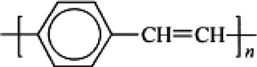
Poly(p-phenylene vinylene)
Image
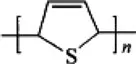
Polythiophene
Image
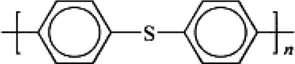
Polyphenylene sulfide
Image
Polyanilines
[CH2CHNH2|]n
Biomedical applications
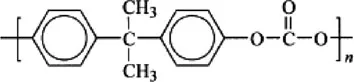
Polycarbonate (diphenyl carbonate)
Image
Polymethyl methacrylate
[CH2CCOOCH3|CH3|]n
Silicone polymers
[Si CH3|CH3|O]n
Specialty polymers
Polyvinylidene chloride
[CH2CCl|Cl|]
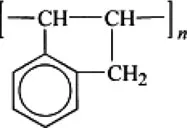
Polyindene
Image
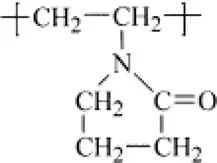
Polyvinyl pyrrolidone
Image
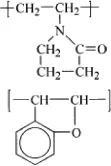
Coumarone polymer
Image
In all civilized societies, industrial activities are carried out, which more often produces pollution, leading to environmental issues. In the separation of pollutants, polymers play a major role in membrane separation. The material of construction of these membranes is mostly polymeric and has the potential of replacing considerably more expensive methods of separation, such as distillation, solvent extraction, crystallization, etc. In view of the recent energy cri...
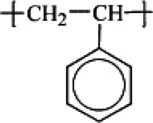
Table of contents

  1. Cover
  2. Half Title
  3. Title Page
  4. Copyright Page
  5. Dedication
  6. Table of Contents
  7. Preface to the Third Edition
  8. Authors
  9. Chapter 1 Introduction
  10. Chapter 2 Effect of Chemical Structure on Polymer Properties
  11. Chapter 3 Step-Growth Polymerization
  12. Chapter 4 Reaction Engineering of Step-Growth Polymerization
  13. Chapter 5 Chain-Growth Polymerization
  14. Chapter 6 Reaction Engineering of Chain-Growth Polymerization
  15. Chapter 7 Emulsion Polymerization
  16. Chapter 8 Measurement of Molecular Weight and Its Distribution
  17. Chapter 9 Thermodynamics of Polymer Mixtures
  18. Chapter 10 Theory of Rubber Elasticity
  19. Chapter 11 Polymer Crystallization
  20. Chapter 12 Mechanical Properties
  21. Chapter 13 Polymer Diffusion
  22. Chapter 14 Flow Behavior of Polymeric Fluids
  23. Chapter 15 Polymer Processing
  24. Index