The Art of Teaching Science has proven itself to be one of the most popular introductory texts for Australian pre-service and in-service teachers, providing guidance on engaging students and helping develop scientifically literate citizens.
Beginning with an examination of the nature of science, constructivist and socio-cultural views of teaching and learning and contemporary science curricula in Australian schools, the expert authors go on to explore effective teaching and learning strategies, approaches to assessment and provide advice on the use of ICT in the classroom. Fully revised and updated, this edition also reflects the introduction of the AITSL professional standards for teachers and integrates them throughout the text. New chapters explore:
•a range of teaching strategies including explicit instruction, active learning and problem-based learning;
•the effective integration of STEM in schools;
•approaches to differentiation in science education; and
•contemporary uses of ICT to improve student learning.
Those new to this text will find it is deliberately written in user-friendly language. Each chapter stands alone, but collectively they form a coherent picture of the art (in the sense of creative craft) and science (as in possessing the knowledge, understanding and skills) required to effectively teach secondary school science.
'Helping each new generation of school science teachers as they begin their careers is crucial to education. This is the updated, third edition of this valuable textbook. It contains a wonderful range of inspirational chapters. All science teachers, not only those at the start of the profession, would benefit from it, in Australia and beyond.'
Michael J. Reiss, Professor of Science Education, University College, London
eBook - ePub
The Art of Teaching Science
A comprehensive guide to the teaching of secondary school science
- 272 pages
- English
- ePUB (mobile friendly)
- Available on iOS & Android
eBook - ePub
The Art of Teaching Science
A comprehensive guide to the teaching of secondary school science
About this book
Information
Topic
PedagogíaSubtopic
Educación generalPART 1
UNDERSTANDING THE ART OF TEACHING SCIENCE
CHAPTER 1
What is Science?
GOALS
The goals for this chapter are to support you to:
- Develop a nuanced and rich understanding of the nature of science as a construct of human action
- Evaluate arguments about the structure of science as a discipline in education
- Start to develop your personal philosophy about the nature of science that will inform your practice as a teacher of science
Australian Professional Standards for Teachers—Graduate Level:
- Standard 2: Know the content and how to teach it (Focus areas 2.1, 2.2)
WHAT CONSTITUTES SCIENCE?
I have always been concerned by the lack of conversation in science education about the nature of science and how teachers make decisions about what counts as science. Combined with this is my concern about how teachers interpret the claims of textbook authors or education-standards developers about what constitutes science. So, here is a little test. Read the following snapshots and decide whether or not they are examples of science. How did you make that decision? Also, note down any questions that come to mind as you read each snapshot.
SNAPSHOT 1.1: MMR vaccine and autism
In early January 2011, the popular news was awash with articles on the decision of the British Medical Journal (Godlee, Smith & Marcovitch, 2011) to accuse Andrew Wakefield, a medical doctor and researcher, of not just shoddy research, but fraud. He was the lead author of a famous study, published in 1998 in The Lancet and withdrawn in February 2010 (Wakefield et al. 1998), which identified a link between the measles, mumps and rubella (MMR) vaccine and autism. He was accused of changing children’s medical records to support the argument he wanted to make. The science community was overwhelmingly critical of Wakefield, presenting him as a fraud.
SNAPSHOT 1.2: Schoolgirl discovers supernova
Kathryn Aurora Gray, a ten-year-old girl from New Brunswick in Canada, was in the news for discovering a supernova using software that allowed her to make time comparisons of a specific area of the night sky near Galaxy UGC3378, which is about 240 million light years away (Jackson 2011).
SNAPSHOT 1.3: Yanyuwa and Garrwa people and cycads
The Yanyuwa and Garrwa people of the south-west Gulf of Carpentaria in Australia use cycads (Cycas angulata) for food. In the Yanyuwa language, the cycad is classified as wurrana or being of authority, with economic and religious significance to the maritime environment. Use of the nut of the wurrana as a food source constitutes a challenge because the nut, located inside the fruit, contains a neurotoxin. To remove the toxin, Aboriginal people treat the nuts by heating them and then pounding or grinding them into flour. Stones used to grind the nuts are often found in groves of cycads. The flour is strained using a tool made from fronds to leach out the toxin. From this flour, bread called damper can be made (Bradley 2005).
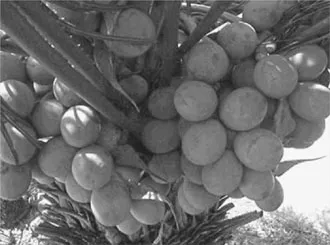
The fruits of wurrana (Cycas angulata) used to make flour
SNAPSHOT 1.4: Antibodies and water memory
In 1988, the science journal, Nature, published a paper of which the lead author was Jacques Benveniste, head of a biomedical laboratory run by the French National Institute of Health and Medical Research (INSERM). The research team was studying the antibody response in basophils, a type of white blood cell. They found that basophils showed an allergic response even when the antibody solutions used were so diluted that there was a calculated absence of any antibody at the highest dilutions (basically, no antibodies were left in the solution). Benveniste and his colleagues argued that since the effects were observed when the dilutions were accompanied with vigorous shaking, transfer of biological information was related to the molecular structure of water (Davenas et al. 1988). One of the challenges for this area of study is that liquid water at the molecular level behaves in a way that is still not fully understood. The press called this phenomenon water memory. Anyone familiar with homeopathy might see a relationship between this study and homeopathic remedies requiring high dilution. In an unprecedented step, the editor of Nature at the time led a team of fraud busters demanding the studies be repeated with external observers, which they were, but the results were inconclusive.
Which of these snapshots did you locate within science? In making that decision, did you focus on: whether the case described was a study of nature? Where the study was published? The procedures the researchers used to produce the knowledge? And whether the data produced had been confirmed by others? Did you focus on whether a scientific theory was central to each case? Or was there some other aspect of each case influencing your decision about whether or not it belonged to science?
Think about how your response to each snapshot is indicative of your understanding of what science is and what lies outside the boundaries of science, which might be called pseudoscience. You might also be asking: well, what is the right answer? Which of these snapshots are really science? Unfortunately, the answer to that question is not a simple one. Equally unfortunately, science textbooks often try to maintain the myth that there is a simplistic scientific method that, if followed, will allow you to say you are doing science. As these snapshots suggest, it is not that simple, because there are cultural and historical structures that support the discipline of science to decide what counts as science.
Complexity aside, I hope you will agree that each of these examples has some features that are important for identifying an endeavour as scientific. Each of the snapshots has something to say to us about the following statement: the practice of science involves working in a field of study with structures, values, and ways of doing things that are used by members of the field of science to decide what should count as science. These structures, values, and ways of doing things are referred to in this chapter as norms. Norms are human constructions, developed or constructed by people within the field, and are used to test knowledge claims. This process of testing knowledge claims through the structures, values, and ways of doing things defines the field and boundaries of science.
An example of this testing process is evident in Snapshot 1.4: Antibodies and water memory. The demand by the editor of Nature that Benveniste and his colleagues replicate their experiments with witnesses and generate similar data to the study they submitted is an extreme example of some of the structures that the science community has in place to organise what counts as science. Other scientists were critical of the decision of the editor of Nature to publish this paper, suggesting that decisions about what counts as science is a communal process. Also, as Nature’s editor acknowledged, the results were startling and seemed inconsistent with longstanding scientific laws, such as the Law of Mass Action (a mathematical model of the constant relationship between the concentration of products and reactants in chemical reactions that reach dynamic equilibrium), and therefore needed to be explored further rather than dismissed.
In Snapshot 1.1: MMR vaccine and autism, retraction by The Lancet of Wakefield’s autism–vaccination paper was initially based on the inability of other researchers to replicate the original results claimed by Wakefield’s research team. Snapshot 1.2: Schoolgirl discovers supernova challenges us to ask whether there are norms in place that try to control the members who are identified as scientists.
How did you respond to Snapshot 1.3: Yanyuwa and Garrwa people and cycads, concerning the Aboriginal groups from Groote Eylandt who extract flour from a toxic nut? This case raises the question of the role of Indigenous knowledge in the science that students learn at school. As a form of systematic knowledge, how is Indigenous knowledge similar to, and different from, the science that typically informs curricula? I think of the science typically taught in schools as a local knowledge that has gone global. Historically, the dispersion of the systematic knowledge we call science was helped by its association with languages, such as Greek, Latin and Arabic, which were the lingua franca of large swathes of Africa, Asia and Europe. What role does language play in Indigenous knowledge? Consider the role that English now plays in the communication of scientific knowledge. If all forms of systematic knowledge about the natural world are called science, then the science typically taught in schools might more accurately be called Eurocentric science, which communicates the place from which this form of science emerged over time.
WHAT DO NATIONAL DOCUMENTS SAY ABOUT SCIENCE?
Often, when science is offered as a subject at school, little thought is given to how we identify the borders of science that allow teachers and students to make the claim that they are teaching or learning science. Instead, students know they are doing science, or biology, or chemistry, or physics, or whatever, because of the context in which this activity takes place—a school classroom or laboratory—and/or the resources, such as textbooks and lab manuals, they use in this space.
If we look at national curriculum documents, we can get a sense of how specific groups of people frame their response to the question ‘what is science?’ For example, in the Australian Curriculum, science is presented in the following way:
Science provides an empirical way of answering interesting and important questions about the biological, physical and technological world. The knowledge it produces has proved to be a reliable basis for action in our personal, social and economic lives. Science is a dynamic, collaborative and creative human endeavour arising from our desire to make sense of our world through exploring the unknown, investigating universal mysteries, making predictions and solving problems. Science aims to understand a large number of observations in terms of a much smaller number of broad principles. Science knowledge is contestable and is revised, refined and extended as new evidence arises. (ACARA 2018 Rationale)
Thoughtful scholars developed this description using available resources and their experiences in the field. This definition communicates a description of science that the authors expect educators building a curriculum to use. However, how this definition is enacted and enforced involves political, social and cultural decisions. The social and cultural decisions that structure science focus on knowledge (epistemology), how we come to know about what is reality (ontology) and the values that are key to science (axiology). In the following sections, we will examine some of the epistemological elements, beginning with the term empirical, which seems to be key since science is described as providing an empirical way of answering questions.
EMPIRICISM
In contemporary usage, the word empirical is typically associated with the practice of observing. This can be direct, through the use of senses such as sight, smell and hearing, or indirect, using instruments that detect objects and changes that are not available to our senses. Made famous by seventeenth-century philosopher John Locke, empiricism as a theory of knowledge associates true knowledge with sense experiences. According to empiricism, our observations provide us with knowledge about something. For example, you walk outside on a summer’s day. Applying your sense of touch, you feel warmth. You can claim to know that it is hot. An empiricist would accept your observation as truthful.
So what do we know about the term empirical? As a word and associated meaning, empirical comes from the Latin empiricus and Greek empeirikos and means experienced or skilled in trial or experiment. Empiricism was associated with an ancient school of physicians in Greek medicine called the empiricists (Lindberg 2007). Greek medical empiricists argued that, if the causes of diseases were the same in all places, then the same remedies should be used in these places. This approach to medicine suggests that there has always been a universal element to empiricism from its origins to modern science. Greek empiricists argued that experience was the most productive way of understanding how it was possible to find relief from sickness, and that actions or practices, not opinions, were the most important for developing knowledge (Milne 2011). Valuing what we do above what we say can be understood as having some connection to how we comprehend empirical today, even if the connection of empirical to the senses was not as highly emphasised then as it is now.
ANSWERING INTERESTING AND IMPORTANT QUESTIONS
Think back over the snapshots you read that introduced this chapter. Did any questions come to you as you read each one? Did you ask any questions that required exploring the science context further? For example, one of the questions that came to me as I read about Wakefield in Snapshot 1.1 was: what do data from other studies have to say about the c...
Table of contents
- Cover
- Title Page
- Copyright Page
- Contents
- Figures, tables and snapshots
- Contributors
- About the editors
- Preface
- Part 1 Understanding the Art of Teaching Science
- Part 2 Implementing the Art of Teaching Science
- Part 3 Extending the Art of Teaching Science
- Index
Trusted by 375,005 students
Access to over 1.5 million titles for a fair monthly price.
Study more efficiently using our study tools.
Frequently asked questions
Yes, you can cancel anytime from the Subscription tab in your account settings on the Perlego website. Your subscription will stay active until the end of your current billing period. Learn how to cancel your subscription
No, books cannot be downloaded as external files, such as PDFs, for use outside of Perlego. However, you can download books within the Perlego app for offline reading on mobile or tablet. Learn how to download books offline
Perlego offers two plans: Essential and Complete
- Essential is ideal for learners and professionals who enjoy exploring a wide range of subjects. Access the Essential Library with 800,000+ trusted titles and best-sellers across business, personal growth, and the humanities. Includes unlimited reading time and Standard Read Aloud voice.
- Complete: Perfect for advanced learners and researchers needing full, unrestricted access. Unlock 1.5M+ books across hundreds of subjects, including academic and specialized titles. The Complete Plan also includes advanced features like Premium Read Aloud and Research Assistant.
We are an online textbook subscription service, where you can get access to an entire online library for less than the price of a single book per month. With over 1.5 million books across 990+ topics, we’ve got you covered! Learn about our mission
Look out for the read-aloud symbol on your next book to see if you can listen to it. The read-aloud tool reads text aloud for you, highlighting the text as it is being read. You can pause it, speed it up and slow it down. Learn more about Read Aloud
Yes! You can use the Perlego app on both iOS and Android devices to read anytime, anywhere — even offline. Perfect for commutes or when you’re on the go.
Please note we cannot support devices running on iOS 13 and Android 7 or earlier. Learn more about using the app
Please note we cannot support devices running on iOS 13 and Android 7 or earlier. Learn more about using the app
Yes, you can access The Art of Teaching Science by Vaille Dawson,Jennifer Donovan,Grady Venville in PDF and/or ePUB format, as well as other popular books in Pedagogía & Educación general. We have over 1.5 million books available in our catalogue for you to explore.