Grow Your Own Mini Fruit Garden
eBook - ePub

Grow Your Own Mini Fruit Garden

Planting and Tending Small Fruit Trees and Berries in Gardens and Containers

  1. 192 pages
  2. English
  3. ePUB (mobile friendly)
  4. Available on iOS & Android
eBook - ePub

Grow Your Own Mini Fruit Garden

Planting and Tending Small Fruit Trees and Berries in Gardens and Containers

About this book

Forget the farmer’s market. Grow your own delicious, organic apples, figs, peaches, plums, strawberries, blackberries, citrus fruits, and more with Grow Your Own Mini Fruit Garden. No green thumb required.

Even beginners become successful fruit "farmers" with the techniques and advice offered by author Christy Wilhelmi, the force behind the popular gardening website, Gardenerd. Selecting the best small-scale fruit trees, bushes, vines, and plants for your climate, siting them properly, and pruning your compact trees for health and productivity are some of the many topics covered in the pages of this bible of small-space fruit growing.

You’ll also discover how to:
  • Turn your urban, suburban, or rural garden into a fruit factory, no matter its size
  • Maximize production from edible container fruit gardens
  • Grow more food in less space
  • Limit your family’s synthetic pesticide consumption
  • Choose varieties with increased disease resistance
  • Select plants that grow well in your climate
  • Maintain your fruiting plants correctly to encourage years of prolific harvests
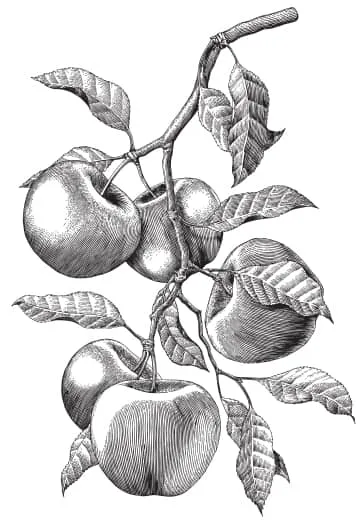
With modern, dwarf varieties, and help from Grow Your Own Mini Fruit Garden, a healthy, high-yielding garden filled with fruit-producing plants is possible—even in the smallest of yards.

Frequently asked questions

Yes, you can cancel anytime from the Subscription tab in your account settings on the Perlego website. Your subscription will stay active until the end of your current billing period. Learn how to cancel your subscription.
No, books cannot be downloaded as external files, such as PDFs, for use outside of Perlego. However, you can download books within the Perlego app for offline reading on mobile or tablet. Learn more here.
Perlego offers two plans: Essential and Complete
  • Essential is ideal for learners and professionals who enjoy exploring a wide range of subjects. Access the Essential Library with 800,000+ trusted titles and best-sellers across business, personal growth, and the humanities. Includes unlimited reading time and Standard Read Aloud voice.
  • Complete: Perfect for advanced learners and researchers needing full, unrestricted access. Unlock 1.4M+ books across hundreds of subjects, including academic and specialized titles. The Complete Plan also includes advanced features like Premium Read Aloud and Research Assistant.
Both plans are available with monthly, semester, or annual billing cycles.
We are an online textbook subscription service, where you can get access to an entire online library for less than the price of a single book per month. With over 1 million books across 1000+ topics, we’ve got you covered! Learn more here.
Look out for the read-aloud symbol on your next book to see if you can listen to it. The read-aloud tool reads text aloud for you, highlighting the text as it is being read. You can pause it, speed it up and slow it down. Learn more here.
Yes! You can use the Perlego app on both iOS or Android devices to read anytime, anywhere — even offline. Perfect for commutes or when you’re on the go.
Please note we cannot support devices running on iOS 13 and Android 7 or earlier. Learn more about using the app.
Yes, you can access Grow Your Own Mini Fruit Garden by Christy Wilhelmi in PDF and/or ePUB format, as well as other popular books in Biological Sciences & Horticulture. We have over one million books available in our catalogue for you to explore.

CHAPTER 1

What’s a Mini Fruit Garden?

image
Not everyone is blessed with acres of land to cultivate and transform into a dream homestead. In fact, most aren’t. Most people live on a standard city lot with obstructions from nearby trees and buildings that make it challenging to grow fruiting crops. Factor in amenities such as swimming pools, play areas, storage sheds, and garages, and that doesn’t leave much space to work with. With even less space to grow, apartment dwellers make up a significant part of the population, ranging from 6 percent in Mexico, 37 percent in the U.S., to 46 percent in Europe. Those in apartments and condominiums may only have a balcony or porch to utilize. Enter the mini fruit garden.
Mini fruit gardens make the most of whatever space is available. They use strategies such as backyard orchard culture, vertical gardening, multifruit grafting, container planting, espalier techniques, and biointensive methods to grow a rainbow harvest in a small space. While there are limits to what you can grow in a small space, strategic planning will help you exploit the space you have for a tasty and rewarding outcome.
image
Create a space where pollinators thrive, and bees will reward you with fresh fruit.

STRATEGIC PLANNING

The first step in planning your mini fruit garden is to assess your space and decide what you have room for. Let’s review a few basic design strategies and observation guidelines. Grab a notepad (or graph paper if you want to make notes to scale), pencil, eraser, tape measure, and head outside.
image
Don’t let drafting tools intimidate you. Have fun and explore the possibilities.

SKETCH YOUR SPACE

Draw the outline of your garden area, including any steps or elevation changes. Indicate walls, existing trees, and any element of the space that will remain in place, such as seating areas, barbecues, or play equipment. This will narrow your focus to the space available. Note the dimensions for this available space. This is your canvas.

FINDING NORTH AND SOUTH

Next, figure out where north is (or south in the southern hemisphere). Most mobile devices have compass apps, or you can look up your address on Google Maps. The top of the web page is always north. Once you know where north and south is, you can determine the sun’s path across the garden. Refresher: The sun rises in the east and sets in the west. That means the arc of the sun crosses from east to west across the south edge of the sky in the northern hemisphere (north edge of the sky in the southern hemisphere). The sun is lower in winter and nearly straight above in summer. Keep this in mind as you assess sun exposure on your garden. Draw arrows indicating north and south on your design.

TALLEST TO SHORTEST

Now that you know where north and south are, you can strategize about tree and shrub placement. The rule of thumb for sun-loving plants is to plant tallest to shortest. Fruit trees and climbing vines should sit north of shorter and trailing plants in the design. To put it simply, tall things cause shade. If you don’t want shade, plant the tall stuff north of the shorter stuff. Place low-growing crops such as strawberries farthest south to ensure they will get the sunlight they need to produce fruit.
image
Planting tallest to shortest from north to south will help full-sun crops get all the light they need.
Layers of a Food Forest
Another way to utilize the ā€œtallest to shortestā€ strategy is with a permaculture-style food forest, which is divided into horizontal layers by height. Fruit trees make up the canopy and subcanopy layers above our heads. Plant cane berries, blueberries, and currants as shrub layers or midheight plants, and grow strawberries as a ground cover layer. Most of these have evolved to grow in, and tolerate, partial shade and will do well. Some permaculturists include vining fruits, such as grapes, in their guilds; they can grow up taller trees if they’re properly supported.

SPACE HOGS

Make a wish list of the fruits that you want to grow. This is the dream phase so don’t hold back. Once you know what crops you want to grow, find out how much room they require. Here’s a guide: In-gro...

Table of contents

  1. Cover
  2. Title Page
  3. Contents
  4. Introduction
  5. Chapter 1 What’s a Mini Fruit Garden?
  6. Chapter 2 Here’s to Your Success!
  7. Chapter 3 Choosing the Best Fruit Trees for Your Climate
  8. Chapter 4 Grafted Trees and Their Importance to Small-Scale Home Orchards
  9. Chapter 5 Let’s Get Planting!
  10. Chapter 6 Berries and Other Fruits
  11. Chapter 7 Caring for Your Home Fruit Garden
  12. Chapter 8 Pruning for Production, Size, and Structure
  13. Chapter 9 Managing Pests and Diseases
  14. Last Thoughts
  15. Appendix A
  16. Resources
  17. Acknowledgments
  18. About the Author
  19. Index
  20. Copyright
  21. Dedication