En el presente volumen, se recogen las ponencias de los ganadores y una selección de las comunicaciones presentadas al congreso. Todo ello refleja una búsqueda auténticamente universitaria, realizada bajo la inspiración del pensamiento de Ratzinger, integrando razón y fe en el camino hacia la unidad del saber y poniendo en relación las ciencias particulares con la filosofía y la teología, sin esquivar las preguntas de fondo.
- 200 pages
- English
- ePUB (mobile friendly)
- Available on iOS & Android
eBook - ePub
III Diálogo entre las ciencias, la filosofía y la teología. Volumen I
About this book
Information
Topic
PhilosophySubtopic
Education Theory & PracticeTHE APPEAL TO TECHNE: MYOPIA IN MODERN NEUROSCIENCE’S
ANTHROPOLOGICAL VISION
ANTHROPOLOGICAL VISION
Denis Larrivée
Loyola University Chicago /University of Navarra
INTRODUCTION
In 1748 Julian de la Mettrie published his best known philosophical work, L’Homme Machine. Often regarded as the antithesis of a human anthropology, the work’s mechanistic and materialistic conception of human nature drew its inferences from medical observations made by de La Mettrie on the body’s influence over mental processes during illness. As a foreshadowing, de La Mettrie’s ‘anti-human’ anthropology resonates today in an empirical era that in recent decades has seen a metaphorical explosion of knowledge about neural processes. As Karl Popper notes:
Yet the doctrine that man is a machine was argued most forcefully in 1751, long before the theory of evolution became generally accepted, by de La Mettrie; and the theory of evolution gave the problem an even sharper edge, by suggesting there may be no clear distinction between living matter and dead matter. And, in spite of the victory of the new quantum theory, and the conversion of so many physicists to indeterminism de La Mettrie’s doctrine that man is a machine has perhaps more defenders than before among physicists, biologists and philosophers; especially in the form of the thesis that man is a computer (Popper, 1978, p. 224)
Its modern resonance does not reflect today’s acceptance of his empirical inferences, however, but rather the adoption of a similar philosophical and metaphysical framework that de la Mettrie was himself heir to, which he had inherited from the works of Roger Bacon and Rene Descartes less than a century earlier.
Their legacy bequeathed to de La Mettrie a profound and intended division of what was formerly a universally accepted synthesis of explananda for material reality. By grounding natural reality in a posteriori, efficient causal influences and relegating form to an immutable, metaphysical Magic, Bacon notably eliminated the role of a priori explananda from interpretive significance.
[…] and let the investigation of the efficient cause, and of matter, and of the latent process constitute physics. And to these let there be subordinate two practical divisions: to physics, Mechanics; to metaphysics, what I call Magic... (Bacon, 2006, p. 36)
Epistemologically, the scientific method that arose from this rupture thereby structured its deductive conclusions by limiting to experimental design a posteriori presuppositions, which subsequently characterized its investigative approach. Restricted by design, a posteriori, efficient causal influences were no longer invoked as complementary explananda for extrinsic interactions between category entities but were instead used to explain the categories themselves; i.e., categories were no longer regarded as sui generis. Exemplified in the modern search for increasingly primitive material composition, the ever regressing spiral of this search epitomizes the logic of Bacon’s division. For cognition, the effect of this redaction has been to remove a domain of explanans for non contiguous interactions, which are characterized by a priori form and autonomy of telos (Maturana and Varela, 1979), traditionally used to explain the properties of a unique class of material entities, living organisms (Moreno and Mossio, 2015).
Confined to a posteriori, explanations de La Mettrie deduced his mechanical ontology, enshrined in his work’s titling. As de La Mettrie himself noted:
Experience and observation should here be our only guides [….] only a posteriori can we reach the highest probability concerning man’s own nature […] Man is such a complicated machine […] (de La Mettrie, 2019).
This reconception of human anthropology was thus specifically linked to its a posteriori grounding (de La Mettrie, 2019). The bridge to a techne anthropology in de La Mettrie’s understanding, therefore, was configured by a redaction of a former multi modal explanatory account intended to address supplementary features of causal relations; that is, explanations originally conceived as interdependent. Characterized as compositional, mechanistic, and deterministic the adoption of this feature trio has been widely regarded as advancing an antithesis to the three property qualities traditionally accorded to human nature: 1) the absence of its unity, understood as a holism, entity, or single substance; 2) the absence of self, as a center of action origin; and 3) the absence of freedom, as in the undertaking of action, here understood as the implementation of agency, subject to rational decision making. Accordingly, it eviscerated the notion of human nature as individuated, i.e., unified by a global principle, self-present, and self-determined (Table 1).
Amplified by post Cartesian Idealist luminaries like Locke and Kant, the Bacon/ Descartes empiricist legacy has been widely retained as a metaphysical conception of cognition among modern biologists, philosophers, and physicists alike, who have used it to undergird a mechanistic conception of human behavior. Often indiscriminately invoked in neuroscience across a hierarchy of cognitive functions, it has had direct bearing on a modern understanding of human nature remarkably like that of de La Mettrie. Karl Popper identifies in this modern mechanistic anthropology, for instance, a resemblance to computational and information processing technology (Popper, 1978). The view that man, especially in his higher cognitive powers, is a remarkably adept mechanical device has in turn invited philosophical speculation on a redaction of self-subsistence from neural operation. On the basis of the brain’s mechanistic properties, for example, Metzinger has argued that neither self nor personal subjectivity exist (Metzinger, 2003, 2009). Wegner extends Metzinger’s argument to further claim that mechanistic behavior is also necessarily deterministic (Fuchs, 2018), a logical outcome of an exclusive emphasis on efficient causal relations and a position consonant with that taken by de La Mettrie later in his philosophical speculations.
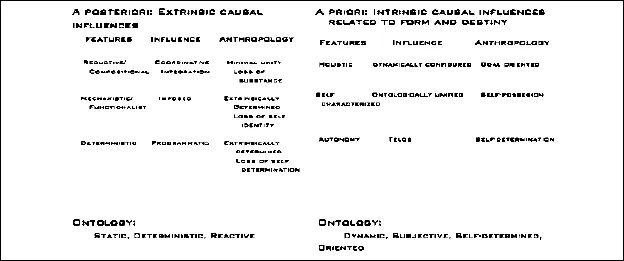
Table 1. Anthropology and Causal Architecture in Neuroscience: Privileging Process over Hierarchy - A posteriori vs a priori Explananda.
The application of a posteriori explananda to higher cognition, however, is increasingly challenged by observations of global neuroscientific phenomena that are inconsistent with interpretations advanced by the mechanist model and that are more consilient with explanations entailing an a priori metaphysical configuring of the human being. This paper will contrast these latter observations with neuroscientific data often used for adducing a mechanist thesis to argue for the presence of a self-organizing principle that is mediated autonomously through the engagement in action, that is, as a dynamic locus of action origin.
REDUCTIONISM IN NEUROSCIENCE AND ITS INFLUENCE ON THE CONCEPTION OF HUMAN UNITY
Heir to the Bacon – Descartes metaphysic modern philosophy of science accounts take as a point of departure a posteriori, efficient causal explanations in modeling cognition. Ramon de Cajal’s application of these explananda to neuroscience, especially, was decisive for their implementation in experimental research and for confirming their validity as neuroscience’s primary interpretive vehicle. Using the silver staining technique developed by Golgi for selectively staining single neurons, his discovery of the cellular composition of the brain led him to conclude that nerve tissue was built up from cellular units termed neurons, a theory termed the Neuron Doctrine. According to this doctrine, the communication of neurons with one another was believed to yield the higher order processes of cognition that flowed from their interactions.
Cajal’s causal and reductive understanding of neural function subsequently dominated neuroscientific understanding in the mid 20th century era, which was devoted to clarifying the details of communication within and between neurons (figure 1) and remains the chief explanatory vehicle of the current 21st century era of big neuroscience and global function. Hodgkin and Huxley’s elucidation of the action potential, which enabled the neuron to send electrical signals to loci distant from the cell body, and Eccle’s characterization of interneuronal communication through vesicular release of neurotransmitters, constitute two frequently referenced demonstrations of efficient causal interactions in fundamental neural operation. Indeed, the explanatory success of a variety of similarly basic empirical discoveries has reinforced this conception, all of which illustrate the contiguous and extrinsic nature of associations that yield successive neural events.
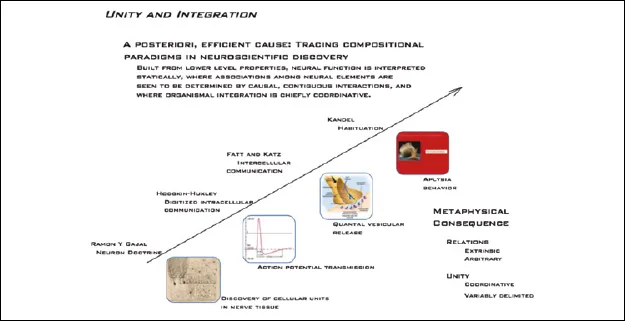
Figure 1. Neuroscience’s demonstration of efficient causal influences in basic cognitive events.
The confirmation of efficient causal influences in basic processes of neuroscientific operation, however, has also been upwardly extended in the assertion that large scale neural events are themselves mechanistically confined. This is illustrated, for example, in the understanding used to explicate the somatic integrity thesis, which advances a mechanistic claim on the body’s unification and has generally served as the philosophical linchpin for brain death assessments:
It has been established that the brain governs such mental functions as consciousness, intellectual activity, memory, emotions, etc. We also know today that it is from here that autonomously regulated functions such as respiration, blood pressure control, temperature control, digestion etc. are regulated. If all of these higher and lower functions of the brain are totally and irreversibly lost, the cohesion and coordination without which other organs of the body cannot function is also terminated. The intrinsically vital functions provided by the heart and other organs are wholly dependent on the cohesive and regulatory functions of the brain. (Swedish Committee on Defining Death, 1984).
As applied in Craver and Tabery’s approach to neural function (Craver and Tabery, 2017) – generally conceded to be a retrieval of the Cartesian, machine based, inertial contact paradigm – mechanisms do something, that is, they are productive of some event. Bechtel and Abrahamsen’s definition specifically links this generative dimension to the succession of causal priors said to achieve this end:
A mechanism is a structure performing a function in virtue of its component parts, component operations, and their organization, where the interaction between parts and the orchestrated functioning of the mechanism is responsible for one or more phenomena. (Bechtel and Abrahamsen, 2012, p. 423).
Mechanistic models of neural operation, accordingly, have been noted for their asymmetric and extrinsic understanding of causal flow (Machamer, Darden, and Craver, 2000). The archetypal model, for example, the action potential mechanism, is posited to induce synaptic vesicle release. Such induction is underpinned by the notion of continuity between cause and effect, since gaps would require additional factors as explanans (Bunge, 1979); hence, causal interactions are here seen to be extrinsic associations and to necessarily entail contiguity and temporal succession, features characteristic of efficient causal interactions.
Applied to large-scale neuronal events, neural phenomena have been similarly understood to flow from a causal nexus constituted, typically, by a suite of cognitive regulatory processes. For somatic integrity, the body has thereby been depicted as a cluster of organized systems unified by the brain’s regulation (Bernat, 2002). In this reading, the coherency and coordination of the body’s operation is thus regarded as indicative of unity, because coherency and coordination are understood to be effects precipitated from a causal nexus; that is, integration of the body is understood, as a matter of explanation, to require an asymmetric, causal succession in bodily events. Anatomically and physiologically the source of this integration is explicitly referenced to neural processes confined to the cranium.
Clinically, this has meant that death is assessed on the basis of whether the brain itself has entered a state of organ failure. Brain death, thereby, became the mode of praxis by which loss of the organ and individual death were equated. Though later adjusted to designate the functional loss of the whole of the organ, the premise that life, and so also organismal integration, depends operationally, if not intrinsically, on the brain is still maintained (Bernat, 2013). Directed to a single organ within the individual, this clinical focus has had the conceptual and diagnostic effect of segregating domains of the body; that is, the brain from the body’s remainder – functionally, hierarchically, and normatively. In the words of James Bernat, chief architect of the philosophical rationale for the somatic integrity thesis, the brain constituted «the critical system of the body», without which the «whole» represented a collection of independent and discordant elements (Bernat 1982, 2002, 2013). The brain has thus been held to be conceptually, as well as biologically, essential for philosophical coherence in clinical praxis. The divorce, however, has effectively created a chasm between the two in which the brain has assumed a regulatory and determinative role and the remainder is relegated to a dependency on the brain’s vital operation.
Analogously, other higher order neural operations have also been regarded as mechanistic, tracing their regulation to causal nexi within the brain. To avoid the explanatory circularity implicit in efficient, contiguous associations – neural feedback, for instance – such operations are typically parceled into functionally discrete categories, which are then investigated independent of their relation to global behavior. As a matter of praxis, mechanistic models are thus constructed by segregating higher order behaviors from the brain’s global operation, the latter conceived as having extrinsic oversight.
Perception, for example, has been widely understood to be an extrinsic operation by which the brain independently generates representations of the world; that is, such representations are regarded as causally and extrinsically constructed by the brain, a posteriori. While evidence of top down influences on the awareness of perception have been shown to occur, e.g., attentional regulation (Posner, 2012), top down influences are here claimed to extend to a manipulation of the nature of such representations, yielding only loosely or even unrelated representations of the external world. This is also to say that what is perceived to be «out there» in the external world is understood to be interpretively managed solely by the brain, a position endorsed not only in modern neuroscience but one also inherited as a historical legacy from the Idealist philosophers who succeeded Bacon and Descartes. Francis Crick, for example, has been unequivocal: «What you see is not what is really there, it is what your brain believes is there» (Fuchs, 2018, p. 3). Given the supposition that the brain regulates perceived events independent of their external reality, this has had the deductive consequence of laying perception open to an unknown and highly variable account of such reality. Metzinger is notable for extending this notion to its logical extreme,
Conscious experience is like a tunnel ... first our brains generate a world simulation, so perfect that we do not recognize it ... and then a construct of o...
Table of contents
- Portada
- Textro de contraportada
- Página de Créditos
- Índice
- Prólogo
- Ponencias
- Naturalism and the Disciplines
- The Narrative as a Means to Make The Video Game a Person-Centered Learning Experience
- Psicología y Antropología cristiana. Consideraciones epistemológicas a la luz de las enseñanzas del magisterio
- Espiritualidad en el arte abstracto y el espacio vacío
- Desigualdad estructural en la época de la revolución digital
- Inteligencia artificial, quo vadis?
- The Appeal to Techne: Myopia in Modern Neuroscience’s Anthropological Vision
- Neuromejoramiento humano. Cerebro, mente y trascendencia
- La formación del docente: aportación de las Ciencias y de la Antropología
- Devenir y libertad. Reflexiones desde el pensamiento educativo de Romano Guardini
- Forgiveness Therapy: The Intersection of Mental Health Practice, Science, Philosophy, and Theology
Trusted by 375,005 students
Access to over 1.5 million titles for a fair monthly price.
Study more efficiently using our study tools.
Frequently asked questions
Yes, you can cancel anytime from the Subscription tab in your account settings on the Perlego website. Your subscription will stay active until the end of your current billing period. Learn how to cancel your subscription
No, books cannot be downloaded as external files, such as PDFs, for use outside of Perlego. However, you can download books within the Perlego app for offline reading on mobile or tablet. Learn how to download books offline
Perlego offers two plans: Essential and Complete
- Essential is ideal for learners and professionals who enjoy exploring a wide range of subjects. Access the Essential Library with 800,000+ trusted titles and best-sellers across business, personal growth, and the humanities. Includes unlimited reading time and Standard Read Aloud voice.
- Complete: Perfect for advanced learners and researchers needing full, unrestricted access. Unlock 1.5M+ books across hundreds of subjects, including academic and specialized titles. The Complete Plan also includes advanced features like Premium Read Aloud and Research Assistant.
We are an online textbook subscription service, where you can get access to an entire online library for less than the price of a single book per month. With over 1.5 million books across 990+ topics, we’ve got you covered! Learn about our mission
Look out for the read-aloud symbol on your next book to see if you can listen to it. The read-aloud tool reads text aloud for you, highlighting the text as it is being read. You can pause it, speed it up and slow it down. Learn more about Read Aloud
Yes! You can use the Perlego app on both iOS and Android devices to read anytime, anywhere — even offline. Perfect for commutes or when you’re on the go.
Please note we cannot support devices running on iOS 13 and Android 7 or earlier. Learn more about using the app
Please note we cannot support devices running on iOS 13 and Android 7 or earlier. Learn more about using the app
Yes, you can access III Diálogo entre las ciencias, la filosofía y la teología. Volumen I by María Lacalle in PDF and/or ePUB format, as well as other popular books in Philosophy & Education Theory & Practice. We have over 1.5 million books available in our catalogue for you to explore.