Lots of varied activities facilitate learning.Relevant and interesting content.All key concepts are thoroughly explained.
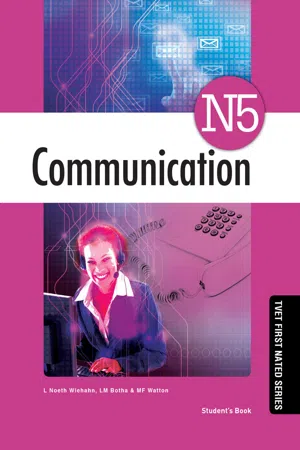
- 265 pages
- English
- PDF
- Available on iOS & Android
eBook - PDF
About this book
Trusted by 375,005 students
Access to over 1.5 million titles for a fair monthly price.
Study more efficiently using our study tools.
Information
Table of contents
- Cover page
- Title page
- Copyright page
- Contents
- Module 1: Organisational communication
- Unit 1.1: Corporate culture
- Unit 1.2: External communication
- Unit 1.3: Internal communication
- Unit 1.4: Organisational hierarchy
- Unit 1.5: Formal communication channels
- Unit 1.6: Briefing
- Unit 1.7: Intervention
- Unit 1.8: Informal communication channels
- Unit 1.9: Work ethics
- Module 2: Formulation of aims and objectives
- Unit 2.1: Aims and objectives
- Unit 2.2: Determining aims and objectives
- Unit 2.3: Evaluating aims and objectives
- Unit 2.4: Time management
- Module 3: Media communication and advertising
- Unit 3.1: The main mass media
- Unit 3.2: Communication process employed by the mass media
- Unit 3.3: Functions of the mass media
- Unit 3.4: The language employed by the mass media
- Unit 3.5: Manipulative reporting
- Unit 3.6: Propaganda
- Unit 3.7: Advertising in the mass media
- Unit 3.8: Requirements for effective advertising
- Unit 3.9: Important aspects in the design of an advertisement
- Module 4: Presentation communication
- Unit 4.1: Introduction
- Unit 4.2: Purpose of speech-making
- Unit 4.3: Factors to consider in the preparation of a speech
- Unit 4.4: Preparing a speech
- Unit 4.5: Coping with nervous tension
- Unit 4.6: Non-verbal aspects determining the success of a speech
- Unit 4.7: Applicable language usage
- Unit 4.8: Visual aids
- Unit 4.9: Occasional speeches
- Unit 4.10: Actions to promote goodwill
- Module 5: Multicultural communication in the business world
- Unit 5.1: Introduction
- Unit 5.2: Cultural differences which may influence communication
- Unit 5.3: Language barriers
- Unit 5.4: Clues to unsuccessful communication
- Unit 5.5: Developing multicultural communication skills
- Unit 5.6: Corporate culture
- Module 6: Language usage
- Unit 6.1: Core notes
- Unit 6.2: Précis writing
- Unit 6.3: Subjective and objective language usage
- Module 7: Concise communication
- Unit 7.1: Telephone message
- Unit 7.2: Fax
- Unit 7.3: Telegram
- Unit 7.4: Memorandum (short)
- Unit 7.5: Formal invitations
- Unit 7.6: Notices on bulletin boards
- Unit 7.7: Simple display advertisement
- Unit 7.8: Compile a simple questionnaire
- Unit 7.9: Use of simple graphic material
- Module 8: Letters
- Unit 8.1: Invitation to a guest speaker
- Unit 8.2: Reply to an unsuccessful application
- Unit 8.3: Letter to the press
- Unit 8.4: Sales letter
- Unit 8.5: Circular
- Module 9: Meeting procedure
- Unit 9.1: Notices, agendas and minutes of committee meetings and monthly general meetings
- Unit 9.2: Notice and agenda of annual general meetings of clubs and associations
- Module 10: Reports
- Unit 10.1: Introduction to reports
- Unit 10.2: Investigation reports
- Unit 10.3: Progress reports
- Unit 10.4: Feedback reports
- Module 11: Critical evaluation ofauditive, visual and written material, and editing of written material
- Unit 11.1: Written communication
- Unit 11.2: Layout, design and content
- Unit 11.3: Choice of words
- Unit 11.4: Sound, colour and image
- Unit 11.5: Reference works
- Module 12: Oral communication
- Unit 12.1: Voice control
- Unit 12.2: Non-verbal communication
- Unit 12.3: Presentation of a written report or a task
- Unit 12.4: Interviews
- Unit 12.5: Conduct at meetings
- Unit 12.6: Development of listening skills
- Bibliography
- Glossary
- Abbreviations/acronyms
- Back cover
Frequently asked questions
Yes, you can cancel anytime from the Subscription tab in your account settings on the Perlego website. Your subscription will stay active until the end of your current billing period. Learn how to cancel your subscription
No, books cannot be downloaded as external files, such as PDFs, for use outside of Perlego. However, you can download books within the Perlego app for offline reading on mobile or tablet. Learn how to download books offline
Perlego offers two plans: Essential and Complete
- Essential is ideal for learners and professionals who enjoy exploring a wide range of subjects. Access the Essential Library with 800,000+ trusted titles and best-sellers across business, personal growth, and the humanities. Includes unlimited reading time and Standard Read Aloud voice.
- Complete: Perfect for advanced learners and researchers needing full, unrestricted access. Unlock 1.5M+ books across hundreds of subjects, including academic and specialized titles. The Complete Plan also includes advanced features like Premium Read Aloud and Research Assistant.
We are an online textbook subscription service, where you can get access to an entire online library for less than the price of a single book per month. With over 1.5 million books across 990+ topics, we’ve got you covered! Learn about our mission
Look out for the read-aloud symbol on your next book to see if you can listen to it. The read-aloud tool reads text aloud for you, highlighting the text as it is being read. You can pause it, speed it up and slow it down. Learn more about Read Aloud
Yes! You can use the Perlego app on both iOS and Android devices to read anytime, anywhere — even offline. Perfect for commutes or when you’re on the go.
Please note we cannot support devices running on iOS 13 and Android 7 or earlier. Learn more about using the app
Please note we cannot support devices running on iOS 13 and Android 7 or earlier. Learn more about using the app
Yes, you can access Communication N5 SB by M Watton, L Botha, L Wiehahan in PDF and/or ePUB format, as well as other popular books in Business & Business General. We have over 1.5 million books available in our catalogue for you to explore.