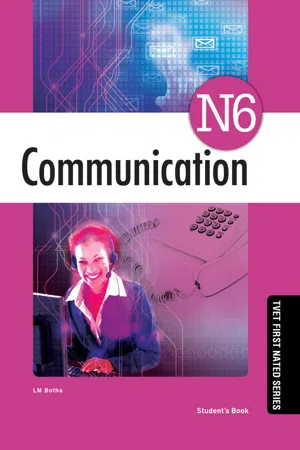
Easy-to-follow learning materials at just the right level for students.Lots of practical activities to prepare students for exams and for the working world.Relevant case studies encourage students to apply their learning.
eBook - PDF
About this book
Trusted by 375,005 students
Access to over 1.5 million titles for a fair monthly price.
Study more efficiently using our study tools.
Information
Table of contents
- Cover page
- Title page
- Copyright page
- Contents
- Module 1: Motivation
- Unit 1.1: Definition of motivation
- Unit 1.2: Degree of motivation in terms of various aspects
- Unit 1.3: Nature of motives or needs
- Unit 1.4: Factors that influence motivation in the workplace
- Unit 1.5: Influence of motivation on communication
- Module 2: Problem-solving and decision-making
- Unit 2.1: Definition
- Unit 2.2: Interdependence of the two concepts
- Unit 2.3: The role of communication
- Unit 2.4: General decision-making process
- Unit 2.5: Stages in the problem-solving process
- Unit 2.6: Alternative solutions
- Unit 2.7: Deciding on the best solutions
- Unit 2.8: Implementation of the solution and follow-up
- Module 3: Coping with conflict
- Unit 3.1: Definitions of conflict and stress
- Unit 3.2: Modern view of conflict
- Unit 3.3: Functional and dysfunctional conflict
- Unit 3.4: Different types of conflict
- Unit 3.5: Causes of conflict
- Unit 3.6: Consequences of conflict
- Unit 3.7: Coping with conflict
- Unit 3.8: Formal mechanisms for resolving conflict
- Unit 3.9: Coping with stress
- Module 4: Interviews
- Unit 4.1: The definition of the interview procedure and its elements
- Unit 4.2: Employment interview
- Unit 4.3: Psychological aspects of the employment interview
- Unit 4.4: Types of employment interviews
- Unit 4.5: Characteristics of a good interviewer
- Unit 4.6: Hints for the interviewer in the interview situation
- Unit 4.7: Phases of the employment interview
- Unit 4.8: Hints for the applicant
- Unit 4.9: Types of interview questions
- Unit 4.10: Common interview mistakes
- Unit 4.11: Criteria for evaluating applicants
- Unit 4.12: Radio and television interviews
- Unit 4.13: Types of radio and television interviews
- Unit 4.14: Guidelines for the interviewee
- Unit 4.15: Guidelines for the interviewer
- Module 5: Language usage
- Unit 5.1: Extension and reduction of core notes
- Unit 5.2: Précis writing
- Unit 5.3: Subjective and objective language usage
- Unit 5.4: Direct and indirect speech; active and passive voice
- Unit 5.5: Use of graphic material
- Module 6 : Concise communication
- Unit 6.1: Telephone message
- Unit 6.2: Facsimile (fax)
- Unit 6.3: Telegram
- Unit 6.4: Memorandum
- Unit 6.5: Formal invitations
- Unit 6.6: Notices on notice boards
- Unit 6.7: Simple display advertisement
- Unit 6.8: Programmes
- Module 7: Letters
- Unit 7.1: N4 and N5 correspondence revised
- Unit 7.2: Goodwill correspondence
- Unit 7.3: Press release
- Module 8: Meeting procedure
- Unit 8.1: Notices and agendas
- Unit 8.2: Minutes
- Module 9: Reports
- Unit 9.1: Investigative reports
- Unit 9.2: Progress and feedback reports
- Module 10: Critical evaluation of auditory, visual and written material and editing of written material
- Unit 10.1: Written communication
- Unit 10.2: Layout, design and content
- Unit 10.3: Choice of words
- Unit 10.4: Sound, colour and image
- Unit 10.5: Reference works
- Module 11: Oral communication
- Unit 11.1: Voice control
- Unit 11.2: Non-verbal communication in different situations
- Unit 11.3: Presentation of written report or task accomplished
- Unit 11.4: Interview
- Unit 11.5: Conduct at meeting(s)
- Module 12: Development of listening skills
- Unit 12.1: Development of listening skills
- Unit 12.2: Pronunciation
- Glossary
- Acronyms
- Bibliography
- Back cover
Frequently asked questions
Yes, you can cancel anytime from the Subscription tab in your account settings on the Perlego website. Your subscription will stay active until the end of your current billing period. Learn how to cancel your subscription
No, books cannot be downloaded as external files, such as PDFs, for use outside of Perlego. However, you can download books within the Perlego app for offline reading on mobile or tablet. Learn how to download books offline
Perlego offers two plans: Essential and Complete
- Essential is ideal for learners and professionals who enjoy exploring a wide range of subjects. Access the Essential Library with 800,000+ trusted titles and best-sellers across business, personal growth, and the humanities. Includes unlimited reading time and Standard Read Aloud voice.
- Complete: Perfect for advanced learners and researchers needing full, unrestricted access. Unlock 1.5M+ books across hundreds of subjects, including academic and specialized titles. The Complete Plan also includes advanced features like Premium Read Aloud and Research Assistant.
We are an online textbook subscription service, where you can get access to an entire online library for less than the price of a single book per month. With over 1.5 million books across 990+ topics, we’ve got you covered! Learn about our mission
Look out for the read-aloud symbol on your next book to see if you can listen to it. The read-aloud tool reads text aloud for you, highlighting the text as it is being read. You can pause it, speed it up and slow it down. Learn more about Read Aloud
Yes! You can use the Perlego app on both iOS and Android devices to read anytime, anywhere — even offline. Perfect for commutes or when you’re on the go.
Please note we cannot support devices running on iOS 13 and Android 7 or earlier. Learn more about using the app
Please note we cannot support devices running on iOS 13 and Android 7 or earlier. Learn more about using the app
Yes, you can access Communication N6 SB by LM Botha in PDF and/or ePUB format, as well as other popular books in Business & Business General. We have over 1.5 million books available in our catalogue for you to explore.