Ursula Hackett's tried-and-tested approach for essay success helps students to create brilliant, original, high-scoring essays that are enjoyable to write – and read.With dozens of hands-on exercises and clear examples, Brilliant Essays begins with students' everyday experience of using language, arguing a case, reading, thinking, and communicating with other people.Chapters help students to examine – and dispel – assumptions, build and control their arguments and use evidence effectively, in written assignments and timed exams. The final chapter provides clear, no-nonsense answers to frequently asked questions raised by Ursula's students at Royal Holloway, University of London and the University of Oxford and via her YouTube channel and website.
Whichever subject your students study, Brilliant Essays will take them beyond the basics and give them the tools to reach their academic potential.
eBook - ePub
Brilliant Essays
About this book
Information
Topic
Study AidsSubtopic
Study GuidesCHAPTER
1
Examining Assumptions in Questions
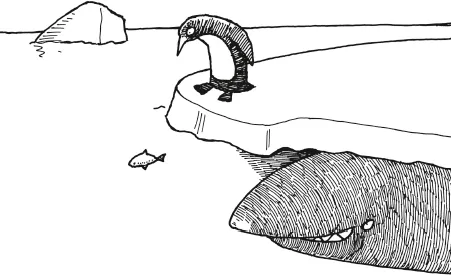
All advice about how to write essays urges you to read the question, but what does read the question really mean? Skimming isn’t enough. You need to take your time. Define the key concepts, think about how they relate to one another and root out any assumptions the question is making. ‘Read the question’ means read the question critically – that is, actively evaluate the question and come to an informed judgement about it.
Reading the question involves spending enough time working out what the question is really asking you to do, instead of leaping in with a response prematurely. I expect you know this already. I am sure you also know that you must define the main terms of the question. In my experience, university students – including very clever ones – already know what they need to do in general but don’t always apply what they know to their own work. It is one thing to know these things in the abstract but quite another to put them into practice. This chapter provides some techniques to help you to read the question critically.
Finding an assumption lurking beneath the surface
One way to read the question critically is to consider whether the question contains any underlying assumptions: propositions that are accepted without proof, hidden in the background, and that may not be immediately obvious to the casual reader. Exposing those assumptions and examining them explicitly can help turn a so-so essay into a brilliant one. It can be an exciting intellectual exercise and an excellent way to read a question critically.
Rooting out these underlying statements starts with something called implicature. Implicature is a proposition that is implied by a question or statement but not stated explicitly. Don’t be disturbed by the fancy word; implicature is all around us in everyday speech. For instance, if I were to ask you:
Does Emma still work as reptile keeper at the zoo?
The word still indicates an underlying implication. In other words, this question is based on an assumption.
Assumption: Emma used to work as reptile keeper at the zoo.
When we use the word ‘still’ in English, we imply that at some point in the past Emma did indeed work as reptile keeper at the zoo and perhaps that her service in that role has been continuous. The question at hand is whether or not she does so now. The answer to the question will be either ‘yes’ or ‘no’ but – additionally and entirely separately – that underlying assumption may or may not be true. Since I am using the word ‘still’, the chances are that we both know that assumption is correct. But if I am wrong, then it might be a good idea to correct that assumption.
Correcting the assumption: You are confusing Emma with Anna. Emma is a primatologist. She has never worked with reptiles. In fact, she hates them.
Another way to correct the assumption: Emma is trainee reptile keeper, but she got the job yesterday so she hasn’t been doing it long. She’s only just started.
The assumption arises as a result of a single word. If I had simply asked you (note the missing word):
Does Emma work as reptile keeper at the zoo?
Without the word ‘still’ in the question, there is no assumption about whether or not Emma has ever been a reptile keeper before. The focus is solely on the present.
Similarly, implicature can arise if I use the word ‘too’ or ‘also’. I could ask you:
Is Ben also a vegetarian?
There is a surface question here – I am asking if Ben is a vegetarian or not – but there is also an assumption (or several) underlying the question.
Assumption: Somebody else (probably someone we both know) is a vegetarian.
Or: There is at least one other vegetarian.
Or: You are a vegetarian.
These assumptions may or may not be true, and the precise nature of the assumption is usually clear from the context of utterance. If I come up to you while you’re loading your plate with tofu and ask:
Is your brother a vegetarian too?
Then, in addition to asking you a question about your brother, I have probably also implied that you are a vegetarian. Perhaps you’re not. Perhaps you are a carnivore who happens to enjoy coagulated soy milk.
Although we don’t often think about it explicitly, everyday speech is riddled with implicature. For instance, if I say ‘the problem with the cat is that it doesn’t know how to use the cat flap’, then my use of the definite article (‘the’) implies that there is just one problem and one cat and one cat flap. If we had several cats, I would most likely have identified it by name (Felix) or description (our fattest cat).
Typically, people converse politely and reasonably, so it is rare to spot an incorrect assumption. It might seem rude to interrupt the flow of the conversation to inform someone they have a faulty assumption; anyway, we can usually be confident that they are correct. In academic essays, however, the best stance is friendly but informed scepticism: start with an open mind and a willingness to question what you are being told, both explicitly and implicitly.
Implicatures such as the ones above often come up in essay questions too, so paying close attention to the wording of the question can help you to assess the question critically. For instance, you might be asked:
Do presidential election debates still matter?
Recall the implicature ‘still’ in the question: Does Emma still work as reptile keeper at the zoo? This question implies that presidential election debates used to matter, and it is asking you whether or not they matter now.
Assumption: Presidential election debates used to matter.
In other words, the question is: Do presidential election debates matter now?
Weaker answers to this question would ignore the assumption and simply list the ways in which presidential election debates do or do not ‘matter’. But the assumption underlying the question may be true or false, depending upon what is meant by ‘matter’ (Matter to whom? Matter in what way?) and the scope conditions of the argument (that is, its empirical boundaries). In this case, the conditions are temporal parameters (What period of time are we talking about? Televised presidential election debates started in 1960: how and when did they change? How far back in time does ‘now’ stretch?)
A cleverer approach would be to consider whether the assumption is true or not when responding to the question at hand. If the assumption is false, you should correct it.
One way to correct the assumption and answer ...
Table of contents
- Cover
- Half-Titlepage
- Seriespage
- Titlepage
- Copyright
- Contents
- List of ‘have a go’ exercises
- Acknowledgements
- Introduction: The Challenge of Writing Brilliant Essays
- Chapter 1 Examining Assumptions in Questions
- Chapter 2 Finding Comparator Classes in Questions
- Chapter 3 Interrogating Tensions in Questions
- Chapter 4 The Introduction Scale
- Chapter 5 Controlling Your Argument
- Chapter 6 Writing Elegantly
- Chapter 7 Using Empirical Evidence Effectively
- Chapter 8 Syllogisms and Summaries
- Chapter 9 Losing the Training Wheels
- Chapter 10 Reading Critically
- Chapter 11 Examination Preparation
- Chapter 12 Frequently Asked Questions
- Conclusion: Techniques for Writing Brilliant Essays
- Answers
- References
- Index
Trusted by 375,005 students
Access to over 1.5 million titles for a fair monthly price.
Study more efficiently using our study tools.
Frequently asked questions
Yes, you can cancel anytime from the Subscription tab in your account settings on the Perlego website. Your subscription will stay active until the end of your current billing period. Learn how to cancel your subscription
No, books cannot be downloaded as external files, such as PDFs, for use outside of Perlego. However, you can download books within the Perlego app for offline reading on mobile or tablet. Learn how to download books offline
Perlego offers two plans: Essential and Complete
- Essential is ideal for learners and professionals who enjoy exploring a wide range of subjects. Access the Essential Library with 800,000+ trusted titles and best-sellers across business, personal growth, and the humanities. Includes unlimited reading time and Standard Read Aloud voice.
- Complete: Perfect for advanced learners and researchers needing full, unrestricted access. Unlock 1.5M+ books across hundreds of subjects, including academic and specialized titles. The Complete Plan also includes advanced features like Premium Read Aloud and Research Assistant.
We are an online textbook subscription service, where you can get access to an entire online library for less than the price of a single book per month. With over 1.5 million books across 990+ topics, we’ve got you covered! Learn about our mission
Look out for the read-aloud symbol on your next book to see if you can listen to it. The read-aloud tool reads text aloud for you, highlighting the text as it is being read. You can pause it, speed it up and slow it down. Learn more about Read Aloud
Yes! You can use the Perlego app on both iOS and Android devices to read anytime, anywhere — even offline. Perfect for commutes or when you’re on the go.
Please note we cannot support devices running on iOS 13 and Android 7 or earlier. Learn more about using the app
Please note we cannot support devices running on iOS 13 and Android 7 or earlier. Learn more about using the app
Yes, you can access Brilliant Essays by Ursula Hackett in PDF and/or ePUB format, as well as other popular books in Study Aids & Study Guides. We have over 1.5 million books available in our catalogue for you to explore.