A free open access ebook is available upon publication. Learn more at www.luminosoa.org. While migration has become an all-important topic of discussion around the globe, mainstream literature on migrants' legal adaptationand integrationhas focused on case studies of immigrant communities in Western-style democracies. We know relatively little about how migrants adapt to a new legal environment in the ever-growing hybrid political regimes that are neither clearly democratic nor conventionally authoritarian. This book takes up the case of Russia—an archetypal hybrid political regime and the third largest recipients of migrants worldwide—and investigates howCentral Asianmigrant workersproduce new forms ofinformalgovernance and legal order. Migrants use the opportunities provided by a weak rule-of-law and a corrupt political systemto navigate the repressive legal landscape and to negotiate—using informal channels—access to employment and other opportunities that are hard to obtain through the official legal framework of their host country. This lively ethnography presents new theoretical perspectives for studying immigrant legal incorporation in similar political contexts.
eBook - ePub
Migration and Hybrid Political Regimes
Navigating the Legal Landscape in Russia
- English
- ePUB (mobile friendly)
- Available on iOS & Android
eBook - ePub
About this book
Information
Topic
Scienze socialiSubtopic
Criminologia1

Understanding Migrants’ Legal Adaptation in Hybrid Political Regimes
As a part of my transnational ethnography among Uzbek migrant workers in Moscow, Russia, and in their home village in Uzbekistan, on August 6, 2014, I traveled to the Fergana Valley of Uzbekistan, to a village I call “Shabboda,” from whence the majority of Uzbek migrants I met in Moscow originated. Shabboda is one of the many remittance-dependent villages in rural Fergana, where labor migration has become a widespread livelihood strategy in the post-Soviet period, a norm for young and able-bodied men. During the “migration season” (March to November) the majority of village inhabitants consist of elderly people, women, and children. In the words of villagers, Shabboda is a “Moscow village,” since the majority of villagers work in Moscow given the existence of village-specific networks there. Several villagers work as intermediaries in Moscow’s construction sector, serving as gatekeepers for villagers seeking access to the labor market. Young men who prefer to stay in the village during the migration season are usually viewed as lazy and abnormal by villagers, whereas those who work in Russia and regularly send money home enjoy higher social status and greater respect.
My field trip to Uzbekistan coincided with the introduction of the entry ban (zapret na v’ezd) legislation in Russia (2013–14), under which any foreign citizen who committed two administrative offenses within a three-year period received a three-year entry ban. By September of 2014, more than 1 million foreigners had already been banned from reentering Russia; the majority of those foreigners were citizens of Uzbekistan (Bobylov 2014). The effects of these legal interventions were already felt in Shabboda, since many migrants were stranded in the village and could not return to Russia after being issued an entry ban. I observed that daily conversations in the village’s “gossip hotspots” (e.g., the mosque, teahouse, at regular get-togethers, and weddings) revolved primarily around entry-banned migrants (zapreti borlar) and various informal strategies and tactics devised by migrants to reenter Russia. I was truly intrigued by these daily conversations and became interested in learning more about the informal strategies adopted by entry-banned migrants. I wondered whether it was indeed possible for entry-banned migrants to reenter Russia and, if so, how that process works, what informal strategies and tactics are employed to navigate around the entry-ban system, and the implications of these strategies and processes for understanding the functioning of the Russian migration regime.
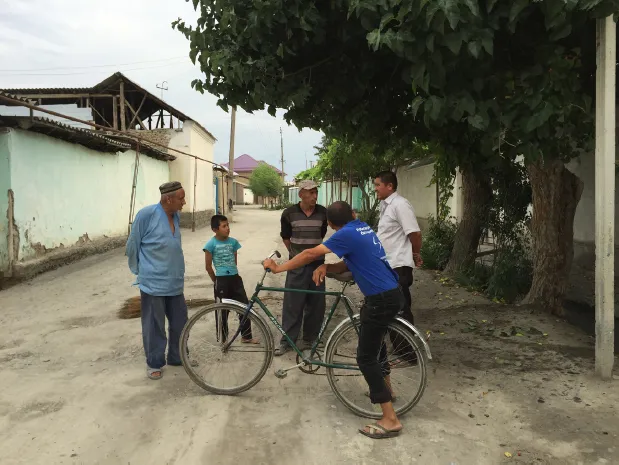
FIGURE 1. Everyday life in Shabboda village, rural Fergana, Uzbekistan. June 2016. Photo by author.
Reflecting on these questions, I was particularly interested in the informal strategies of three entry-banned migrants in the village—Alish (male, 32), Mamir (male, 35), and Tillo (male, 37)—individuals who were well-connected to different formal and informal institutions in Russia. Between 2008 and 2014, Alish worked as a caretaker at a dacha (summer cottage) in Rublevka, a prestigious residential area in the western suburbs of Moscow where many high-level Russian state officials, oligarchs, and successful businessmen reside. The owner of the dacha (Alish’s boss) was a high-level state official within the Russian Federal Security Service (FSB), the most powerful organization in the country. Owing to his six years of halol (honest) work at the dacha, Alish was able to establish a good relationship with his FSB boss and family members. When I asked Alish if his FSB connection could solve his entry-ban problem, he replied confidently that he had already contacted his boss, who assured him that his entry ban would be lifted quite soon. Once lifted, he could return to Moscow and continue working at the dacha.
Mamir’s case also intrigued me, given his connections to immigration officials. From 2009 until 2014 Mamir worked as a registraysiyachi (an informal intermediary in residence registration) at an air ticket office located near a metro station in the north of Moscow. In that position he primarily acted as a bridge between (a) migrant workers who needed a residence registration certificate and other immigration papers and (b) immigration officials who always sought opportunities to generate informal benefits from their “oily position.” This was where Mamir became acquainted with immigration officials who could, for an informal fee of US$700, help him enter Russia despite the existence of an entry ban. When I asked Mamir how his entry ban problem would be resolved, he replied that, in some cases, immigration officials might suspend someone’s entry-ban case for a few months by referring to ongoing legal proceedings or by appealing the ban in court. In such circumstances the entry ban is suspended in the databases of both the immigration service and the border control service, allowing the entry-banned migrant to enter Russia. Mamir believed that this strategy would work and enable him to reenter Russia in the near future.
Unlike Alish and Mamir, Tillo was not well-connected with Russian state officials but had strong connections with “street institutions,” such as racketeers, intermediaries, and smugglers. Between 2005 and 2014 Tillo worked at a wholesale bazaar in Moscow, selling Uzbek fruits and vegetables. Owing to his daily interactions with people from diverse backgrounds and social statuses Tillo also had friends from the “street world” who could put him in touch with reliable human smugglers operating at the Russia-Kazakhstan border. These smugglers would help him enter Russia through roundabout means. Given his contacts, Tillo appeared quite well-informed about how things work at the border, relaying that Russian border guards and human smugglers act as accomplices and jointly organize migrants’ illegal border crossings. Tillo even knew about the existence of the so-called plan system, where Russian border guards ignored and facilitated illegal border-crossing operations during the first two weeks of each month (from the first until the 15th), while those migrants who cross the border illegally during the second half of the month were usually caught and arrested to serve as indicators of the effectiveness of border control measures. In Tillo’s words Russian border guards worked for the well-being of their “families and children” during the first two weeks of each month, and after the 15th of the month they worked for the government, catching all migrants illegally entering Russia. Owing to his influential “street contacts,” Tillo was confident that he would be able to return to Russia within a few months.
After a nine-month break I returned to Moscow for a follow-up fieldwork visit from July 19 through August 15, 2015. On arriving in Moscow, I first determined whether the three entry-banned migrants I had met in Fergana were actually able to return to Moscow. Much to my surprise, all three of them—Alish, Mamir, and Tillo—were already back in Moscow and working at the same jobs they had held before being banned from entry. Eager to learn more about their adventures, I invited them for dinner at an Uzbek café in Moscow’s Medvedkovo district. During my conversation with them I learned that the strategies they mentioned to me a year previously did actually work and helped secure their reentry into Russia. Following their reentry into Russia via semilegal or illegal channels, all three of them “legalized” their work and residence status through the Kazansky vokzal, a very popular “migrant legalization” site situated in Moscow’s Kazansky railway station. At this site it is possible to obtain virtually all types of illegal and semilegal documents, including fake (fal’shivka), “clean fake” (chistaya fal’shivka), and “almost clean” (pochti chistiy) residence registrations and work permits, as well as fake Russian and Kyrgyz, Tajik, and Uzbek passports. Since all three of these migrants lacked authentic immigration documents, I wondered how they organized their daily life and avoided surveillance from police officers and immigration officials scattered across Moscow. When I asked them whether they ran the risk of being deported if they were caught by the authorities, they laughed sarcastically and said, “Russia is a land of opportunities if you know the street rules and have the right amount of money when stopped by police officers.” Yet, seeing my puzzled face, they quickly noticed my poor understanding of the “street life” and shared an anecdote about “Putin and the golden fish.” This anecdote slyly hinted at the near impossibility of immigration control in the Russian legal context, a context predicated on ubiquitous corruption and a weak rule of law:
There is an anecdote widely circulated among Uzbek migrants in Russia. Once upon a time, Putin, the President of Russia, went fishing. Putin cast his net and luckily pulled out a golden fish. Not wanting to die, the golden fish pled for its life, promising three wishes in return. But Putin laughed and said that he wanted neither wealth nor power and said that he had just one wish. He promised to let the fish go if it fulfilled his wish. The golden fish became happy and asked for his wish. Putin said, “I neither need wealth nor power. I want you to send all Uzbek migrants to their homeland. All organizations responsible for immigration control—that is, immigration service, the police, and the border guards—are corrupt and want to keep migrants in Russia because migrants are the source of wealth for them. If you help me get rid of Uzbek migrants, I will free you and you can enjoy your life.” The golden fish’s heart sank when it heard Putin’s wish, and it fell into deep thought. “I am very sorry, but I cannot fulfill this wish, brother Putin,” said the golden fish. Putin became angry and asked why the fish could not fulfill it. The golden fish replied, “It’s because I am a migrant too. Originally, I am from Syrdaryo, the second largest river in Uzbekistan.”
To my mind, my field observations refined many of my initial assumptions about how migrants establish a relationship with the law in Russia. The above empirical examples suggest that migrants’ legal adaptation to weak rule-of-law migration contexts such as Russia’s should not be merely understood in terms of migrants’ knowledge of immigration laws, their legal status, and legalization strategies. Instead, that adaptation should also be examined in terms of their knowledge of the informal rules, street laws, and their capacity to negotiate with informal channels. Despite the existence of draconian immigration laws and border control infrastructure, combined with ever-increasing antimigrant sentiments within Russian society, I found that migrant workers continued to live and work under the conditions of a shadow economy. Even the behavior of state officials overseeing immigration laws and policies (e.g., immigration officials, border guards, and the police) was driven more by informal norms and practices than by state law. Consequently, rather than complying with immigration laws that are rarely followed by Russian state officials, migrants have actually produced new forms of informal governance and a legal order that provides alternative means of legal adaptation. These alternatives allow migrants to regulate their working lives and navigate around structural constraints, such as complicated residence registration and work permit rules, racism, and the lack of a social safety net. Furthermore, this navigation implies that informal and illegal practices in weak rule-of-law migration contexts may actually enable migrants to escape the constraints imposed by the immigration laws and policies (Garcés-Mascareñas 2010; Reeves 2013; Dave 2014a; Urinboyev and Polese 2016; Schenk 2018).
The above field observations thus lead us to the main goal of this book, which is intended to contribute new theoretical and empirical insights into scholarly debates on migrants’ legal adaptation and integration. In doing so, this study is conceived as a critical reflection on the dominant migrant legal adaptation and integration literature (and, more generally, migration studies scholarship), which is still based largely on case studies of immigrant communities in Western-style democracies, such as Australia, Canada, France, Germany, the United Kingdom, and the United States (Castles and Miller 2013). While the dominant frameworks provide useful insight toward understanding migrants’ experiences in a new legal environment, they have limited utility when applied in the context of non-Western, nondemocratic migrant-receiving contexts. Consequently, in spite of the large diversity of scholarly explanations for, and approaches to, explaining the diverse patterns of migrant legal adaptation and incorporation, we know relatively little about how migrants adapt to a new legal environment in the ever-growing hybrid political regimes that are neither clearly democratic nor conventionally authoritarian (Diamond 2002; Levitsky and Way 2002; Goode 2010a). As Reeves (2013) maintains, this lacuna can be explained in part by the ongoing legacies of the “three-worlds division” of social-scientific labor (Pletsch 1981; Chari and Verdery 2009) that tend to focus on Global South–North migrations, whereas migration processes in hybrid regimes such as Russia (“non-Western migration regimes,” broadly conceived) remain underrepresented in comparative and theoretical debates about contemporary migration regimes. At the same time, hybrid political regimes have been traditionally viewed as exporters of migrant workers to Western Europe, North America, and Australia (Castles and Miller 2013); their role as a recipient of migrant workers from other countries has been obscured. Addressing this research gap is especially important when considering the fact that hybrid regimes such as Russia, Kazakhstan, Malaysia, Singapore, and Turkey, as well as other nondemocratic contexts such as the Gulf States, have become key “migration hotspots” worldwide because of their improved economic conditions, receiving an increasing number of migrants with either low qualifications, no legal right to work or stay, or simply lacking the skills to quickly integrate into local job markets (Garcés-Mascareñas 2010; Anderson and Hancilová 2011; Tolay 2012; Heusala and Aitamurto 2016). The need for empirically grounded knowledge of these relatively understudied migratory flows, as well as the necessity to understand their implications for (Western-centric) migration theories, is thus, from this perspective, substantial.
Migrant legal adaptation is not uniform everywhere but rather holds different meanings, forms, and functional roles depending on sociopolitical context, legal environment, economic system, and various cultural factors. The comparative political-regimes literature demonstrates the rapid proliferation of hybrid political regimes worldwide, stretching from postcommunist Eurasia to sub-Saharan Africa (Diamond 2002). Unlike classic authoritarian regimes, such as North Korea or Turkmenistan, which brutally suppress any form of opposition, hybrid regimes display some elements of political competition and regularly hold presidential and parliamentary elections. But unlike Western-style liberal democracies in which culture of the rule of law is strong and presumed to be the standard of governance, political competition under hybrid regimes remains heavily shaped by an authoritarian culture, the rule of law remains quite weak, formal institutions are dysfunctional, informal governance and corruption are prevalent, and independent civil society institutions are heavily controlled or banned altogether (Robertson 2007; Wigell 2008; Gilbert and Mohseni 2011).
Given the differences in state-society relations, governance, and legal cultures, we cannot assume that immigrant integration and adaptation frameworks constructed in Western contexts apply within the context of hybrid political regimes, where migrants do not experience the “rule-of-law” and functional institutions but must navigate around the corrupt legal system and produce new forms of informal governance and legal orders. A closer empirical investigation of these processes may lead to new theoretical insights on migrants’ legal adaptations to non-Western migration locales and, more broadly, on the functioning of the social fabric involving state actors, nonstate legal orders, and migrants in the law-and-order chain. Ultimately, this book argues that in hybrid-regime contexts migrants are not passive entities; instead, migrants do have agency, and they use that agency and the opportunities provided by a weak rule of law and a corrupt political system to navigate the legal landscape using informal channels to access employment and other opportunities that are limited (to those with legal status) or hard to obtain in the current legal framework of the host country. Based on these propositions, I explore the following questions in this book: How do migrants build relationships with the law and law-like informal orders in hybrid political regimes? What factors incite them to disengage from the formal legal system and, thereby, produce new forms of informal governance and legal order to organize their daily lives? How does migrants’ legal culture (e.g., premigratory social norms, religious values, daily transnational practices, attitudes toward the law, and interpretations of legality and illegality) shape their legal adaptation patterns and strategies in a new environment? How, why, and when do migrants resort to informal channels and adaptation strategies? What theoretical implications do such “outside the nation-state law” processes have for the dominant [Western-centric] immigrant integration and adaptation frameworks in general and, more specifically, for the sociolegal perspectives on migrants’ legal adaptation and incorporation?
I investigate these questions through a multisited transnational ethnography of Uzbek migrant workers in Moscow, Russia, and in their home village in Uzbekistan’s Fergana Valley. I focus on Russia because it represents the archetypal hybrid political regime (Diamond 2002; Levitsky and Way 2002) and because it is one of the five largest recipients of migrants worldwide. Yet Russia remains relatively underrepresented in comparative and theoretical debates about contemporary migration regimes. Hence, analyzing migrant legal adaptation in a context of this type is of huge importance, given our need to bridge the knowledge gap on the topic, whereby current studies are limited to the analysis of immigration communities in Western-style democracies. The novel sociolegal lens put forth in this book—that is, that we must examine not only the limitations of the legal system but the unintended consequences of it that empower the agency of migrants to navigate the system—enables us to go beyond the Western-centric scholarship on contemporary migration regimes. With these considerations in mind, I provide in the next section of this chapter a review of dominant (Western-centric) frameworks and approaches to understanding migrants in a new legal environment. I focus on (1) assimilation, acculturation, and integration; (2) transnationalism; (3) premigratory cultural legacies as a factor in understanding migrants in their new environment; and (4) sociolegal perspectives on studying migrants in the host country. Emphasizing the relevance and usefulness of these frameworks for explaining migrants’ integration into and adaptation to a new legal environment, I argue that their analytical applicability is limited in terms of fully understanding migrants’ legal adaptation to nondemocratic, weak rule-of-law contexts.
UNDERSTANDING MIGRANTS IN A NEW LEGAL ENVIRONMENT: DOMINANT FRAMEWORKS AND APPROACHES
As outlined in the previous section, much of the scholarly literature on migrant adaptation and integration (both historical and current literature) relies on case studies of immigrant communities living in Western-style democracies. This is especially true for the United States, which represents the main source of research on the theme of immigrant incorporation and adaptation (Gordon 1964; Park 1964; Portes and Zhou 1993; Portes and Rumbaut 2006; Alba and Nee 2009). Extensive literature also focuses on immigrant adaptation in Australia, Canada, continental Europe (e.g., France, Germany, Italy, and Spain), and the United Kingdom (Sayegh and Lasry 1993; Brubaker 2003; Colic‐Peisker and Walker 2003; Robinson 2005; Alencar and Deuze 2017). These trends can be explained by the fact that Australia, Canada, and the United States have long stood as the “established countries of immigration,” while many countries of Western Europe received large numbers of immigrants because of their colonial legacy and guest worker programs in the post–World War II period (Castles and Miller 2013). Given these circumstances, it is not surprising that the dominant frameworks of immigrant adaptation—namely, assimilation, acculturation, and integration—were originally constructed with reference to the experiences of immigrant communities in Western-style democracies.
The assimilation theory, ba...
Table of contents
- Cover
- Title
- Copyright
- Contents
- Acknowledgments
- Note on Transliteration and Naming
- 1. Understanding Migrants’ Legal Adaptation in Hybrid Political Regimes
- 2. Migration, the Shadow Economy, and Parallel Legal Orders in Russia
- 3. Uzbek Migrant Workers in Russia: A Case Study
- 4. Uzbek Migrants’ Everyday Encounters with Employers and Middlemen
- 5. Uzbek Migrants’ Everyday Encounters with Street-Level Institutions
- 6. Uzbek Migrants’ Everyday Encounters with Police Officers and Immigration Officials
- 7. The Life Histories of Three Uzbek Migrant Workers in Russia
- 8. Informality, Migrant Undocumentedness, and Legal Adaptation in Hybrid Political Regimes
- Notes
- References
Trusted by 375,005 students
Access to over 1.5 million titles for a fair monthly price.
Study more efficiently using our study tools.
Frequently asked questions
Yes, you can cancel anytime from the Subscription tab in your account settings on the Perlego website. Your subscription will stay active until the end of your current billing period. Learn how to cancel your subscription
No, books cannot be downloaded as external files, such as PDFs, for use outside of Perlego. However, you can download books within the Perlego app for offline reading on mobile or tablet. Learn how to download books offline
Perlego offers two plans: Essential and Complete
- Essential is ideal for learners and professionals who enjoy exploring a wide range of subjects. Access the Essential Library with 800,000+ trusted titles and best-sellers across business, personal growth, and the humanities. Includes unlimited reading time and Standard Read Aloud voice.
- Complete: Perfect for advanced learners and researchers needing full, unrestricted access. Unlock 1.5M+ books across hundreds of subjects, including academic and specialized titles. The Complete Plan also includes advanced features like Premium Read Aloud and Research Assistant.
We are an online textbook subscription service, where you can get access to an entire online library for less than the price of a single book per month. With over 1.5 million books across 990+ topics, we’ve got you covered! Learn about our mission
Look out for the read-aloud symbol on your next book to see if you can listen to it. The read-aloud tool reads text aloud for you, highlighting the text as it is being read. You can pause it, speed it up and slow it down. Learn more about Read Aloud
Yes! You can use the Perlego app on both iOS and Android devices to read anytime, anywhere — even offline. Perfect for commutes or when you’re on the go.
Please note we cannot support devices running on iOS 13 and Android 7 or earlier. Learn more about using the app
Please note we cannot support devices running on iOS 13 and Android 7 or earlier. Learn more about using the app
Yes, you can access Migration and Hybrid Political Regimes by Rustamjon Urinboyev in PDF and/or ePUB format, as well as other popular books in Scienze sociali & Criminologia. We have over 1.5 million books available in our catalogue for you to explore.