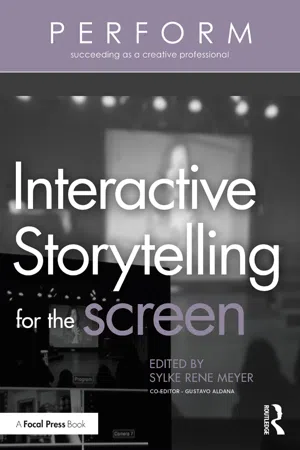
An invaluable collection of essays and interviews exploring the business of interactive storytelling, this highly accessible guide offers invaluable insight into an ever-evolving field that is utilizing new spatial and interactive narrative forms to tell stories. This includes new media filmmaking and content creation, a huge variety of analog story world design, eXtended realities, game design, and virtual reality (VR) design.
The book contains essays written by and interviews with working game designers, producers, 360-degree filmmakers, immersive theatre creators, and media professors, exploring the business side of interactive storytelling – where art meets business. Contributors to this book share their perspectives on how to break into the field; how to develop, nurture, and navigate business relationships; expectations in terms of business etiquette; strategies for contending with the emotional highs and lows of interactive storytelling; how to do creative work under pressure; the realities of working with partners in the field of new media narrative design; prepping for prototyping; writing analog and digital.
This is an ideal resource for students of filmmaking, screenwriting, media studies, RTVF, game design, VR and AR design, theater, and journalism who are interested in navigating a career pathway in the exciting field of interactive storytelling.
Interactive storytelling, as a practice, has been carried out by humans through a myriad of forms for generations. From oral traditions to modern digital methods, people have sought out ways to tell their stories. However, as natural as storytelling may seem, the broad history of storytelling and the overwhelming variety of storytelling methods and forms may seem daunting. As a newcomer to interactive storytelling, the breadth of options, and the constantly evolving nature of the industry can seem like serious impediments to the beginning of your interactive storytelling career.
With so many options available, how and where do you begin?
The oral traditions of the earliest storytellers came naturally through the power of the spoken word. However, with the advent of the increasingly interconnected nature of humans and digital tools, we are no longer limited to the old ways of storytelling. With so many tools at your disposal, you can become an interactive storyteller using whatever talents you might have – whether these are in live theater, computer sciences, visual arts, or elsewhere. As an interactive storyteller, you get to decide what practices and methods work best for you in order to succeed. The ever-evolving nature and longevity of storytelling as a practice means that you have the freedom to choose your own path.
A career as an interactive storyteller offers rather open-ended opportunities in terms of your approach to your practice. Luckily, there are professionals who have provided insight into how they have managed to forge their own ways in the industry and write their own stories. By learning about their journeys and experiences, you can begin to learn about what your own adventure might look like.
In the first chapter, you will learn about:
•Ways that the industry has evolved with the advent of emergent technologies
•Planning out the earliest phases of your interactive storytelling projects
•Techniques for creating your own works using new digital tools
•Differences among some of the many new mediums for interactive storytelling
•Methods for creating successful collaborative works
•Strategies for making professional connections as a newcomer
•Business strategies for making your way in the industry
•What you can do to make your way into your chosen niche of the industry
To begin, let us take a look at some of the ways that the approaches to interactive storytelling have evolved over time.
We are building a bridge as we are walking across it
▸ Ingrid Kopp
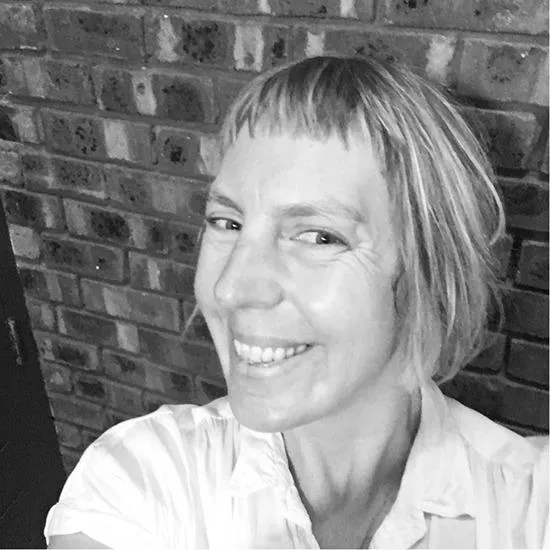
Figure 1.1 Ingrid Kopp
Ingrid Kopp is a co-founder of Electric South, a non-profit initiative to develop virtual reality and immersive projects across Africa. She also curates the Tribeca Storyscapes program for interactive and immersive work at the Tribeca Film Festival and produces Immerse – a publication for Medium on emerging storytelling – in partnership with MIT Open DocLab and Dot Connector Studio.
My background is in documentaries and television. I started at Channel Four Television in London in the early 2000s just as everything was moving to digital. A lot of new prosumer cameras were coming onto the market. I was interested in storytelling and became interested in how different kinds of technology were enabling different kinds of stories to be told and new filmmakers to enter the space. During my time in television, even though I was not doing interactive work, I started to think about how technology enables things to happen. I was involved in trying to get cameras like a Sony PD150 accepted for broadcasting. At the time, we realized that certain filmmakers were making films with those cameras, but they were not considered to be broadcast quality. We were starting to see new, emerging talent in the TV world, enabled by access to cheaper cameras. That, for me, was the beginning of technology and storytelling coming together in my career.
Then, I moved to New York and started working more on the web development side of things while also being involved with the film community, and running the US office of the British organization, “Shooting People: Independent Filmmakers Network.” Through that experience, I began teaching digital boot camps, supporting traditional filmmakers in social media, or using the internet to promote their films and build a career. Over time, I became more interested in interactive storytelling as an art form in itself, as I started to see projects emerging around 2007 or 2008. I started seeing more interactive work on the web, such as web documentaries like “Gaza Sderot,” a web documentary that really inspired me.
I saw web documentaries like this and became interested in the idea of using the internet as a medium and not just a platform for traditional media. Casper Sonnen of the International Documentary Film Festival Amsterdam [IDFA] DocLab is a big inspiration: he talks a lot about using the internet as a creative medium. With accessible internet, mobile phones, and smartphones on the market, as well as cheaper digital equipment, it seemed like an exciting time for new forms of work to emerge. I started writing a column about these ideas for a British movie magazine movieScope. In 2010, the Tribeca Film Institute in New York hired me to advise on a proposal for a program to fund interactive filmmaking and interactive storytelling. We received a grant from the Ford Foundation, and I found myself running a new department at the Tribeca Film Institute.
Thus, in 2011, I started full-time funding interactive work and became part of the emerging interactive immersive space. Low-tech and high-tech have always interested me. I love high-tech stuff with all of the bells and whistles, being on the bleeding edge of the coolest things technology can do, with high production values. It is very exciting for me, but I have also always been rather interested in ideas, access, and audiences as well. Who is the audience, and who is getting to see the work? Instead of just who is going to make the work. One example was the “Quipu Project,” which was about women who were sterilized against their will in Peru. I loved the project because it involved workshops with women in the communities in which they lived. It was a workshop with the women affected, and they had a phone line that women could call and leave messages on. There was also a beautiful website that they created. Another one was “Priya’s Shakti” which is an ongoing project. It includes AR-enabled comic books. They also did murals in India that were AR-enabled, but even if you did not have a smartphone, you could still access the project in other ways. The comic books were distributed for free. We also funded the “Nanny Van” project by Marisa Jahn – a public art project dealing with the economy of women working in homes as nannies and as domestic workers.
The idea of collaborative collective work and having different points of entry into a project for audiences was something that really interested me, but it is challenging too. I know why a lot of this work feels unfinished to people who are accustomed to traditional films – because you do not have the three-act structure.
You do not have the beginning, the middle, and the end. Sometimes, it can feel unfulfilling in a way, but it enables you to challenge the dominant narrative of how a story should be and who gets to tell that story. I kind of love the unfinished side, because some of these stories are so loose that it feels like they can go on forever.
I like what they were enabling people to do, but I also think that was one of the challenges in making this kind of storytelling mainstream. It does not engage audiences the way that a lot of stories do. That means it is a little harder to interact with. We did start to get a lot of proposals and ideas sent to us which were very much about crowdsourcing or having crowdsourced material. One of the things that I noticed is that mostly the crowd would not contribute. Most people will contribute to the network that they are already on. People are making TikTok videos, and they are on Instagram. They stay in the communities that they are already in.
If you set up a website and say, “I want you to send me your stories,” it usually just does not work. That is something that a lot of filmmakers and storytellers really misunderstand. That is the flip-side of this rather lovely idea of collective work. It is very possible to do it, but I think there have been a lot of bad experiences with crowdsourced storytelling where the intended “crowd” never uploaded anything because they did not feel part of the project.
Funding became really tight for a lot of non-VR work after 2014. A lot of early transmedia and interactive excitement went away, and not all of it was replaced by new sources. In 2012, the new wave of VR was just starting to emerge. The first VR experience that I saw was in Sundance 2012. In 2011, we were funding web documentaries, mobile experiences, mobile storytelling apps, and more transmedia experiences. As VR started coming onto the scene, we started funding more 360 and immersive, room-scale VR, but that did not begin happening until about 2014. All of the money for web documentaries kind of disappeared with this new focus on VR. I do not think it is coming back. VR sucks up a lot of the oxygen in the room. There is new money in the space – mostly around VR. Although, even for VR projects, we are noticing that there has been a dip. A lot of the funders have gone away. With private or commercial money, it is hard to know where it is unless you are already part of that world. People have to think clearly about how their project is going to fit into their career, and how else they will support themselves. A lot of people will break the bank making their one project, and they will not make another one; they will not build on their craft. This is something that is very close to my heart. It is important that filmmakers and artists get to make more than one project, get better and better, and have a sustainable career.
There are a few production companies that are doing well. There are a few artists who are good at getting money and have a body of work. However, most people have to support themselves with other jobs. The market for story-based work is rocky. That pertains to the market in general. The headset market is smaller than everyone expected or wished for. Also, for a lot of projects, it is very hard to charge for them. You can charge for a big A-list game, but it is hard for the small, interesting storytelling projects because people will not pay. They expect the project to be free. In the current infrastructure, we do not have a lot of distributors, sales agents, or all of the other things that get traditional films put out there. Nonetheless, there are people who are figuring it out. There are some entrepreneurial artists, like Briege Whitehead, who is an Australian filmmaker. She made a beautifully shot 360 project about Antarctica, and it was distributed to Australian museums with great success.
You just have to be really smart about how you will fund your project in the first place, and what you think is going to happen once the film is out in the world. You cannot expect to automatically attract a big audience, and that everyone is going to pay $30 for the film because it does not work that way. With Electric South, which is the nonprofit that I co-founded in South Africa working with African artists, we have been careful about how we work. We can get screening fees from festivals. We license the films. I would not say that it has big bucks, but we are definitely making sure that there is income for the filmmakers and that, because we funded the project, they are never out of pocket. It has enabled them to continue working in their practices; however, their practice is defined, because we work with interdisciplinary artists. You have to be really smart about reality and not just hope that something is going to finally change.
When thinking about a project, there are two things to consider: One, be really smart about how you do a project. For example, Marshmallow Laser Feast is making sure that they are scoping out the work they make. They do not make a project and hope that it is all going to work out. They scope out everything. They work out things like how long a piece should be because you will have to get x number of people through every hour. How long will it be? How much can they charge? How many headsets do they need? Will they need extra headsets in case some break? They figure all of that out before they make the project. They know exactly what they need to break even. Then, they design their release schedule around that. It is very expensive for projects to go to festivals. Installations are rather expensive. Often, the festival will not cover all of the travel and accommodation costs. Be especially smart about the real costs, not just the costs when you are at the beginning of the project – the real cost to get out into the world and reach audiences. That is the key. Second, it is important to map out who is funding and where the support is. There are some public media like the point of view “POV” series, which is a part of the US Public Broadcasting Service (PBS). There are some commercial companies in the advertising world doing experiential marketing, so there are opportunities there. There are certain interesting immersive theater crossovers as well. Some of the philanthropy foundations are a source of funding. There are some governments that fund this type of work quite well, like France and Canada. There are exciting things happening in China around VR. There are cities and regions that are trying to bill themselves as “the city of VR” or “the region of VR,” and they are investing huge amounts in VR parks and other initiatives. There are a lot more arcades, but I am not sure this model will work everywhere.
You have to be entrepreneurial and figure out where the money is – not just money, but resources as well. There are certain rather interesting stuff happening in the academia around VR and immersive storytelling: Gabo Arora at Johns Hopkins, Jessica Brillhart at USC, Sarah Wolozin at MIT Open DocLab. There is not always money for production available, but there are resources there. In this space, it is not necessarily about a single discipline but, rather, about converging.
You are now in a space where you are with people from the immersive theater, the game industry, film, and journalism. There are a lot of journalism 360-degree projects. Those areas will overlap, and there are a lot of opportunities there because you can tap into their network.
One of the things I have found rich about this space is I have been able to network with other folks who are in adjacent industries. I love that you can work with people doing artificial intelligence, academia, and theater folk in the course of one day. I was part of a World Economic Forum VR council this year (2019). That, for me, ...
Table of contents
Cover
Half Title
Series Page
Title Page
Copyright Page
Contents
Foreword
Acknowledgments
Introduction
CHAPTER 1: GETTING STARTED
CHAPTER 2: STICKING IT OUT
CHAPTER 3: FINDING SUCCESS
CHAPTER 4: GETTING AHEAD
CHAPTER 5: STARTING AGAIN
Conclusion
About the editors
Index
Trusted by 375,005 students
Access to over 1.5 million titles for a fair monthly price.
Study more efficiently using our study tools.
Frequently asked questions
Yes, you can cancel anytime from the Subscription tab in your account settings on the Perlego website. Your subscription will stay active until the end of your current billing period. Learn how to cancel your subscription
No, books cannot be downloaded as external files, such as PDFs, for use outside of Perlego. However, you can download books within the Perlego app for offline reading on mobile or tablet. Learn how to download books offline
Perlego offers two plans: Essential and Complete
Essential is ideal for learners and professionals who enjoy exploring a wide range of subjects. Access the Essential Library with 800,000+ trusted titles and best-sellers across business, personal growth, and the humanities. Includes unlimited reading time and Standard Read Aloud voice.
Complete: Perfect for advanced learners and researchers needing full, unrestricted access. Unlock 1.5M+ books across hundreds of subjects, including academic and specialized titles. The Complete Plan also includes advanced features like Premium Read Aloud and Research Assistant.
Both plans are available with monthly, semester, or annual billing cycles.
We are an online textbook subscription service, where you can get access to an entire online library for less than the price of a single book per month. With over 1.5 million books across 990+ topics, we’ve got you covered! Learn about our mission
Look out for the read-aloud symbol on your next book to see if you can listen to it. The read-aloud tool reads text aloud for you, highlighting the text as it is being read. You can pause it, speed it up and slow it down. Learn more about Read Aloud
Yes! You can use the Perlego app on both iOS and Android devices to read anytime, anywhere — even offline. Perfect for commutes or when you’re on the go. Please note we cannot support devices running on iOS 13 and Android 7 or earlier. Learn more about using the app
Yes, you can access Interactive Storytelling for the Screen by Sylke Rene Meyer in PDF and/or ePUB format, as well as other popular books in Media & Performing Arts & Film & Video. We have over 1.5 million books available in our catalogue for you to explore.