'So, so good! ... More gems than a pirate's chest ... science, art, history, culture - it's epic and mammoth, a repository of all our truths through their lives' Chris Packham
A powerful and fascinating insight into the 100 animals - from the blue whale to the mosquito - that have had the biggest influence on humanity through the ages.
We are not alone. We are not alone on the planet. We are not alone in the countryside. We are not alone in cities. We are not alone in our homes. We are humans and we love the idea of our uniqueness. But the fact is that we humans are as much members of the animal kingdom as the cats and dogs we surround ourselves with, the cows and the fish we eat, and the bees who pollinate so many of our food-plants.
In The History of the World in 100 Animals, award-winning author Simon Barnes selects the 100 animals who have had the greatest impact on humanity and on whom humanity has had the greatest effect. He shows how we have domesticated animals for food and for transport, and how animals powered agriculture, making civilisation possible. A species of flea came close to destroying human civilisation in Europe, while the slaughter of a species of bovines was used to create one civilisation and destroy another. He explains how pigeons made possible the biggest single breakthrough in the history of human thought. In short, he charts the close relationship between humans and animals, finding examples from around the planet that bring the story of life on earth vividly to life, with great insight and understanding.
The heresy of human uniqueness has led us across the millennia along the path of destruction. This book, beautifully illustrated throughout, helps us to understand our place in the world better, so that we might do a better job of looking after it. That might save the polar bears, the modern emblem of impending loss and destruction. It might even save ourselves.
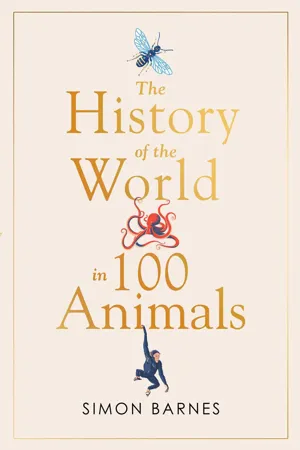
- 416 pages
- English
- ePUB (mobile friendly)
- Available on iOS & Android
eBook - ePub
History of the World in 100 Animals
About this book
Information
Table of contents
- Cover
- Title Page
- Foreword
- Chapter 1: Lion
- Chapter 2: Domestic Cat
- Chapter 3: Gorilla
- Chapter 4: Galápagos Mockingbirds
- Chapter 5: American Bison
- Chapter 6: Oriental Rat Flea
- Chapter 7: Cattle
- Chapter 8: Blue Whale
- Chapter 9: Coral
- Chapter 10: Eagle
- Chapter 11: Platypus
- Chapter 12: Honeybee
- Chapter 13: Tyrannosaurus Rex
- Chapter 14: Shark
- Chapter 15: Cockroach
- Chapter 16: Panda
- Chapter 17: Cod
- Chapter 18: Egret
- Chapter 19: Dodo
- Chapter 20: Donkey
- Chapter 21: Wolf
- Chapter 22: Pigeon/Dove
- Chapter 23: Mosquito
- Chapter 24: Tiger
- Chapter 25: Rat
- Chapter 26: Wasp
- Chapter 27: Earthworm
- Chapter 28: Snake
- Chapter 29: Chicken
- Chapter 30: Monkey
- Chapter 31: Archaeopteryx
- Chapter 32: Housefly
- Chapter 33: Dog
- Chapter 34: Bear
- Chapter 35: Camel
- Chapter 36: Penguin
- Chapter 37: Octopus
- Chapter 38: Dolphin
- Chapter 39: Rhinoceros
- Chapter 40: Nightingale
- Chapter 41: Pig
- Chapter 42: Chimpanzee
- Chapter 43: Albatross
- Chapter 44: Passenger Pigeon
- Chapter 45: Tsetse Fly
- Chapter 46: Duck
- Chapter 47: Kangaroo
- Chapter 48: Thylacine
- Chapter 49: Crocodile
- Chapter 50: Horse
- Chapter 51: Owl
- Chapter 52: Seal
- Chapter 53: Bowerbird
- Chapter 54: Elephant
- Chapter 55: Piranha
- Chapter 56: Tits and Chickadees
- Chapter 57: Spider
- Chapter 58: Silkworm
- Chapter 59: Falcon
- Chapter 60: Pheasant
- Chapter 61: Barnacle
- Chapter 62: Head Louse
- Chapter 63: Crow
- Chapter 64: Bat
- Chapter 65: Bumblebee
- Chapter 66: Salmon
- Chapter 67: Oryx
- Chapter 68: Sheep
- Chapter 69: Nene or Hawaiian Goose
- Chapter 70: Orang-utan
- Chapter 71: Parrot
- Chapter 72: Colorado Beetle
- Chapter 73: Locust
- Chapter 74: Baiji or Chinese River Dolphin
- Chapter 75: Crane
- Chapter 76: Mammoth
- Chapter 77: Goat
- Chapter 78: Loa Loa Worm
- Chapter 79: Peafowl
- Chapter 80: Goldfish
- Chapter 81: Canary
- Chapter 82: Reindeer
- Chapter 83: Turkey
- Chapter 84: Deer
- Chapter 85: Rabbit
- Chapter 86: Sparrow
- Chapter 87: Butterfly
- Chapter 88: Fruit Fly
- Chapter 89: Saola
- Chapter 90: Giant Squid
- Chapter 91: Beaver
- Chapter 92: Guanay Cormorant
- Chapter 93: House Mouse
- Chapter 94: Stork
- Chapter 95: Oyster
- Chapter 96: Jaguar
- Chapter 97: Pink Pigeon
- Chapter 98: Vaquita
- Chapter 99: Ant/Termite
- Chapter 100: Polar Bear
- Epilogue
- Acknowledgements
- About the Author
- Index
- Picture Credits
- Copyright
Trusted by 375,005 students
Access to over 1.5 million titles for a fair monthly price.
Study more efficiently using our study tools.
Frequently asked questions
Yes, you can cancel anytime from the Subscription tab in your account settings on the Perlego website. Your subscription will stay active until the end of your current billing period. Learn how to cancel your subscription
No, books cannot be downloaded as external files, such as PDFs, for use outside of Perlego. However, you can download books within the Perlego app for offline reading on mobile or tablet. Learn how to download books offline
Perlego offers two plans: Essential and Complete
- Essential is ideal for learners and professionals who enjoy exploring a wide range of subjects. Access the Essential Library with 800,000+ trusted titles and best-sellers across business, personal growth, and the humanities. Includes unlimited reading time and Standard Read Aloud voice.
- Complete: Perfect for advanced learners and researchers needing full, unrestricted access. Unlock 1.5M+ books across hundreds of subjects, including academic and specialized titles. The Complete Plan also includes advanced features like Premium Read Aloud and Research Assistant.
We are an online textbook subscription service, where you can get access to an entire online library for less than the price of a single book per month. With over 1.5 million books across 990+ topics, we’ve got you covered! Learn about our mission
Look out for the read-aloud symbol on your next book to see if you can listen to it. The read-aloud tool reads text aloud for you, highlighting the text as it is being read. You can pause it, speed it up and slow it down. Learn more about Read Aloud
Yes! You can use the Perlego app on both iOS and Android devices to read anytime, anywhere — even offline. Perfect for commutes or when you’re on the go.
Please note we cannot support devices running on iOS 13 and Android 7 or earlier. Learn more about using the app
Please note we cannot support devices running on iOS 13 and Android 7 or earlier. Learn more about using the app
Yes, you can access History of the World in 100 Animals by Simon Barnes in PDF and/or ePUB format, as well as other popular books in Biological Sciences & Zoology. We have over 1.5 million books available in our catalogue for you to explore.