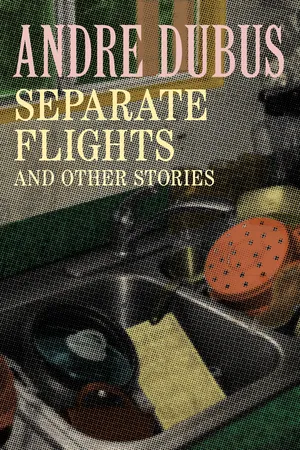
This first collection, from one of the most celebrated masters of the form, "restores faith in the survival of the short story" (
Los Angeles Times).
For the men and women in Andre Dubus's poignant debut collection, life and love are not without their tribulations. The devout endeavor to reconcile the demands of their faith with their most basic human inclinations. A doctor is confronted with his limitations as a man. Husbands and wives seek solace in the beds of others, even as their infidelities expose them to further heartbreak.
Etched in austere prose that is punctuated with powerful emotional moments, the richly drawn characters of
Separate Flights command both compassion and admiration.
This ebook features an illustrated biography of Andre Dubus including rare photos and never-before-seen documents from the author's estate.
- 222 pages
- English
- ePUB (mobile friendly)
- Available on iOS & Android
eBook - ePub
About this book
Information
Subtopic
Literature GeneralIndex
LiteratureWe Don’t Live Here Anymore
Pity is the worst passion of all: we don’t outlive it like sex.
—Graham Greene, The Ministry of Fear
—Graham Greene, The Ministry of Fear
Come see us again some time; nobody’s home but us, and we don’t live here anymore.
—a friend, drunk one night
—a friend, drunk one night
1
THE OWNER of the liquor store was an Irishman with graying hair; he glanced at Edith, then pretended he hadn’t, and said: ‘There’s my ale man.’
‘Six Pickwicks,’ I said. ‘And a six-pack of Miller’s for the women.’
‘You hardly find a woman who’ll drink ale.’
‘That’s right.’
We leaned against the counter; I felt Edith wanting to touch me, so I stepped back and took out my wallet. Hank had wanted to pay for all of it but I held him to two dollars.
‘Used to be everybody in New England drank ale. Who taught you? Your father?’
‘He taught me to drink ale and laugh with pretty girls. What happened to the others?’
I was watching Edith enjoying us. She is dark and very small with long black hair, and she has the same charming gestures that other girls with long hair have: with a slow hand she pushes it from her eye; when she bends over a drinking fountain, she holds it at her ear so it won’t fall into the basin. Some time I would like to see it fall: Edith drinking, lips wet, throat moving with cool water, and her hair fallen in the chrome basin, soaking.
‘World War II. The boys all got drafted before they were old enough to drink in Massachusetts, see? So they started drinking beer on the Army bases. When they came home they still wanted beer. That was the end of ale. Now if one of your old ale drinkers dies, you don’t replace him.’
Outside under the streetlights Edith took my arm. In front of the news stand across the street a cop watched us get into the car, and in the dark Edith sat close to me as I drove through town. There were few cars and no one was on the sidewalks. On the streets where people lived most of the houses were dark; a few blocks from my house I stopped under a large tree near the curb and held Edith and we kissed.
‘We’d better go,’ she said.
‘I’ll bring my car to the Shell station at twelve.’
She moved near the door and brushed her hair with her fingers, and I drove home. Terry and Hank were sitting on the front steps. When I stopped the car Edith got out and crossed the lawn without waiting or looking back. Terry watched me carrying the bag, and when I stepped between her and Hank she looked straight up at me.
We talked in the dark, sitting in lawn chairs on the porch. Except Hank, who was always restless: he leaned against the porch rail, paced, leaned against a wall, stood over one of us as we talked, nodding his head, a bottle in one fist, a glass in the other, listening, then breaking in, swinging his glass like a slow hook to the body the instant before he interrupted, then his voice came, louder than ours. In high school he had played halfback. He went to college weighing a hundred and fifty-six pounds and started writing. He had kept in condition, and his walk and gestures had about them an athletic grace that I had tried to cultivate as a boy, walking home from movies where I had seen gunmen striding like mountain lions. Edith sat to my right, with her back to the wall; sometimes she rested her foot against mine. Terry sat across from me, smoking too much. She has long red hair and eleven years ago she was the prettiest girl I had ever seen; or, rather, the prettiest girl I had ever touched. Now she’s thirty and she’s gained a pound for each of those eleven years, but she has gained them subtly, and her only striking change is in her eyes, blue eyes that I fell in love with: more and more now, they have that sad, pensive look that married women get after a few years. Her eyes used to be merry. Edith is twenty-seven and her eyes are still merry, and she turned them bright and dark to me as I talked. When Hank and Edith left, we walked them to the car, hugging and pecking them goodnight as we always did; I watched Edith’s silhouette as they drove away.
‘Come here,’ Terry said. She took my wrist and pulled me toward the back door.
‘Come where.’
‘In the kitchen. I want to talk to you.’
‘Would you let go of my wrist?’
She kept pulling. At the sidewalk leading to the back door I stopped and jerked my arm but she held on and turned to face me.
‘I said let go of my wrist,’ and I jerked again and was free. Then I followed her in.
‘From now on we’re going to act like married people,’ she said. ‘No more of this crap.’ I went to the refrigerator and got an ale. ‘Just like other married people. And no flirting around with silly adventures. Do you understand that?’
‘Of course I don’t. Who could understand such bullshit.’
‘You’re not really going to play dumb. Are you? Come on.’
‘Terry.’ I was still calm; I thought I might be able to hold onto that, pull us out of this, into bed, into sleep. ‘Would you please tell me what’s wrong?’
She moved toward me and I squared my feet to duck or block, but she went past me and got ice from the refrigerator and went to the cabinet where the bourbon was.
‘Why don’t you have a beer instead.’
‘I don’t want a beer.’
‘You’ll get drunk.’
‘Maybe I will.’
I looked down at my glass, away from her face: in summer she had freckles that were pretty, and I remembered how I used to touch her in daylight, a quick kiss or hug as I went through the kitchen, a hand at her waist or shoulder as we walked in town; that was not long ago, and still she reached for me passing in the house, or touched me as she walked by the couch where I read, but I never did; in bed at night, yes, but not in daylight anymore.
‘Why don’t we talk in the morning. We’ll just fight now, you’ve got that look of yours.’
‘Never mind that look of mine.’
The pots from dinner were still on the stove, the plates were dirty in the sink, and when I sat at the table I brushed crumbs and bits of food from the place in front of me; the table was sticky where I rested my hands, and I went to the sink and got a sponge and wiped the part I had cleaned. I left the sponge on the table and sat down and felt her fury at my cleaning before I looked up and saw it in her eyes. She stood at the stove, an unlit cigarette in her hand.
‘You and Edith, all these trips you make, all these Goddamn errands, all summer if someone runs out of booze or cigarettes or wants Goddamn egg rolls, off you go, you and Edith, and it’s not right to leave me with Hank, to put me in that position—’
‘Now wait a minute.’
‘—something’s going on, either it’s going on or you want it to—’
‘Just a minute, wait just a minute—two questions: why is it wrong for Edith and me to go get some beer and Goddamn ale, and what’s this position you’re in when you’re alone with Hank, and what is it you’re really worrying about? Do you get horny every time you’re alone with Hank and you want Daddy to save you from yourself?’
‘No, I don’t get horny when I’m alone with Hank; I only get horny for my Goddamn husband but he likes to be with Edith.’
‘We’ve been married ten years. We’re not on our honeymoon, for Christ’s sake.’
Her eyes changed, softened, and her voice did too: ‘Why aren’t we? Don’t you love me?’
‘Oh hell. Of course I do.’
‘Well what are you saying, that you love me but we’ve been married so long that you need Edith too, or maybe you’re already having her? Is that it, because if it is maybe we should talk about how long this marriage is going to last. Because you can move out anytime you want to, I can get a job—’
‘Terry.’
‘—and the kids will be all right, there’s no reason for you to suffer if marriage is such a disappointment. Maybe I’ve done something—’
‘Terry.’
‘What.’
‘Calm down. Here.’ I reached across the table with my lighter and she leaned over to light her cigarette, cupping her hands around mine, and under her flesh like a pulse I could feel her need and I wanted at once to shove her against the stove, and to stroke her cheek and tousle her hair.
‘Terry, you said those things. Not me. I have never wanted to leave you. I am not suffering. I’m not tired of you, and I don’t need Edith or anyone else. I like being with her. Like with any other friend—man or woman—sometimes I like being alone with her. So once in a while we run an errand. I see nothing threatening in that, nothing bad. I don’t think married people have to cling to each other, and I think if you look around you’ll see that most of them don’t. You’re the only wife I know who gets pissed at her husband because he doesn’t touch her at parties—’
‘The other husbands touch their wives! They put their arms around them!’
‘Hank doesn’t.’
‘That’s why she’s so lonely, that’s why she likes to tag along like your little lamb, because Hank doesn’t love her—’
‘Who ever said that?’
‘Hank did.’ Her eyes lowered. ‘Tonight while you two were gone.’
‘He said that?’
‘Yes.’
‘Why?’
‘I don’t know, he just said it.’
‘What were you doing?’
‘Well we were talking, how else do you tell people things.’
‘When people talk like that they’re usually doing other things.’
‘Oh sure, we were screwing on the front porch, what do you care?’
‘I don’t, as long as I know the truth.’
‘The truth. You wouldn’t know the truth if it knocked on the door. You won’t even admit the truth about yourself, that you don’t really love me—’
‘Stop that, Terry. Do not say that shit. You know why? Because it’s not true, it’s never been true, but when you say it like that, it is. For a minute. For long enough to start a really crazy fight. Do you understand that?’
She was nodding, her cheeks looking numb, her eyes frightened and forlorn; then I felt my own eyes giving her pity, washing her cheeks and lips with it, and when I did that her face tightened, her eyes raged again, and too quick for me to duck she threw her drink in my face, ice cubes flying past my head and smacking the wall and sliding across the floor. I rose fast but only halfway, poised with my hands gripping the edge of the table; then I looked away from her and sat down and took out my handkerchief and slowly wiped my face and beard, looking out the back door at the night where I wanted to be, then I brushed at the spots on the burgundy sweat shirt she had brought home for me one day, happily taking it from the bag and holding it up for me to see. Then I stood up and walked quickly out the back door, and she threw her glass at me but too late, the door was already swinging to and the glass bounced off the screen and hit the floor. Somehow it didn’t break.
I crossed the lawn, onto the sidewalk that sloped down with the street; a half block from the house I was suddenly afraid she was coming, I felt her behind me, and I turned, but the sidewalk was empty and lovely in the shadows of maples and elms. I went on. If there was a way to call Edith and she could come get me. But of course no. I could go back and get my car, the keys were in my pocket, I could start it and be gone before Terry came running out with a Goddamn knife, if I drove to Edith’s and parked in front of the house and looked up at the window where she slept beside Hank she would know, if I waited long enough watching her window she would know in her sleep and she would wake and look out the window at me under the moon; she would tiptoe downstairs and hold me on the damp lawn. I came to a corner and went up another street. ‘Edith,’ I whispered into the shadows of my diagonal walk, ‘oh Edith sweet baby, I love you, I love you forever.’ I thought about forever and if we live afterward, then I saw myself laid out in a coffin, the beard and hair lovely white. I stopped and leaned against a car, dew on its fender cool through my slacks. Natasha and Sean and I looked at Terry in her coffin. I stood between them holding their small hands. Terry’s smooth cheeks were pale against her red hair.
When she told me she was pregnant she wasn’t afraid. She was twenty years old. It was a cold bright Thursday in January, the sky had been blue for a week and the snow in Boston was dirty and old. We went to a bookstore on Boylston Street and bought paperbacks for each other, then we had steamers and draft beer in a dim place with paintings of whale fishing and storms at sea and fishing boats in harbor on the walls. For some reason the waiters wore leather tunics. In those days Terry always seemed happy. I can close my eyes any time and remember how I loved her and see and feel her as she took my hand on the table and said: ‘After today I’ll be careful about eating, and if I promise not to get fat and if I get a job, can I keep our baby?’
Now I started walking home. We were, after all this, the same Jack and Terry, and I would go to her now and touch her and hold her; I walked faster, nodding my head yes yes yes. Then going into the dark living room I felt her in the house like the large and sharpened edge of a knife. She was asleep. I crept into the bedroom and lay beside her, at the edge of the bed so we didn’t touch.
Natasha and Sean woke Terry early for break...
Table of contents
- Cover Page
- Title Page
- Table of Contents
- We Don’t Live Here Any More
- Over the Hill
- The Doctor
- In My Life
- If They Knew Yvonne
- Going Under
- Miranda Over the Valley
- Separate Flights
- A Biography of Andre Dubus
- Copyright Page
Trusted by 375,005 students
Access to over 1.5 million titles for a fair monthly price.
Study more efficiently using our study tools.
Frequently asked questions
Yes, you can cancel anytime from the Subscription tab in your account settings on the Perlego website. Your subscription will stay active until the end of your current billing period. Learn how to cancel your subscription
No, books cannot be downloaded as external files, such as PDFs, for use outside of Perlego. However, you can download books within the Perlego app for offline reading on mobile or tablet. Learn how to download books offline
Perlego offers two plans: Essential and Complete
- Essential is ideal for learners and professionals who enjoy exploring a wide range of subjects. Access the Essential Library with 800,000+ trusted titles and best-sellers across business, personal growth, and the humanities. Includes unlimited reading time and Standard Read Aloud voice.
- Complete: Perfect for advanced learners and researchers needing full, unrestricted access. Unlock 1.5M+ books across hundreds of subjects, including academic and specialized titles. The Complete Plan also includes advanced features like Premium Read Aloud and Research Assistant.
We are an online textbook subscription service, where you can get access to an entire online library for less than the price of a single book per month. With over 1.5 million books across 990+ topics, we’ve got you covered! Learn about our mission
Look out for the read-aloud symbol on your next book to see if you can listen to it. The read-aloud tool reads text aloud for you, highlighting the text as it is being read. You can pause it, speed it up and slow it down. Learn more about Read Aloud
Yes! You can use the Perlego app on both iOS and Android devices to read anytime, anywhere — even offline. Perfect for commutes or when you’re on the go.
Please note we cannot support devices running on iOS 13 and Android 7 or earlier. Learn more about using the app
Please note we cannot support devices running on iOS 13 and Android 7 or earlier. Learn more about using the app
Yes, you can access Separate Flights by Andre Dubus in PDF and/or ePUB format, as well as other popular books in Literature & Literature General. We have over 1.5 million books available in our catalogue for you to explore.