The National Book Award–finalist movingly examines the lives of a group of New Yorkers deeply affected by one woman's troubled life—
and death.
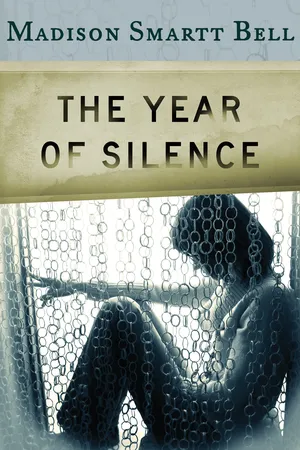
Marian is haunted by an unspoken past reflected in the choices she makes. Whether it's her drug addiction or her dubious affairs, she finds herself increasingly adrift and alone. Yet in a city of millions, her story plays a part in the lives of others.
Jaded cops who register Marian at a glance, a lover who agonizes over her abortion, a close friend stunned by her tragic overdose, a panhandling dwarf making the rounds in her Upper West Side neighborhood—each story weaves back and forth through time, revealing a compelling, compassionate portrait of one woman's tragic fate.
In a novel whose "structure combines delicacy and great tensile strength . . . Bell's voice is increasingly diverse, accurate and, in this book of mourning, powerfully moving" (
Publishers Weekly). One of America's finest storytellers shows once again that he is a writer of "superb command" (
The New York Times).
- 198 pages
- English
- ePUB (mobile friendly)
- Available on iOS & Android
eBook - ePub
The Year of Silence
About this book
Information
THE HOMELESS DEAD
YOU MIGHT THINK BEING in a wheelchair you’re too slow to catch up with things, the world passing you by and all that. But I see it more like the other way around, you get, going too fast and you miss everything. That’s if Robbie is pushing the thing, at least. That’s why I’d rather use the walker in the end.
Now you know I wouldn’t seriously complain about Robbie, wouldn’t do it for the world. He’s my grandnephew and it’s his first year in NYU and it’s more than most his age would do to give a part of a Saturday or Sunday over to trolling a dried-up crippled old lady around lower Manhattan in a wheelchair. Really, Robbie is just as nice as pie, always has the nicest smile, like the man in the moon, though I’ve been tempted to wonder if anything much goes on behind it. Robbie and I don’t really communicate, as people like to call it on the TV. It just would not make sense to him if I was to ask him, for instance, why he has to move so goddamn fast. Where does he think he’s going to get to sooner? Hell itself, or just the grave? No, but if I asked Robbie anything like that he would start to think I was senile or crazy and pretty soon other people would start thinking that same thing. Then I would be jerked out of my nice little rent-controlled apartment on Waverly Place and slapped in a nursing home about as fast as you can say the words, something my daughter would like to see happen because she’s worried about my welfare, and my landlord, too, because he’s worried about his.
So it’s How’s your schoolwork, Robbie, and S’all right I guess, Aunt Marie, and Don’t study too hard now, Robbie, and on and on like that. Boring, really. But it is fresh air.
It was last weekend, Robbie had taken me out and it was shake, rattle and roll across the park and down to the Grand Union, where I wanted him to run in and pick me up some cottage cheese and corn plasters and things. Across the street on the block above the store the man who collects for the homeless was there. I know him well by sight. He sits behind a little card table with his hands folded over each other behind that enormous green jug people put their money into. I set him as a target when I come down on my walker, the weeks he’s there. Some weeks he isn’t. No matter how long it takes me to get to him, I’ve never seen him move a hair. He doesn’t seem to need to shift around, not any more than a snake would. His face is the color and texture a brick might have if it had been underwater for about a thousand years, and has the same expression. Drinking did that, I wouldn’t wonder, and yet he seems a steady man. I believe that he must know me too. Finally, at long last, I’ll come up beside that table and I’ll sling a quarter into the cloudy green glass lip of the jug and hear it ring on the other coins inside. You can’t imagine how it makes me feel, a real accomplishment, like I had all of a sudden turned into Kareem Abdul-Jabbar and started making slam dunks. Then the man always gives me some sign of recognition. Not a round of applause, not a nod or a wink. Maybe it’s just a dilation of his eye, but he somehow manages to give me some sign that he knows just what I’ve done.
Last weekend there was something new about his set-up, only from across the street I couldn’t quite make out what it was. Eyes not much good anymore, along with everything else. All I could see was a big black square with white something on it. Robbie parked me at the end of the bicycle rack (a wonder he didn’t chain me to it too) and took my little list inside. I sat there and thought it over. You get as old as I am and everything’s a political decision. I tried the question out in my head to see if it sounded crazy, and decided I could get away with it.
“Let’s go back up the other side of the street, Robbie.”
“Sure, okay, Aunt Marie.”
Only of course we were rolling along so quick I didn’t have much time to take it in, plus the, sidewalks were crowded with the weekend traffic, so I didn’t really get much of a clear look. I could just see it was a big black bulletin board with white squares of paper tacked to it, but I couldn’t see what was on them. At the top in big block letters like a movie marquee it said, THE HOMELESS DEAD. Well, even that little was enough to start me thinking—feeling, I should say. Those white squares against the black looked so much like a graveyard that when I blinked my eyes I was looking across the slopes and the tombstone files of Arlington again, where they buried some bits and pieces of what they claimed was Robbie’s grandfather back at the end of the Second World War. I opened my mouth to tell Robbie what I was thinking about, and maybe even get him to wheel me back for a better look, but that would have sounded like dwelling on the past or something, of course.
“Pretty day, isn’t it, Robbie?”
“Yes’m, it sure is, Aunt Marie.” It was, too, one of the first really good days of the spring.
Back home I sat there and felt bad the whole rest of the day. I kept seeing that bulletin board cemetery and trying to match it to different other things in my head. What exactly was bothering me I couldn’t have told you, it was like it was just around a corner, just barely out of sight, and that frightened me good, the way it always does these days. Because someday what disappears around that corner could be something as simple and necessary as my own name. From the cradle to the grave the body is in a race with the mind and now what I pray for is that my body will get there first. Please, goes that little prayer, don’t let it be some mental thing, and don’t let it be something just incapacitating either. Let it be something major, like my heart.
The picture of that bulletin board and the words on it had got to me somehow, and I kept thinking about it all through the week. When Saturday came around again I decided I just had to go back and give it a better look. If I saw exactly what it really was, I believed I might get rid of the thought of it. It would have seemed like such a crotchet that I didn’t want to ask Robbie to wheel me down there. I might have dreamed up some kind of excuse, but I finally thought I’d prefer to go by myself.
I wake up long before most people do, except for other old ladies, I guess. That Saturday morning I had luck and the elevator was working. Without it I wouldn’t have had a hope in hell of getting the walker down the stairs. When I came to the street it was barely good light yet and of course no one was around. That’s the only time of the day the city’s truly quiet. I started heaving the walker in the direction of the park.
What’s that like? Well, imagine that you were so decrepit and done in that you had to throw your whole weight on a stone wall just to hold yourself up. Then imagine you had to pick up that same wall at the same time. Then think about covering some distance that way. Of course there’s no real risk of feeling rushed. In fact, you’ll have generous time to memorize every blasted stalk of grass and every crack in the pavement.
It was warm weather so I hadn’t needed to put much on, nothing but a raggedy old cotton dress, you could just about see right through it. I left vanity behind me a long time ago, and fear along with it, for that matter. I didn’t have a purse or even a pocket. It’s not so bad to be helpless, really, the trick is you’ve got to be worthless too.
By the time I had hauled my sack of skin and bones to the bottom of the park it was quite some time later and there were a few more people around. Since I’ve been slowed down so thoroughly, it’s begun to astonish me how other people can move, like water spiders flashing from one place to another without your really being able to see how they do it. Whereas I must have looked like some kind of inchworm, humping myself over to the corner of La Guardia Place where I could see all the way down to the grocery store.
He wasn’t there. Sometimes he isn’t, like I said. Of course it was awful early. I kept going down toward the place where he usually sits, picking up the walker and slamming it back. I won’t deny I was disappointed. After every step I managed to make I looked again at the spot he should have been at, like I thought maybe the sidewalk was going to open and pop him out, table and jug and bulletin board and all. But naturally when I finally did get there the spot was just as empty as it had been all along.
I stood there and rested and blew awhile. The sun had come all the way up and I was getting kind of warm. Still, I thought I’d go on. There was a little Italian place I liked, just a few blocks over to the east, and this time I had better luck and it was open.
Actually it seemed a little funny for a bar to be open that time of the day. It must have been all of eight o’clock by the time I got there. I think it’s that the owner gets lonely, or maybe he just can’t sleep in the mornings, same as me. I’d call him a young man but he must be in his sixties, a solid Italian-looking face on him with all the parts of it rounded like a water-smoothed stone. He doesn’t get the morning drinkers, not like an Irish bar. There’s a little coffee pot he keeps going and he puts out a basket of rolls and pastries I think he probably just buys retail at the bakery up the block. Probably throws most of them out in the end too because he doesn’t get much trade. Me sometimes, but I don’t eat, and now and then some other stray. There was one young couple that used to be kind of regular, a boy and a girl who would come in for a light breakfast sometimes, still warm and sleepy smelling from the bed.
It was pleasant to come into the cool dim, out of the glare of the sun. I nodded to the owner, who was sitting all the way at the end of the bar by the window, and started toward my table in the back next to the phone. There was a hiss and a clink and I knew he had opened me a beer, though I had my eyes fixed on the black and white tiles of the floor. It pleased me the way he did it without being asked. By the time I got myself lowered into the chair he was at the edge of the table with the squatty brown bottle and the short little glass. I unscrewed one of the caps from the walker and pulled my ten-dollar bill out of the tubing. Always makes him smile to see that, and I think it’s pretty slick myself. He took the money and rang it up and carried me back my change. It’s a courtesy, they don’t normally wait tables here, but he can see how I’m fixed and I’m not about to turn it down.
I sat there for a nice long time just watching the cold vapors curl out of the mouth of the bottle, because, you see, I had to make it last. I can’t afford to drink a whole beer, not that I don’t want to. All I can have is one glassful, I guess about six ounces. The rest I just leave on the table. The owner could wash his hair with it, maybe, if he had any hair to wash. The trouble’s not in my head, it’s with my kidneys. As I found out one very unpleasant day, if I drink the whole bottle I don’t make it back to the apartment. That’s old age for you, and you can have it. You will have it too, if you survive; that’s what survival’s all about.
On the other hand, if I could drink a whole beer or maybe a bunch of them I might turn into the old lady who sits in the bar all day long and plays “Mack the Knife” over and over and cries. Then you wake up one day and you’ve been taken out of your own hands and your last little bit of freedom is gone.
If that nice young couple happened to be there, I could offer them the bottom half of the beer. The boy didn’t drink it but the girl wasn’t above a little beer with her breakfast. That’s how I got to know something about them. The boy was a schoolteacher and the girl said she was some kind of artist, I think. They weren’t married, of course, but I was way past worrying over that.
There was a bar of light creeping across the floor as the sun moved, and I waited for it to touch my chair leg before I poured out my glass of beer. I raised the glass and sort of ate a little of the foam. After I had waited some more time I let myself have a good swallow. Then I finished the glass fast enough to get a really strong tingle out of it. Since it was all I was going to get I’d learned how to make it feel good. That tingle was just beginning to fade when the schoolteacher boy walked in the door.
“Over here,” I said, not thinking. I was just pleased and relieved somebody had turned up for me to offer the rest of the beer to. I wasn’t sure he’d recognize me but he did. He smiled and came over and actually sat down. Then he looked like he wasn’t sure what was next. We’d never really talked a lot, not more than a word or two in passing.
“Got half a beer for you here,” I said. “I was just pulling myself together to leave.” My thought was to let him off whatever hook he might think he was on. His hand came halfway toward the bottle and stopped and I saw something cross his face, like a memory had come back to him he’d just as soon had stayed away. I wondered, did he have a little spat with the girlfriend? and then some devil got into me and started flapping my mouth.
“Now what’s become of that girl you go with? She’s the one takes morning beer, now I recall.”
You would have thought I had hit him with a lead pipe between the eyes. His face got a look like a blank sheet of paper.
“She died,” he said, looking over my shoulder. “Killed herself, that is.”
Something went out in me like a candle, and I wished real bad I’d stayed home. Before I knew it my hand went out and closed over the boy’s wrist, which felt about as lively as a stick of wood.
“That’s terrible, son, that’s just terrible.” It sounded like the exact right word when it came out, I think it was the terror part that convinced me. It was a piece of what had been puzzling me all week, I thought, but now I was sorry I had it.
“I know it is,” the boy said. “But I’m not sure she did it on purpose.”
That’s when I actually saw my hand on his arm and I thought, Oh no, what do you think you are doing? You go around putting your old skeleton hands on practical strangers, and you know where you’re going to end up.
“Excuse me, I’m sorry,” I said, meaning about my hand, which I took back and used to stuff my money back into the walker. Then I heaved myself up and started clanking toward the door. I don’t think the boy noticed much, he seemed a long way gone. I don’t suppose I’d made his day either, not exactly.
It had got cloudy outside all of a sudden and the sky looked like the sole of somebody’s shoe coming down. I felt terrible, terrible, terrible, and I wished I’d never come out. What I needed was to see something good, something that would make it worth the trip. It didn’t have to be a big thing necessarily, but a freaking flower wasn’t going to do it.
There was nothing. I’d hoped the man with the money jug might have turned up, but he didn’t. By the time I got back to where he would have been I was about nine-tenths worn out. It was late in the morning now and people were either jostling me or wishing me ill under their breath when they got stuck behind me and had to slow down. The weather had turned so muggy my hands were slippery on the frame of the walker and sweat ran stinging down my every crease and wrinkle underneath my clothes.
It was peculiar, but even though the streets were getting crowded there was hardly anybody at all in the park when I finally got there. With the overcast it looked all gray and dull and not like anywhere you’d much want to be. A woman with wires stuck to her head was hopping up and down in front of a tree with a horrible jerky motion, like she was being electrocuted. She hung there in the middle of my sight, twitching. By this time I was so tired out that a pulse of red light had started up behind my eyes, and I really didn’t think I could raise the walker for another step.
Where I came to a stop was beside some benches and I stood there propped on the walker, trying to make up my mind if the relief I would get from sitting down would be worth the effort it would take to get up again. I was staring over the back of the row of benches, across an empty stretch of scraggly grass. A chunky young woman and a little boy met each other just where I was looking, both of them as dull and shabby as the grass was. They nodded to each other with some kind of complicity, and each took a long step back. The woman lowered herself on a bent knee, her arms swung up slowly from behind her back, and out of her hands a bright red ball appeared, floating on a long flat curve into the raised hands of the boy. They each took another backward step and the boy’s hands dropped and rose with a scooping motion and the ball flew out in a longer swoop to vanish into the woman’s loosened sleeves. Again they stepped back, on an easy rhythm, and when the ball reappeared in the air between them I knew that I was seeing what I had wanted to see. My spirit rose back up inside me like a wave. Thank you, thank you, I said, not caring for the moment if it was out loud or not. Thank you so much for that little good feeling. Actually I’m not at all convinced that there is anybody to thank, but somehow it always feels better if I can make it personal.
Whatever the reason, everything jagged in my mind was dropping smoothly into place. I shut my eyes a second and the white squares on the black board returned to my memory, and it came to me so simply what I’d missed about that phrase. I had been thinking of it as two things, when all along it was just one thing. Everyone fears to be homeless, I’ve feared it myself a long time, but what is it finally but to be let out of the old bag of flesh we all drag around like a snail its shell? My heart began to race with the thrill of seeing that little truth. A little truth—The rest of the sentence got away from me, turning the corner. I opened my eyes and squinted my mind, trying to catch hold of it. The woman and the boy were still lengthening the distance between them, the ball still linking them together with the pace of a heartbeat. Will set—I saw the ball vanish and return—set—the ball stopped in the air like the dot on a question mark—set me free.
WORLD WITHOUT END
IT WAS THE RAIN that made her decision final. A tap, a blink, and it began to spatter all down the gray length of 14th Street, a cold greasy rain, all wrong for spring. It made everything seem even more insupportable than it had before. Gwen had brought no umbrella and she hurried toward the corner of Sixth. It was dark enough that she could see through the plate-glass window of the coffee shop without being seen. Sinclair bulked in a booth toward the back, waiting because she had kept him waiting. She went in ordinarily as if all were well and joined him.
“Wet?” Sinclair said. His hand covered hers where she had carelessly left it exposed on the table.
“Not too,” she said. A waiter appeared with the two heavy plastic-sheathed menus, a good pretext for her to retrieve her hand. She hid inside the menu for a couple of minutes. There was a lot of food to be had, after all, and suddenly she was ravenous. Her stomach clenched and did a flip; then she solved the terrible difficulty of choice by choosing quickly: eggs and home fries, corned beef hash. Comfort food.
The waiter came and went, removing the shield of the menu. Gwen remembered what she’d thought on the drizzling street, No putting it off this time, and regretted it a little, looking at Sinclair. Though he was almost completely bald, just a few lonely sprigs of reddish hair scattered across the top of his head, he wasn’t bad looking at all. He had a strong face with friendly creases around his mouth and eyes, which were a light, transparent blue. He’d been good in bed too, Gwen thought, too bad about all that, and realized she’d never be able to touch the food she’d ordered.
“I can’t,” she said. Sinclair’s eyebrows cocked. Gwen lowered her head and turned it so that a fall of her pale hair came over one of her eyes. “I don’t think … I’m not hungry at all, not really,” she said, rushing and beginning to mumble too. “Maybe just some coffee?”
“Had a bad day, have you?” Sinclair’s tone was even, noncommittal, but Gwen knew this sort of thing infuriated him. She kept her face averted toward the puffy vinyl padding of the booth. Sinclair got up, slapping the flat of his hands on the table top.
“I guess I’d better stop the waiter.”
Gwen listened to the sound of his feet going away and kept on watching the patina of dirt on the red leatheret...
Table of contents
- Cover
- Title Page
- Dedication
- Epigraph
- Contents
- The Year of Silence
- The Girl in the Black Raincoat
- I've Got a Secret
- The Kick
- The Numbers Game
- Hour of Lead
- Beggarman Thief
- Feast of the Assumption
- As We Are Now
- The Homeless Dead
- A Biography of Madison Smartt Bell
- Copyright
Trusted by 375,005 students
Access to over 1.5 million titles for a fair monthly price.
Study more efficiently using our study tools.
Frequently asked questions
Yes, you can cancel anytime from the Subscription tab in your account settings on the Perlego website. Your subscription will stay active until the end of your current billing period. Learn how to cancel your subscription
No, books cannot be downloaded as external files, such as PDFs, for use outside of Perlego. However, you can download books within the Perlego app for offline reading on mobile or tablet. Learn how to download books offline
Perlego offers two plans: Essential and Complete
- Essential is ideal for learners and professionals who enjoy exploring a wide range of subjects. Access the Essential Library with 800,000+ trusted titles and best-sellers across business, personal growth, and the humanities. Includes unlimited reading time and Standard Read Aloud voice.
- Complete: Perfect for advanced learners and researchers needing full, unrestricted access. Unlock 1.5M+ books across hundreds of subjects, including academic and specialized titles. The Complete Plan also includes advanced features like Premium Read Aloud and Research Assistant.
We are an online textbook subscription service, where you can get access to an entire online library for less than the price of a single book per month. With over 1.5 million books across 990+ topics, we’ve got you covered! Learn about our mission
Look out for the read-aloud symbol on your next book to see if you can listen to it. The read-aloud tool reads text aloud for you, highlighting the text as it is being read. You can pause it, speed it up and slow it down. Learn more about Read Aloud
Yes! You can use the Perlego app on both iOS and Android devices to read anytime, anywhere — even offline. Perfect for commutes or when you’re on the go.
Please note we cannot support devices running on iOS 13 and Android 7 or earlier. Learn more about using the app
Please note we cannot support devices running on iOS 13 and Android 7 or earlier. Learn more about using the app
Yes, you can access The Year of Silence by Madison Smartt Bell in PDF and/or ePUB format, as well as other popular books in Literature & Literature General. We have over 1.5 million books available in our catalogue for you to explore.