A stylish and informative guide to the best of Midcentury Modern chair design. These are the top 100 most interesting, most controversial, or simply most beautiful chairs from the period spanning 1930–1970, according to expert curator and chair addict Lucy Ryder Richardson.
Get to know the designers of the Modern era, and find out about the controversies, drama, gossip and intrigue that accompanied these fascinating figures. Featuring a range of top international names, including Robin Day, Charles and Ray Eames, Ernest Race, Arne Jacobsen, Pierre Paulin, Finn Juhl, Harry Bertoia, Ero Saarinen and Norman Cherner.
There is also an exploration into materials and manufacturing processes, plus lots of information about the manufacturers that brought chair designs to the masses, such as Knoll, Herman Miller, Fritz Hansen and Asko. Packed full of design details, historical facts, quotes and anecdotes – you can even find out the position in which the designers intended you to sit in their chairs! With a 'chair timeline', showcasing the very best of European, Scandinavian, Japanese and American design, this is the perfect book for collectors, enthusiasts and design junkies alike.

- 300 pages
- English
- ePUB (mobile friendly)
- Available on iOS & Android
eBook - ePub
About this book
Information
Topic
DesignSubtopic
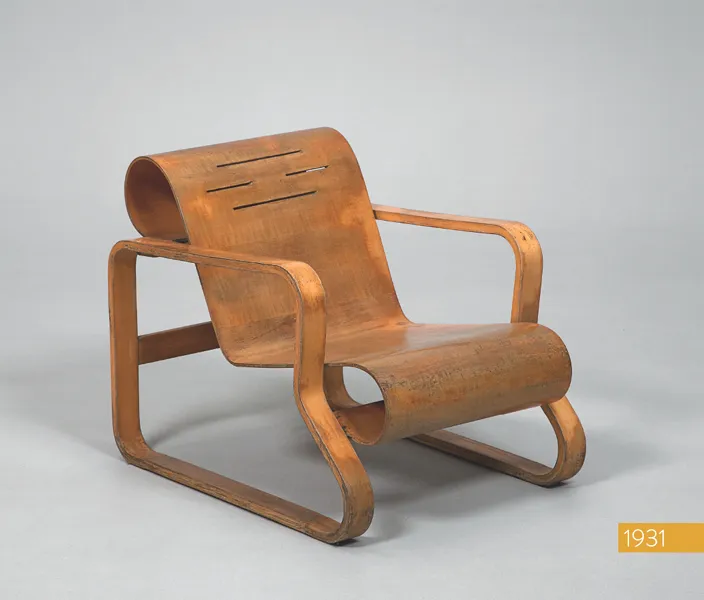
Graphic Design1 Paimio Armchair 41, Alvar Aalto
Are there ever times in history where you wonder, if I took that moment out what would the world have looked like? That moment in the midcentury modern story is Paimio. It is where our story starts. Paimio was a sanatorium. It was also a chair. A very special kind of chair that inspired Charles Eames and Eero Saarinen to take up bentwood as a technique after they visited Alvar Aalto’s architectural masterpiece and were blown away by the furniture inside.
Before the widespread use of antibiotics during the Second World War the only known cure for tuberculosis, otherwise known as “the white plague”, was rest, clean air and sunshine; therapy that often took a couple of years. So when king of the curve, architect Alvar Aalto won the commission to design a tuberculosis hospital in Paimio, south-west Finland – built between 1930 and 1932 and inaugurated in 1933 – he wanted the building and its furniture to be as much a contributor to the healing process as the treatment from its doctors and nurses.
With Aalto’s “medical instrument” came a huge roof terrace where patients would be taken in their beds as part of their daily routine to enjoy fresh air and views of the forest. A south-facing balcony was added to the end of each floor to give the bedridden as much sunlight as possible. Paths with water features wound around the grounds to encourage able patients to take walks. With his wife Aino he designed lighting fixtures and clocks, even door handles that would not catch on the doctors’ lab-coat sleeves as they were prone to do.
By using wood he gave the cantilever many of his contemporaries were working on in metal, a less clinical look. With Otto Korhonen of the Oy Huonekalu-ja Rakennustyötehdas AB furniture factory he was able to develop a new construction process for laminated birch or beech that made furniture more flexible.
Designed to sit the tuberculosis patient up at just the right angle to help them breathe, the Paimio Armchair features two loops of beech (later birch) fused together to form arms, legs and floor runners and a slither of layered and laminated wood balancing delicately in the middle. Aalto had Korhonen use heat and pressure to loop the layers of glued veneer into scrolls top and bottom to strengthen the places that generally get more wear and tear. These acted like springs, allowing a certain bounce. “Though buoyant as a spring cushion, the seat back is virtually unbreakable,” 7 Aalto said at the time.
Proof that Aalto pushed his lamination to the limit, a year later backrest slits were introduced to the design to release the stress from pressing. With the slits, the curve became even more flexible, which also made it easier to attach the handrails. Indeed, without the slits the chair could end up crooked, according to Korhonen’s great-grandson Joonas who still runs Artek’s A-factory (the name of the Oy Huonekalu-ja factory arm that now works with Artek as a subsidiary of Vitra). Whichever Paimio you prefer, you cannot help but marvel at Aalto’s sculptural tour de force that inspired some of the greatest designers of the twentieth century.
2 Armchair 31, Alvar Aalto, Oy Huonekalu-ja Rakennustyötehdas AB
In 1933, architectural critic Philip Morton Shand contacted Alvar Aalto to ask if he and his business partner Geoffrey Boumphrey could become the distributor for the Finnish master in the UK. Morton Shand had already struck up a friendship with Aalto and organized an exhibition of his work at Fortnum & Mason in November 1933, and he was keen to keep the momentum up. Aalto agreed; a London shop and distribution company was set up and Finmar soon became a temple to Scandinavian design. Boxy brown leather armchairs and three-piece suites were banished to the attic as Finmar brought Scandinavia’s light, bright and revolutionary concept for a new way of living to the UK. No one in Britain had seen such curvilinear pieces nor such extraordinary wood veneers until this point. Chairs hung from the walls of the Kingly Street shop. Clouds of delicately pleated Le Klint paper lanterns floated above dynamic pieces by Aalto, Arne Jacobsen, Hans Wegner and Børge Mogensen.
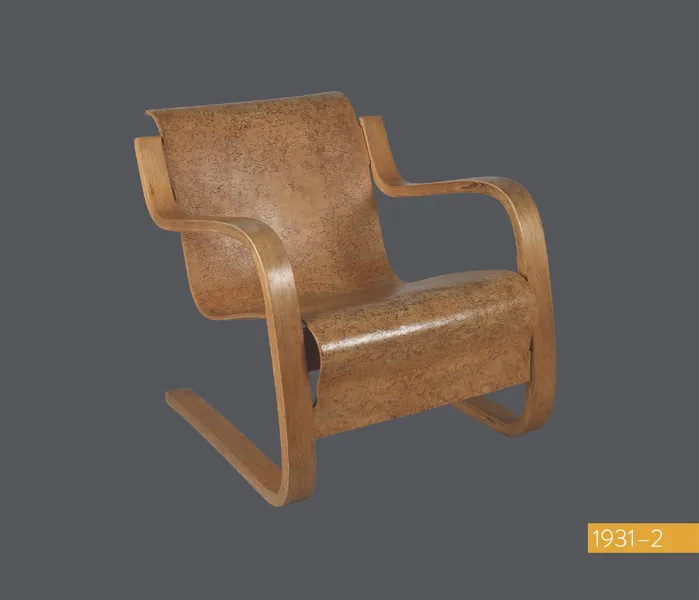
The 31 chair combines Scandinavian tradition with the cantilevered work of Mart Stam and the work of Marcel Breuer at the Bauhaus. Designed for the Paimio Sanatorium in 1931–2 and sold by Finmar from 1935, the chair in the photograph was bought around the time of a design-savvy man’s marriage to a North London widow during the war. Little did she know of its worth, until years later when her architect grandson spotted its familiar cantilevered shape in her attic and carefully peeled off layers of paint to find the masterpiece in Karelian birch underneath. This cantilevered chair was one of many designs that Morton Shand would have originally seen at Paimio in the patients’ rooms when he and Isokon’s Jack Pritchard were taken on a personal tour led by Aalto.
“There is a degree of honesty and solidity about Finnish design that gives it its value. Some of the furniture is being sold now 70 years later and looks as contemporary now as it did then. They are justifiably proud of their international icons.” 8
Tom Dixon
Savvy collectors will look for Karelian birch chairs like the one pictured where the pattern to the veneer is much more intricate. Even though the Karelian birch veneer was used post war at the Hedemora factory in Sweden, and since then in special Artek editions, many are rare examples from the pre-war era. The young fiancé was lucky to have got this particular chair. Oy Huonekalu-ja Rakennustyötehdas AB in Turku, the original factory working for Aalto, where Artek’s Aalto collection has been produced under the name A-factory since 2014, was unable to keep up with demand and many orders had to be put on hold. It was after Morton Shand’s coaxing that Aalto set up Artek to cope with the overspill – and Artek, with Aalto, became huge players in the design world.
3 Folding Chair, MK99200, Mogens Koch
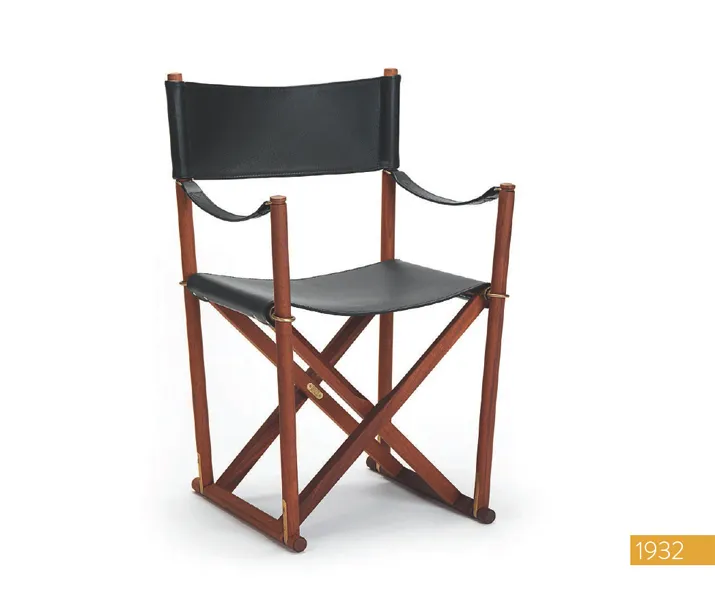
Mogens S. Koch, the son of the Danish designer of the same name, remembers his father pulling his Folding Chair, with its original canvas armrests, away from the fire at home for fear it would go up in flames. One of four prototypes the Koch family were forced to keep because no one would buy them, this chair was so ahead of its time that when fellow designer Børge Mogensen asked his manufacturer Andreas Graversen of Fredericia Møbelfabrik to put the folding chair into production in the fifties, Graversen rather scathingly replied that he would not be producing furniture made from what he called “sticks”.
First unveiled at a church interiors competition in 1932, with wooden balls as detailing, Koch’s Folding Chair was influenced by Kaare Klint’s favourite book, Safari: A Saga of the African Blue. Klint was Koch’s teacher at the Royal Academy of Fine Arts in Copenhagen, and loved telling his students the story of American cinematographer Martin Johnson’s three-year African adventure with his wife in the twenties. Koch, who later worked for him, particularly liked the image of the Johnsons sitting on the canvas and wood folding chairs of British officers outside their two-man tent. Klint also showed his students a folding stool he had designed in class with a student, based on the officer’s chair and using aircraft propeller shafts as inspiration for the leg design. The Propeller Stool folded vertically and could be converted from stool into side table with the simple addition of a wooden tray. Koch wanted to make his chair equally easy to store and transport, without losing its sophistication. He used brass rings on all four legs to create a smooth closing movement and leather to take it up a notch. Like the officer’s chairs the Johnsons used in the wild, the Folding Chair stabilizes itself automatically when a person sits on it.
Koch refused to give up on his ingenious prototype, which, by using brass and elegant woods like beech and mahogany, offered a refined alternative to earlier safari and director’s chairs. He introduced a more simplified version, without the ball detailing, at Copenhagen’s annual Cabinetmakers’ Guild Exhibition in 1935 with extended arms that he was forced to whittle and attach himself after his carpenter made the “sticks” too short. Ironically a Spanish firm who tried to copy the Folding Chair later chose this particular “extended” prototype and copies from this run have become a bit of a joke amongst Danish collectors.
No producer had the confidence to take the chair under its wing until designer Axel Thygesen from Interna happened upon Koch’s chair in an old Dansk Kunsthåndværk (Danish Craft) journal. Recommissioned with leather arms as part of a collection that included a smaller Grandchild Chair created for Axel Thygesen’s daughter Michaela, the collection was displayed at Købestævnet, a manufacturers’ exhibition, in 1950.
4 Deck Chair, Kaare Klint, Rud. Rasmussen
When he put the human at the very centre of both his and his students’ studies, Klaare Klint instigated a new way of thinking about furniture. He researched designs based on proportions adapted to the human body and extolled the use of the best and most local materials, paving the way for Danish design internationally. His studies resulted in a set of standardized measurements that are still used by designers today. Often referred to as the godfather of Danish design, Klint taught many of the design greats at the furniture school he headed up within the Royal Academy of Fine Arts in Copenhagen after it was founded in 1924. Stripping everything back to its function, including a Thomas Chippendale chair, his method of deconstructing and creating furniture in front of students including Grete Jalk and Børge Mogensen gave them a greater understanding of materials and construction.
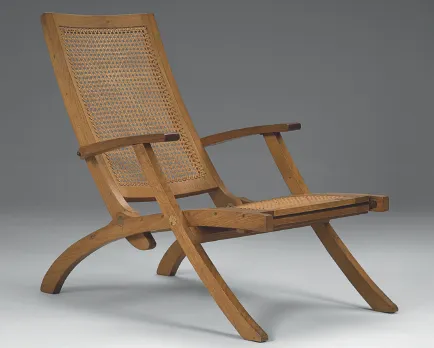
The idea of a folding chair is not a new one. Unearthed from archaeological digs in Egypt, Greece, Italy, the Far East and Scandinavia, Vikings carried them on their backs and Marcel Breuer and Gustav Hassenpflug played with folding chairs at the Bauhaus. Klint wanted to develop a more rational folding method than he had seen with cruise ship chairs, but while his use of teak enabled the user to take his 1933 Deck Chair inside and out, and an ingenious folding mechanism incorporating Klint’s favourite brass fittings ensured it could be stowed away in a neater way with its fellow lounge chairs in winter, the rattan involved in the seat would never have survived aboard a ship.
Savvy collectors look for a removable upholstered pillow and a thin padded mat that were part of the original design. The mat should be doubled back after the leg rest has been made to slide back under the chair with its folding stand. Klint made it just the right thickness to be comfortable when lying down and realized that doubling the mat when sitting up added the extra comfort needed to allow for adjusting your weight from lying down to sitting up. Testament to its good design, little has changed in the look of garden lounge chairs today. While “luxury teak lounger” companies have replaced the cane with teak bars, they have never quite been able to improve on Klint’s handmade design available in both teak and oak, and now only made to order by Rud. Rasmussen’s craftsmen. Early Deck Chairs are rare and highly collectable.
5 Zig Zag Chair, Gerrit Rietveld, Metz & Co.
In 1918–19 a Dutch architect and interior designer carefully constructed a wooden armchair using thirteen square battens, two rectangular armrests and two plank-style panels to create a new piece of furniture with intersecting planes that was all about sculptural functionality: a lesson in geometry, it was an armchair in its purest form. Painted in Mondrian colours in 1924, the Red and Blue Chair became a visual manifesto for the De Stijl movement and, as a technically challenging piece, has become an exercise for architects, many of whom try to make their own.
However it was Gerrit Rietveld’s Zig Zag Chair that had the greatest impact on midcentury designers themselves – including Verner Panton, who was influenced by Rietveld’s Z structure and the counterbalancing of weights in the way he designed his S-shaped Panton Chair. Rietveld called it a “construction joke” but his chair is as serious a piece of design history as his Red and Blue Chair. To look at the Zig Zag Chair you would think it would collapse as soon as any weight was placed on it. However, the movement of a human’s weight through the carefully constructed structure of balance and counterbalance, the dovetail joints between the seat and back, reinforcements with nuts and screws, strengthening wooden wedges placed in the corners and a longer bottom “zag” all add to the magic architectural formula that keeps it upright when a person sits on it.
Excited by Mart Stam’s experiments with the cantilever in 1926 and the brothers Heinz and Bodo Raschs’s Sitzgeiststuhl (Sitting Spirit Chair) of 1927, Rietveld initially tried bendi...
Table of contents
- Cover
- Title
- Contents
- Introduction
- 1 Paimio Armchair 41, Alvar Aalto
- 2 Armchair 31, Alvar Aalto, Oy Huonekalu-ja Rakennustyötehdas AB
- 3 Folding Chair, MK99200, Mogens Koch
- 4 Deck Chair, Kaare Klint, Rud. Rasmussen
- 5 Zig Zag Chair, Gerrit Rietveld, Metz & Co.
- 6 Eva Chair, T101, Bruno Mathsson, Firma Karl Mathsson
- 7 Chaise A, Xavier Pauchard, Tolix
- 8 Crate Chair, Gerrit Rietveld, Metz & Co.
- 9 Standard Chair, No. 4, Jean Prouvé, Ateliers Jean Prouvé
- 10 Long Chair, Marcel Breuer, Isokon Furniture Company
- 11 Lounge Chair 43, Alvar Aalto, Artek
- 12 Butterfly Chair, 198, Jorge Ferrari-Hardoy, Juan Kurchan and Antonio Bonet, Artek-Pascoe
- 13 Landi Chair, Hans Coray, P. & W. Blattmann Metallwarenfabrik
- 14 Sunbed, Aino Aalto, Artek
- 15 Tokyo Chaise Longue, 522, Charlotte Perriand, Cassina
- 16 Pelican Chair, Finn Juhl, Niels Vodder
- 17 Poet Sofa, 705/FJ41, Finn Juhl, Niels Vodder
- 18 Risom Lounge Chair, 654W, Jens Risom, Hans Knoll Furniture
- 19 Grass-seated Chair, George Nakashima, Nakashima Studio
- 20 Pernilla 3, Bruno Mathsson, Firma Karl Mathsson
- 21 Rocking Chair, J16, Hans J. Wegner, FDB Møbler
- 22 45 Chair, NV45, Finn Juhl, Niels Vodder
- 23 DCW (Dining Chair Wood) and LCW (Lounge Chair Wood), Charles and Ray Eames, Evans Products Company
- 24 Child’s Chair, Charles and Ray Eames, Evans Products Co.
- 25 Womb Chair, 70, Eero Saarinen, Knoll Associates
- 26 AX Chair, 6020, Peter Hvidt and Orla Mølgaard-Nielsen, Fritz Hansen
- 27 Peacock Chair, JH550, Hans J. Wegner, Johannes Hansen
- 28 Model 132U, Don Knorr, Knoll and Associates
- 29 Listen-To-Me Chaise, 4873, Edward J Wormley, Dunbar
- 30 RAR (Rocking Armchair Rod), Charles and Ray Eames, Herman Miller
- 31 Colonial Chair, OW149, Ole Wanscher, A.J. Iversen
- 32 Antropus, 721, Marco Zanuso, Ar-flex
- 33 Chieftain Chair, Finn Juhl, Niels Vodder
- 34 Round Chair, JH503, Hans J. Wegner, Johannes Hansen
- 35 Folding Chair, JH512, Hans J. Wegner, Johannes Hansen
- 36 Wishbone Chair, CH24, Hans J. Wegner, Carl Hansen & Søn
- 37 Side Chair, 939, Ray Komai, J.G. Furniture Systems
- 38 Papa Bear Chair, AP19, Hans J. Wegner, A.P. Stolen
- 39 Hillestak, Robin Day, S. Hille and Co.
- 40 Antelope Chair, Ernest Race, Race Furniture
- 41 The Upholstered Wire Chair, DKR (Dining K-Wire Shell, R-Wire Base/Rod Iron Base), Charles and Ray Eames, Herman Miller
- 42 Element Chair, PK25, Poul Kjærholm, Fritz Hansen
- 43 Lady Chair, Marco Zanuso, Ar-flex
- 44 Ant Chair, 3100, Arne Jacobsen, Fritz Hansen
- 45 Diamond Chair, 421LU, Harry Bertoia, Knoll Associates
- 46 Reclining Chair, Robin Day, Hille
- 47 675 Chair, Robin Day, Hille
- 48 Casa del Sole Side Chair, Carlo Mollino, Ettore Canali and Apelli & Varesio
- 49 Teak and Cane Sofa, FD147, Peter Hvidt and Orla Mølgaard-Nielsen, France & Son
- 50 Revolt Chair, Friso Kramer, De Cirkel
- 51 Valet Chair, JH540, Hans J. Wegner, Johannes Hansen
- 52 Rocking Stool, Isamu Noguchi, Knoll Associates
- 53 Mezzadro, Achille and Pier Giacomo Castiglioni
- 54 Coconut Chair, 5569, George Nelson, Herman Miller
- 55 Eames Lounge Chair, 670, and Ottoman, 671, Charles and Ray Eames, Herman Miller
- 56 Series 7 Chair, 3107, Arne Jacobsen, Fritz Hansen
- 57 Butterfly Stool, Sori Yanagi, Tendo Mokko
- 58 PK22, Poul Kjærholm, E. Kold Christensen
- 59 Marshmallow Love Seat, 5670, George Nelson Associates, Herman Miller
- 60 DAF Swag Leg Armchair, George Nelson, Herman Miller
- 61 Lamino Easy Chair, Yngve Ekström, Swedese
- 62 Tulip Chair, 151, Eero Saarinen, Knoll and Associates
- 63 Scandia Chair, Hans Brattrud, Hove Möbler
- 64 School Stacking Chair, Lucian R. Ercolani, Ercol
- 65 Chandigarh Desk Chair, Pierre Jeanneret, Le Corbusier and Pierre Jeanneret
- 66 Superleggera, 699, Gio Ponti, Figli di Amedeo Cassina
- 67 Grand Prix, 4130, Arne Jacobsen, Fritz Hansen
- 68 Cherner Armchair, Norman Cherner, Plycraft
- 69 Egg Chair, 3316, Arne Jacobsen, Fritz Hansen
- 70 Swan Chair, 3320, Arne Jacobsen, Fritz Hansen
- 71 Cone Chair, Verner Panton, Plus-linje
- 72 Hanging Egg Chair, Nanna and Jørgen Ditzel, R. Wengler
- 73 Spanish Chair, 2226, Børge Mogensen, Fredericia Møbelfabrik
- 74 Time-Life Stool, Charles and Ray Eames, Herman Miller
- 75 Time-Life Lobby Chair, ES108, Charles and Ray Eames, Herman Miller
- 76 Mushroom Chair, 560, Pierre Paulin, Artifort
- 77 Panton Chair, Verner Panton, Vitra
- 78 Bar Stool, Erik Buch, OD61, Oddense Maskinsnedkeri
- 79 G Plan Easy Chair, 6250R, Paul Conti, E. Gomme
- 80 Corona Chair, EJ 5, Poul M. Volther, Erik Jørgensen
- 81 Elda Armchair, Joe Colombo, Comfort
- 82 GJ Chair, Grete Jalk, Poul Jeppesen
- 83 Djinn Chair, Olivier Mourgue, Airborne International
- 84 Ball Chair, Eero Aarnio, Asko Oy
- 85 Executive Chair, Charles Pollock, Knoll & Associates
- 86 40/4, David Rowland, General Fireproofing Co.
- 87 Big Tulip Armchair, F545, Pierre Paulin, Artifort
- 88 Universale Chair, 4860, Joe Colombo, Kartell
- 89 Easy Chairs, SZ01 and SZ02, Martin Visser, ‘t Spectrum
- 90 Platner Armchair, Warren Platner, Knoll International
- 91 Blow, Jonathan De Pas, Donato D’Urbino, Paolo Lomazzi and Carla Scolari, Zanotta SpA
- 92 Seagull Chair, 3208, Arne Jacobsen, Fritz Hansen
- 93 Garden Egg Chair, Peter Ghyczy, Elastogran GmbH
- 94 Soft Pad Chair, 217, Charles and Ray Eames, Herman Miller
- 95 UP5 Donna, Gaetano Pesce, C&B Italia
- 96 Birillo Bar Stool, Joe Colombo, Zanotta
- 97 OMK, Rodney Kinsman, OMK Design
- 98 Synthesis 45 Typist Chair, Z9/r, Ettore Sottsass Jr, Olivetti
- 99 Falcon Chair, Sigurd Resell, Vatne Lenestolfabrikk
- 100 Wiggle Side Chair, Frank Gehry, Easy Edges
- About the author/Contributors
- Picture credits
- Directory
- Notes
- Index
- Copyright
Trusted by 375,005 students
Access to over 1.5 million titles for a fair monthly price.
Study more efficiently using our study tools.
Frequently asked questions
Yes, you can cancel anytime from the Subscription tab in your account settings on the Perlego website. Your subscription will stay active until the end of your current billing period. Learn how to cancel your subscription
No, books cannot be downloaded as external files, such as PDFs, for use outside of Perlego. However, you can download books within the Perlego app for offline reading on mobile or tablet. Learn how to download books offline
Perlego offers two plans: Essential and Complete
- Essential is ideal for learners and professionals who enjoy exploring a wide range of subjects. Access the Essential Library with 800,000+ trusted titles and best-sellers across business, personal growth, and the humanities. Includes unlimited reading time and Standard Read Aloud voice.
- Complete: Perfect for advanced learners and researchers needing full, unrestricted access. Unlock 1.5M+ books across hundreds of subjects, including academic and specialized titles. The Complete Plan also includes advanced features like Premium Read Aloud and Research Assistant.
We are an online textbook subscription service, where you can get access to an entire online library for less than the price of a single book per month. With over 1.5 million books across 990+ topics, we’ve got you covered! Learn about our mission
Look out for the read-aloud symbol on your next book to see if you can listen to it. The read-aloud tool reads text aloud for you, highlighting the text as it is being read. You can pause it, speed it up and slow it down. Learn more about Read Aloud
Yes! You can use the Perlego app on both iOS and Android devices to read anytime, anywhere — even offline. Perfect for commutes or when you’re on the go.
Please note we cannot support devices running on iOS 13 and Android 7 or earlier. Learn more about using the app
Please note we cannot support devices running on iOS 13 and Android 7 or earlier. Learn more about using the app
Yes, you can access 100 Midcentury Chairs by Lucy Ryder Richardson in PDF and/or ePUB format, as well as other popular books in Design & Graphic Design. We have over 1.5 million books available in our catalogue for you to explore.