Bestselling author of
Broken Ground "offers fascinating glimpses" into the real world of criminal forensics from its beginnings to the modern day (
The Boston Globe).
The dead can tell us all about themselves: where they came from, how they lived, how they died, and, of course, who killed them. Using the messages left by a corpse, a crime scene, or the faintest of human traces, forensic scientists unlock the mysteries of the past and serve justice. In
Forensics, international bestselling crime author Val McDermid guides readers through this field, drawing on interviews with top-level professionals, ground-breaking research, and her own experiences on the scene.
Along the way, McDermid discovers how maggots collected from a corpse can help determine one's time of death; how a DNA trace a millionth the size of a grain of salt can be used to convict a killer; and how a team of young Argentine scientists led by a maverick American anthropologist were able to uncover the victims of a genocide.
Prepare to travel to war zones, fire scenes, and autopsy suites as McDermid comes into contact with both extraordinary bravery and wickedness, tracing the history of forensics from its earliest beginnings to the cutting-edge science of the modern day.

- 320 pages
- English
- ePUB (mobile friendly)
- Available on iOS & Android
eBook - ePub
About this book
Information
Print ISBN
9780802125156
Subtopic
Forensic MedicineONE
THE CRIME SCENE
The scene is the silent witness
Peter Arnold, crime scene specialist
‘Code Zero. Officer in need of assistance.’ It’s the call sign every British police officer dreads. One grey November afternoon in Bradford in 2005, PC Teresa Millburn’s broken words on the radio sent a chill round the West Yorkshire Police control room. Her message heralded a case that touched everyone in the police community. That afternoon, the fear that cops live with every day became a bleak reality for two women.
Teresa and her partner, PC Sharon Beshenivsky, just nine months into the job, were near the end of their shift in their patrol car, their task a roving, watching brief. There to intervene in minor incidents. To be a visible presence on the streets. Sharon was looking forward to getting home for her youngest child’s fourth birthday party and, with less than half an hour till she and Teresa clocked off, it looked like she would be in time for the cake and the party games.
Then, just after half-past three, a message came through. A silent attack alarm linked directly to the police central control had been set off in Universal Express, a local travel agent’s shop. The two women would be passing anyway on their way back to the station, so they decided to take the call. They parked up opposite the shop and crossed the busy road to the long single-storey brick building, its picture windows obscured by vertical blinds.
As they reached the shop, they came face to face with a trio of armed robbers. Sharon was shot in the chest at point blank range. Later, at the trial of Sharon’s killers, Teresa said, ‘We were a stride apart. Sharon walked in front of me. Then she stopped. She stopped dead – she stopped that quickly that I overstepped. I heard a bang and Sharon fell to the ground.’
Moments later, Teresa was also shot in the chest. ‘I was lying on the floor. I was coughing up blood. I could feel blood running down my nose and blood over my face, and I was gasping for breath.’ Yet she managed to press the panic button and alert the control room with those fateful words ‘Code Zero’.
Peter Arnold, a Crime Scene Investigator (CSI) for the Yorkshire and Humberside Scientific Support Services, heard the code call on the radio. ‘I’ll never forget it. I could see the scene from the police station; it was literally just up the road. And suddenly there was a sea of police officers running up the road. I’ve never seen so many police officers running at one time, it was like a fire evacuation.
‘At first I didn’t know what was going on. Then I heard over the radio that someone had been shot, possibly a police officer. So I just ran too. I was the first CSI to the scene. I wanted to support the officers in terms of getting the cordons up, making sure we’d got the scene preserved, because it was very emotive at the time, as you can imagine, and we just needed to bring some order to that.
‘I spent the best part of two weeks processing that scene. Some very long hours. I’d start at seven in the morning and wouldn’t get home till midnight. I remember being absolutely exhausted afterwards, but at the time I didn’t care. That will live with me forever. I’ll never forget that scene. Not because it was so high profile but because it was so personal, because it was a colleague that had been murdered. The fact that Sharon was a police officer made her part of my family. Others who knew her were even more upset, but they all swallowed their grief and got on with the job.’
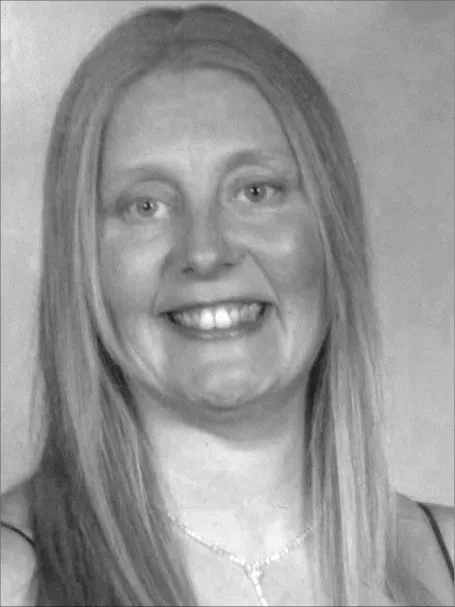
Police Officer Sharon Beshenivsky, who died after being shot at point blank range by a gang of armed robbers
‘And we had some very good forensic results that really contributed to the case as well, not just at that scene but at the peripheral scenes as well: the getaway vehicles and the premises they went to afterwards.’
The men responsible for the armed robbery that left Sharon Beshenivsky’s husband a widower, and her three children motherless, were later brought to trial and jailed for life. The conviction was mainly down to the work of CSIs and other forensic experts, people who find evidence, interpret it and eventually present it in court. We will follow that evidential journey in this book.
Every sudden violent death carries its own story. To read it, investigators begin with two primary resources – the crime scene and the body of the deceased. Ideally they discover the body at the scene; looking at the relationship between the two helps investigators reconstruct the sequence of events. But that’s not always the case. Sharon Beshenivsky was rushed to hospital in the forlorn hope that she might be resuscitated. Other fatally wounded people sometimes manage to make their way some distance from where they were attacked. Some killers move the body, either with the intention of hiding it or simply to confuse detectives.
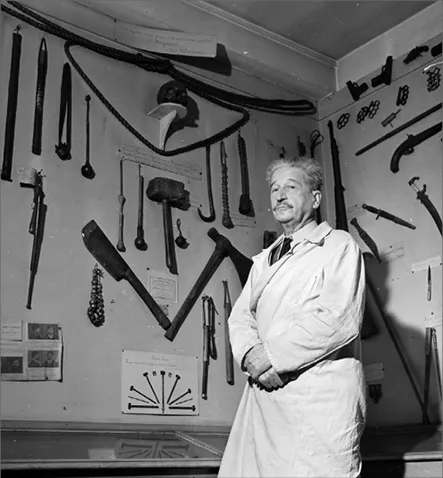
Edmond Locard, who opened the world’s first crime investigation laboratory, also coined the forensic scientists’ watchword, ‘every contact leaves a trace.’
Whatever the circumstances, scientists have developed methods that provide detectives with an array of information to read the story of a death. To make that story credible in a court of law, the prosecution has to show that the evidence is robust and uncontaminated. And so crime scene management has become the front line in the investigation of murder. As Peter Arnold says, ‘The scene is the silent witness. The victim can’t tell us what happened, the suspect probably isn’t going to tell us what happened, so we need to give a hypothesis that explains what has taken place.’
The accuracy of such hypotheses has developed in tandem with our understanding of what it’s possible to learn from the scene of the crime. In the nineteenth century, as evidence-based legal proceedings became the norm, the preservation of evidence remained rudimentary. The notion of contamination wasn’t part of the reckoning. And considering the narrow limits to what scientific analysis could achieve, this wasn’t such a big problem. But the limits expanded as scientists applied their increasing knowledge in practical ways.
One of the key figures in the understanding of crime scene evidence was the Frenchman Edmond Locard. After studying medicine and law in Lyons, he opened the world’s first crime investigation laboratory in 1910. The Lyon police department gave him two attic rooms and two assistants, and from these cramped beginnings he grew the place into an international centre. From an early age Locard had been an avid reader of Arthur Conan Doyle, and was particularly influenced by A Study in Scarlet (1887), in which Sherlock Holmes makes his first appearance. In that novel Holmes says, ‘I have made a special study of cigar ashes – in fact, I have written a monograph upon the subject. I flatter myself that I can distinguish at a glance the ash of any known brand, either of cigar or of tobacco.’ In 1929, Locard published a paper on the identification of tobacco by studying ashes found at a crime scene, ‘The Analysis of Dust Traces’.
He wrote a landmark 7-volume textbook on what he called ‘criminalistics’, but probably his most influential contribution to forensic science is his simple phrase, known as the Locard Exchange Principle: ‘Every contact leaves a trace.’ He wrote: ‘It is impossible for a criminal to act, especially considering the intensity of a crime, without leaving traces of his presence.’ It might be fingerprints, footprints, identifiable fibres from his clothing or his environment, hair, skin, a weapon or items accidentally dropped or left behind. And the converse is also true – the crime leaves traces with the criminal. Dirt, fibres from the victim or the scene itself, DNA, blood or other stains. Locard demonstrated the power of this principle in his own investigations. In one case, he unmasked a killer who appeared to have a solid alibi for his girlfriend’s murder. Locard analysed traces of pink dust found among the dirt under the suspect’s fingernails and proved that the powder was a unique make-up made for the victim. Confronted with the evidence, the killer confessed.
The influence of dedicated laboratory scientists continues apace. But without the initial fastidious work at the crime scene, science has nothing to work on. One unlikely pioneer of reading a crime scene like a narrative was Frances Glessner Lee, a wealthy Chicago heiress who founded the Harvard School of Legal Medicine in 1931, the first of its kind in the US. Lee constructed a series of intricate replicas of actual crime scenes, complete with working doors, windows, cupboards and lights. She christened these macabre dolls’ houses ‘Nutshell Studies of Unexplained Death’ and used them in a series of conferences on understanding crime scenes. Investigators spent up to ninety minutes studying the dioramas and were then invited to write a report on their conclusions. Erle Stanley Gardner, the crime writer whose Perry Mason mysteries were the basis for a long-running TV series, wrote: ‘A person studying these models can learn more about circumstantial evidence in an hour than he could learn in months of abstract study.’ The eighteen models are still being used for training purposes more than fifty years later by the Office of the Chief Medical Examiner of Maryland.
While Frances Glessner Lee would recognise the principles of modern crime scene management, most of the details would be alien to her. Paper suits, nitrile gloves, protective masks – all the paraphernalia of modern CSI work has given it a rigour that early criminalists only dreamed of. Such was the rigour that was brought to bear on Sharon Beshenivsky’s murder; a textbook example of investigators following every promising lead to its conclusion. As always, detectives relied heavily on the information supplied by the forensics team.
At the front line in this process are the CSIs. They start their career path on a residential development programme that gives them a grounding in basic skills and techniques for identifying, collecting and preserving evidence. When they return to their base, they are closely mentored while they build up on-the-job experience, starting with lower level crime and working their way up to more difficult cases as they acquire knowledge and skills. They have to provide a portfolio of evidence over time to demonstrate their competency.
We’ve seen enough crime scenes processed on TV. We all think we know how it’s done; the white-coated professionals painstakingly photographing, bagging and preserving vital evidence. But what is the reality? What do CSIs really do? What happens after a body has been discovered?
Generally, the first police to arrive are in uniform. The decision on whether the death in question is suspicious rests with a plain-clothes officer of the rank of Detective or above. Once the detective has determined that it could be a homicide, the scene is preserved for the CSIs. The police withdraw, set a perimeter with cordon tape and start a scene log. Anyone who enters or leaves the scene is recorded, so every possible source of contaminated evidence is listed.
A lead detective takes charge of the investigation. All CSIs are accountable to them, and the buck stops with them. The lead detective decides what they need as far as CSI response and evidence collection, but the DA may later request another testing closer to trial.
Peter Arnold is a trim bundle of energy with the sharp eyes of a blackbird and an obvious enthusiasm for his job. An Area Forensic Manager in the UK, he oversees CSIs, advises detectives and coordinates scientific resources, and his unit serves four separate police forces. They are the UK’s biggest scientific support service outside the London Metropolitan Police, with a staff of around 500. They work a 24-hour shift pattern to provide a round-the-clock service to detectives investigating every type of crime imaginable. The service is based just off the M1 near Wakefield, in a custom-built centre named after Sir Alec Jeffreys, the father of DNA profiling. It overlooks a manmade lake whose rural tranquillity is in sharp contrast to the cutting-edge science that happens inside the building.
‘As soon as I get that first call, I start coordinating resources,’ says Peter. ‘If it’s an indoor scene, there’s not so much of a hurry because nothing’s going to get snowed on, nothing’s going to get rained on; it’s now a sterile, preserved scene and we will deal with it in a more considered manner. But if it’s an outside scene, it’s the middle of winter and it’s about to throw down with rain, I’ll get st...
Table of contents
- FORENSICS
- Also by Val McDermid
- Title Page
- Copyright Page
- Contents
- Dedication
- Preface
- CHAPTER ONE: Crime Scene
- CHAPTER TWO: Fire Scene Investigation
- CHAPTER THREE: Entomology
- CHAPTER FOUR: Pathology
- CHAPTER FIVE: Toxicology
- CHAPTER SIX: Fingerprinting
- Color Photo Insert
- CHAPTER SEVEN: Blood Spatter and DNA
- CHAPTER EIGHT: Anthropology
- CHAPTER NINE: Facial Reconstruction
- CHAPTER TEN: Digital Forensics
- CHAPTER ELEVEN: Forensic Psychology
- CHAPTER TWELVE: The Courtroom
- Conclusion
- Preview: 1979
- Acknowledgements
- Select Bibliography
- Illustration Credits
- Index
Trusted by 375,005 students
Access to over 1.5 million titles for a fair monthly price.
Study more efficiently using our study tools.
Frequently asked questions
Yes, you can cancel anytime from the Subscription tab in your account settings on the Perlego website. Your subscription will stay active until the end of your current billing period. Learn how to cancel your subscription
No, books cannot be downloaded as external files, such as PDFs, for use outside of Perlego. However, you can download books within the Perlego app for offline reading on mobile or tablet. Learn how to download books offline
Perlego offers two plans: Essential and Complete
- Essential is ideal for learners and professionals who enjoy exploring a wide range of subjects. Access the Essential Library with 800,000+ trusted titles and best-sellers across business, personal growth, and the humanities. Includes unlimited reading time and Standard Read Aloud voice.
- Complete: Perfect for advanced learners and researchers needing full, unrestricted access. Unlock 1.5M+ books across hundreds of subjects, including academic and specialized titles. The Complete Plan also includes advanced features like Premium Read Aloud and Research Assistant.
We are an online textbook subscription service, where you can get access to an entire online library for less than the price of a single book per month. With over 1.5 million books across 990+ topics, we’ve got you covered! Learn about our mission
Look out for the read-aloud symbol on your next book to see if you can listen to it. The read-aloud tool reads text aloud for you, highlighting the text as it is being read. You can pause it, speed it up and slow it down. Learn more about Read Aloud
Yes! You can use the Perlego app on both iOS and Android devices to read anytime, anywhere — even offline. Perfect for commutes or when you’re on the go.
Please note we cannot support devices running on iOS 13 and Android 7 or earlier. Learn more about using the app
Please note we cannot support devices running on iOS 13 and Android 7 or earlier. Learn more about using the app
Yes, you can access Forensics by Val McDermid in PDF and/or ePUB format. We have over 1.5 million books available in our catalogue for you to explore.