A health expert "explores ways survivors can live a preventative lifestyle so they can continue to thrive" (Kerry Monaghan, nutrition and wellness coach).
For the more than eleven million cancer survivors in the United States, a healthy lifestyle is essential after treatment. Cancer wellness writer Suzanne Boothby aims to provide this invaluable information to cancer survivors in her book,
The After Cancer Diet. In it, Suzanne shares what cancer survivors should eat, drink, and do to remain cancer-free for life, including sample recipes, regular exercise routines, detox programs, and overall advice for leading a healthy, happy life full of creativity and joy.
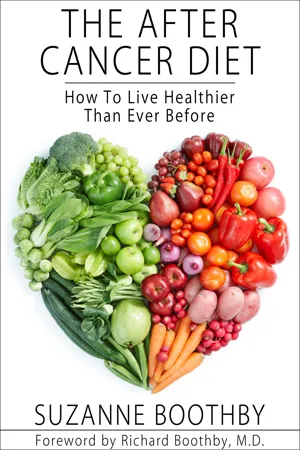
- 112 pages
- English
- ePUB (mobile friendly)
- Available on iOS & Android
eBook - ePub
About this book
Information
Topic
MedicineSubtopic
Diseases & Allergies Chapter 1: Discover Your Diet
Oscar Wilde said, “I can't stand people who do not take food seriously.”
In all my years of experimenting with nutrition and diet, I have to say, I agree wholeheartedly. Food is the foundation for health. When we put the right foods in our body, the system runs smoothly. When we put junk in our body, the system breaks down. Sometimes this breakdown is minor and expressed in little aches and pains or energy slumps. Over time, it’s expressed in larger ways like cancer, heart disease and diabetes. Food is an avenue to manage this breakdown and, in some cases, reverse the direction.
The problem, of course, is that we are all different, so I can’t give you the perfect formula to maintain health and balance in the body. I can recommend where to start, give you guidelines to get to know your body better and help you learn the signals of good health.
I think life has a certain rhythm to it. Wake up, shower, get dressed, eat breakfast, go to work, do your work, eat lunch, take a break, eat a snack, finish the day, come home, eat dinner, unwind from the day, go to bed.
Maybe your routine is different, but whatever your day looks like, eating is a big part of it. Food is the fuel we use to power up each and every day. It nourishes our cells and our souls at very deep levels.
When was the last time you actually thought about your diet? You know all that food you eat every day. Food is a daily decision and when you understand the importance of eating well, your world can expand in so many new directions.
My dad is a great example. He used to drink three to four cans of diet soda a day. He didn’t consider it much—it was usually available in the doctor’s lounge. He was always dragging by mid-afternoon and was not sleeping that well at night. While he was studying nutrition, he tried an experiment. He quit drinking diet soda cold turkey and replaced it with water and tea. Within about two weeks, he was more energetic during the day and was sleeping through the night. That’s the power of fueling your body well.
Here are a few questions for you to consider:
o Does your day start with energy and vitality, or are you dragging yourself from your bed to your coffeemaker?
o Are you feeding your body, or are you feeding your desires?
o Do you end your day with the same energy as when you woke up?
Vibrant health makes your day. When you feel powerful around your food choices, your whole life opens up.
You may think, “Sure, I’d love to be healthier, but I don’t want to be one of those health nuts. I’m not interested in eating bunny food all day long. I don’t want to give up my favorite foods or feel hungry all the time.”
I like to think of it this way: Each day, when I wake up I have a new opportunity to treat myself well. Each meal is an offering to my body and an act of self-care. Whether I am having a green smoothie or a chocolate chip cookie, I always feed myself with love. When eating is self-care, you become very generous with a dynamic combination of nutrients, flavors, and colors.
So I encourage you to start with this same mindset. Every time you eat, you can think, “I am worth every effort it took to make this meal—from the farmer who cultivated the veggies to the person who took the time to prepare this food.”
A new area of scientific study also offers hope and inspiration for the power of nutrition and lifestyle. One of my favorite integrative doctors in New York City, Dr. Frank Lipman, loves to discuss this topic called epigenetics. It looks at how you can change your genes in this lifetime based on diet and lifestyle factors.
While there is plenty of science to back it, I think you have already seen it firsthand. Have you ever met someone who just looked way older than they should? Maybe someone who has “lived a hard life.” Many celebrities or rock stars come to mind for me. That’s epigenetics at play. Similarly, I have nutrition-school friends in their 50s and 60s who radiate youth and easily look 10 years younger than their actual age.
I’ve heard Dr. Lipman describe epigenetics in such an inspiring way.
“Your genes are not set in stone and how you live your life really does matter,” he said at a talk at the Urban Zen Foundation in New York City.
“There are thousands of genes that render you susceptible to the classic, chronic diseases so many people are experiencing today, such as heart disease, obesity, diabetes and cancer. But whether or not these genes are expressed, and blossom into disease, may be determined by how you live your life, how you eat, the toxins you're exposed to, the supplements you take, your beliefs and how you handle stress,” he wrote in an article.
I don’t want to get too scientific here, but the basic gist is that you have control of your health. You don’t have to sit around waiting for your next check-up. You don’t have to fear that the cancer will come back. You can make simple, sustainable changes to your diet and begin to create your new future.
A great example is Dr. Barry Sears, biochemist and author of the bestselling, The Zone Diet. Sears became interested in health research when his father died of a heart attack at the age of 53 and his father’s three brothers died of heart attacks a few years later. Sears thought he was doomed to the same fate and so he started to work on ways to combat heart disease as a researcher at Boston University’s School of Medicine and Massachusetts Institute of Technology. His work led him to nutritional science and evolved into the Zone diet. Sears has outlived all of his relatives. He is now in his 60s and continues to promote healthy diet as a means to combat and reverse chronic conditions.
So here’s the goal: eat well and enjoy the foods you eat. You can develop a taste for the foods that will fuel your recovery and heal your body. As a cancer thriver, you have overcome health challenges many people can only imagine. But I know you can keep that strength going and try some new ways of eating and living. Keep reading and keep with it.
Many people get stuck with where to begin. So I say, start where you are. This diet is not about a radical transformation; it’s about small steps. If you can take on one challenge a week, you can change your life and tremendously improve your health.
Challenge One: Eat real food.
Much of the food you eat these days comes from boxes, cans, and bags. Real food comes from a place. Apples grow on trees. Corn grows on a stalk. When you are at the grocery store, look at the label of the food you are about to purchase. If you see a long list of ingredients and/or ingredients you can’t pronounce, you are not moving in the direction of real food.
If you go out to eat at a standard restaurant, most of the food is dead and colorless. Imagine that food going into your system and fueling your cells, blood, tissue, muscles, etc. It’s not the same as fresh, colorful food full of vital nutrients and vitamins. Real food examples include carrots, cucumbers, lettuce, rice, lentils, or walnuts.
When was the last time you created a real food meal?
I spent a year living in New Zealand and working on organic farms. At many of the places I stayed, when we got hungry, we would head to the garden and see what looked good. It was fun to connect with the rich smells, textures, and colors of all the vegetables. I use this same approach at the grocery store or the farmers’ market today. Each meal begins with delicious, real food.
Now you might be a creature of habit. My great uncle has been eating the same meals for decades. Thursdays are spaghetti night. Sundays are Chinese food night. You may have a similar routine and that’s OK.
You can keep your routine—just add something new to it. Try a real food. If you always order fettuccine Alfredo, order it with a side of broccoli. Green vegetables have the most impact so go for things like broccoli, green beans, cucumbers, celery or Romaine lettuce. Once you have developed a taste for these greens, you can graduate to powerhouse veggies like cabbage, kale, and collards. And eventually, your taste will naturally shift to more healthful foods.
Challenge Two: Eat More Like a Vegetarian (And Especially Eat Your Greens)
So much research exists on the benefits of a plant-based diet, especially when it comes to cancer. “Eating a plant-based diet rich in phytochemicals, antioxidants, fiber, and other healthful plant compounds is the best way to prevent cancer—along with regular physical activity, not smoking, and being at a healthy body weight” said Colleen Doyle, MS, RD, director of nutrition and physical activity for the American Cancer Society.
I was a vegetarian for almost 10 years, so I know how great it can feel in the body. I also know the mental hurdles to stick with a restrictive diet. Ultimately, I found that my body was happier and healthier with small amounts of quality meat, but I know many vegetarians and vegans who are successful with it. Our culture has come a long way in supporting the vegetarian lifestyle, but all vegetarian, all the time is not realistic for everyone. If vegetarianism isn’t for you, I still think you can eat more like a vegetarian.
Here’s a few quick, easy ways to eat more like a vegetarian:
1. Try going meatless on Mondays. Meatless Monday is a national group who promotes cutting out meat one day a week and offers tons of recipes and support. http://www.meatlessmonday.com
2. Pick one or two meals each day to cut out meat. If you have bacon for breakfast, opt for a lentil soup for lunch. If you are going out for a special occasion steak dinner, don’t eat meat at breakfast and lunch.
3. Think of meat more like a side dish and make vegetables and grains the main event on your plate. I’ve found just a few bites of meat goes a long way.
4. Visit a farm or an animal sanctuary. Remembering where our food comes from helps us feel more empathetic toward animals and more excited about veggie options.
5. Eat more vegetables! Keep your same eating habits with meat, but just add more veggies to every meal and eventually your taste buds with crave more plant-based foods.
If you are a meat eater, begin by upgrading your meat. Look for animal products that are raised without antibiotics, grass-fed, and pasture-raised. These distinctions will combat most of what is wrong with modern factory-farmed meat. Grass-fed in particular means that the animals have less fat, calories and more omega-3 fatty acids, which you will learn in a later challenge help ...
Table of contents
- Foreword by Richard Boothby, M.D.
- Introduction
- Chapter 1: Discover Your Diet
- Chapter 2: Develop a Healthy Thirst
- Chapter 3: Move Your Body
- Chapter 4: Get the Toxins Out
- Chapter 5: Super Size Your Health
- Chapter 6: Free Your Mind
- Chapter 7: Create the Rest of Your Life
- Recipes
- Resources, Websites and Support
- About the Authors
Trusted by 375,005 students
Access to over 1.5 million titles for a fair monthly price.
Study more efficiently using our study tools.
Frequently asked questions
Yes, you can cancel anytime from the Subscription tab in your account settings on the Perlego website. Your subscription will stay active until the end of your current billing period. Learn how to cancel your subscription
No, books cannot be downloaded as external files, such as PDFs, for use outside of Perlego. However, you can download books within the Perlego app for offline reading on mobile or tablet. Learn how to download books offline
Perlego offers two plans: Essential and Complete
- Essential is ideal for learners and professionals who enjoy exploring a wide range of subjects. Access the Essential Library with 800,000+ trusted titles and best-sellers across business, personal growth, and the humanities. Includes unlimited reading time and Standard Read Aloud voice.
- Complete: Perfect for advanced learners and researchers needing full, unrestricted access. Unlock 1.5M+ books across hundreds of subjects, including academic and specialized titles. The Complete Plan also includes advanced features like Premium Read Aloud and Research Assistant.
We are an online textbook subscription service, where you can get access to an entire online library for less than the price of a single book per month. With over 1.5 million books across 990+ topics, we’ve got you covered! Learn about our mission
Look out for the read-aloud symbol on your next book to see if you can listen to it. The read-aloud tool reads text aloud for you, highlighting the text as it is being read. You can pause it, speed it up and slow it down. Learn more about Read Aloud
Yes! You can use the Perlego app on both iOS and Android devices to read anytime, anywhere — even offline. Perfect for commutes or when you’re on the go.
Please note we cannot support devices running on iOS 13 and Android 7 or earlier. Learn more about using the app
Please note we cannot support devices running on iOS 13 and Android 7 or earlier. Learn more about using the app
Yes, you can access The After Cancer Diet by Suzanne Boothby in PDF and/or ePUB format, as well as other popular books in Medicine & Diseases & Allergies. We have over 1.5 million books available in our catalogue for you to explore.