A "profusely illustrated" and "impressively informative" look at the end of the steam locomotive era on one of UK's Big Four railway lines (
Midwest Book Review).
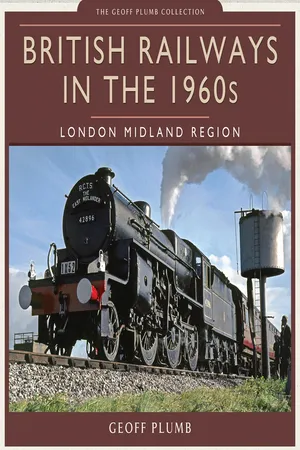
After the Second War, Britain's railways were rundown and worn out, requiring massive investment and modernization. The Big Four railway companies were nationalized from 1948, and the newly formed British Railways embarked on a program of building new Standard steam locomotives to replace older types. These started to come on stream from 1951.
This program was superseded by the 1955 scheme to dieselize and electrify many lines and so the last loco of the Standard types was built in 1960 and the steam locomotives had been swept entirely from the BR network by 1968.
This series of books, The Geoff Plumb Collection, is a photographic account of those last few years of the steam locomotives, their decline and replacement during the transition years. Each book covers one of the former Big Four, the Southern Railway, London Midland & Scottish Railway, Great Western Railway and London & North Eastern Railway, including some pictures of the Scottish lines of the LMS and LNER.
Though not a complete history of the railways, the books bring a sense of occasion to the last run of a locomotive type or a stretch of line about to be closed down. Pictures are of the highest quality that could be produced with the equipment then available, but they do reflect real life and real times. In simple terms, a look at a period not so long ago but now gone forever.
"An evocative collection of views of the twilight of BR steam." —Railway Modeller
- 169 pages
- English
- ePUB (mobile friendly)
- Available on iOS & Android
eBook - ePub
About this book
Trusted by 375,005 students
Access to over 1.5 million titles for a fair monthly price.
Study more efficiently using our study tools.
Information

Southern Railway Unrebuilt Bulleid ‘West Country’ Class 4-6-2 No. 34006 Bude stands under Barlow’s magnificent train shed roof at St. Pancras station. It is at the head of the joint RCTS/LCGB ‘The North Midlands Railtour’ which it worked as far as Derby on Saturday 11 May 1963, though the footplate crew had a great deal of trouble in getting the loco to steam properly! The engine was built at Brighton Works and emerged as No. 21C106 in August 1945, being named at Bude on 1 November 1945 by Councillor J.H. Hallett, Chairman of Bude & Stratton Urban District Council. After nationalisation it became No. 34006 in May 1948 and was based at Exmouth Junction shed until March 1951. No. 34006 was one of three ‘WC’ Class Pacifics used in the 1948 Locomotive Exchange Trials organised by the newly formed British Railways, ostensibly to compare engines from the ‘Big Four’ to establish best practice for the forthcoming BR Standard designs, but in actuality rather more of a publicity stunt. Bude worked over the former GWR route from Bristol to Plymouth via Taunton and also on the former Great Central route from Marylebone to Manchester. The ‘WCs’ were attached to LMS tenders (as were the ‘Merchant Navies’ involved in the trials) so that they could pick up water on the move, SR tenders having no scoops as there were no water troughs on the Southern. For some reason, they also acquired considerably longer smoke deflectors as part of the ‘air-smoothed casing’, which Bude is still carrying in the photo. After the trials, the loco returned to Exmouth Junction, moving on to Nine Elms in March 1951 where it remained until a final move to Salisbury in September 1964. Withdrawn in March 1967 it was stored at Salisbury until August, finally going to Cashmore’s Newport, and scrapped in September 1967.

‘Peak’ Class 45/0 1Co-Co1 Diesel Electric No. D37 departs north from St. Pancras station with an express to Sheffield in September 1970, the landmark gasworks dominating the background. D37 was built at BR Derby Works and entered service on 10 July 1961, initially allocated to Derby MPD, before moving to the Bristol area until 1966. It then returned to the former Midland Main Line at various depots until transferred to the Eastern Region in November 1973. Under the TOPS scheme it became No. 45009 in December 1973. It was withdrawn from service on 13 September 1986 and sold for scrap to Vic Berry, being cut up in their Leicester yard by 1 August 1988.

After a heavy April shower in 1970, the sun is trying to come out again as double-headed electric engines arrive at Euston with an up express, 1A54. Both engines are Class AL6 (later Class 86), the leading engine is No. E3166. The loco was built by English Electric Vulcan Foundry and entered service on 27 September 1965, it was renumbered 86216 under the TOPS scheme in October 1973. It was named Meteor on 31 August 1979 and withdrawn from service in April 1998. It was eventually scrapped by Easco at Immingham Railfreight Terminal during March 2002.

Riddles designed BR Standard Class 7P6F 4-6-2 ‘Britannia’ No. 70049 Solway Firth (named during May 1960) and coupled to a BR1D large capacity tender, simmers in the sunshine at Willesden MPD (1A) on Saturday 12 October 1963. The engine was built at BR Crewe Works and entered service in July 1954, initially allocated to Holyhead shed until October 1959, moving on to Chester (Midland) and Crewe North in November and December 1959. Transferred south to Camden until January 1960, it was back at Crewe North until February 1960, then moving to Newton Heath, where it settled for a while until moving to Neasden in September 1961, followed by a move to Annesley in June 1962. Transferred to Willesden in September 1962 it was back in North Wales at Llandudno Junction and Holyhead again from December 1962 until May 1963. After a short spell at Aston, its next move was back to Crewe North in November 1963 and then to Willesden during March 1964, heading north to Carlisle Kingmoor from October to November 1964. Carlisle Upperby was its next home until December 1966 after which its final year in service until December 1967 was back at Kingmoor. After withdrawal from Kingmoor on 9 December 1967, it was stored there until February 1968 before being sent for scrap to J. McWilliams at Shettleston, meeting its end by 15 March 1968.

Stanier LMS ‘Princess Coronation’ Class 8P 4-6-2 No. 46239 City of Chester in the remarkably clean-looking roundhouse at Willesden MPD, on Saturday 12 October 1963. The engine was built at Crewe Works as part of Lot No. 150 (engines numbered from 6235 to 6252), and entered service from 30 September 1939, originally in streamlined form. At the formation of BR in 1948 it was allocated to Camden MPD (1B), having been de-streamlined during June 1947, and was renumbered to 46239 in August 1948. It remained a Camden engine until August 1963, when it was transferred to Holyhead, though it remained there for just a month before re-allocation to Willesden in September 1963, just before this photo was taken. Its final transfer was to Crewe North in August 1964 and sadly it was withdrawn, along with all the remaining eighteen engines of the class, in September 1964. It was stored at Crewe North until November 1964, then moving to Cashmore’s, Great Bridge, during December 1964, where it was scrapped in January 1965.

On the road above the slope down to the canal at Willesden MPD is Fowler LMS ‘Jinty’ Class 3F 0-6-0T No. 47341, simmering in the weak October sunshine between duties. Alongside is an unidentified ‘Britannia’ Standard Pacific, on Saturday 26 October 1963. Very few of this numerous class were built ‘in house’ by the LMS; No. 47341 was one of many of the class built by the North British Locomotive Company, Glasgow, Works Number 23420 of 1926. It entered service during August 1926 as LMS No. 7341, becoming 47341 in March 1950, some two years after nationalisation in 1948. At that time it was based at Longsight MPD in Manchester, moving to Crewe South for just a month in September 1960, then returning to Longsight for just another month until moved on to Carnforth in November 1960. A month later it moved to Crewe South and remained there over a year until January 1961 when Stoke-on-Trent became its home depot. Three months later it moved again, this time to Monument Lane in Birmingham, remaining there until February 1962, then moving to nearby Aston MPD. It moved to Willesden MPD in September 1962 until May 1963 when it was transferred to Bletchley – and almost immediately back to Willesden the same month. Willesden remained its home depot until March 1964, after which it became one of the shunters at Wolverton Works until July 1966 when it was withdrawn from service. It was stored there until October 1966 and then moved to Garnham, Harris & Elton at Chesterfield, where it was scrapped during November 1966.

On Sunday 15 December 1963, catching a glint from the last of the evening sunshine and leaking steam from almost everywhere possible, Stanier ‘Princess Coronation’ Class 4-6-2 No. 46228 Duchess of Rutland potters about in the shed yard at Willesden MPD. It is about to go off shed carrying the headcode 3T06, possibly a Christmas parcels special train. The engine was one of ten built as Lot 145 at Crewe Works in 1938 (Nos. 6225 - 6234), the first five of which were originally streamlined and carried maroon and gold livery. It entered service from 30 June 1938. From October 1946, it was a Carlisle Upperby engine, losing its streamlined casing in July 1947 and renumbered to 46228 in June 1948. It remained at Upperby until July 1951, when it moved south to Camden MPD for a short stay, moving back to Upperby in September 1951.
It remained allocated there until June 1954 and then moved to Edge Hill for a month, apparently ‘on loan’. It returned to Upperby in July 1954 but was back at Edge Hill by September, this time for two months, then returning to Upperby until September 1957. Moving southwards again to Crewe North depot, it spent almost two years there before going back once again to Carlisle Upperby during June 1959 but just a week or so later it was returned to Crewe North. This remained its home depot until the engine was withdrawn during mid-September 1964, when the eighteen locos of the class still remaining in service were culled in one fell swoop. It was stored at Crewe North until November 1964 and then moved to Cashmore’s, Great Bridge, in December 1964, where it was scrapped during January 1965.

LMS Stanier ‘Black 5’ 4-6-0 No. 44765 was one of two engines built in 1947 with double-chimney and Timken roller bearings, here catching the last rays of the setting sun at Willesden MPD on Sunday 15 December 1963. The engine was built as part of Lot 187 at Crewe Works, emerging as No. 4765 during December 1947 and allocated to Crewe North (5A) from new. Renumbered to 44765 during September 1948, it remained a Crewe based engine all of its life, moving from Crewe North to Crewe South (5B) in May 1965. It was withdrawn from Crewe South in September 1967 and was stored there until February 1968, then moving to Cashmore’s, Great Bridge, where it was scrapped in March 1968.

On an utterly miserable day, Sunday 5 January 1964, Stanier ‘Princess Coronation’ Class 4-6-2 No. 46251 City of Nottingham stands by the ash disposal facilities at Willesden MPD. Compared to many engines by this time, it is in commendably clean external condition, carrying LMR maroon livery. The engine was built at Crewe Works as part of Lot 150, constructed between 1938 and 1944, No. 6251 entering service in June 1944 as an unstreamlined loco. The early part of its career was spent at Carlisle Upperby and it was renumbered to 46251 during May 1948, moving to Camden depot in June 1948. It then led a somewhat peripatetic life with spells at Edge Hill, Crewe North, Camden and Carlisle Upperby depots on a sort of merry-go-round, finally ending up at Crewe North from April 1963. It was withdrawn from there in September 1964, together with all the remaining engines of the class. Stored at Crewe North until December 1964, it was then moved to Cashmore’s, Great Bridge and scrapped the same month.

A couple of young spotters wander through the grime at a very dull Willesden MPD on Sunday 5 January 1964. They are just walking past an unidentified ‘Royal Scot’ 4-6-0 and approaching another 4-6-0, this one a rebuilt ‘Patriot’ Class, No. 45534 E. Tootal Broadhurst. It is still adorned with the reporting number 1A00, so had presumably arrived in London at the head of an express, perhaps hauling it from Crewe as it was a 5A, Crewe North MPD, allocated engine at this stage. Designed by Fowler, the engine was built at Derby Works as part of Lot 098, entering service from 25 April 1933 as No. 5534 in its original parallel boiler form. Forty-two of these locos were ostensibly rebuilds from LNWR ‘Claughton’ Class 4-6-0s but apart from the first two of the class, which did incorporate a few parts, the remainder were effectively new-builds on ‘Royal Scot’ type chassis. As such, they were often referred to as ‘Baby Scots’ and were also known as ‘Patriots’ after the first loco, No. 5500, took the name from one of the ‘Claughtons’ to commemorate the LNWR railwaymen lost in the First World War. Several others of the class also took their names from the previous ‘Claughtons’, including this engine named after one of the directors of the LNWR (though the name was originally applied to No. 5525 and transferred to 5534 in July 1937 when 5525 was renamed Colwyn Bay). Eighteen of the fifty-two strong class were rebuilt from 1946 under the auspices of CME H.G. Ivatt, utilising the same Type 2A taper boiler as used on the rebuilt ‘Royal Scots’ and with Stanier type cabs, new cylinders and double-chimneys, together with larger 4,000 gallon tenders. A Leeds Holbeck engine at nationalisation in 1948, it was renumbered 45534 in December 1948 after it was rebuilt, by which time it was at Crewe North MPD, having spent a few months at Edge Hill. Subsequent years found the loco moved around a considerable amount, including to Bushbury, Holyhead and Longsight, as well as Camden, Llandudno Junction and Willesden depots. Its final move was from Llandudno Junction to Crewe North in June 1963 and it was withdrawn from there in May 1964. Stored at Crewe North for a short while, it ended up at Crewe Works, where it was scrapped in June 1964. None of the class was preserved, but at the time of writing a new-build project is underway to result in an unrebuilt version to be known as No. 45551 The Unknown Warrior.

Stanier Class 6P5F ‘Mogul’ 2-6-0 No. 42947 is stabled in steam at Willesden MPD on Sunday 2 February 1964. These engines were sometimes referred to as ‘Lobsters’, to differentiate them from the Hughes-Fowler ‘Crab’ 2-6-0s. Forty engines of the class were built at Crewe Works during 1933-34, this engine as part of Lot 104, entering service as No. 13247 on 2 November 1933. The first ten engines, including this one, originally had the safety valves combined with the top feed on the boilers. Being one of Stanier’s early designs for the LMS, there w...
Table of contents
- Cover
- Dedication
- Title
- Copyright
- Introduction
- Glossary of Terms
- Chapter
Frequently asked questions
Yes, you can cancel anytime from the Subscription tab in your account settings on the Perlego website. Your subscription will stay active until the end of your current billing period. Learn how to cancel your subscription
No, books cannot be downloaded as external files, such as PDFs, for use outside of Perlego. However, you can download books within the Perlego app for offline reading on mobile or tablet. Learn how to download books offline
Perlego offers two plans: Essential and Complete
- Essential is ideal for learners and professionals who enjoy exploring a wide range of subjects. Access the Essential Library with 800,000+ trusted titles and best-sellers across business, personal growth, and the humanities. Includes unlimited reading time and Standard Read Aloud voice.
- Complete: Perfect for advanced learners and researchers needing full, unrestricted access. Unlock 1.5M+ books across hundreds of subjects, including academic and specialized titles. The Complete Plan also includes advanced features like Premium Read Aloud and Research Assistant.
We are an online textbook subscription service, where you can get access to an entire online library for less than the price of a single book per month. With over 1.5 million books across 990+ topics, we’ve got you covered! Learn about our mission
Look out for the read-aloud symbol on your next book to see if you can listen to it. The read-aloud tool reads text aloud for you, highlighting the text as it is being read. You can pause it, speed it up and slow it down. Learn more about Read Aloud
Yes! You can use the Perlego app on both iOS and Android devices to read anytime, anywhere — even offline. Perfect for commutes or when you’re on the go.
Please note we cannot support devices running on iOS 13 and Android 7 or earlier. Learn more about using the app
Please note we cannot support devices running on iOS 13 and Android 7 or earlier. Learn more about using the app
Yes, you can access British Railways in the 1960s by Geoff Plumb in PDF and/or ePUB format, as well as other popular books in Technology & Engineering & Modern British History. We have over 1.5 million books available in our catalogue for you to explore.