eBook - ePub
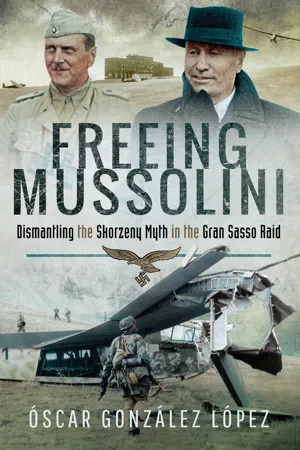
Freeing Mussolini
Dismantling the Skorzeny Myth in the Gran Sasso Raid
- 176 pages
- English
- ePUB (mobile friendly)
- Available on iOS & Android
eBook - ePub
About this book
The untold inside story of the audacious Nazi plot to rescue il Duce from an Allied prison.
The operation to free Mussolini, who was being held prisoner in a high mountain hotel on the summit of Gran Sasso, Italy, in September 1943, is without a doubt one of the most spectacular operations not only of the Second World War, but in all military history.
German paratroopers, the Wehrmacht's elite, were responsible for organizing the rescue in record time, and executing a daring and perfectly synchronized operation between land and airborne detachments. Surprise and speed were the Fallschirmjäger's main weapons, surprising the Italian garrison guarding il Duce. For political reasons Otto Skorzeny, the clever SS officer, also participated in the operation, leading a dozen of his commandos. Propaganda and his connections with Himmler made him into the false hero of the mission, over-emphasizing his role in the whole search and rescue operation.
Based on the testimony of several protagonists in this incredible operation, as well as analyzing major documents (letters, reports by General Kurt Student, etc.) and the abundant literature available on the subject, this book dismantles the "Skorzeny Myth" and reveals the truth of what really happened in a mission that even Churchill called "one of great daring."
Information
1
The Operation Begins
On 24 July 1943, fourteen days after the start of the Allied invasion of Sicily, the Italian Grand Council of Fascism met for the first time since 1939. The following morning, a vote of no confidence was passed by an absolute majority requesting that although Mussolini was not to be completely removed from power, the king would now take control of the army for the first time since Italy entered the war on 10 June 1940.
This decision is historically significant because it gave the monarch the motive to remove Mussolini, whose downfall had been prepared through a coup d’etat inspired and raised by the military and those close to the monarch. In any case, the vote of the Grand Council of Fascism served as a pretext to remove Mussolini.
As he left the king’s residence, Mussolini was put in an ambulance and taken under arrest to the Podgora Carabinieri Headquarters in the Trastevere area of Rome. In the afternoon he was transferred to the Carabinieri Cadet School in vía Legnano, where he stayed until 27 July.
Immediately after the fall of Mussolini became known, Hitler seriously considered occupying the Italian Peninsula (Operation Schwarz). Other operations he considered included: the occupation of Rome and the Vatican, including the arrest of the royal family and all politicians and officers who opposed the alliance with Germany; reinstalling the fascist regime in Italy (Operation Alarico); the destruction of the Italian fleet (Operation Achse) and the liberation of Mussolini (Operation Eiche). The latter would be assigned to XI Fliegerkorps (XI Air Command) under the command of General Kurt Student and the objective of freeing Mussolini soon became a priority.
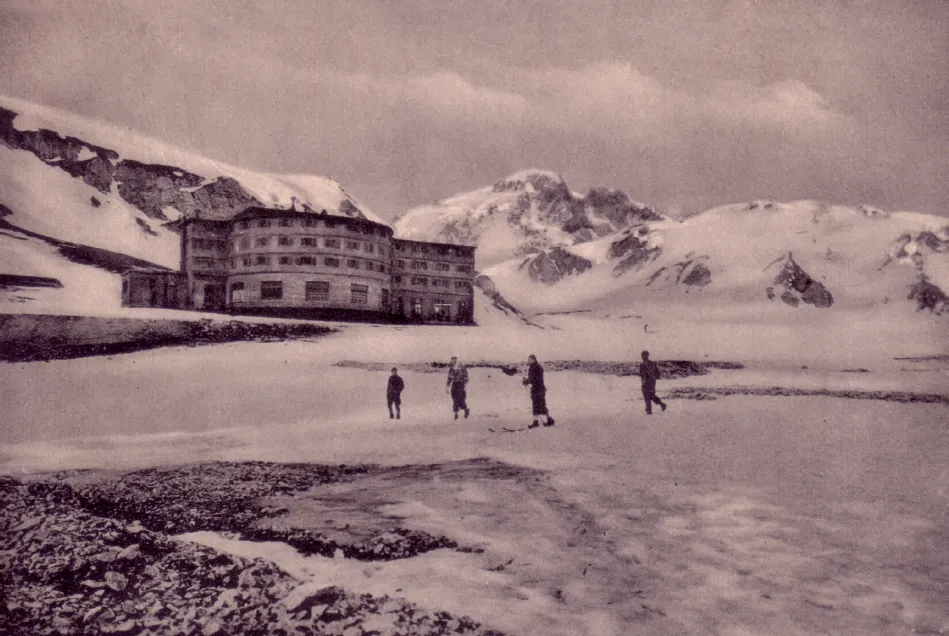
The Campo Imperatore hotel was located next to a ski station in the Gran Sasso, Italy. (COG)
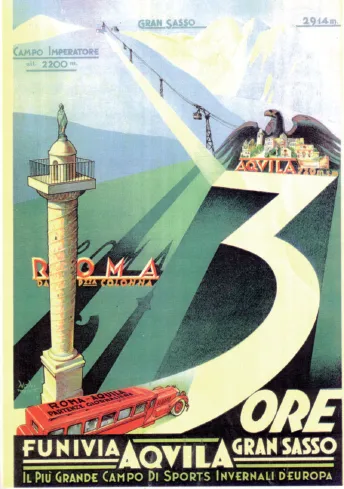
Postcard from the 1930s advertising the Campo Imperatore hotel. (COG)
To accomplish the mission (code-named Operation Eiche (Operation Oak) from 1 August 1943) the first objective was to discover the whereabouts of il Duce, who had been missing without a trace since his last audience with the king. After staying in Rome, on 27 July he was taken to the coastal port of Gaeta, accompanied by the chief of the military police of the Supreme Command, General Francesco Saverio Pólito. Once on-board the corvette Persefone, he arrived on the island of Ponza at 12:00 on 28 July, where he was kept in an isolated house before spending three weeks in a private villa on the island of La Maddalena, where he had arrived on 7 August.
Initially, Student did not inform anyone about his special mission to free il Duce. He did not even say anything to Otto Skorzeny, the Austrian SS-Hauptsturmführer1 whom Himmler had originally selected, together with a commando of around forty SS soldiers, for Operation Schwarz. According to Student:
I was surprised when I received a phone call from the Führer’s headquarters [Wolfsschanze, Wolf’s Lair] while I was in Nimes on the afternoon of 26 July 1943. I was told to report to him immediately. I flew as fast as I could to Rastenburg (East Prussia), and once there was ordered by Hitler to march to Rome with all available paratroopers. I was ordered to hold Rome in case Italy surrendered and was given a special mission to free Mussolini. On the return trip I was accompanied by someone who was unknown to me at the time: SS-Hauptsturmführer Otto Skorzeny. We had both been given an SS commando to help search for Mussolini and carry out some police work. Hitler had ordered us to keep our instructions in the strictest silence and so we started an intense search to locate Mussolini’s hiding place. Finally, on 8 September, the day that Italy surrendered, a ‘hot tip’ took us to the Gran Sasso. In light of this serious event, I should have put off Mussolini’s rescue and committed all my forces to my main task; preventing Rome from falling into the enemy’s hands.
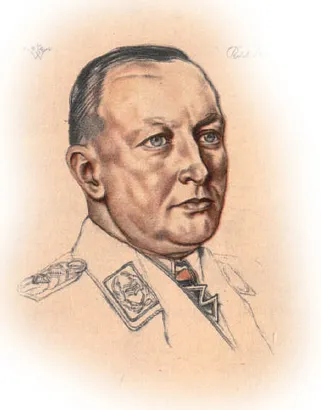
A portrait of Major Kurt Student by Willrich. (COG)
The ‘hot tip’ had been given by SS-Obersturmbannführer Herbert Kappler, the commander of the German security service (SD) in Rome, who had known for several days that something strange was going on in the Gran Sasso. However, his suspicions were confirmed when he managed to intercept an ecrypted message addressed to the Italian police chief, Carmine Senise. Kappler knew the code used by the Italian Ministry of the Interior, so it was easy for him to decipher the message, which read, ‘We have finalized the security measures in the Gran Sasso and its surroundings’. The message was signed by Inspector Gueli, and Kappler quickly communicated the information to Student, who then informed Skorzeny.
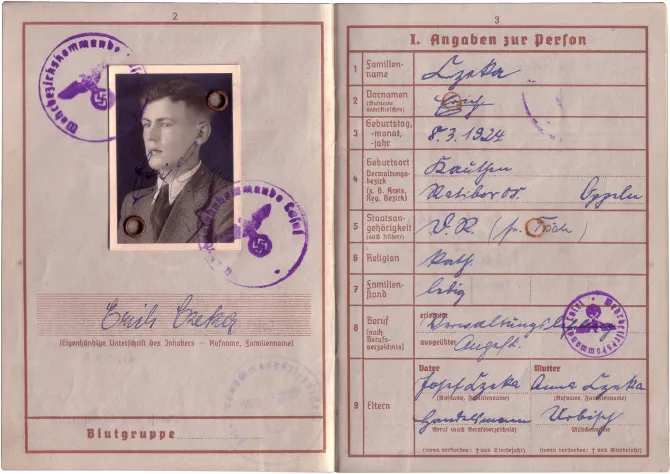
Wehrpaß belonging to Erich Czeka, 3./FJR 7. He took part in the ‘land phase’ of the Gran Sasso Operation, under the command of Major Mors. (COG)
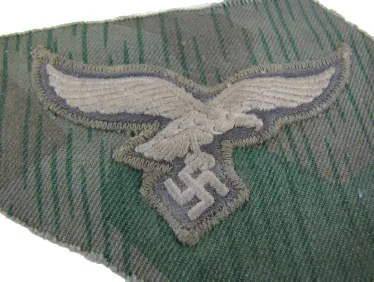
The Luftwaffe eagle on a paratrooper’s jump suit (CP).
‘The highest prison in the world’, as it was described by Mussolini, was located in an ‘unreachable and inaccessible’ place in a mountain lodge called Campo Imperatore, 2,112 metres above sea level in the Italian Gran Sasso. The building itself was D-shaped and was originally planned to be the first of three buildings (the other two were never built), with the other two hotels being built in the shape of a ‘V’ and ‘X’ so that the word ‘DVX’ could be clearly read from above at the highest point of the Apennines. As luck would have it, the building that was erected to celebrate il Duce had become his prison.
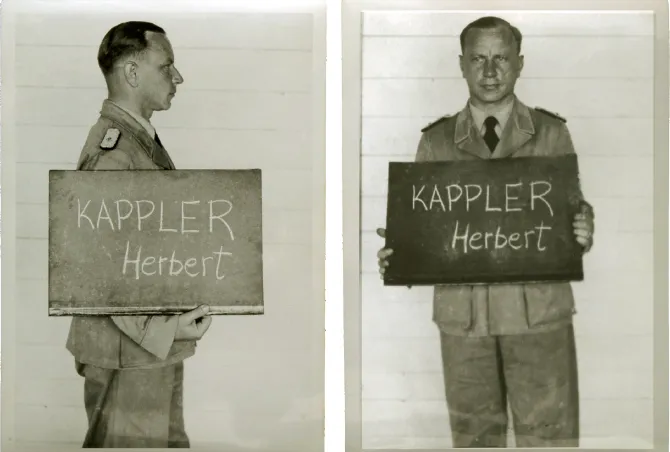
Herbert Kappler, head of the German SD in Rome. This photograph was taken after he was captured by the Allies.
Student decided to free Mussolini and entrusted the task to Major Harald Mors, who was supposedly the officer most admired by Student. Mors had been part of Student’s staff since the beginning of the war and in mid-July 1943 had replaced Harry Herrmann as the commander of the Fallschirmjäger-Lehr-Bataillon (the model and experimental battalion of the paratroopers), the crème de la crème, which was renamed for security reasons as I./FJR 7 (1st battalion of the 7th Regiment). As Student said: ‘On the morning of 11 September, I decided to act fast and with a very particular method of attack. I could not afford to waste any more time. I entrusted the task of organising the rescue mission to the Fallschirmjäger-Lehr-Bataillon, under the command of Major Mors.’ Once the alliance with the Italians was broken, there were no longer any diplomatic issues. However, there was a serious risk that Mussolini’s guards, deprived of any orders due to the chaos currently reigning in the capital, (Badoglio and King Victor Manuel III having fled to Brindisi, which was now under Allied control, on the morning of 9 September), did anything terrible. From that moment, the operation to free il Duce was launched.
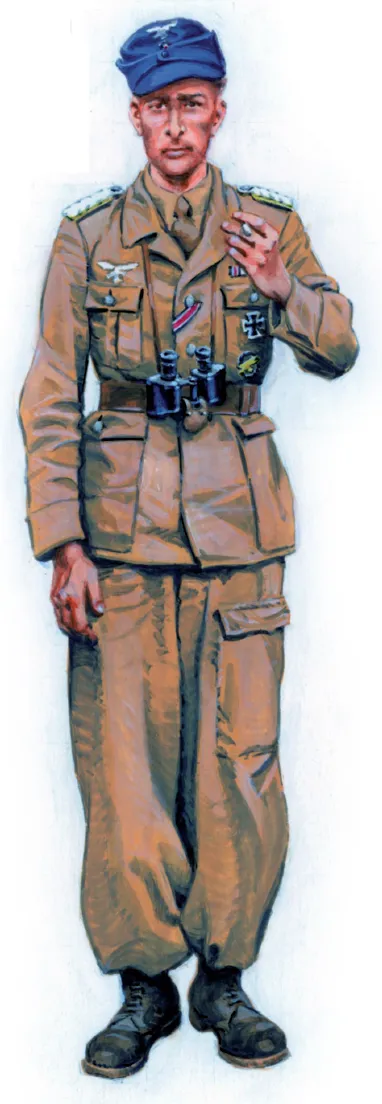
Harald Mors, the paratroop commander in charge of Mussolini’s rescue operation. (Illustration by Ramiro Bujeiro)
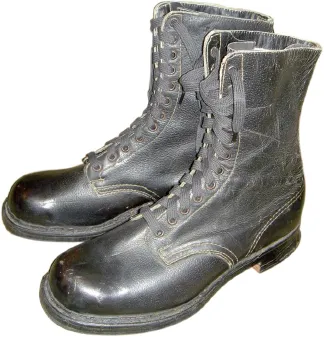
German paratrooper (Fallschirmjäger) boots. (CP)
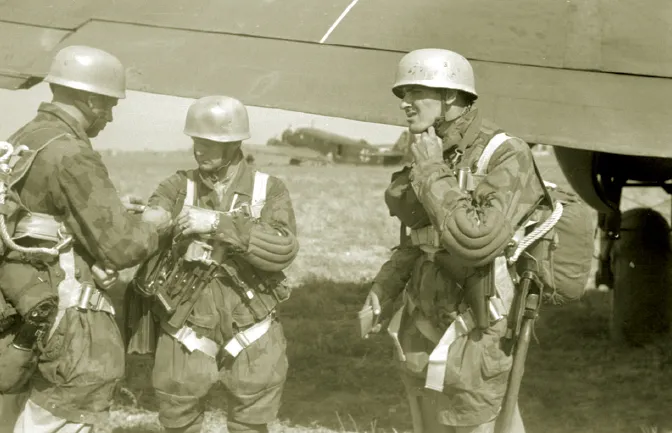
German paratroopers in the Mediterranean, preparing for a jump. They have RZ 20 parachutes and their pale brown M38 helmets. (EC).
2
Preparing for The Mission: Freeing Mussolini!
Harald Mors, 32, was quartered with his battalion near the Jesuit college of Mondragone. He had been talking to other officers from the battalion about the motorisation of the Fiat trucks belonging to 103rd Infantry Division ‘Piacenza’ (which had been disarmed the previous day as part of the operation to control the Italian Army), when the telephone rang. At the other end was General Student, who wanted to speak to Mors about a matter of extreme urgency. After the conversation had ended, Mors set off for the general headquarters, where he met other officers, friends, and comrades from previous operations. He took advantage of the situation to ask the First Section commander of Student’s staff, Major von Roon2, the reason for this urgent meeting.
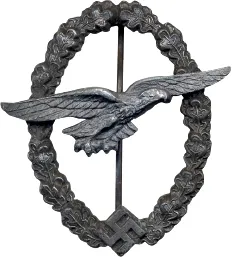
Luftwaffe glider pilot’s badge, with C.E Juncker markings. (COG)
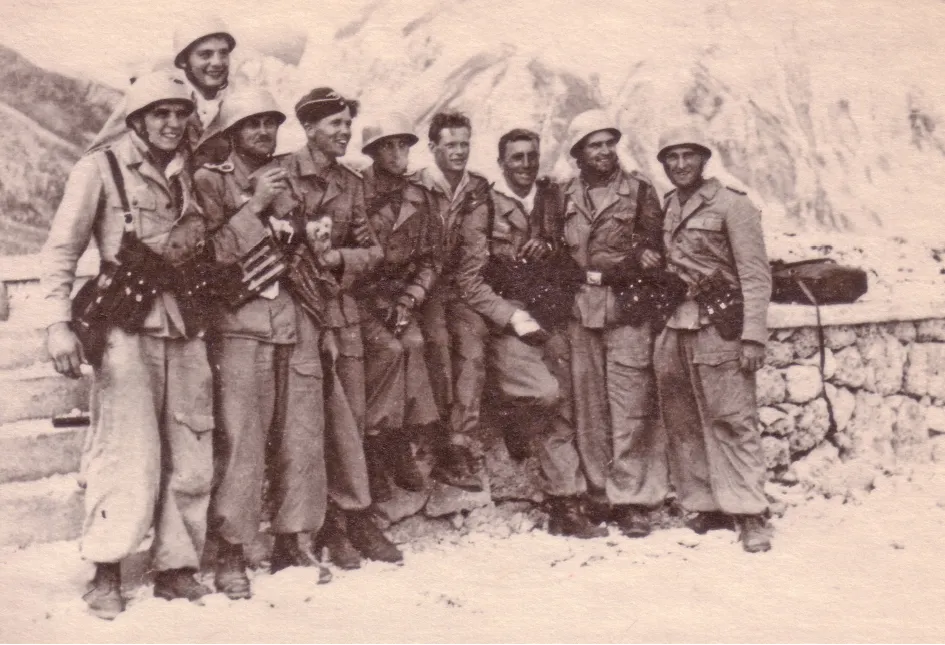
The glider pilots who landed at the Gran Sasso. From left to right, Gedenk, Stark, Neelmeyer, Meyer-Wehner (with cap), Berenbold, Jenniches, Heiner Lohrmann, Thielmannand and Maier. Ronsdorf is missing, as he was wounded during the landing. (COG)
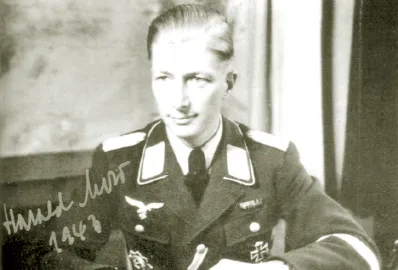
Harald Mors, commander of I./FJR 7, the unit in charge of Mussolini’s rescue. (COG)
Ironically von Roon replied, ‘Bruno Meyer’, and took him to see Student. The general didn’t bother with any pleasantries: ‘Major, tomorrow at 07:30, free Mussolini from the Gran Sasso in Italy.’ It was clear from the nature of the order what kind of pressure Student had been under over the last few days.
Student had some idea about what was entailed, ...
Table of contents
- Cover
- Dedication
- Title
- Copyright
- Contents
- Acknowledgements
- Introduction
- 1 The Operation Begins
- 2 Preparing for The Mission: Freeing Mussolini!
- 3 Skorzeny Joins the Operation
- 4 First Company Heads for the Gran Sasso
- 5 An Unexpected Manoeuvre
- 6 The ‘Ground Phase’
- 7 Landing at ‘Campo Imperatore’
- 8 Gran Sasso
- 9 Mors Meets Mussolini
- 10 Skorzeny Enters the Scene
- 11 Surprise at the Gran Sasso?
- 12 Skorzeny’s Version of Events
- 13 “My Dear Mors: I Don’t Want Any Trouble With Himmler”
- Appendix I: Official Report of Oberleutnant Karl Schulze, commander of 3./ FJR 7
- Appendix II: Order of Combat for I./FJR 7 in September 1943
- Appendix III: The Protagonists after the War
- Bibliography
Trusted by 375,005 students
Access to over 1.5 million titles for a fair monthly price.
Study more efficiently using our study tools.
Frequently asked questions
Yes, you can cancel anytime from the Subscription tab in your account settings on the Perlego website. Your subscription will stay active until the end of your current billing period. Learn how to cancel your subscription
No, books cannot be downloaded as external files, such as PDFs, for use outside of Perlego. However, you can download books within the Perlego app for offline reading on mobile or tablet. Learn how to download books offline
Perlego offers two plans: Essential and Complete
- Essential is ideal for learners and professionals who enjoy exploring a wide range of subjects. Access the Essential Library with 800,000+ trusted titles and best-sellers across business, personal growth, and the humanities. Includes unlimited reading time and Standard Read Aloud voice.
- Complete: Perfect for advanced learners and researchers needing full, unrestricted access. Unlock 1.5M+ books across hundreds of subjects, including academic and specialized titles. The Complete Plan also includes advanced features like Premium Read Aloud and Research Assistant.
We are an online textbook subscription service, where you can get access to an entire online library for less than the price of a single book per month. With over 1.5 million books across 990+ topics, we’ve got you covered! Learn about our mission
Look out for the read-aloud symbol on your next book to see if you can listen to it. The read-aloud tool reads text aloud for you, highlighting the text as it is being read. You can pause it, speed it up and slow it down. Learn more about Read Aloud
Yes! You can use the Perlego app on both iOS and Android devices to read anytime, anywhere — even offline. Perfect for commutes or when you’re on the go.
Please note we cannot support devices running on iOS 13 and Android 7 or earlier. Learn more about using the app
Please note we cannot support devices running on iOS 13 and Android 7 or earlier. Learn more about using the app
Yes, you can access Freeing Mussolini by Óscar González López in PDF and/or ePUB format, as well as other popular books in History & Military & Maritime History. We have over 1.5 million books available in our catalogue for you to explore.