A "fascinating" walk through the history of one English port town, told through the names of its streets—includes photos (
Books Monthly).
With a history that dates back to the days of the Vikings, Grimsby, on England's eastern coast, has served as a hub for shipping companies and fishermen and a home to generations of citizens. Arranged alphabetically,
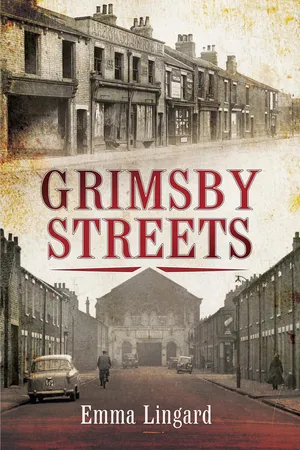
Grimsby Streets is a journey through time, examining the meanings and origins of many of the town's street names, from their association with the Danish settlers through to the Victorian era and the men who helped develop the town and build its surrounding docks. Names of the great and good who were forgotten until now are explored, as well as some of the many famous people who were born there, and where they lived.
The book also covers numerous incidents that occurred on Grimsby's streets, providing colorful insight into the history of this once-famous fishing port and some of the many wonderful buildings that stood there. Included throughout are a selection of old photographs, some of which have never been published before, a reminder of what this town was like before change and demolition in the 1960s.
- 144 pages
- English
- ePUB (mobile friendly)
- Available on iOS & Android
eBook - ePub
Grimsby Streets
About this book
Information
Topic
HistoireSubtopic
Histoire de la Grande-BretagneStreet Names of Grimsby
Abbey Drive East/West see Abbey Road
Abbey Road
All the Abbey streets – Abbey Park Road, Abbey Drive East/West, Abbot’s Way, and Abbey Walk are all connected to the town’s former Wellow Abbey. Around the site on which stood the former Abbey, we have Abbey Park Road, which appears in the 1851 Census.
Abbey Road was named in the 1890s, prior to that it was known as Love Lane, and before that Watery Lane. The latter name came from the fact there was a blow well in a field, from which flowed a stream into an open drain on the road.
Wellow Abbey was founded in the time of King Henry I and was a house for the Austinian Canons. It was dedicated to Norwegian St Olaf and St Augustine – links to the town’s Scandinavian origins – and was finally dissolved by King Henry VIII in 1539. In 1911 a seal depicting these saints was found on the Norwegian shore.
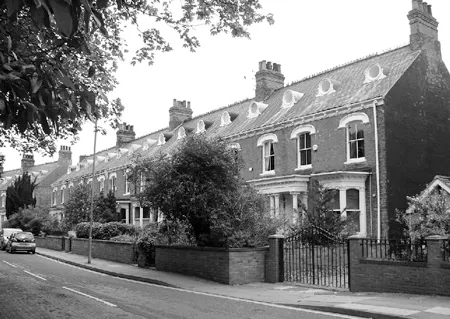
5. Abbey Road also known as Spectacle Row, a modern day view.
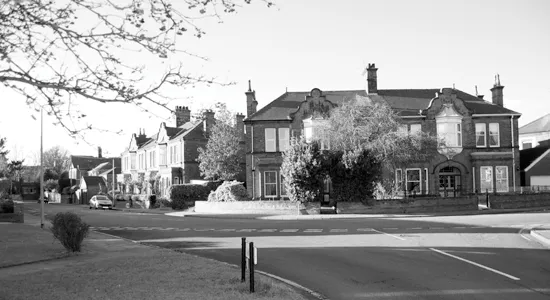
6. The former site of Wellow Abbey now occupied by houses.
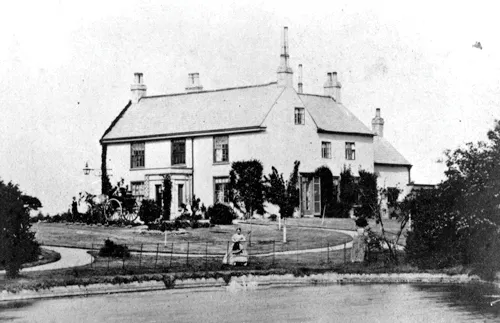
7. The Abbey, 1860s.
Sir Thomas Heneage, who was the last Lord of the Hainton estate, bought the former Abbey land, and a large house was later built on the site before being demolished in 1967. At the time the Grimsby Evening Telegraph reported what an outrage it was that the site had not been saved for the town and its people.
Abbot’s Way is a relatively new development and one householder, on digging in his garden, did find the grave of a man, believed to have been a monk.
Abbey Park Road see Abbey Road
Abbot’s Way see Abbey Road
Achilles Way
This and other streets on the Laceby Acres are connected with the Battle of Trafalgar – Achilles was a 74-gun frigate. Others include Collingwood Way, Hamilton, Africa, Ajax, Belleisle, Brittania, Orion, Sovereign, Swiftsure, Tonnant and Victory Way.
Adam Smith Street
This name recalls Grimsby’s rise from obscurity in the eighteenth century to success as a port in the nineteenth, especially from 1850 onwards. Adam Smith was a well-known and respected civil engineer in North Lincolnshire. He was in charge of the Ancholme Navigation improvements and extension and his skill and experience were used in the building of Grimsby Docks.
The street was built in 1882. It runs along the Westgate – A180. The houses have long gone, and it is now part of an industrial estate.
Ainslie Street
Built in 1882, the name commemorates a magnificent benefactor to Grimsby, Canon Robert Ainslie, Vicar of Grimsby (1856–1879). In 1856 the town was developing rapidly and there were no schools for children in a population of 10,000. Canon Ainslie was responsible for the opening of seven new schools. He paid for the cost of two, replaced St James’s Church, built St Luke’s, St Paul’s and St Andrew’s, and organised soup kitchens, cheap coal clubs, and other good works. It was only in his later years that Grimsby people began to realise how much he had done for them.
Grimsby author Bob Lincoln wrote:
Ainslie Road then (1882) in the making, was slightly different to the present day. The old White House with the Sand Hills at the rear stood where Watson has his dairy, whilst at Isaac Watts’ corner, the footpath remained to Old Clee, crossing Legsby Avenue and Hainton St, etc. The remaining route was simply a wilderness. Indeed it was not until some five years after, in 1893, that Messrs. Walker and Cook built the first two houses. They are situated at the corner of Lambert Road, and were occupied by Mr E. R. Wright, the well known school master and Mr Arthur Simons.
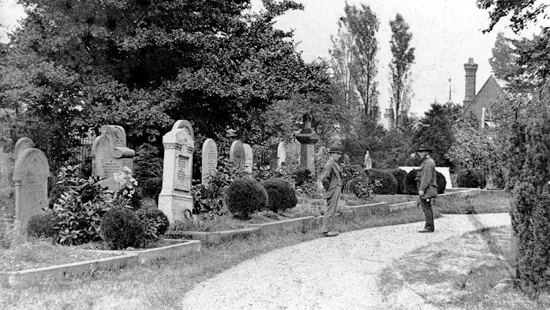
8. Old cemetery in Ainslie Street/Doughty Road.
The old town’s cemetery was opened here in 1859. It closed during the Second World War due to bomb damage and closed officially in 1959 when it was turned into a park.
Airedale
This and Easdale, Farndale, Ravendale, Wharfedale and Whernside, on the West Marsh were created in 1974 by Grimsby Estates Committee. Councillor Peter Ellis had wanted them to commemorate trawler owner, Sir Alec Black, but it was opposed. One councillor did not think the names were fitting for the area but another said people were beginning to think the council were becoming more imaginative with street names.
Albert Street East & West
This street, off Freeman Street, was in existence in 1880 and was probably named in honour of the popular Prince Albert Victor, eldest son of the then Prince of Wales, who became King Edward VII. In 1885 he visited Cleethorpes to open the Pier Gardens, and the Sea Wall built to protect High Cliff. Albert Road and Victor Colonnade in Cleethorpes also commemorate him. There was great national sorrow when he died of pneumonia in 1902. It could also have been named after the Prince Consort, husband of Queen Victoria, who laid the first stone of the Great Grimsby Dock in 1848, and came here again in 1854.
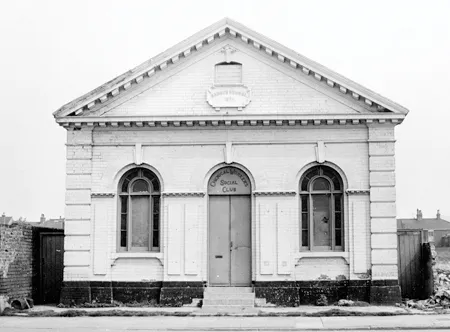
9. Ragged School in Albert Street.
Albion Street
Albion is an ancient name for Great Britain, and is also the name of a former pub on Clee Road. The Albion was also a fishing boat sunk off the coast of Spurn Point in July 1918 by a German U-boat.
In 1887 a 24-year-old fisherman called Richard Insole was sent to the gallows after shooting his estranged wife. The gun used was bought from a gun shop in Albion Street. In 1989, while renovating the Corporation Arms pub in Freeman Street, a notice was found referring to this murder.
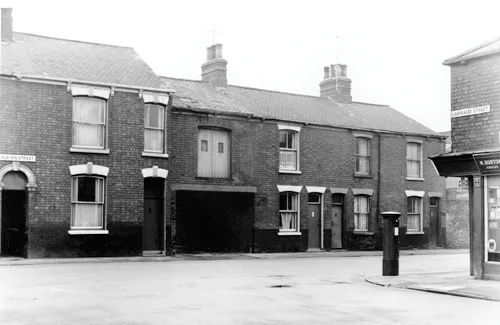
10. Albion Street/ Garibaldi Street junction. M. Burton grocers far right. Circa 1950s.
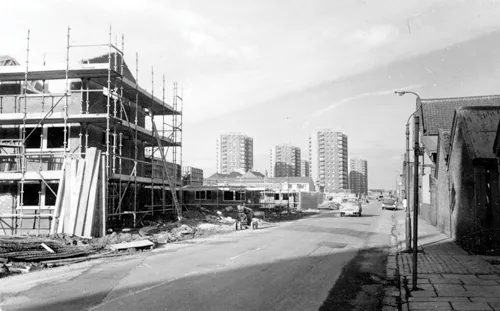
11. East Marsh flats built in the 1960s - earmarked for demolition in 2016 as part of redevelopment in the area.
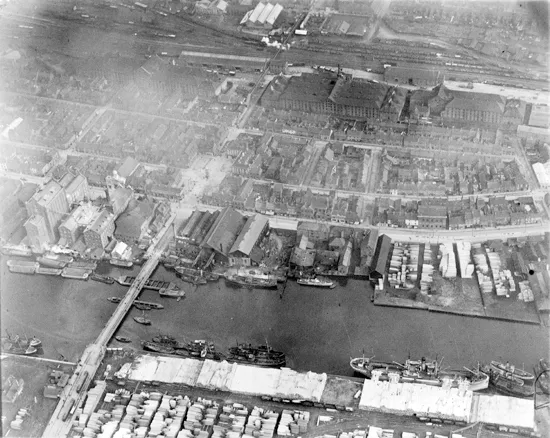
12. Alexandra Dock aerial view.
Alexandra Road
This highway was named Ropery Lane in a ‘Plan of the Town, Harbour and Lordship of Great Grimsby’, surveyed by W Smith in 1820. In James Rendel’s map of 1848 it was called West Marsh Lane, and in 1905 it was known as Old Dock Road.
Its current name comes from the Alexandra timber dock, which was opened in 1879 by the Prince and Princess of Wales, though it was not given this name until 1913 in honour of the Princess, later Queen Alexandra. The Old Dock, built in 1800, likewise became the Alexandra Dock. The street was built in 1892. The section between Corporation Road, and the former Adam Smith Street is un-adopted.
Alfred Street
This street runs south from Tennyson Street towards Frederick Street. All these street names commemorate the Lincolnshire Tennyson family, as does Somersby Street. Alfred, its most famous member, was born at Somersby and was Lincolnshire’s great poet (1809-1892) and Poet Laureate from 1850 to his death.
By the Grimsby Enclosure Award of 8 May 1840, George Tennyson became the fourth biggest landowner in Grimsby. Charles Tennyson was MP for Grimsby between 1818 and 1820. See also Frederick Street.
Alfred Terrace
Branching off Brighowgate, the current terrace replaced a Georgian one pulled down in the 1980s after having been derelict. It caused outrage in the town at the time. The building was listed, but following a local inquiry, the Secretary of State for the Environment said it was not of any architectural merit and some councillors agreed.
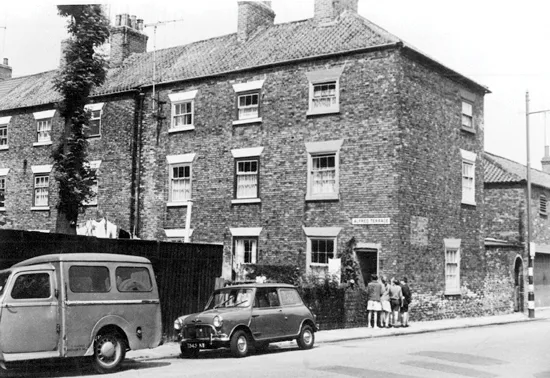
13. Alfred Terrace, 1964. Formerly the House of Industry.
The original was built in 1802 and was a former House of Instruction, in other words, a workhouse and then it was r...
Table of contents
- Cover
- Title
- Copyright
- Contents
- Dedication
- Foreword
- Introduction
- Street Names of Grimsby
- Illustrations and Acknowledgements
- Bibliography
- References
Trusted by 375,005 students
Access to over 1.5 million titles for a fair monthly price.
Study more efficiently using our study tools.
Frequently asked questions
Yes, you can cancel anytime from the Subscription tab in your account settings on the Perlego website. Your subscription will stay active until the end of your current billing period. Learn how to cancel your subscription
No, books cannot be downloaded as external files, such as PDFs, for use outside of Perlego. However, you can download books within the Perlego app for offline reading on mobile or tablet. Learn how to download books offline
Perlego offers two plans: Essential and Complete
- Essential is ideal for learners and professionals who enjoy exploring a wide range of subjects. Access the Essential Library with 800,000+ trusted titles and best-sellers across business, personal growth, and the humanities. Includes unlimited reading time and Standard Read Aloud voice.
- Complete: Perfect for advanced learners and researchers needing full, unrestricted access. Unlock 1.5M+ books across hundreds of subjects, including academic and specialized titles. The Complete Plan also includes advanced features like Premium Read Aloud and Research Assistant.
We are an online textbook subscription service, where you can get access to an entire online library for less than the price of a single book per month. With over 1.5 million books across 990+ topics, we’ve got you covered! Learn about our mission
Look out for the read-aloud symbol on your next book to see if you can listen to it. The read-aloud tool reads text aloud for you, highlighting the text as it is being read. You can pause it, speed it up and slow it down. Learn more about Read Aloud
Yes! You can use the Perlego app on both iOS and Android devices to read anytime, anywhere — even offline. Perfect for commutes or when you’re on the go.
Please note we cannot support devices running on iOS 13 and Android 7 or earlier. Learn more about using the app
Please note we cannot support devices running on iOS 13 and Android 7 or earlier. Learn more about using the app
Yes, you can access Grimsby Streets by Emma Lingard in PDF and/or ePUB format, as well as other popular books in Histoire & Histoire de la Grande-Bretagne. We have over 1.5 million books available in our catalogue for you to explore.