- 183 pages
- English
- ePUB (mobile friendly)
- Available on iOS & Android
eBook - ePub
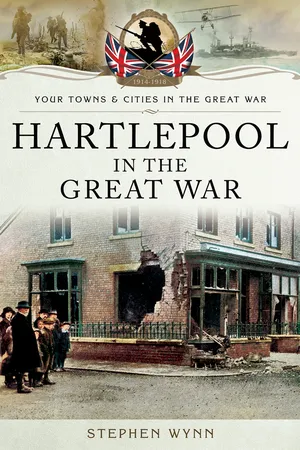
Hartlepool in the Great War
About this book
With the outbreak of the First World War, it was not surprising that a number of individuals who were of German decent, and who lived in Hartlepool and its surrounding areas, were rounded up and detained by the British military authorities, in the interests of both national security and for their own personal safety. They were held at the towns Stranton Ice Rink. Their numbers included the ex-German Consul for the Hartlepool's district as well as others who had been local residents of many years standing.The first soldier with connections to Hartlepool to be killed on foreign soil during the war, was Corporal 57561 John Robert Richardson, who was serving with the 54th Battery, Royal Field Artillery, when he was killed in action on 4 October 1914. He is buried at the Bergen Communal Cemetery at Mons.The war came to Hartlepool on the morning of Wednesday, 16 December 1914 in the shape of three vessels of the Imperial German Navy. By the time their attack was over, more than 1,100 artillery shells had landed on the town, killing 9 soldiers, 86 civilians and wounding a further 438. Amongst the dead was 29 year old Private 18/295 Theophilus Jones of the 18th Battalion, Durham Light Infantry, making him the first British serviceman to be killed on British soil as a result of enemy action during the course of the First World War. Before the war was over, his brother Alfred, would also be killed, during fighting at the Battle of Arras, on 3 May 1917.By the time the war had ended, some 1700 men and women from Hartlepool and its surrounding areas had paid the ultimate price of having served their King and country.
Information
Topic
StoriaSubtopic
Storia britannicaCHAPTER ONE
A Brief History of Hartlepool
Hartlepool has a long and interesting history which can be traced back some 1400 years to 640AD when the town had a monastery founded by the Irish Abbess Hieu which, unusually, was home to both monks and nuns. A village formed around the perimeter of the monastery, which was the beginning of what is today the town of Hartlepool.
St Hilda became the monastery’s second Abbess in 649 before she moved on to the abbey in the neighbouring town of Whitby in about 658. After Hilda left nothing much else was heard of the town for centuries afterwards; it was as if it simply hadn’t existed for about 500 years.
It was not until the year 1174 that the first mention of the town by its current name of Hartlepool, occurred. It was King John in the year 1200, who created the town of Hartlepool as a Royal Borough. It used to be a walled town and due to its geographical location played a prominent part in some of the troubled times across the centuries. Over the years its importance and its prosperity waned. It wasn’t really until the development of the railway around 1830 as a viable proposition, for both travel and the delivery of goods, that the people of Hartlepool realized the full potential and worth of the locomotive. With this in mind a Bill was promoted in Parliament for the building of a dock and a railway line for Hartlepool. The Bill was successful and passed into law in 1832, and within just three years the dock was finished and open for business. The railway was established soon after and the town’s prosperity soon began to grow; so flourishing was the trade, that a second dock was opened in 1840.
By 1845 business was booming and more and more people were moving into the town. A stretch of land that was a barren swamp, where only an old farm house stood, was developed to such an extent that an entire new town grew, known as West Hartlepool. In no time at all the new town had flourished and within two years it had a harbour, followed a short while later by a dock, both of which were linked by the railway to other nearby towns and cities.
Despite continued competition from its powerful and wealthy neighbours on the Tyne and the Humber, Hartlepool continued to prosper and by the outbreak of the First World War its docks were equipped with some of the most up-to-date equipment which allowed for the rapid loading and unloading of vessels. Added to this was the repairing and building of ships, industries which not only helped make the town even more affluent, but also provided more work opportunities for many of the townspeople.
CHAPTER TWO
1914 – Starting Out
The outbreak of war in 1914 wasn’t really a shock to most people. It had been coming for a long time and it was more a case of when, rather than if, war broke out. But as with everything in life, when a situation becomes a reality, it is always a shock to a greater or lesser degree. From the start of the war on 4 August until 31 December 1914, British and Dominion forces lost more than 42,000 men who had been killed in the fighting. That equates to 8,400 men for each of the first five months of the war. These figures included men from Hartlepool.
The first major battle of 1914 and therefore of the First World War was the Battle of Mons. It took place on 23 August as the British attempted to hold back the rapidly advancing German Army at the Mons-Condé Canal. It was followed by a two-week retreat, which saw the British Expeditionary Force (BEF) pushed all the way back to the outskirts of Paris. The retreat was only halted by a counter-attack in unison with French forces in what became known as the Battle of the Marne.
There were other battles during the course of those first five months of the war, with the First Battle of Ypres being the major coming together of the two opposing sides. It took place between 19 October and 22 November, and saw British, French and Belgian forces pitting their strength against the might of the Germany army, across a front that stretched from Arras in France all the way up to the Belgian coastal town of Nieuport.
To show the size of the problem that Britain found herself up against at the beginning of the war, one only had to take a look at the strength of the opposing forces. Whilst Germany and France each had armies which numbered one million men, Britain had an army of only 80,000 men, which included a combination of volunteers and reservists.
If the reports in local newspapers were anything to go by, war was the last thing on the minds of most residents of Hartlepool. It was sport, or so it seemed. The day war broke out, there was a local tennis tournament going on, with competitions for both men and women. The Northern Cyclists group had an important meet, which involved competitors from both West Hartlepool and Hartlepool areas, and football was in the news as well.
With the outbreak of war, it was not surprising that a number of individuals who lived in Hartlepool and its surrounding areas, and who were of German descent, were rounded up and detained by the British military authorities in the interests of national security as well as for their own safety. They were held at the town’s Stranton Ice Rink. One of those detained was the former German consul for the Hartlepool district; others, including local residents of many years standing, were also detained.
On Tuesday, 11 August 1914, with the war just a week old, Hartlepool recorded its first military-related death, when Captain James Arrowsmith of C Company, Northern Cyclist Corps, a Territorial unit, was killed in a traffic accident at the corner of Mainsforth Terrace and Surtees Street in West Hartlepool. Captain Arrowsmith was riding a motor bike when he was in collision with a motor trolley. One of the vehicle’s wheels ran over his body. He was immediately conveyed to the Cameron Hospital by PC Hillier by ambulance, but was pronounced to be dead on arrival, from severe internal injuries. He also had fractures to both legs. He was buried at the Oxbridge Lane Cemetery at Stockton-on-Tees.
The first naval man from Hartlepool to be killed during the war was Able Seaman J/1782 James William Dale, part of the crew of the light cruiser HMS Arethusa. He was 23 years of age when he was killed in action on 28 August, during the Battle of Heligoland Bight, when the Arethusa came under attack by the German cruisers SMS Frauenlob and SMS Stettin. Both vessels caused serious damage to the Arethusa, to such an extent that she had to be towed back to Hartlepool. James Dale is buried at the Woodlands Cemetery in Gillingham, Kent.
On Sunday 30 August Mr Horsley of West Hartlepool, organized a fleet of some twenty automobiles, which had been lent by their patriotic owners, to travel to the outlying villages in the East Durham coalfield areas, collect young men, and deliver them to the recruiting offices in West Hartlepool to enlist. The town had done so well with its recruitment drive that Lord Kitchener had written to the mayor personally, to thank him.
Owing to the lack of facilities, recruits from some of the outlying districts were unable to get to Hartlepool, and accordingly Mr J.J. Prest, Chief Agent of the Horden Collieries, on Monday morning sent a telegram to the War Office:
Kitchener, War Office, London. Hundreds of young miners, physically fit and excellent recruits, unable to join your Army at Hartlepool or Sunderland, owing to inefficient arrangements of recruiting staff. – Prest, Castle Eden, Durham.
By noon on Wednesday 2 September, the total number of recruits who had passed their Army medical at West Hartlepool was 2,200. Of these 400 had enlisted on the Tuesday. The time spent attending one of the recruitment offices to enlist in the Army could be a long and arduous process. To try and assist with the smooth running of the day, men were provided with meals paid for by private donations.
By noon on Saturday 5 September, the total number of recruits who had enrolled in the Army at Hartlepool stood at the staggering figure of 3,200. The previous day had seen a total of 270 men enlist in the town, and during the course of the Saturday afternoon and the following Monday, a similar number from surrounding districts were also expected. Throughout West Hartlepool it was hoped that a local corps could be formed, similar to what had been proposed at nearby Darlington and other surrounding towns. Councillor E.O. Bennet had communicated with the commanding officer of the Northern Division on the matter and was awaiting a reply.
With the war just over a month old, Sunday 6 September saw the sudden and tragic death, and in the strangest way, of Hartlepool’s Member of Parliament, Sir Stephen Furness, whilst on a short holiday with his wife at a sea front hotel in Broadstairs, on the Isle of Thanet. They had a room with a sea view and were situated on the fifth floor. It would appear that at about one o’clock in the morning, Sir Stephen attempted to open the large bedroom window, as it was a warm and sticky evening, and in doing so, overbalanced and fell some 60 feet to the pavement below, breaking his back and dying almost immediately.
He had won the Hartlepool seat in the by-election of June 1910, for the Liberal Party, by a hair’s breadth, with a margin of just 48 votes, polling 6,017 against the 5,969 of the Unionist Party’s candidate, Mr W.G. Howard Gritten. The original General Election which had taken place in January 1910, and which had been voided as a result of an electoral petition, had been won by his uncle Sir Christopher Furness. Although by the time of his death he had been a Member of Parliament for four and a half years, according to Hansard records, he had not made one single speech on behalf of his constituents during that period.
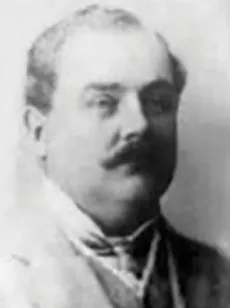
Sir Stephen Wilson Furness
When Sir Christopher died in 1912, Sir Stephen succeeded him as the chairman of the company Furness, Withey & Co, which included ship building, collieries and ironworks. He became a member of the West Hartlepool Town Council in 1897, the Durham County Council 1898, a Justice of the Peace, as well as a member of the Hartlepool Port and Harbour Committee. At 42 years of age, he was a comparatively young man and was married to Eleanor Forster, the daughter of Matthew Forster, of Adelaide in South Australia. They had three sons, Christopher, Stephen and Frank, and a daughter, Eleanor. The family lived at Tunstall Grange in West Hartlepool, along with Stephen’s brother, Einar, both of whom were born in Sweden. Stephen was made a baronet on 18 June 1913.
Sir Stephen was buried just three days after his death at Cundall. Three memorial services were held simultaneously at the Burbank United Methodist Church, St Hilda’s Church, both of which were in Hartlepool, and the other at Christ Church in West Hartlepool. There were many signs of mourning throughout the district. Flags were flying at half mast from all municipal buildings, as well as the Constitutional and Liberal Clubs and numerous different businesses. The civic service, held at Christ Church, was an impressive affair, attended by the mayor, members of the corporation and many other prominent citizens.
I found records of a Carl Einar Furness, evidently Sir Stephen’s brother, who was conscripted at Newcastle on 2 June 1917 as Driver 240565 in the Royal Field Artillery, but the next day he was transferred to the Royal Garrison Artillery at Hartlepool, initially serving as a driver, before becoming a gunner. He was living in Gateshead at the time he was called up and was 30 years of age, single and a ship owner and managing director. He spent six days as a patient at the Western General Hospital in Manchester, between 29 June and 5 July 1918. The reasons for his admission was not legible on his Army Service Record. On 28 October 1918 he was discharged from the Army as no longer physically fit for wartime military service due to fracturing his skull.
After Sir Stephen’s untimely death, he was replaced as the town’s Liberal MP by Sir Walter Runciman, who at the time was also the President of the Northern Liberal Federation, after a meeting of Hartlepool’s Liberal Six Hundred on Friday 18 September. In keeping with the agreement of all political parties during the First World War, the Hartlepool Unionists agreed to abide by its terms and not to c...
Table of contents
- Cover
- About the Author
- Title
- Copyright
- Contents
- Chapter One: A Brief History of Hartlepool
- Chapter Two: 1914 – Starting Out
- Chapter Three: 1915 – Deepening Conflict
- Chapter Four: 1916 – The Realisation
- Chapter Five: 1917 – Seeing it Through
- Chapter Six: 1918 – The Final Push
- Chapter Seven: The Aftermath
- Chapter Eight: Hartlepool War Memorial
- Sources
Trusted by 375,005 students
Access to over 1.5 million titles for a fair monthly price.
Study more efficiently using our study tools.
Frequently asked questions
Yes, you can cancel anytime from the Subscription tab in your account settings on the Perlego website. Your subscription will stay active until the end of your current billing period. Learn how to cancel your subscription
No, books cannot be downloaded as external files, such as PDFs, for use outside of Perlego. However, you can download books within the Perlego app for offline reading on mobile or tablet. Learn how to download books offline
Perlego offers two plans: Essential and Complete
- Essential is ideal for learners and professionals who enjoy exploring a wide range of subjects. Access the Essential Library with 800,000+ trusted titles and best-sellers across business, personal growth, and the humanities. Includes unlimited reading time and Standard Read Aloud voice.
- Complete: Perfect for advanced learners and researchers needing full, unrestricted access. Unlock 1.5M+ books across hundreds of subjects, including academic and specialized titles. The Complete Plan also includes advanced features like Premium Read Aloud and Research Assistant.
We are an online textbook subscription service, where you can get access to an entire online library for less than the price of a single book per month. With over 1.5 million books across 990+ topics, we’ve got you covered! Learn about our mission
Look out for the read-aloud symbol on your next book to see if you can listen to it. The read-aloud tool reads text aloud for you, highlighting the text as it is being read. You can pause it, speed it up and slow it down. Learn more about Read Aloud
Yes! You can use the Perlego app on both iOS and Android devices to read anytime, anywhere — even offline. Perfect for commutes or when you’re on the go.
Please note we cannot support devices running on iOS 13 and Android 7 or earlier. Learn more about using the app
Please note we cannot support devices running on iOS 13 and Android 7 or earlier. Learn more about using the app
Yes, you can access Hartlepool in the Great War by Stephen Wynn in PDF and/or ePUB format, as well as other popular books in Storia & Storia britannica. We have over 1.5 million books available in our catalogue for you to explore.