![]()
Chapter 1
THE NEED FOR EBEN EMAEL
The military art of fixed fortifications is as old as warfare itself. Complex fortifications have been widely used in the Low Countries of north-eastern France, Belgium and the Netherlands. Here they were positioned to guard cities and key points on the traditional invasion routes from the north German plain into France (and of course vice versa), which General de Gaulle described as ‘that fatal avenue’.
Fortress design developed over the millennia, as technology produced both successive new threats and construction techniques to counter them. By the middle of the nineteenth century, the earlier works of the great military architects (chief amongst whom were de Vauban and Coehorn) had been undermined by the pattern of warfare in the Age of Reason and by new weapon designs. The French Revolution, massive rifled gun barrels, breach-loading artillery and piercing shells combined to render the seventeenth-century bastions, ravelins, etc. increasingly obsolescent. Most fortresses were redesigned to include a ring of smaller, mainly concrete forts built outside artillery range of the older citadel defences.
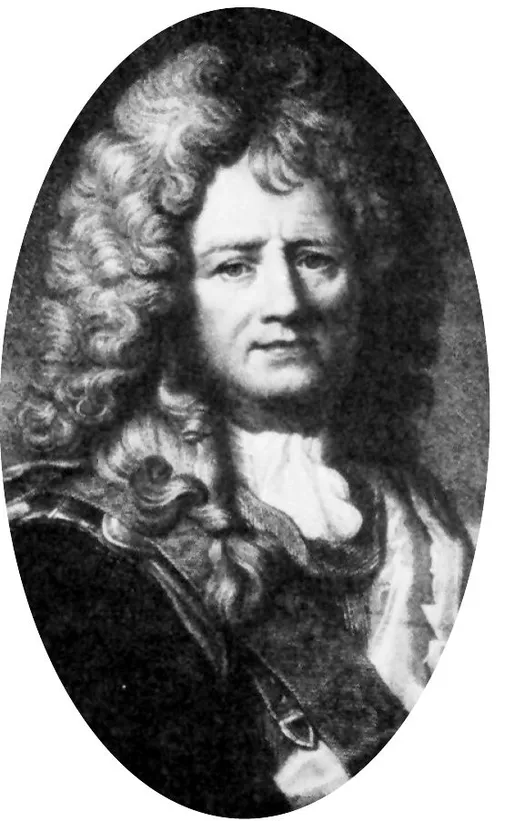
After the treaty of 1871, at the end of the Franco/Prussian War, the Belgians witnessed the French and Prussians building a series of fortifications along their new borders, and it was plain to them that both nations nursed a desire to return to the fight. As a result, in 1877 General Henri-Alexis Brialmont (1821 – 1903) set about modernising the Belgian defences, fearful that the new Second German Reich would be forced to attack Belgium in a future conflict in order to avoid the ‘impregnable’ defences on the Franco/German border. Chief among the new Belgian defences was the ring of forts positioned on a radius of approximately 7,000 yards from the older defences of Liege. Sited roughly 4,000 yards apart, the twelve forts were based on a series of armoured cupolas mounting a handful of modern quick-firing artillery pieces. Except for the cupola and galleries that provided covered positions from which infantry could sweep the approaches to the forts with fire, the whole fortress (barracks, magazines and connecting tunnels) was buried underground. Brialmont designed the defences to withstand bombardment by guns of 210 mm calibre. However, as artillery developed, this figure was soon relegated to an arbitrary calibre and defences were not updated to reflect the availability of heavier guns.
Early criticisms of the Brialmont fortifications, however, centred upon human factors:
‘The time and difficulty of filing the men out of dark and narrow underground passages and spreading them along the line they are intended to hold, or of getting them under cover again when the besieger’s artillery opens fire, may easily be imagined.’
Another commented that:
‘Brialmont’s military genius had an academic bent, and he forgot that his works were made for human beings; he left out of account a natural function which does not cease during a bombardment – quite the reverse.’
The rings of modern fortresses built around key Belgian cities, which had been almost completed by the end of the nineteenth century, appeared to compare well with those of the Germans and the French, but in practice they proved to be less than impregnable when subjected to the test of German attack.
Despite the new Belgian fortifications, the Germans were not deterred from attacking Belgium: in fact, the architect of Germany’s war plan, Count von Schlieffen, planned to violate Belgium’s neutrality. He intended to fix the French in Alsace Lorraine by vigorous attack, while his main body would outflank the French by marching through Belgium. To support this plan, the Germans produced siege artillery to reduce the Belgian fortresses, including the Krupp 420 mm ‘Big Bertha’ guns. By 1914, Belgium’s defences may have been virtually complete, but the fortress lines had some critical deficiencies. One of these was the lack of adequate defences covering the Vise Gap between Maastricht and Liege, for which Brialmont had been denied funding, and he passionately argued that Belgium ‘will weep tears of blood for not having built that fort’.
The Austria 12-inch siege mortar, built by Skoda. The type was borrowed by the Germans to reduce the frontier forts in Belgium and France. The gun has been levelled for loading.
Consequently, the Germans were presented with an opportunity to take this route into the heart of the country with relative impunity, as the small Belgian Army’s field equipment was obsolete.
In August 1914, faced with artillery of up to twice the calibre that Brialmont had designed the fortresses to withstand, the Belgian defences failed, and the German armies marched on into northern France. The Liege fortresses were the first to feel the might of the German Army under General Ludendorff. The enemy infantry passed through the gaps between the forts of Fleron and Evegnee, as Brialmont, relying on a few quick-firing guns mounted in turrets, failed to produce sufficient volume of fire to halt them. To make matters worse, the Belgian infantry were tied to positions in the forts rather than holding ground between the defensive works, where they could be supported by fire from the quick-firing turrets. In the event some of the forts did not hold out for long, and on 8 August, even before the arrival of the Big Berthas, smaller calibre guns smashed the first of the defences into submission. The lack of adequate steel reinforcing, and a faulty methodology used during pouring the concrete, produced structures that lacked the necessary resilience. In addition, the Belgians had not embraced the simple technology of using layers of sand to absorb the shock of bombardment, which in 1916 allowed fortresses such as Dourmont at Verdun to withstand heavy and sustained bombardment. Consequently, the arrival of the Big Bertha guns on 12 August served only to speed up the reduction of the Liege defences. At 1720 hours, on 18 August, a 420 mm shell penetrated the ammunition magazine of the key Fort of Loncin. The resulting explosion created a large crater in the centre of the fort, which is now a registered war grave for 350 Belgian soldiers. Gun turrets were shattered, sprung out of their mountings and toppled into the crater. The commander of the Liege fortresses was pulled from the rubble of the fort in a shocked state, and promptly surrendered. The remaining forts of Liege fell soon after this disaster. As the main body of the German Army pressed on into northern France, the defences at Namur resisted for only four days, while those of the National Redoubt at Antwerp lasted a little longer, both also succumbing to the German heavy guns.
After the Great War, Belgium initially remained in alliance with France. In the late 1920s, however, this alliance proved to be of little value, and the two countries worked on their own defence with minimal effort at coordination. The example of the stout defence of the Antwerp fortresses, the resilience of France’s Verdun fortresses, and the Great War victors’ belief in the power of defensive systems, led Belgium into a new round of fortress construction. France began building the Maginot Line in 1929 and Belgium started work on reconstructing her own defensive lines, and eventually resumed its policy of defended neutrality in 1936. ‘Plucky Belgium’ was determined to deter aggression from both the east and west, and to fight to preserve its national integrity.
Ludendorff’s attack on the Liege fortresses and its ring of defences.
Germans inspecting the wrecked Fort Loncin in August 1914.
Between the wars, the new Belgian defences were again based on a system of fortifications and defended lines using natural barriers such as the Meuse and the Albert Canal, along with the older city defences. The Be...