"An in-depth illustrated history of one of the most successful post-war British tanks" from the author of
Special Forces Vehicles (Forces Pension Society).
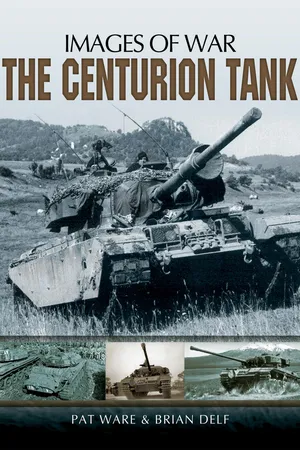
Few tank designs have been as effective, versatile and long-lived as that of the British Centurion. Conceived during the Second World War as the answer to the superior German Tiger and Panther tanks and to the lethal 88mm gun, this 52-ton main battle tank incorporated the lessons British designers had learned about armored fighting vehicles during the conflict, and it was free of the major faults that had impaired the other British tank designs of the time. The Centurion was so successful that it served in the British Army and in numerous other armies across the world from 1945 until the 1990s.
Pat Ware's highly illustrated history of this remarkable tank covers its design and development, its technical specifications and the many variants that were produced. He tells the story from the design brief of 1943, through testing and trials to the tank's entry into service. In addition, he traces the course of the Centurion's subsequent career, as it was up-dated, up-gunned and adapted to operate in varied conditions and conflicts all over the world including Korea, the Indo-Pakistan wars, Vietnam and the Arab-Israeli wars.
His expert account of this remarkable fighting vehicle is accompanied by a series of color plates showing the main variants of the design and the common ancillary equipment and unit markings. His book is an essential work of reference for enthusiasts.
"An impressive tribute to a superb vehicle." —
The Pegasus Archive
- 128 pages
- English
- ePUB (mobile friendly)
- Available on iOS & Android
eBook - ePub
The Centurion Tank
About this book
Chapter One
Development
Although most people would rightly consider the A41 Centurion medium tank to be a post-war machine, the development process for the vehicle had actually started in the early autumn of 1943, more than twelve months before the D-Day landings. However the first pre-production examples did not make it into Europe until after VE day, and came too late to affect the outcome of the war. Nevertheless, it was clear from the outset that the Centurion was an excellent machine and, even with the original 17-pounder (76.2mm) gun, may well have been capable of standing up to the heavier German Tiger and Panther tanks. In fact, it would probably be fair to say that the A41 was the best tank of the Second world war that the British Army never had … but it would be equally true to say that, despite being the final iteration of the flawed British cruiser tank concept, the Centurion went on to prove itself one of the best tanks of the immediate post-war period, regardless of origin. Notwithstanding its comparatively slow road speed and apparently insatiable thirst for fuel, it offered an excellent balance of firepower, protection and mobility, and was easily capable of being up-gunned.
The first Centurions entered service in December 1946, and the type saw its first combat in Korea in January 1951 with the 8th King’s Royal Irish Hussars. By the time production came to an end in 1962, almost 4,500 Centurions had been constructed, and the vehicle saw service with nineteen armies across the world, notably also fighting in Aden, India/Pakistan, the Middle East and Vietnam.
To better understand the reasons behind the development of the Centurion it is necessary to look at the generally lacklustre performance of the tanks deployed by the British Army since 1939. These can be considered to fall into three categories: the pre-war tanks which the British Expeditionary Force (BEF) took to France in 1940, most of which were abandoned there after the evacuation from Dunkirk; the newer tanks developed for the British Army during the years 1940 to 1944; and the light and medium tanks supplied to Britain by the USA under the Lend-Lease arrangements. Despite a plethora of different machines, Allied tank design had generally failed to keep pace with developments in Germany since the mid-1930s, and almost all of the tanks fielded by the western Allies during the Second world war were ill-matched to their German counterparts, in terms of both firepower and protection. The situation was not helped by the British Army’s dogged insistence that tanks should be designed either as ‘cruisers’ or ‘infantry tanks’ – cruisers were described as fast, lightly armoured vehicles that could easily penetrate enemy lines, while infantry tanks were slower and more heavily armoured to suit the role of supporting advancing infantry. Even the iconic M4 Sherman medium tank, which was deployed in all of the major theatres of the conflict, was unable to meet the German heavy tanks such as the Tiger and Panther on equal terms.
By the time the Allies landed on the D-Day beaches in June 1944, the main British tanks in service were the A22 Churchill, which was officially described as ‘infantry tank Mk IV’, the A27M Cromwell, or ‘cruiser tank MkVIII’, and the M4 Sherman, which, although not designed in Britain, was also considered to be a cruiser. None of the three was any match for the heavier German tanks and it was not until the appearance of the hybrid Anglo-American Sherman Firefly and the Cromwell-based Comet, both of which were armed with a British 17-pounder (76.2mm) gun, that the Allies were able to field a tank that was able to pose any real threat to the opposition. However neither had been designed from first principles and both could be considered to be ‘what-if’ developments of earlier designs that were inevitably compromised in various ways.
With the war showing every sign of dragging on well into 1945, it had long been obvious that both Britain and the USA would require better-armed and more heavily armoured tanks to defeat the German Tiger and Panther. In the USA, work had been progressing on a replacement for the Sherman since 1942. This eventually appeared as the M26 Pershing at the beginning of 1945. In Britain, meanwhile, work on the Centurion – originally simply designated A41, the name Centurion having previously been assigned to the A30 tank that actually ended up being called Challenger – had started in the summer of 1943, initially with a view to seeing full-scale production under way by November 1945.
By October 1943 the British Tank Board had met to consider a paper that had been drawn up by the Army Council Secretariat describing the desirable characteristics of future cruiser tanks. Embodying all of the lessons in tank design that the British Army had learned fighting the Germans in the Western Desert, the paper was intended to provide a starting point for the development of a new heavy cruiser tank. Recognising that the existing process of allowing industry to design new tanks had not proved particularly successful, and in the light of criticisms in Parliament and in the press with regard to the weaknesses of existing tanks in terms of firepower and reliability, it was decided that the Ministry of Supply’s Department of Tank Design (DTD), led by A.A.M. Durrant, would be tasked with preparing the outline design for what was being described as the ‘A41 heavy cruiser tank’. In time, the DTD would become the Fighting Vehicles Design Department (FVDD), before merging with the Fighting Vehicles Proving Establishment (FVPE) to become the Fighting Vehicle Research & Development Establishment (FVRDE).
Major emphasis was to be placed on firepower and protection, even if this was at the expense of mobility, and the new tank was intended to match the armour; firepower and automotive performance of the 75mm-equipped German Pz Kpfw V Panther in all practical respects.
A document was prepared that spelt out the major design features. For example, it was stated that the turret ring should not be less than the 69in diameter of the American Sherman. The new tank was to be armed with the 17-pounder (76.2mm) quick-firing anti-tank gun that had proved so effective against German armour in the Sherman Firefly … but there was some suggestion that this might eventually be replaced by a huge 37-pounder gun firing separated ammunition, a proposal which came to naught! The armour was to be sufficient to withstand the powerful German 88mm KwK 36 and PaK 43 guns, and the hull design was to incorporate a sloping glacis plate to improve frontal protection. For the first time in a British cruiser tank, the hull machine gun was said to be unnecessary, which allowed the number of crew to be reduced to four. The overall weight was to be constrained to a maximum of 40 tons – although this was subsequently to prove impractical and the weight limit was increased to 47 tons – and the overall width was not to exceed 126in, the latter being intended to allow the tank to be transported by rail, and to cross a standard Bailey bridge. A high road speed was not considered to be important since combat experience had generally shown that it offered little advantage, although cross-country performance was to be at least as good as that of the Comet and Cromwell tanks, and a high-speed reverse gear was considered to be essential. An initial life-mileage of 3,000 miles was demanded, along with an optimum balance of reliability, and simplicity of operation and maintenance.
Power was to be provided by the Rolls-Royce V12 Meteor petrol engine in Mk 4 guise. Based on the iconic Merlin aircraft engine, but lacking the supercharger that had boosted the Merlin’s power output to more than 1,000bhp, the Meteor had been developed by W.A. Robotham at Rolls-Royce in 1941 expressly for use in tanks. It was originally used to replace the ageing Liberty V12 engine that dated back to 1916, and had already been installed in the Challenger Comet and Cromwell to huge success, proving itself to be both powerful and reliable.
At this stage in the war, and particularly bearing in mind the criticisms that had been levelled at the propensity of the Sherman to catch fire when hit, the choice of a petrol engine might seem strange. However, the decision was at least partly determined by the logistic use of fuels in the British services: the Royal Navy had priority on diesel fuel and the RAF required high-octane aviation spirit, leaving the army reliant on petrol … despite the very real risk of fire when used in armoured fighting vehicles. It was felt that this arrangement allowed the largest possible quantity of fuel to be obtained from a given quantity of crude oil and, although these days the stated policy is now to use diesel fuel in all armoured vehicles, the decision to continue to use petrol in fighting vehicles was upheld in 1951 and remained policy for a further decade or more.
Unlike the Merlin, where weight was a critical issue, the Meteor used cast-iron wherever possible and, in order that it could be a direct replacement for the Liberty engines that had been fitted to British tanks such as the Crusader, Centaur and Cavalier, the overall height of the engine was reduced by some six inches when compared to the Merlin, by repositioning the water and oil pumps, and various accessories. The direction of rotation was also reversed, with the Meteor running clockwise when viewed from the nose; other changes from the original Merlin engine included the use of detachable cylinder heads. However, a large percentage of the parts were interchangeable between the two engines, including the crankshaft and connecting rods.
The engineers at Rolls-Royce’s Clan Foundry in Belper, Derbyshire, had access to stocks of early Merlin engines and some of these were used to produce the first mock-ups of the Meteor. However, the adoption of the Merritt-Brown gearbox forced a number of design changes which meant that many of the Merlin castings were no longer suitable, and the first ‘proper’ Meteor engine was installed into a Crusader tank (number T15646) in April 1941. By July Rolls-Royce had completed three more engines and had shipped them to the company’s Pym’s Lane factory at Crewe for testing. Once the design had been proven, it was planned that Leyland Motors would start to construct 1,200 engines for the Cavalier Mk VII tank, with production to reach 500 a month by autumn 1942. However, nervous that the more powerful Meteor engine would highlight weaknesses in other areas of the Cavalier, particularly the ability to cool the engine effectively, and having tooled up to continue producing Liberty engines, Leyland backed out, leaving Rolls-Royce to produce the first 1,000 engines, with the Ministry of Supply subsequently increasing the requirement to 3,000.
It was not an ideal arrangement. Rolls-Royce, already busy producing the Merlin, lacked sufficient capacity to also produce the numbers of Meteors that would eventually be required. It was subsequently agreed that Rolls-Royce would maintain its design parentage, and would produce the components for the engines, with the wolverhampton-based Henry Meadows company undertaking assembly, occasionally using parts salvaged from the Merlin engines of crashed aircraft! Meteor engines were also subsequently produced by the Nuffield Mechanizations division of Morris Motors, but by 1943 production and design parentage of the Meteor had been passed to the Rover Company at Solihull in ‘exchange’ for the gas turbine engine designs that Rover had been working on for the Ministry of Supply. By the time the war was over, production of the Meteor, and the subsequent V8 Meteorite, resided only with Rover, which continued to manufacture the engine at Drakelow and then at Tysley until 30 June 1964, when the very last one was built. For the Centurion development project, Rover was initially commissioned to provide eighteen Meteor Mk 4 engines with a power output of 550bhp, but by the time the development process was finished this figure had risen to 650bhp.
In what was something of an innovation for British tanks, the Centurion was also to be fitted with an auxiliary engine coupled to a generator, allowing the radios, turret traverse and gun-control equipment, as well as the all-important tea-brewing equipment – coyly described as a ‘boiling vessel’ – to continue to operate without any need for the main engine to be running.
The transmission was a redesigned version of the Merritt-Brown five-speed combined gearbox and steering unit that had already been well proven in the Cromwell and Comet tanks. The major differences when compared to earlier versions of this transmission were the inclusion of a high-speed reverse gear, capable of propelling the Centurion backwards at 7.6mph, and an automatic differential lock. The track width was initially specified at 24in.
Finally, the increased weight of the vehicle when compared to earlier cruiser tanks meant that the old Christie suspension had to be abandoned. AEC’s designer, G.J. Rackham, came up with a modified version of the Horstman system that it was felt would provide the best possible cross-country performance. Although Rackham introduced a number of new features, notably the use of three concentric coil springs, the Horstman suspension system was not new. It was originally designed by Sydney Horstman, the son of a German watchmaker who had settled in Bath in 1854, changing his name from Horstmann after the end of the First World War and had first been used on the Vickers Mk II light tank back in the mid-1930s. In redesigning Horstman’s system, Rackham made certain that there was sufficient allowance to accommodate subsequent increases in weight as the tank was inevitably up-gunned and upgraded during its life.
A design team for the tank was established under the chairmanship of Sir Claude Gibb, the Director General of Tank Production. An outline specification and general arrangement drawings had been completed by October or November of 1943, with a full-size mock-up available by the end of the year. Following a protracted discussion, it was decided that pilot and pre-production models would be constructed towards the end of 1944, and AEC, which had been building engines for the Valentine tank, was appointed as the ‘design parent’.
By late May 1944, scarcely two weeks before D-Day, the AEC workshops in west London, working in conjunction with the Royal Ordnance Factory (ROF) at the Woolwich Arsenal way over on the south-east side of the capital, had produced the first mock-up of the hull in mild steel. Although lacking both gun and turret, the intention was simply to ‘prove’ the choice of suspension, engine and transmission, and the control systems. A second hull, this time of armoured steel, was also produced for stowage and defensive firing trials. It was intended that these mock-ups would be followed by twenty prototypes, or pilot models, to be constructed at ROF woolwich and Nottingham, with the Centurion entering full production by November 1945.

The original caption to this photograph described it as the ‘A41 prototype’. This view across the rear deck shows the distinctive cooling louvres, the exhaust silencers mounted on the track guards and the circular escape hatch at the rear of the welded turret that was also designed to allow the barrel of the 17-pounder (76.2mm) gun to be removed. The stencilled legend on the side skirt indicates that anti-freeze has been added to the cooling system. (Warehouse Collection)

The same vehicle from the front, showing the 17-pounder (76.2mm) gun and the 20mm coaxial Polsten cannon. The warning triangle, just visible on the turret side, normally indicates that the component is not made from armoured steel. Records show that the vehicle was delivered in April 1945. (Warehouse Collection)

The legend ‘P1’ on the turret side indicates that this is ‘prototype number one’ again, but the turret has now had the distinctive sto...
Table of contents
- Front Cover
- Title Page
- Copyright Page
- Contents
- Chapter One: Development
- Chapter Two: Centurion Production and Sales
- Chapter Three: The Centurion Crew
- Chapter Four: The Centurion in Combat
- Chapter Five: The Centurion Described
- Chapter Six: Improving the Breed
- Chapter Seven: Centurion Engineers’ Tanks
- Chapter Eight: Centurion Projects and Oddballs
- Appendix: Centurion Reference Data
Trusted by 375,005 students
Access to over 1.5 million titles for a fair monthly price.
Study more efficiently using our study tools.
Information
Publisher
Pen & Sword MilitaryYear
2013Topic
HistoryPrint ISBN
9781781590119
Subtopic
Military & Maritime HistoryeBook ISBN
9781783378623
Index
HistoryFrequently asked questions
Yes, you can cancel anytime from the Subscription tab in your account settings on the Perlego website. Your subscription will stay active until the end of your current billing period. Learn how to cancel your subscription
No, books cannot be downloaded as external files, such as PDFs, for use outside of Perlego. However, you can download books within the Perlego app for offline reading on mobile or tablet. Learn how to download books offline
Perlego offers two plans: Essential and Complete
- Essential is ideal for learners and professionals who enjoy exploring a wide range of subjects. Access the Essential Library with 800,000+ trusted titles and best-sellers across business, personal growth, and the humanities. Includes unlimited reading time and Standard Read Aloud voice.
- Complete: Perfect for advanced learners and researchers needing full, unrestricted access. Unlock 1.5M+ books across hundreds of subjects, including academic and specialized titles. The Complete Plan also includes advanced features like Premium Read Aloud and Research Assistant.
We are an online textbook subscription service, where you can get access to an entire online library for less than the price of a single book per month. With over 1.5 million books across 990+ topics, we’ve got you covered! Learn about our mission
Look out for the read-aloud symbol on your next book to see if you can listen to it. The read-aloud tool reads text aloud for you, highlighting the text as it is being read. You can pause it, speed it up and slow it down. Learn more about Read Aloud
Yes! You can use the Perlego app on both iOS and Android devices to read anytime, anywhere — even offline. Perfect for commutes or when you’re on the go.
Please note we cannot support devices running on iOS 13 and Android 7 or earlier. Learn more about using the app
Please note we cannot support devices running on iOS 13 and Android 7 or earlier. Learn more about using the app
Yes, you can access The Centurion Tank by Pat Ware,Brian Delf in PDF and/or ePUB format, as well as other popular books in History & Military & Maritime History. We have over 1.5 million books available in our catalogue for you to explore.