eBook - ePub
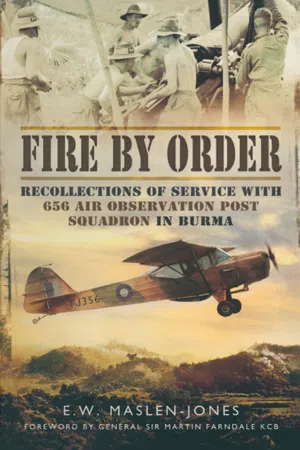
Fire by Order
Recollections of Service with 656 Air Observation Post Squadron in Burma
- 188 pages
- English
- ePUB (mobile friendly)
- Available on iOS & Android
eBook - ePub
Fire by Order
Recollections of Service with 656 Air Observation Post Squadron in Burma
About this book
Perhaps the most surprising thing about this book is the fact that it has waited fifty years to appear for, as Sir Martin Farndale points out in his foreword, the debt owed by 14th Army to 656 Air OP Squadron in the reconquest of Burma was immeasurable. From 1943 until the end of the war, these three flights of five tiny Auster aircraft provided air observation for the whole of the Army fighting the Japanese in the jungle below. A likely explanation, if Ted Maslen- Jones is typical of his colleagues, is that they were essentially modest men who, in their own eyes, were only doing their job and were in fact rather privileged to be sailing above the canopy while the ground troops were slogging it out somewhere below them. Several times the author refers to the sheer exhilaration of flying over that beautiful but still unhappy country.Now, at last, thanks to the recollections, as well as the diligent research of Ted Maslen-Jones, the true contribution of these 'daring men in their flying machines' can be properly appreciated. As one of the pilots, his own memories are naturally of his flying time, but he never loses sight of the fact that it was the efforts of the fitters, signallers and drivers who kept these flimsy aircraft in the air and rightly points out that the record of serviceability of 656 Squadron was truly remarkable.
Information
Topic
GeschichteSubtopic
Asiatische GeschichteCONTENTS
Acknowledgements
Foreword
Introduction
Glossary
Maps
Prologue
1. Prepare For Action
2. Baptism of Fire
3. Gathering Experience
4. Respite, Recollection and Re-equipment
5. Back To War
6. Towards the Chindwin
7. Across the Chindwin
8. To the Plains
9. To the Irrawaddy – via Monywa
10. Across the Irrawaddy
11. South to Rangoon
12. Back to India
13. Malaya
Epilogue
Appendix A
Appendix B
Appendix C
Roll of Honour
Bibliography
Index
ACKNOWLEDGEMENTS
I am indebted to many comrades and friends for their readiness to assist either with the production of the manuscript or with reviving memories of particular events. Special thanks are also due to Debi Gardner for undertaking the typescript, Alan Watson for his initial “reviews” and Malcolm Phillips for his help in refining the maps. Similarly, for permission to quote from their private diaries;
Arthur Windscheffel R.A.F.
Reg Bailey R.A.
Denis Kemp R.A.F.
Ray Pett R.A.
Arthur Maycroft R.A.
Reg Bailey R.A.
Denis Kemp R.A.F.
Ray Pett R.A.
Arthur Maycroft R.A.
and from their personal records;
Frank McMath R.A.
Cecil (“Nobby”) Clark R.A.F.
Cecil (“Nobby”) Clark R.A.F.
as well as Robbie Robertson and Arthur Adamson, both of whom served with 136 Field Regiment R.A. in Burma.
In addition, valuable assistance was received from Archivists at
The Museum of Army Flying – Middle Wallop
National Army Museum
Public Record Office – Kew
Imperial War Museum.
National Army Museum
Public Record Office – Kew
Imperial War Museum.
FOREWORD
by
General Sir Martin Farndale KCB
Master Gunner St James’s Park
The story of 656th Air Observation Post Squadron RAF/RA is remarkable by any standards. Ted Maslen-Jones, a pilot in the Squadron, recounts how one single squadron composed of three Flights each of five tiny Auster aircraft provided air observation for the whole of the famous 14th Army in Burma from 1943 until the end of World War 2 in 1945 and then in Malaya and Java until 1947. The outstanding gallantry of all members of the Squadron, both ground crew and pilots, both in the air and on the ground where they often had to defend themselves in the jungle with small arms against direct attack, brings great credit to them all, to the Royal Air Force and to the Royal Artillery. It shows how men under pressure work together despite different backgrounds and different uniforms.
Even the formation of the squadron had to be done against all odds and only occurred because of the dedication of all concerned and in particular Major Denis Coyle, the Officer Commanding. Squadron Headquarters, A and C Flights were committed to the Arakan in January, 1943, and first saw action in the great Arakan battles where they played a significant part in the Battle of the Admin Box in February, 1943. B Flight went to Kohima in March, 1943, to be joined by Squadron Headquarters and C Flight, leaving A Flight to cope with the Arakan operations alone. The Austers spent much time patrolling over dense jungle to warn their comrades on the ground of what lay ahead or evacuating wounded, bringing up vital supplies and all the time directing the fire of the guns which did so much to keep the enemy at bay. After the monsoons of 1943 C Flight returned to the Arakan leaving Squadron Headquarters and A and B Flights on the northern front. Indeed it was Captain Jimmy Jarrett RA of C Flight who landed at Akyab and accepted its surrender ahead of the Army!
While this was happening in the Arakan the rest of the squadron was covering operations at Kohima and Imphal and in the bloody fighting along the Tiddim road. But perhaps their finest hour came in the magnificent support given to the whole of 14th Army at the same time in its advance to, and the crossing of, the Irrawaddy and then in the dash for Rangoon which defeated the Japanese and ended the War. The part played by the gallant few of this splendid squadron is out of all proportion to their size. Their flying hours broke all records, their feats of endurance and airmanship in appalling weather conditions set standards seldom equalled and they never once failed to answer a call for help from their comrades on the ground. Between October, 1944, and May, 1945, alone they flew 6712 sorties in 5170 flying hours! Some of the artillery attacks they directed had decisive impact on the great battles raging below them. The Japanese dreaded them and stopped all firing when they saw them above. To the British they gave confidence, help of all kinds and above all information.
But this is also a human story. Although some of their experiences were horrific, the pressures immense and the fatigue, problems and conditions appalling, they never failed. The feats of the Signallers in linking all Flights with Squadron Headquarters, a net which spanned the whole Theatre; the feats of the drivers in getting the ground crews forward when roads and tracks hardly existed and the feats of the Fitters in keeping the aircraft serviceable in such conditions were outstanding and without equal, to say nothing of the gallantry of the pilots. They also had fun and the bonds of comradeship then created have remained so strong as to last a lifetime.
This is a story that constitutes a remarkable feat of arms and must be recorded for ever in the Annals of the British Army, the Royal Air Force and the Royal Artillery. This splendid book does just that and is highly commended for doing so.
INTRODUCTION
The motivation to write a book about my experiences as an Air O P pilot in the Far East arose primarily from the realization that no true record of the work done by 656 Squadron in supporting the 14th Army exists. I was also persuaded that the story was worth telling. Once I had decided to set down my recollections I found that my memory of incidents as well as the continuity of events was still quite clear. This was confirmed when I began to read through the Squadron Records at the Public Record Office. What had not been clear in my mind was the extent of the achievement of this Squadron in operating throughout the campaign on its own and without reinforcements. Once I was committed to the field of action, I became relatively unaware of the problems that Squadron HQ continually faced in terms of the supply of spare parts and replacement aircraft, administration difficulties, and a lack of reinforcements.
656 were self-sufficient through the whole campaign, and fully extended whenever flying was possible. I and my fellow pilots were always fully operational whenever we were needed and this was due entirely to the quality of leadership, the skill of our personnel and the objective spirit that existed throughout the unit.
The facility of air observation was quickly recognized by the Artillery Commanders in Burma, and our usefulness as pilots increased with experience. The country was difficult for all who fought in it, but the versatility of the Auster aircraft, coupled with the advantages of height and mobility over the battle areas, were there to be exploited.
The Auster was not particularly robust and in the tropical climate the fabric which covered wings and fuselage suffered considerably. Nearly all our aircraft at one time or another had to be recovered in the field. We also had problems with overheated engines, which made restarting (by hand) very difficult. Squadron engineers eventually solved the problem. Above six thousand feet the performance was not satisfactory, and although this became a factor in the mountains of northern Burma it was brief and not at all critical. In general the Auster was ideal for the job and, for me at least, a delight to fly.
With the passage of years I have frequently reflected upon my very good fortune in coming through the whole Burma campaign with little more to complain about at the time than prickly heat, and certainly nothing of a lasting nature. All of us out there had our tasks to perform, but those who had to endure the worst conditions and were at greatest risk were on the ground. Infantrymen, Sappers or Gunners, they all made the supreme sacrifice in the most appalling circumstances.
The location of our landing grounds ensured that our camp areas were usually sited in very uncomfortable situations. It was necessary for us to be as close to the artillery as possible. However, I had what I still regard as the benefit of being able to take off and, for a while, fly above all this. Free in the air and excited by flying, there is no doubt at all that it represented a form of respite.
In writing this book I have endeavoured to set out my own recollections in such a way that they represent the work of the Squadron as a whole. It was a privilege for me to serve in it. I have also endeavoured to portray individuals and units as accurately as possible. If there should be any inaccuracy that causes offence I apologize unreservedly. The object has been to provide a faithful account of Air O P at work in South-East Asia.
GLOSSARY
| ADS | Advanced Dressing Station. |
| AFTS | Advanced Flying Training School. |
| ALFSEA | Allied Land Forces South-East Asia. |
| ALG | Advanced Landing Ground. |
| ALO | Air Liaison Officer. RAF Officer attached to Advanced HQ of fighting units. |
| BHQ | Brigade Headquarters. |
| BMRA | Brigade Major Royal Artillery in charge of Artillery at Divisional HQ. |
| BUND | Small bank separating paddy fields. |
| CCRA | Corps Commander Royal Artillery. |
| Chaung | Burmese water course. In spate during wet season, often dry at other times. |
| CRA | Commander Royal Artillery. |
| EFTS | Elementary Flying Training School. |
| FFE | Fire For Effect. Engage Target After Ranging. |
| FOB | Forward Observer Bombardment (for Royal Navy). |
| GF | Gunfire. Guns from artillery units fire specific number of rounds on to a target. |
| HAA | Heavy Anti-Aircraft. |
| HMG | Heavy Machine Gun. |
| HQRA | Headquarters Royal Artillery. |
| IG | Instructor in Gunnery. |
| LAC | Leading Aircraftsman. |
| LCA | Landing Craft Assault. |
| LCT | Landing Craft Tank used in amphibious landings. |
| LMG | Light Machine Gun. |
| L of C | Line of Communication. |
MAPS
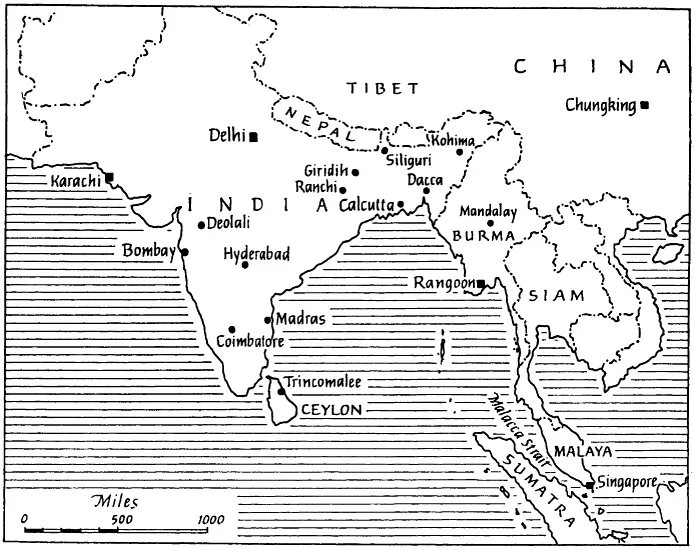
1. India and South-East Asia
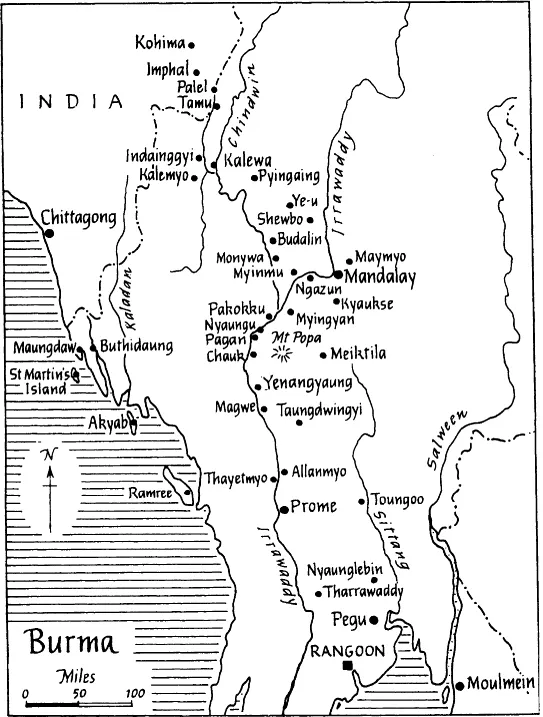
2. Burma
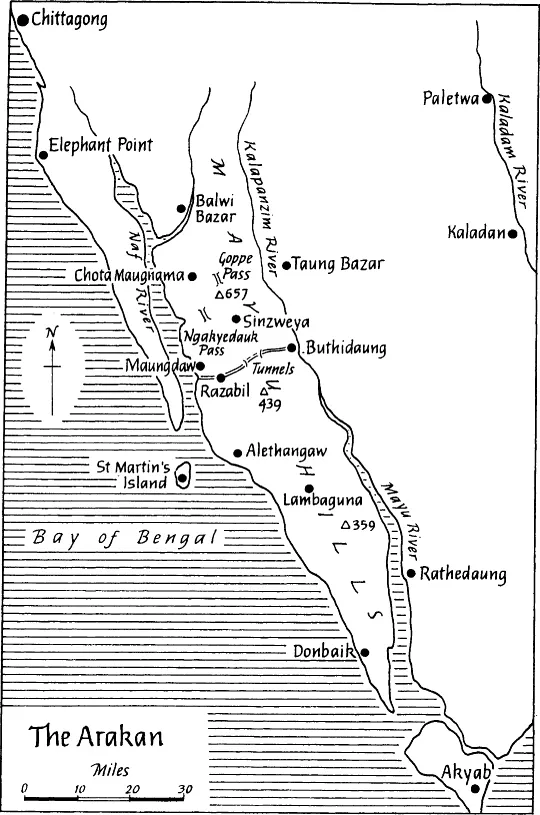
3. The Arakan
4. Kabaw to the Chindwin
5. Crossings of the Irrawaddy, 1945
6. Malaya
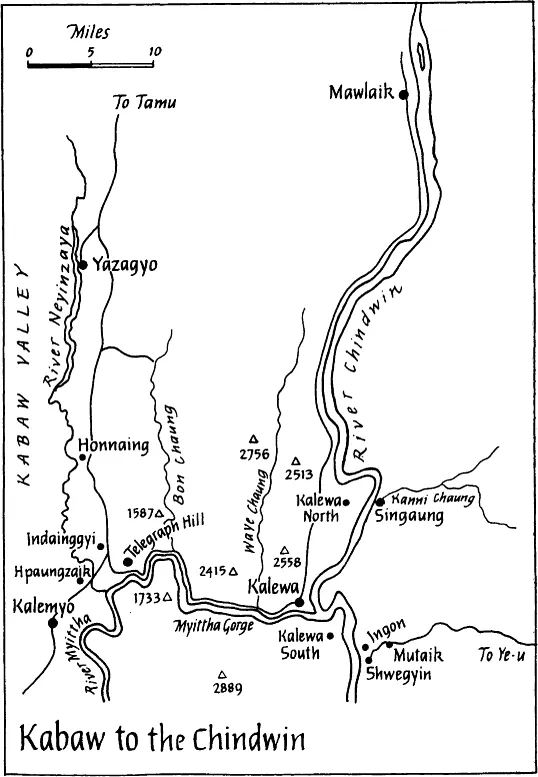
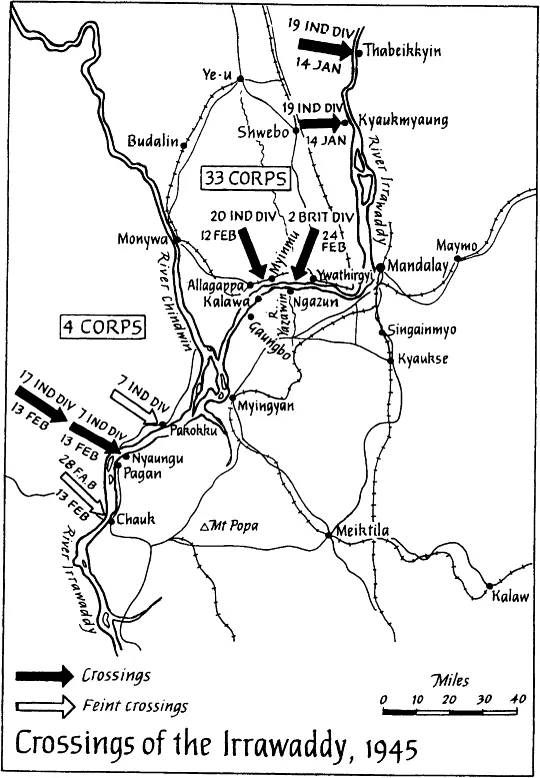
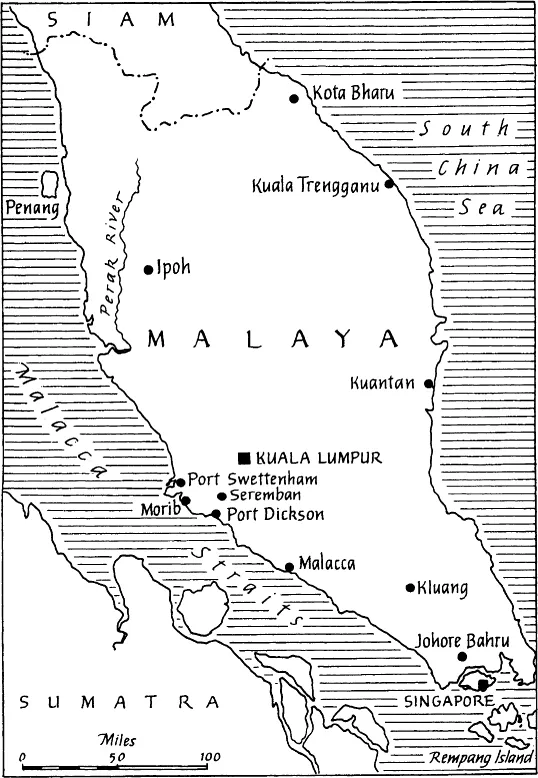
PROLOGUE
I had thrown it overboard, as many of my comrades had also done with theirs. It was hardly surprising that they floated, and they made slow headway across Bombay Harbour, a strange-looking flotilla which we had decided was out of date and quite useless for what was in store for us.
We were, at that moment, leaning on the rail of the SS Ascania. She had brought us through the Red Sea and across the Indian Ocean, after we had transhipped at Port Tewfik at the southern end of the Suez Canal, from the SS Monarch of Bermuda. The Monarch was a comfortable ship and would have been well suited to the remainder of our voyage, even though as a troopship she was considerably overcrowded. The Ascania, in contrast, was more suited to the icy waters of the North Atlantic than transporting troops into tropical climates. Furthermore she was smaller.
The object I had discarded was a nineteenth century pith helmet, which had been issued to me by the Chief Quartermaster at Hendon, together with other articles of clothing “suitable for a tropical climate”. In due course most of these items were replaced by those that really were going to be suitable for the jungles of Burma, which was our eventual destination. In fact when it came to flying my Auster, I even set aside the popular bush hat and wore a beret all the time that I was out there.
The voyage itself provided ample opportunity to reflect upon how it was that I came to be there, and what it was that I might have to face up to. We were heading for a strange country, conditions that sounded frightening and an enemy that was intensely pursuing his plan to take control of the whole of South-East Asia. What influences, decisions, and happenings had brought me to this moment?
During the earliest stages of the Second World War a group of dedicated “believers”, who in peacetime had been members of the Royal Artillery Flying Club at Larkhill, had succeeded in persuading their superiors as to the merits of using light aircraft in observing and controlling artil...
Table of contents
- Cover
- Half Title
- Full Title
- Copyright
- Contents
Trusted by 375,005 students
Access to over 1.5 million titles for a fair monthly price.
Study more efficiently using our study tools.
Frequently asked questions
Yes, you can cancel anytime from the Subscription tab in your account settings on the Perlego website. Your subscription will stay active until the end of your current billing period. Learn how to cancel your subscription
No, books cannot be downloaded as external files, such as PDFs, for use outside of Perlego. However, you can download books within the Perlego app for offline reading on mobile or tablet. Learn how to download books offline
Perlego offers two plans: Essential and Complete
- Essential is ideal for learners and professionals who enjoy exploring a wide range of subjects. Access the Essential Library with 800,000+ trusted titles and best-sellers across business, personal growth, and the humanities. Includes unlimited reading time and Standard Read Aloud voice.
- Complete: Perfect for advanced learners and researchers needing full, unrestricted access. Unlock 1.5M+ books across hundreds of subjects, including academic and specialized titles. The Complete Plan also includes advanced features like Premium Read Aloud and Research Assistant.
We are an online textbook subscription service, where you can get access to an entire online library for less than the price of a single book per month. With over 1.5 million books across 990+ topics, we’ve got you covered! Learn about our mission
Look out for the read-aloud symbol on your next book to see if you can listen to it. The read-aloud tool reads text aloud for you, highlighting the text as it is being read. You can pause it, speed it up and slow it down. Learn more about Read Aloud
Yes! You can use the Perlego app on both iOS and Android devices to read anytime, anywhere — even offline. Perfect for commutes or when you’re on the go.
Please note we cannot support devices running on iOS 13 and Android 7 or earlier. Learn more about using the app
Please note we cannot support devices running on iOS 13 and Android 7 or earlier. Learn more about using the app
Yes, you can access Fire by Order by E. W. Maslen-Jones in PDF and/or ePUB format, as well as other popular books in Geschichte & Asiatische Geschichte. We have over 1.5 million books available in our catalogue for you to explore.