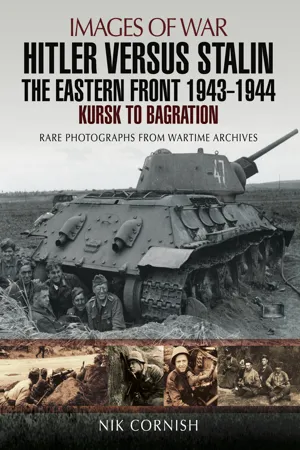
- 160 pages
- English
- ePUB (mobile friendly)
- Available on iOS & Android
eBook - ePub
About this book
The third volume in Nik Cornishs photographic history of the Second World War on the Eastern Front records in vivid visual detail the sequence of Red Army offensives that pushed the Wehrmacht back across Russia after the failure of Operation Citadel, the German attack at Kursk. Previously unpublished images show the epic scale of the build-up to the Kursk battle and the enormous cost in terms of lives and material of the battle itself. They also show that the military initiative was now firmly in Soviet hands, for the balance of power on the Eastern Front had shifted and the Germans were on the defensive and in retreat. Subsequent chapters chronicle the hard-fought and bloody German withdrawal across western Russia and the Ukraine, recording the Red Armys liberation of occupied Soviet territory, the recovery of key cities like Orel, Kharkov and Kiev, the raising of the siege of Leningrad and the advance to the borders of the Baltic states. Not only do the photographs track the sequence of events on the ground, they also show the equipment and weapons used by both sides, the living conditions experienced by the troops, the actions of the Soviet partisans, the fight against the Finns in the north, the massive logistical organization behind the front lines, and the devastation the war left in its wake.
Information
Chapter 1
Kursk, the Northern Flank
For the Germans the westward facing bulge in the line that centred on the city of Kursk was unfinished business, left over from their counteroffensive of February–March 1943. On 13 March, within days of the recapture of Kharkov and Belgorod, Hitler listed the tasks for his men on the Eastern Front. Of these the main priority was the destruction of the Kursk Bulge. This was to be accomplished by a simple, two-thrust pincer movement; one attack from AGC; one from the southern flank by AGS. Later that month the Führer considered operations south of Kharkov to reconquer the industrial region of the Donets River. However, in mid-April those participating in the Kursk offensive, codenamed Operation Citadel, were informed that they should be prepared to attack at six days’ notice sometime after 28 April. This was what Hitler termed ‘the first offensive of the year’.
With the die cast, AGS’ Fourth Panzer Army and AGC’s Ninth Army were to spearhead Operation Citadel and began to receive powerful reinforcements. However, a combination of continuing bad weather and technical problems with the new tank, the Panzer V Panther, led to the offensive being postponed several times. But, every day that Hitler vacillated and factors beyond his control intervened gifted the Soviets more time to prepare their defences. For much as the German leadership was not entirely united behind the Führer in support of the summer offensive, Stalin’s generals and marshals were less doubtful of success.
Having lost the offensive momentum following Manstein’s counterattacks, Stavka was eager to regain the initiative. Therefore, Stalin consulted his senior officers for their assessment of the strategic situation with reports to be ready by mid-April. The conclusion reached resulted in the decision to ‘concentrate our forces in the Kursk area, to bleed the enemy forces here in a defensive operation, and then to switch to the offensive and achieve their full destruction’, as described in a Stavka memorandum.
The German northern pincer would be commanded by General Walter Model, the well-respected defender of the Rzhev Salient. Model’s Ninth Army would deploy six panzer divisions: 2nd, 4th, 9th, 12th, 18th and 20th alongside 10th Panzer Grenadier Division and 14 infantry divisions. The 2nd, 9th and 20th Panzer divisions and 6th Infantry Division would spearhead the attack. After the postponements and false alarms of May and June information from newly captured German POWs was sufficiently convincing for Zhukov to order the artillery to fire a pre-emptive barrage to upset enemy assembly and artillery positions.
Although the damage inflicted was minimal, it did wrong-foot the attackers, causing a delay of over 2 hours. However, an attack on Luftwaffe bases on both flanks of the bulge achieved very little. Then, at 0430hr, on 5 July the German artillery opened fire followed 60 minutes later by the ground attack.
A feint by XXIII Army Corps at the junction of Thirteenth and Forty-Eighth armies at the eastern end of the bulge pushed 1.5km into the first defence line where it was held by counterattacks, 3km short of the road junction of Maloarkhangelsk. But the main attack by XXXXVII and XXXXI Panzer corps with strong air support advanced 5km in the direction of Ponyri railway station. Rokossovsky’s Central Front, facing these attacks, fought back deploying armour and mobile obstacle detachments while simultaneously falling back on the line of ridges outside of Ponyri. By sunset Ninth Army had pushed into the first defence line to a depth of 8km across a front of 15km. One German noted, ‘We’re getting there! Not easily, and the battle has been bloody and costly. But we are getting there.’ However, ‘Nowhere has the enemy been taken by surprise. Nowhere has he been soft. He had clearly been expecting the attack . . .’ That night Rokossovsky’s armoured reserve, Second Tank Army, began to move forward in preparation to counterattack. Model’s panzer units counted some 20 per cent of tanks and assault guns lost from the 300 committed.
The Soviet counterattack was to be met by 2nd and 9th panzer divisions supported by the Tigers of 505th Heavy Tank Battalion. From 6 July upwards of 1,000 tanks would be locked in a huge battle that swung to and fro along the Ponyri ridge line, Hill 274 and the fortified villages of Olkhovatka and Samodurovka.
Renewing the attack towards Maloarkhangelsk, 18th Panzer Division and its accompanying 86th and 292nd infantry divisions were stopped short of Ponyri by well-entrenched infantry and cleverly sited anti-tank guns. Described thus by a German observer, ‘The Russian infantrymen allowed the tanks to rumble past their well-camouflaged fox holes and then came out to deal with the German grenadiers in their wake. Thus the battle continued to rage on in sectors that the forward tank commanders believed already won . . . and the tanks and assault guns were out of fuel.’ Such holding actions by the Soviet riflemen bought time for their armour which had been experiencing great difficulty moving forward through the maze of their own defences. This slow movement resulted in less effective, piecemeal attacks.
Such was the pressure that 140th Rifle Division from Seventieth Army on the Soviet left flank was sent in support. As dusk fell concealed Soviet infantrymen and engineers scuttled about the battlefield sowing mines, killing the members of tank recovery and repair crews and generally creating havoc. On 7 July the Red Air Force finally gained control of the air over the bulge’s northern flank. Now the Shturmovik not the Stuka would pulverize enemy armour as it ground forward through the dust and smoke.
As dawn spread across fields littered with smashed tanks, guns and men, Model brought up the hitherto uncommitted 4th Panzer Division with 101 tanks. During the course of the day four attacks were launched through the unharvested corn that covered the fields near the fortified village of Samodurovka. ‘The (panzer) grenadiers swept on, capturing trenches and encountering new ones . . . Companies became platoons’, an anonymous officer of 4th Panzer Division reported.
Elsewhere 4th Panzer Division took the village of Teploe at the junction of 70th and 175th Guards rifle divisions, but tanks and infantry arrived to seal the breach and once more the Soviet line held firm. German accounts paid tribute to the Soviet defenders, ‘the Soviet infantry refused to panic in the face of the roaring Tiger and Ferdinand tanks . . . Everything had been done to inoculate the troops against the notorious “tank panic”.’ Firing over open sights, Soviet anti-tank gunners poured fire into the advancing panzers while infantry weapons pinned down their supporting panzer grenadiers.
To reinforce the attack on Ponyri 10th Panzer Grenadier Division was brought up to face two Soviet airborne divisions, 3rd and 4th Guards, which it pushed back to the outskirts of the town. But this was Ninth Army’s last effort in this area, men and machines were at their last gasp, their last drop of fuel. However, there was still sufficient strength remaining for one last attempt to breakthrough into open country. On 9 July, as Ponyri’s fate hung in the balance, Model concluded that his best chance of success lay in taking the ridge near Olkhovatka. Mustering the last 300 armoured fighting vehicles of 2nd, 4th and 20th panzer divisions, Ninth Army’s units entered the fray once more. A massive aerial and artillery bombardment preceded the tank attack. Pulverized though they were, the Soviets held their ground, thanks in part to reinforcements in the shape of 162nd Rifle Division, another fresh unit.
When this last gamble failed to pay off it was clear that Model’s offensive was over. Moscow’s response was swift. Bryansk Front and the left flank of Western (W) Front were ordered to go over to the offensive. While AGC was preoccupied with Operation Citadel’s northern thrust the Soviet preparations for their offensive continued. However, timing was paramount, Ninth Army must not be strong enough to wheel and counterattack. By 11 July this requirement had, in good measure, been met. Model’s forces had lost some 50,000 men killed, wounded or captured along with 400 tanks for an advance of no more than 15km. Therefore, Stalin’s forces north of Kursk could move over to the attack. Exhausted as Rokossovsky’s Central Front may have been, Stavka had other forces available that could be unleashed on the salient around Orel. The attack that AGS was mounting on the bulge’s southern flank was Hitler’s only hope of capturing Kursk and restoring the situation.
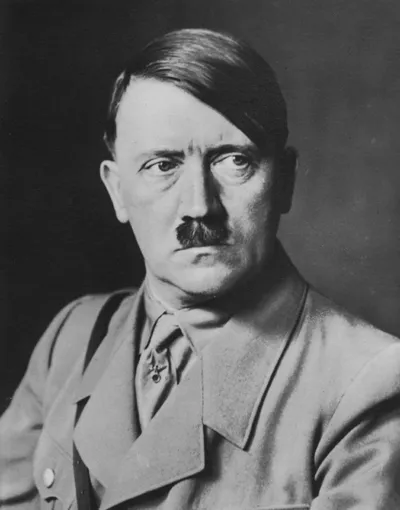
Hitler was uncertain that Operation Citadel would achieve its obj...
Table of contents
- Cover
- Title
- Copyright
- Contents
- Preface
- Acknowledgements
- Photograph Credits
- Introduction
- Chapter One: Kursk, the Northern Flank
- Chapter Two: Kursk, the Southern Flank
- Chapter Three: Operation Kutuzov
- Chapter Four: Operation Rumiantsev
- Chapter Five: West to Smolensk
- Chapter Six: West from Leningrad
- Chapter Seven: Kiev, Back in the USSR
- Chapter Eight: Across Ukraine
- Chapter Nine: Out of the USSR
Trusted by 375,005 students
Access to over 1.5 million titles for a fair monthly price.
Study more efficiently using our study tools.
Frequently asked questions
Yes, you can cancel anytime from the Subscription tab in your account settings on the Perlego website. Your subscription will stay active until the end of your current billing period. Learn how to cancel your subscription
No, books cannot be downloaded as external files, such as PDFs, for use outside of Perlego. However, you can download books within the Perlego app for offline reading on mobile or tablet. Learn how to download books offline
Perlego offers two plans: Essential and Complete
- Essential is ideal for learners and professionals who enjoy exploring a wide range of subjects. Access the Essential Library with 800,000+ trusted titles and best-sellers across business, personal growth, and the humanities. Includes unlimited reading time and Standard Read Aloud voice.
- Complete: Perfect for advanced learners and researchers needing full, unrestricted access. Unlock 1.5M+ books across hundreds of subjects, including academic and specialized titles. The Complete Plan also includes advanced features like Premium Read Aloud and Research Assistant.
We are an online textbook subscription service, where you can get access to an entire online library for less than the price of a single book per month. With over 1.5 million books across 990+ topics, we’ve got you covered! Learn about our mission
Look out for the read-aloud symbol on your next book to see if you can listen to it. The read-aloud tool reads text aloud for you, highlighting the text as it is being read. You can pause it, speed it up and slow it down. Learn more about Read Aloud
Yes! You can use the Perlego app on both iOS and Android devices to read anytime, anywhere — even offline. Perfect for commutes or when you’re on the go.
Please note we cannot support devices running on iOS 13 and Android 7 or earlier. Learn more about using the app
Please note we cannot support devices running on iOS 13 and Android 7 or earlier. Learn more about using the app
Yes, you can access Hitler Versus Stalin: The Eastern Front, 1943–1944 by Nik Cornish in PDF and/or ePUB format, as well as other popular books in History & Military & Maritime History. We have over 1.5 million books available in our catalogue for you to explore.