- 256 pages
- English
- ePUB (mobile friendly)
- Available on iOS & Android
eBook - ePub
About this book
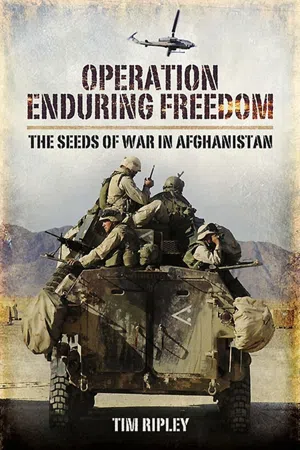
The first six months of the war in Afghanistan were incredibly confused. Few journalists or civilians had access to the main events and the result was the creation of many urban myths that persist to this day. This book reveals the truth behind Operation Enduring Freedom, its objectives, successes, failures and consequences. Tim Ripley has discovered what actually happened in the first six months of this US-led intervention. He reveals the clandestine US and UK reconnaissance efforts before hostilities commenced on 7 October 2001, secret US UAV and drone operations, RAF Canberra and U-2 spy flights and details of initial combat between Taliban and Northern Alliance ground forces.This is a definitive account of the first six months of the military campaign in Afghanistan that saw the initial air and special drive to unseat the Taliban regime, the launching of search and destroy operations to hunt down Osama bin Ladens Al Qaeda organization and the setting up of President Hamid Karzais government in Kabul. These events were the catalyst for the subsequent and continuing war in that far-off troubled land.
Information
Topic
GeschichteSubtopic
Militär- & SeefahrtsgeschichteChapter 1
Operation Enduring Freedom – Ten Years On
The date 11 September 2011 will mark the tenth anniversary of the 9/11 attacks on the United States and the start of the subsequent American-led military operation in Afghanistan against the bases of Usama bin Laden’s Al Qaeda organization, which was immediately accused of being responsible for the attacks on the World Trade Centre and Pentagon that left just under 3,000 dead. (Usama bin Laden is the usual translation from Arabic, although the spelling Osama bin Laden is commonly used in the media. US and British troops and ‘spooks’ in Afghanistan called him Usama bin Laden, shortening it to UBL, so that is the spelling that has been used here.)
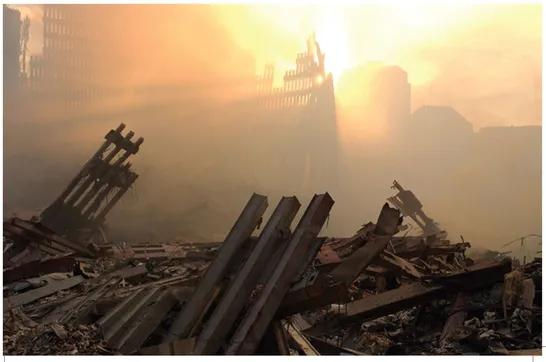
The sun streams through the dust cloud over the ruins of the World Trade Centre.
(Andrea Booher/ FEMA)
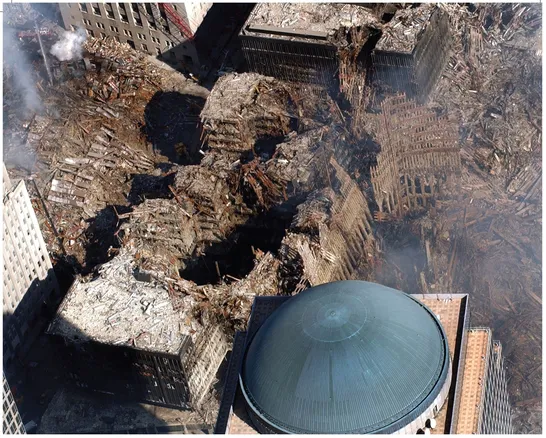
‘Ground Zero’ at the World Trade Centre on 19 September 2001, New York City.
(US Navy/ Photographer’s Mate 2nd Class Aaron Peterson)
At first it appeared that more than 10,000 people had died in the attacks but as the dust settled the authorities in the US were able to confirm the death toll as 2,996, including the 19 hijackers of the four aircraft that were used as weapons and 2,977 victims. Some 246 victims were on the hijacked aircraft. The majority of the dead were in New York City where 2,606 died in the towers and on the ground, and a further 125 died at the Pentagon. All the deaths in the attacks were civilians, except for 55 military personnel killed in the attack on the Pentagon.
The US intervention in Afghanistan at first appeared to inflict a decisive defeat on the perpetrators of the 9/11 attacks, and the Taliban regime that protected them. But a decade on, coalition forces, including more than 100,000 US troops, were still fighting in the Central Asian country, raising fears that they might be bogged down in a ‘Vietnam War-style quagmire’.
This book tells the story of the first six months of the US-led military campaign in Afghanistan, which saw strong air and special forces unseat the Taliban regime, the launching of search and destroy operations to hunt down bin Laden and the setting up of President Hamid Karzai’s government in Kabul. These events were the catalyst for the subsequent war in Afghanistan, which was still on-going ten years after 9/11.
While many of the events of this period are well known, many of the reasons why they happened have not been well understood. The opening months of the war in Afghanistan were incredibly confused. Few journalists had access to the main events of the period and as a result many urban myths emerged about what actually happened in the war. This book will provide the inside story of many of these events and for the first time pull them together in a coherent and understandable narrative.
In the decade since the initial US invasion, almost all the major figures on the US and British side, US President George Bush, British Prime Minister Tony Blair, US Central Command chief General Tommy Franks and Central Intelligence Agency director George Tenet, have produced accounts of their role in the campaign and many lower ranking military and intelligence personnel have also provided accounts of their experiences.
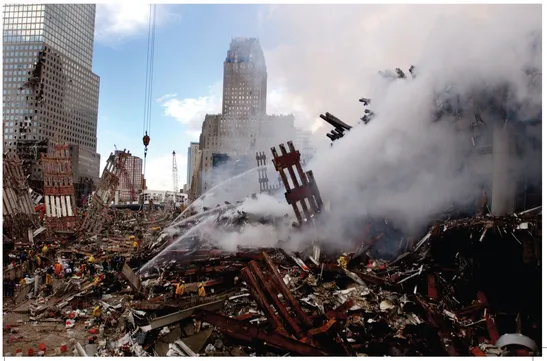
Fires still burning amidst the rubble of the World Trade Centre on 13 September, two days after the attack on the Twin Towers. (US Navy Photographer’s Mate 2nd Class Jim Watson)
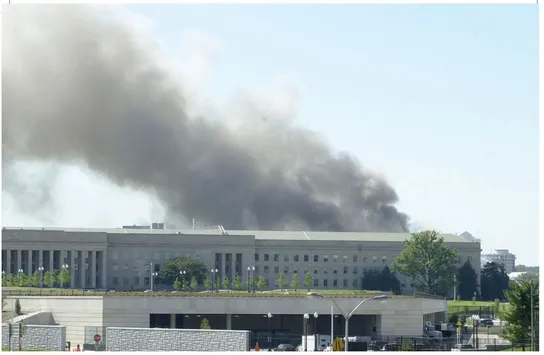
Smoke bellows from the Pentagon after a hijacked airliner crashed into the building on 11 September 2001. (USAF/TSgt Jim Varhegyi)
I have also been able to speak to many participants in the conflict, as well as acquire a large quantity of official military documents, including after action reports and lessons learnt studies for this phase of the Afghan campaign. Over the past decade, I have also visited Afghanistan on a number of occasions and visited several of the key locations in the battles of 2001.
When drawing together all this information the picture that emerges is very different in many respects to that portrayed at the time by politicians and generals keen to be seen in the rosy glow of victory. In particular, in the immediate aftermath of the US invasion the role of key individuals from the Central Intelligence Agency (CIA) in devising and executing the American war plan was little known. More recently, a spate of memoirs from American intelligence operatives and special forces troops who were on the ground in Afghanistan in 2001 and 2002, as well as the release of previously classified military documents from the period, have made it possible to build up a very comprehensive picture of battles in Afghanistan at this time.
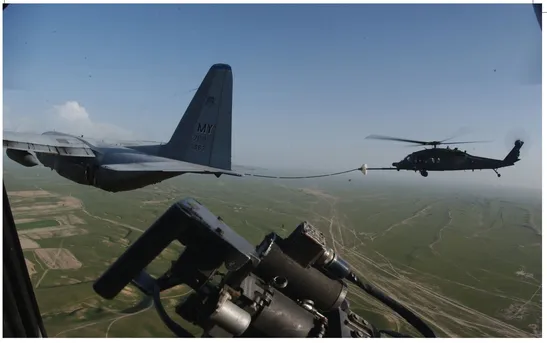
A HH-60G Pave Hawk rescue helicopter, from the 66th Expeditionary Rescue Squadron, takes on fuel from a HC-130 Combat Shadow during a mission over Afghanistan in the spring of 2002. (USAF/ TSgt Mike Buytas)
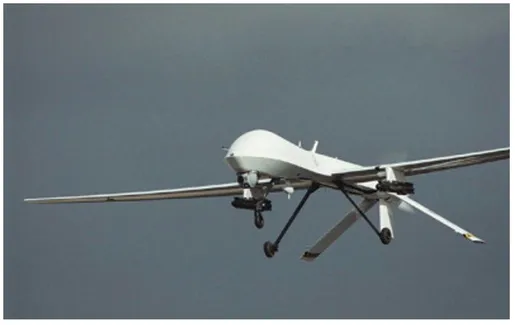
Predator unmanned aerial vehicles played a central role in the US campaign in Afghanistan, using Hellfire missiles to strike at high value targets. (USAF)
At the heart of this book has been the construction of a complete narrative of events and then making linkages to provide a real insight into when key decisions were made and who made them. This is not always obvious and at the time a great deal of effort was put into creating confusion about US and Coalition decision making. I hope this book goes some way to lifting that veil of secrecy and confusion.
It is clear from analysis of the battles of late 2001 and early 2002 that the outcome of the fighting was very different from that envisaged by senior US political and military leaders before the first bombs were dropped on 7 October 2001. Events on the battlefield ran out of control on a number of occasions, with the Afghans and other local players dictating the course of events for their own ends. Mistakes were made in the planning and execution of the US-led campaign because key decision makers were not fully informed of events on the ground or just had no understanding of the nature of the conflict the US and its allies found themselves engaged in.
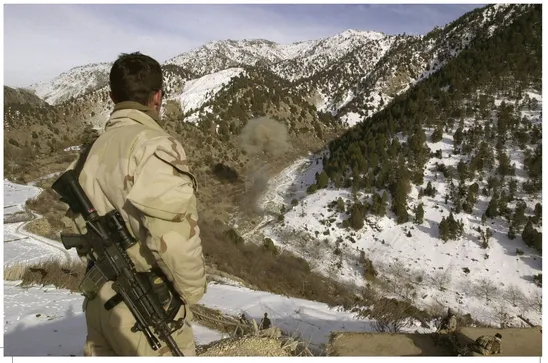
A US Navy SEAL commando observes abandoned munitions being destroyed, 12 February 2002. The munitions were discovered during a Sensitive Site Exploitation (SSE) mission of a suspected Al Qaeda base in Eastern Afghanistan. (US Navy/ Photographer’s Mate 1st Class Tim Turner)
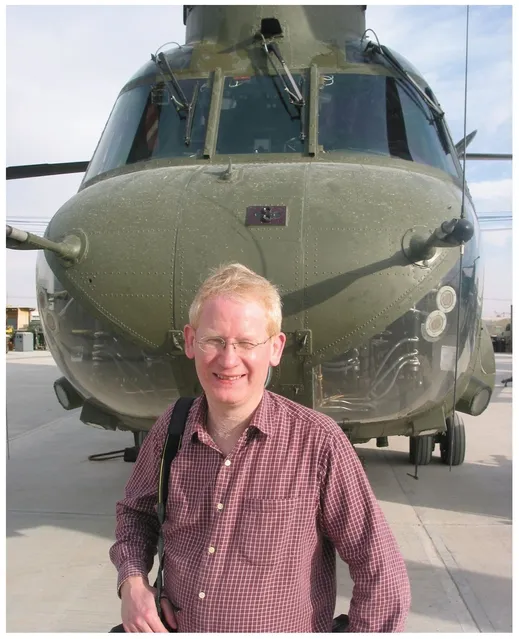
Tim Ripley at Kandahar Airfield. (Tim Ripley)
The consequences of the opening months of the US-led intervention in Afghanistan in 2001 are still being felt. Hopefully, this book will shed some light on the reality of intervening in Afghanistan and the countries that border it so that in the future the same mistakes will not be made again.
Chapter 2
Experience of War
War in Afghanistan in 2001 and early 2002 was a small-scale affair. Contrary to much of the media reporting of the conflict, the fighting in the Central Asian country was limited to several very small regions and large parts of the country were untouched by the combat between US forces and their opponents.
The size of the forces involved in these battles were also very small, with fewer than 50,000 fighters being involved at the height of the fighting in October and November 2001, but only a few thousand men were engaged, on both sides, in the main battles of this period. At this point fewer than 1,000 US personnel were on the ground in Afghanistan and very few of them were ever involved in close quarter combat.
From the Afghan point of view, the US-led invasion was just another round of conflicts that had been going on almost continuously for more than two decades. Afghanistan has been blighted by conflict since the late 1970s. The Central Asian country has suffered from at least two foreign invasions, numerous covert interventions and almost incessant civil war since 1979.
Armies in Afghanistan in 2001 lacked most of the features that westerners would recognize. The country came bottom of most global league tables of health, life expectancy and industrial production, and topped global poverty and infantry mortality league tables. It had long been regarded as one of the poorest countries in the world and this meant the capacity of its military forces was limited.
Afghan military forces, of all tribal, political and religious persuasions, had few sophisticated weapons systems or combat aircraft. The most complex weapons in Afghan arsenals were old Soviet-era Mil Mi-17 transport helicopters, T-55 main battle tanks and 122-mm artillery pieces. The Taliban alone had a handful of 1970s-vintage MiG-21 jet fighters, which they occasionally sent up to try to intercept Northern Alliance helicopters bringing in supplies from Tajikistan or Uzbekistan.
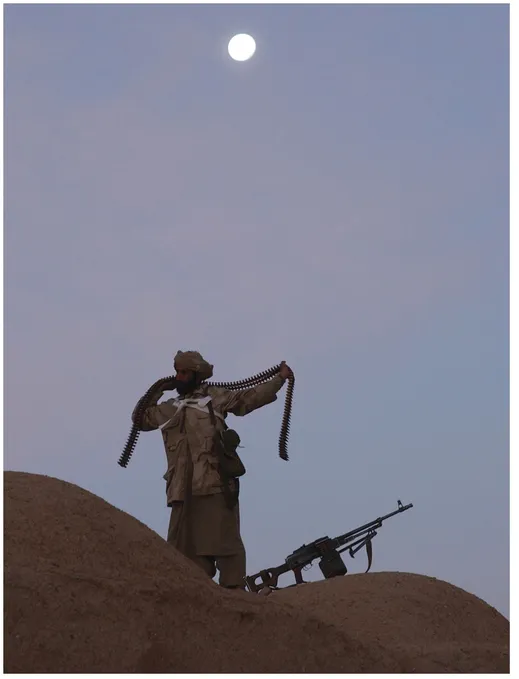
A pro-US Afghan fighter wraps a bandolier of ammunition around his body during a mission to help secure a compound that is being searched by US Marines of the 26th Marine Expeditionary Unit (Special Operations Capable) in Afghanistan’s Helmand Province in January 2002. (US Navy/Chief Photographer’s Mate Johnny Bivera)
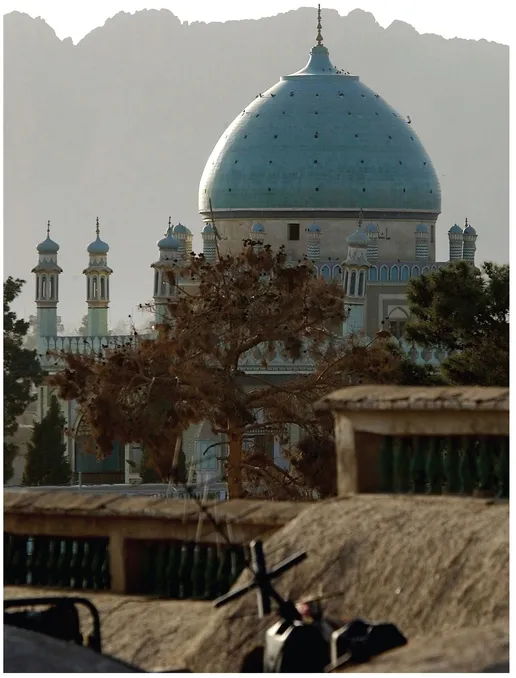
A view of downtown Kandahar City from the roof of the governor’s palace on 20 April 2002. (USAF/SSgt Ricky A. Bloom)
However, the country had been touched by the modern communications revolution and any self-respecting Afghan politician, warlord, tribal chief or leader of a smuggling gang had his own satellite phone and access to the internet.
Afghan armies were recruited and organized on tribal lines, with contingents of soldiers being offered up for service to political or military leaders by local tribal chiefs. Each district would offer several hundred soldiers to the provincial chief to defend their locale or to participate in offensive battles.
The average age of these soldiers was usually between fifteen and seventeen and very few had any formal military training. While every young Afghan from the countryside had learnt ...
Table of contents
- Title Page
- Copyright Page
- Table of Contents
- Chapter 1 - Operation Enduring Freedom – Ten Years On
- Chapter 2 - Experience of War
- Chapter 3 - The Commanders
- Chapter 4 - ‘They Will Hear from Us’
- Chapter 5 - On the Brink of War
- Chapter 6 - Strategic Air Campaign
- Chapter 7 - Northern Alliance Attacks
- Chapter 8 - Air War
- Chapter 9 - Revolt in the South
- Chapter 10 - Spy Planes and Drones
- Chapter 11 - Battle of Tora Bora
- Chapter 12 - ISAF Deploys
- Chapter 13 - Light Footprint
- Chapter 14 - A Flawed Victory?
- Sources
- Glossary of Terms
- Index
Trusted by 375,005 students
Access to over 1.5 million titles for a fair monthly price.
Study more efficiently using our study tools.
Frequently asked questions
Yes, you can cancel anytime from the Subscription tab in your account settings on the Perlego website. Your subscription will stay active until the end of your current billing period. Learn how to cancel your subscription
No, books cannot be downloaded as external files, such as PDFs, for use outside of Perlego. However, you can download books within the Perlego app for offline reading on mobile or tablet. Learn how to download books offline
We are an online textbook subscription service, where you can get access to an entire online library for less than the price of a single book per month. With over 1.5 million books across 990+ topics, we’ve got you covered! Learn about our mission
Look out for the read-aloud symbol on your next book to see if you can listen to it. The read-aloud tool reads text aloud for you, highlighting the text as it is being read. You can pause it, speed it up and slow it down. Learn more about Read Aloud
Yes! You can use the Perlego app on both iOS and Android devices to read anytime, anywhere — even offline. Perfect for commutes or when you’re on the go.
Please note we cannot support devices running on iOS 13 and Android 7 or earlier. Learn more about using the app
Please note we cannot support devices running on iOS 13 and Android 7 or earlier. Learn more about using the app
Yes, you can access Operation Enduring Freedom by Tim Ripley in PDF and/or ePUB format, as well as other popular books in Geschichte & Militär- & Seefahrtsgeschichte. We have over 1.5 million books available in our catalogue for you to explore.