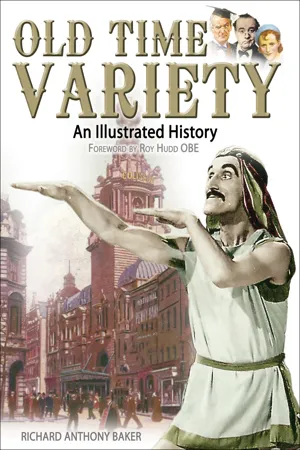
"An illustrated history of good old-fashioned entertainment from names like Tessie O'Shea, George Formby, and the early days of Bruce Forsyth." —Yours
As one of the richest sources of diversion for the people of Britain between the end of the First World War and the 1960s, the variety theater emerged from the embers of music hall, a vulgar and rambunctious entertainment that had held the working classes in thrall since the 1840s. Music hall bosses decided they would do better business if a man going to theaters on his own could take his wife and children with him, knowing they would see or hear nothing that would scandalize them. So variety, a gentler, less red-blooded entertainment was gradually established. At the top of the profession were Gracie Fields, a peerless singer and comedienne, and Max Miller, a comic who was renowned for being risqué, but who, in fact, never cracked a dirty joke.
They were supported by acts that matched the word variety: ventriloquists, drag artists, animal acts, acrobats, jugglers, magicians and many more. But the variety theater was constantly under threat, first from revue, then radio, the cinema, girlie shows, the birth of rock 'n' roll and finally television. By the end of the 1950s, the variety business seemed to have given up, but the recent and extraordinary popularity of talent shows on television has proved the public appetite is still there. Variety could be about to start all over again.
"A priceless record of the people who entertained several generations between the wars and, for a brief time, after WWII . . . thoroughly entertaining." —
Books Monthly
- 256 pages
- English
- ePUB (mobile friendly)
- Available on iOS & Android
eBook - ePub
About this book
Information
Subtopic
World HistoryCHAPTER ONE
New Readers Start Here
The Stage is Set
It was a day popular performers thought they would never see. Reviled over many years, music hall, that rumbustious and vulgar entertainment of the late Nineteenth Century, had finally been accepted by the Establishment: the first Royal Command Performance was to be staged before George V and Queen Mary at the Palace Theatre, Cambridge Circus, on 1 July 1912. Such comics as George Robey, sometimes a little saucy, but never salacious, and Harry Tate, with his up-to-the-minute parody on motoring, were allowed their moment of glory. Interestingly, those two men attracted more laughter that evening than anyone else on the bill and were the only entertainers who successfully carried their careers on from music hall to the variety theatre.
In spite of losing some of its bite, music hall was still popular in the years immediately preceding the First World War. In the year of the Royal Command, there were 48 music hall theatres in London alone. Each night [and often twice nightly] they played to 70,000 people. In the world at large, everything appeared normal. Smart hotels held Tango Teas at which women wearing skirts slashed to near the top of the leg danced with young men known as Nuts and, if the tango appeared too complicated, there was another innovation, the foxtrot:
But everywhere a restless spirit was perceptible, as of people waiting on some impending climax. Nobody knew that we had reached the end of an age, yet everybody in his bones and blood was sensible of something disconcerting, some hovering and pervading disquiet.1
On the first night of the Great War, there were lengthy queues outside the most popular halls in the West End. At the Palladium, Little Tich, the four foot six comic who danced in boots nearly half that length, appeared as Miss Turpentine. At the London Pavilion, the much loved Marie Lloyd sang I’d Like to Live in Paris All the Time. The only concession to international tension was that, at the end of the evening, the national anthems of Russia and France were played, as well as that of Britain.
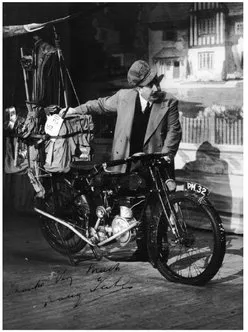
Harry Tate: again in mechanical difficulties.
Once the call-up began, the young men of Britain marched to war belting out the latest music hall songs they had heard: Pack Up Your Troubles; Good-Bye-Ee; Take Me Back to Dear Old Blighty; and this:
Send out the Army and the Navy.
Send out the rank and file.
Send out the brave old Territorials.
They’ll face the danger with a smile.
Send out the boys of the Old Brigade,
Who made old England free.
Send out my brother, my sister and my mother,
But for Gawd’s sake don’t send me.
Send out the rank and file.
Send out the brave old Territorials.
They’ll face the danger with a smile.
Send out the boys of the Old Brigade,
Who made old England free.
Send out my brother, my sister and my mother,
But for Gawd’s sake don’t send me.
Come 1918, it did not seem so funny. Nearly three-quarters of a million British soldiers had died, about two-thirds of them in their twenties.
During the course of the war, so many young men were overseas that their girlfriends and wives had to make their own lives, eating out with each other, some of them drinking and smoking for the first time. Between 1914 and 1918, the consumption of alcohol actually fell by about a half, although smoking increased. Pubs, which had closed at 12.30am, now had to shut at 10pm. A similar curfew was imposed on all places of entertainment, but music halls still drew big audiences, as did cinemas and theatres staging a new type of entertainment, revue. People needed escapism.
By the end of the war, movies were becoming big business. Several music halls had already been converted into cinemas: the Balham Empire; the Bradford Empire; in Brighton, the Empire and the Alhambra; the New Star, Bristol; the Alhambra, Edinburgh; the Hippodrome, Gateshead; the Savoy, Glasgow; the Tivoli, Liverpool; the Grand, Sheffield; the Variety, Shoreditch; and the Empire, Stockton-on-Tees. More importantly, 3,500 purpose-built cinemas were constructed between 1910 and 1914.
Revues, speedy concoctions of unlinked sketches and songs, had been staged at the Empire, one of three major halls in Leicester Square, since it re-opened after refurbishment in 1906. The first, Rogues and Vagabonds, was written by George Grossmith, a leading player in the earliest musical comedies produced by George Edwardes at the Gaiety Theatre. Grossmith also wrote part of the Empire revues, Hello … London! [1910] and Everybody’s Doing It [1912], built around one of Irving Berlin’s earliest hits. By 1912, the craze for revue had London in its grip. At the end of that year, Albert de Courville, who ran the London Hippodrome, staged Hullo, Ragtime! his first big spectacular revue, which capitalised on the fashion for ragtime. It ran for 451 performances and de Courville followed it with Hullo Tango! in which Harry Tate gave an impersonation of how George Robey would play his sketch about golf. Hullo Tango! did even better: 485 performances.
In the years following the war, the revues, the movies, the dances and music hall all reflected the spirit of the age, but times were changing rapidly:
The old order had gone … Restrictions imposed in wartime were never quite lifted.2 That centuries-old feeling of security had vanished … Life was no longer simple. It was sharper and more brittle. The old code of morality had slackened … and the days of national pride had been veneered over with self-restraint … The conditions which created music hall no longer existed. There was a new thing called sophistication. The old insularity had gone. Men who had never been further than Margate now knew all about Mesopotamia. It was a different world.3
The stars were dying off, too. After years of alcoholism and nervous breakdowns, music hall’s pre-eminent comedian, Dan Leno, had died of syphilis in 1904 at the age of 43 and, after the First World War, Marie Lloyd, now weary and bloated, was showing signs of the maltreatment inflicted on her by two brutal husbands. She died in the arms of one of her sisters in 1922, aged 52.
The night she died, a young Lancashire woman, who was in the fifth year of a touring revue that was to make her name, was appearing in Swindon. Once she was famous, people began to refer to her as Marie’s successor. She was Gracie Fields.
CHAPTER TWO
Amazing Gracie
Top of the Bill: Dame Gracie Fields
That was an enormous compliment to Gracie, if unwelcome. Comparisons are odious. The eminent critic, James Agate, who rated Gracie so highly that he believed she should play George Bernard Shaw’s St Joan,4 dismissed the allusion succinctly: ‘London impudence and Lancashire cheek are poles apart’5 And Gracie was pure Lancashire, as the northern playwright, J.B. Priestley, who co-wrote the scripts of her films, Sing As We Go and Look Up and Laugh, pointed out:
Listen to her for a quarter of an hour and you will learn more about Lancashire women … than you would from a dozen books … All the qualities are there: shrewdness, homely simplicity, irony, fierce independence, an impish delight in mocking whatever is thought to be affected and pretentious.6
Gracie was born in the mill town of Rochdale three years before Queen Victoria died. Life was tough, but the no-nonsense kindness of its people made it bearable. If a woman fell ill, her front step was scrubbed, her washing up was done and a stew was left to simmer on the hob. Often, the bedridden woman did not even know who was being so kind. In spite of this close-knit cosiness, one woman, Jenny Stansfield, craved a better existence: ‘We’re going oop in t’world, not down,’ she constantly told her family.
Jenny, a fiercely ambitious and stage-struck woman, introduced Grace, one of her daughters, to the world of show business by way of the Rochdale Hippodrome. Jenny scrubbed the theatre’s stage every Sunday. Grace joined her with a duster and a brush. Then, Jenny began doing the laundry for entertainers at the Hippodrome. All the time, she was teaching Gracie the songs she knew and encouraging her to sing them as loudly as she could. The laundry was returned to the Hippodrome every Friday and Saturday and Jenny and Grace were allowed to stand in the wings and watch the shows. Watch everything you can, Jenny told Grace. It’s the only way you’ll ever learn. After each show, Grace was interrogated: What were the entertainers wearing? How did they look? And, most importantly, what did they sing? If there was a new song, Grace learned it instantly and sang it on the way home. She also learned to impersonate those she saw.
Jennie also exhorted Grace to sing [loudly] outside theatrical digs. One day, the ploy paid off. A music hall singer from the Midlands, Lily Turner, was impressed by what she heard and suggested that Grace entered a singing competition at the Hippodrome. Grace tied for first place and won 10s 6d [£30]. This even impressed Grace’s hard-drinking father, who up to then had foreseen her working life in bleak terms: Shove ‘er in t’factory. For a time, Grace worked with Lily Turner. Then, at the age of 10, she joined in succession two juvenile troupes. At about this time, the Stansfields’ neighbour, old Fred, moved in with them as he was no longer able to look after himself. Grace sang to him and did impersonations and was encouraged by his toothless chuckle. One night, he said that he had heard that Jessie Merrilees,7 who was due to appear at the Hippodrome, had been taken ill and that the manager was frantically looking for a replacement. ‘Young Grace Stansfield, Rochdale’s own girl vocalist’ filled the bill and was paid 35 shillings [£60] for the week’s work. Grace’s father, who had a job at an engineering works, was then earning 30 shillings a week.
Gracie Fields [Grace Stansfield]
- Born Rochdale, Lancashire, 9 January 1898
- Married [1] Archibald Selinger [professionally known as Archie Pitt], Clapham, South London, 21 April 1923 [His previous wife was May Deitchmann] Divorced 1939, died 12 November 1940
- Married [2] Mario Bianchi [professionally known as Monty Banks], Santa Monica, California, 19 March 1940. Born Nice, France, 18 July 1897. [He had previously been married to Gladys Frazin, who killed herself in New York in March 1939] Died Arona, Italy, 7 January 1950
- Married [3] Boris Abraham Luigi Alperovici, 18 February 1952. Died Capri, Italy, 3 July 1983
- Dame Gracie Fields died Capri, Italy, 27 September 1979
- Left over £4 million [£15 million]
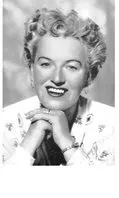
Soon, Grace Stansfield became Gracie Fields. Jenny was told that a shorter name would stand out better on billboards. At the age of 14, Gracie began a two-year tour with Charburn’s Young Stars and impersonated many of the stars she worked with: George Formby senior [see Chapter 10]; Victoria Monks, who sang Bill Bailey, Won’t You Please Come Home?; Maidie Scott, whose speciality was The Bird on Nellie’s Hat; and Gertie Gitana, best known for Nellie Dean. [Years later, Gertie Gitana imitated Gracie.]
There followed a season with a Pierrot concert party near Blackpool and a pantomime in which Gracie had a small part. Then, the work dried up. In 1915, old Fred died and left Jenny £100 with a note that read: Tha knows how best to spend it. She did indeed. After paying for Fred’s funeral, she settled the family’s debts, stocked up the larder and took Gracie every day to Manchester to learn tap dancing. Within six weeks, Gracie had mastered all the steps she was to use later in her movies.
After that, a wad of letters was written to agents, one of whom, Percy Hall, asked to see her. He offered her six weeks’ work at £5 a week and then proffered a 10-year contract. Under its terms, Gracie would earn not less than £5 a week. Anything over that sum was to be shared equally by Hall and Gracie. Ill-advisedly, Jenny and Gracie signed.
At the end of the six-week engagement, Hall found her a part in a new revue, Yes, I Think So, starring Archie Pitt, a comedian, who had worked as a shop assistant and a travelling salesman before turning to the halls. Pitt was the first professional to recognise Gracie’s potential, but she neither found him funny nor even liked him much:
He sang a song, Does This Shop Stock Shot Socks with Spots? that made me smile a bit, but the rest of his act seemed like rubbish. When I sang my couple of songs, I noticed he watched me keenly … He disturbed and unset...
Table of contents
- Dedication
- Title Page
- Copyright Page
- Table of Contents
- Foreword
- Introduction
- CHAPTER ONE - New Readers Start Here
- CHAPTER TWO - Amazing Gracie
- CHAPTER THREE - Funny Girl
- CHAPTER FOUR - Black and Blue
- CHAPTER FIVE - Gang of Six
- CHAPTER SIX - There’ll Never Be Another
- CHAPTER SEVEN - A Class of their Own
- CHAPTER EIGHT - Infinite Variety
- CHAPTER NINE - When Harry wrote Sally
- CHAPTER TEN - George and the Dragon
- CHAPTER ELEVEN - By ‘Eck
- CHAPTER TWELVE - A Little Bit of Locke
- CHAPTER THIRTEEN - Musical Mayhem
- CHAPTER FOURTEEN - Hutch – Too Much
- CHAPTER FIFTEEN - The Day War Broke Out
- CHAPTER SIXTEEN - Bare-Faced Chic
- CHAPTER SEVENTEEN - From The Heart of My Bottom
- CHAPTER EIGHTEEN - Nothing Up My Sleeve
- CHAPTER NINETEEN - Use of Cruet: Threepence
- CHAPTER TWENTY - High Camp, Low Farce
- CHAPTER TWENTY ONE - Indelible Impressions
- CHAPTER TWENTY TWO - Life of Riley
- CHAPTER TWENTY THREE - Their Lips Were Sealed
- CHAPTER TWENTY FOUR - Two of a Kind
- CHAPTER TWENTY FIVE - Par Excellence
- CHAPTER TWENTY SIX - A Dancing Mood
- CHAPTER TWENTY SEVEN - Downhill All the Way
- Notes
- Bibliography
- Index
Trusted by 375,005 students
Access to over 1.5 million titles for a fair monthly price.
Study more efficiently using our study tools.
Frequently asked questions
Yes, you can cancel anytime from the Subscription tab in your account settings on the Perlego website. Your subscription will stay active until the end of your current billing period. Learn how to cancel your subscription
No, books cannot be downloaded as external files, such as PDFs, for use outside of Perlego. However, you can download books within the Perlego app for offline reading on mobile or tablet. Learn how to download books offline
Perlego offers two plans: Essential and Complete
- Essential is ideal for learners and professionals who enjoy exploring a wide range of subjects. Access the Essential Library with 800,000+ trusted titles and best-sellers across business, personal growth, and the humanities. Includes unlimited reading time and Standard Read Aloud voice.
- Complete: Perfect for advanced learners and researchers needing full, unrestricted access. Unlock 1.5M+ books across hundreds of subjects, including academic and specialized titles. The Complete Plan also includes advanced features like Premium Read Aloud and Research Assistant.
We are an online textbook subscription service, where you can get access to an entire online library for less than the price of a single book per month. With over 1.5 million books across 990+ topics, we’ve got you covered! Learn about our mission
Look out for the read-aloud symbol on your next book to see if you can listen to it. The read-aloud tool reads text aloud for you, highlighting the text as it is being read. You can pause it, speed it up and slow it down. Learn more about Read Aloud
Yes! You can use the Perlego app on both iOS and Android devices to read anytime, anywhere — even offline. Perfect for commutes or when you’re on the go.
Please note we cannot support devices running on iOS 13 and Android 7 or earlier. Learn more about using the app
Please note we cannot support devices running on iOS 13 and Android 7 or earlier. Learn more about using the app
Yes, you can access Old Time Variety by Richard Anthony Baker in PDF and/or ePUB format, as well as other popular books in Media & Performing Arts & World History. We have over 1.5 million books available in our catalogue for you to explore.