eBook - ePub
A Flock of Fools
Ancient Buddhist Tales of Wisdom and Laughter from the One Hundred Parable Sutra
- 216 pages
- English
- ePUB (mobile friendly)
- Available on iOS & Android
eBook - ePub
A Flock of Fools
Ancient Buddhist Tales of Wisdom and Laughter from the One Hundred Parable Sutra
About this book
"These teachings from the heart of Buddhism ring true . . . a sumptuous meal of wild and comic dharma. Enjoy!" (Enky? O'Hara, Soto priest and teacher).
One hundred illuminating tales of the foibles and follies of everyday fools, this elegant, humorous, and masterful little book of wisdom is a welcome addition to the Buddhist canon.
"The One Hundred Parable Sutra" is known as the most humorous sutra in all of Buddhist literature. Here, Kazuaki Tanahashi, the celebrated translator, calligrapher, and D?gen scholar, and Peter Levitt, an award-winning poet, storyteller, and Zen practitioner, have translated and retold these jewel-like parables with storytelling panache for students, teachers, and seekers everywhere. With appropriate commentary, each tale becomes a simple lesson for everyday living. From the potter who seeks fame to the woman who possesses great lust, these tales are told with a gentle clarity that magnifies our appetites and delusions. In doing so, they become an accurate mirror of the human condition.
Illustrated with seventeen original brushwork drawings by Tanahashi, A Flock of Fools is a perfect little book of wisdom, laughter, and compassion.
"Translator Kaz Tanahashi and storyteller Peter Levitt have given these stories a subtle American-Zen flavor, and although this collection has a 1500-year pedigree . . . its messages ring clear and true today." — Shambala Sun
"Funny, strange, wise, informing, this marvelous book celebrates the wild heart of Buddhism." —Roshi Joan Halifax, Zen Buddhist teacher
"Nothing breaks apart dualism and sanctimoniousness like a good laugh! . . . lively reminders of the power of humor to enrich our understanding, and to help us let go of our attachments." — Enky? O'Hara, Soto priest and teacher
Information
Topic
Theology & ReligionSubtopic
Eastern PhilosophyVOLUME ONE
EATING SALT
A long time ago, a fool was invited to a neighbor’s house to share a meal. Once the food was served, the fool was displeased because he found the food tasteless. His neighbor noticed this and immediately sought to remedy the situation by offering the fool some salt. After the fool sprinkled a bit of salt onto his food and took a bite, he said to himself, “The salt has really made the food quite tasty. If such a small amount of salt has had such an effect, just imagine what a lot of salt will do!” To his neighbor’s astonishment, he pushed his meal to the side and began to eat the salt all by itself. Of course, it wasn’t long before the foolish man had burned his mouth, and instead of being delighted he groaned in pain.
A person who misconstrues the Way of Understanding is just like this fool. He hears that by eating and drinking less, the Way may be gained, and so he fasts for seven or even fifteen days. He ends up starving himself in vain and realizes nothing of the Way. Consider this carefully and you’ll find it is so.
FOOL’S MILK
In olden times, a fool sent out invitations to a feast to take place at his home the following month. He planned to serve his guests milk with their meal, but after thinking further he decided, “If I milk the cow now, I’ll have no place to store the milk and it may turn bad before the feast. It would be better to let the milk stay in the cow’s belly. After my guests arrive, I’ll just milk the cow and serve it fresh.” Pleased with his plan, the fool tied up the nursing calf in one place, and the cow in another, so that not a drop of milk would be wasted before the feast.
The day of the feast arrived a month later and the foolish man graciously received his guests. After they were assembled, he brought out the cow with much fanfare, but when he sat down to milk, the cow was completely dry. Not one drop of milk fell into the pail. When the guests saw this and heard what he had done, a few became angry, but most of them just shook their heads and laughed at his foolish ways.
This fool is like someone who wishes to practice the act of giving but decides to wait until he has a lot of money. However, no one knows what the future holds, and before very much can be saved something unforeseen takes place: he receives an enormous tax bill or is the victim of a fire or flood, or he is robbed and ends up losing what little he has managed to put away. He might even lose his life. The best way is to give right now. It is so.
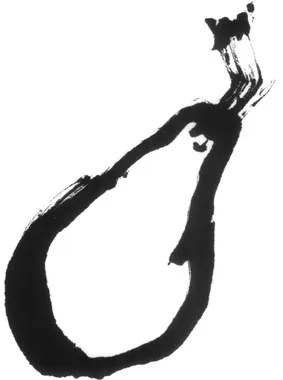
A MAN WHOSE HEAD WAS HIT BY A PEAR
A long time ago, there was a bald-headed fool. Another fool came along and, just for the fun of it, struck the first fool on the head with a pear. After several more blows, the poor fool’s head was entirely covered with bruises. He had allowed himself to receive the blows in silence and did not even consider running away. When the beating was over, a man who had witnessed the episode said, “Why didn’t you run away and avoid being hit instead of taking the blows and getting hurt?” The fool answered, “I stayed because that man is ignorant. He boasts constantly and tries to prove how strong he is in any way he can. He saw that I was bald, but he was stupid enough to mistake my head for a stone. That’s why he struck it with a pear.”
The other man answered, “How could you call him stupid? You’re the ignorant one. Only a fool would take such a beating and not even consider running away!”
A monk who has no faith and can neither keep the precepts nor cultivate learning is like the fool who took this beating but could speak only of the stupidity of others. While he maintains the outward forms of practice, and therefore receives some benefit, ultimately he spends his life without understanding even the simplest of things. Such a monk really is a fool.
THE UNFAITHFUL WIFE
Once there was a fool whose wife was very beautiful. He loved her deeply, but she was not faithful to him and was secretly seeing another man. Finally, her desire for the other man became so strong that she decided to leave her husband and run away with her lover. She went to see an old woman who was her friend and confided her plan. “After I am gone,” she said, “bring a dead woman’s body into my house, leave it there for my husband to discover, and, when he does, tell him I am dead.”
The old woman agreed to the plan. After the wife ran away, the old woman waited for the husband to leave the house. Then she took a woman’s corpse into the house for the husband to discover when he came home.
When the husband returned, the old woman met him at his door. “I’m sorry to have to tell you this,” she said, “but while you were gone, your wife passed away.” The husband rushed into the house, saw the dead woman’s body, and, believing it to be his wife’s, began to weep and grieve bitterly. Then, according to custom, he gathered oil and wood to make a pyre and burned the body. When the cremation was completed, the foolish man placed the remaining ashes and bones into a bag, which he carried by his side night and day.
A long time later, the fool’s wife grew tired of her lover and decided to return home. She went to the house she had shared with her husband and when he answered the door she said to him, “I am your wife. I’ve come home.” The man answered, “How can you say such a thing? My wife has been dead for a long time. How dare you pretend to be my beloved?” His wife couldn’t believe her ears. She tried everything she could to convince him, but he would not believe her and he sent her on her way.
This fool is like a person who hears false teachings, becomes confused, and believes the teachings to be true. For a long time, he remains faithful to what he’s been told, and though he may encounter teachings that are correct, he still does not believe them or accept them as true.
THE THIRSTY MAN
Long ago, there was a man who was known to be foolish beyond belief. One day, although it was particularly hot, he decided to go wandering. Of course, the more he wandered, the more he felt the effects of the heat and the thirstier he became. Finally, he was so parched that he imagined a mirage in the distance and, mistaking it for water, he began to run toward it.
All day long, the man chased the mirage until his tongue was practically hanging out of his mouth in thirst. However, as luck would have it, the man had run so far that he found himself standing on the banks of the Indus River. Though his throat was burning, he stood at the river’s edge, dying of thirst, without taking a single drink.
Another man, who was sitting near him on the river-bank, said, “Friend, you have run to the river and are clearly in need of water. Now that you have reached it, why don’t you take a drink?”
The foolish man replied, “I’ll be okay, but if you like, please take a drink yourself. I want one, but this amount of water is far too much for me. There’s no way in the world I could finish it all.”
This fool is like the person who misunderstands the basic teachings and truths of the Way. He thinks he will never be able to maintain all of the precepts, and so he refuses to receive a single one. Because of this, he will never attain true understanding but is doomed to wander forever in the cycle of birth and death.7 Don’t be such a fool.

A FATHER WHO KILLED HIS CHILD
In a distant land, there was a fool who had seven children. One day, quite suddenly, one of his youngest children died. When the fool found his dead child, he wanted to keep the corpse in his house rather than take it for burial. A friend who happened to be visiting witnessed this and said, “The road of Life and the road of Death are different. It is better to perform the ceremonies at once, take the body far away, and bury it. You can’t keep your dead child here, but must remove him as soon as you can.”
The fool thought, “If I really can’t keep my child at home, but must bury him, then I would rather kill another one as well. It will be a lot easier for me to carry two of them, one on each end of a pole.”
So the fool killed another of his children and took them both far away into the forest where he buried them. When people heard about this, they were dumbfounded and ridiculed the fool for what he had done.
This foolish man is like a monk who secretly breaks a precept. Since he does not wish to confess even a single misdeed, he hides what he has done and declares his purity. But a wise man who knows better tells him that a home leaver must keep the precepts and guard them just as he would guard bright jewels. “Why have you broken what you received,” he asks, “and why won’t you confess what you have done?”
The monk hears the wise man but thinks, “If I really must confess, then I might as well break as many precepts as I like. When I’m finished, I’ll confess to them all”
Then he goes about causing havoc, breaking precepts, and, in the end, he makes one grand confession. What a fool he is! He is like the man whose child died and whose ignorance caused him to kill another. Without question, it is so.
THE IMPOSTOR
A long time ago there was a very wise and handsome man who was also very rich. In the entire world, there was no one who did not admire him. One day a fool who passed him on the street sought to come up with a plan to gain a bit of the man’s money. He began by spreading the rumor that the man was his brother. Shortly afterward, the fool saw the man as he was paying off a debt and immediately he changed his story and denied being related to him at all. “That man is not my brother,” he said. “I never said anything like that.”
Another man, who had observed the situation develop, approached the fool and asked, “How did you ever get to be such a fool? Why do you tell people the man is your brother when he has money to spend, but deny it when you see him pay a debt?”
The fool answered, “I wanted his wealth, so I spread the word that we were brothers. Since he is not my brother, if he owes money, I want everyone to know we’re not related.”
When people heard what he said, they all had a good laugh.
This fool is like someone outside the Way who hears the Buddha’s teachings and begins presenting them as his own, He gathers students around him and tells them to live according to what he says. The students don’t heed him and ignore everything he has to say. When he sees this, he thinks, “For my own benefit I used the Buddha’s words and taught sentient beings, but it didn’t work. No one would follow the teachings. The teachings must not be good.” This is like the fool who sought to gain another man’s wealth by calling him his brother, but when the man was in debt he denied that they were kin.
THE THIEF AND THE TREASURE HOUSE
Once a thief stole into the royal treasure house, took everything he could carry, and ran for all he was worth to a distant land. The theft was discovered quickly, and no sooner had the king sent his men in search of the thief than he was caught and brought back to face the king. When the stolen goods were laid out before the thief and the king, the king picked out a set of beautiful robes and accused the man of theft. “But these are my robes,” insisted the thief. “That is, they once belonged to my grandfather, and therefore they are mine.”
“If this is really true,” said the wary king, “let us see you put them on.”
Since the robes did not really belong to the thief, he had no idea how to wear them. First he tried to make the sleeves fit around his legs; then he put the waistband on his head. The king observed this dumb show for a while and then gathered together his courtiers to discuss the matter.
When the consultation was over, the king said to the thief, “If these robes were given to you by your grandfather, you would know how to wear them. What a mockery you make, trying to put them on upside down. Because you don’t know how to wear them, we know they don’t really belong to you. Therefore, I declare you guilty of theft.”
Consider that the king represents the Buddha, the royal treasury the dharma8—his teachings of ultimate truth-and the ignorant thief a person outside the Way. Though a man may listen to the Buddha dharma in secret, and try to incorporate it into his own teachings, claiming the insight and understanding as his own, he does not really grasp its roots or subtle essence. In the end, he presents it in a way that leads only to misunderstanding and confusion. This person is like the thief who stole the royal robes but did not know how to wear them and put them on upside down. Be careful of fools like this; they will only lead you astray.
THE VIRTUOUS FATHER
Once a man was standing among a crowd of people discussing their parents. When it was his turn, the man praised his f...
Table of contents
- Cover Page
- Title Page
- Copyright Page
- Contents
- Foreword
- Note on the Original text and Acknowledgments
- Prologue
- Volume One
- Volume Two
- Volume Three
- Volume Four
- Table of Similar Tales
- Footnotes
Trusted by 375,005 students
Access to over 1.5 million titles for a fair monthly price.
Study more efficiently using our study tools.
Frequently asked questions
Yes, you can cancel anytime from the Subscription tab in your account settings on the Perlego website. Your subscription will stay active until the end of your current billing period. Learn how to cancel your subscription
No, books cannot be downloaded as external files, such as PDFs, for use outside of Perlego. However, you can download books within the Perlego app for offline reading on mobile or tablet. Learn how to download books offline
Perlego offers two plans: Essential and Complete
- Essential is ideal for learners and professionals who enjoy exploring a wide range of subjects. Access the Essential Library with 800,000+ trusted titles and best-sellers across business, personal growth, and the humanities. Includes unlimited reading time and Standard Read Aloud voice.
- Complete: Perfect for advanced learners and researchers needing full, unrestricted access. Unlock 1.5M+ books across hundreds of subjects, including academic and specialized titles. The Complete Plan also includes advanced features like Premium Read Aloud and Research Assistant.
We are an online textbook subscription service, where you can get access to an entire online library for less than the price of a single book per month. With over 1.5 million books across 990+ topics, we’ve got you covered! Learn about our mission
Look out for the read-aloud symbol on your next book to see if you can listen to it. The read-aloud tool reads text aloud for you, highlighting the text as it is being read. You can pause it, speed it up and slow it down. Learn more about Read Aloud
Yes! You can use the Perlego app on both iOS and Android devices to read anytime, anywhere — even offline. Perfect for commutes or when you’re on the go.
Please note we cannot support devices running on iOS 13 and Android 7 or earlier. Learn more about using the app
Please note we cannot support devices running on iOS 13 and Android 7 or earlier. Learn more about using the app
Yes, you can access A Flock of Fools by Kazuaki Tanahashi, Kazuaki Tanahashi, Peter Levitt, Kazuaki Tanahashi,Peter Levitt in PDF and/or ePUB format, as well as other popular books in Theology & Religion & Eastern Philosophy. We have over 1.5 million books available in our catalogue for you to explore.