- 167 pages
- English
- ePUB (mobile friendly)
- Available on iOS & Android
eBook - ePub
About this book
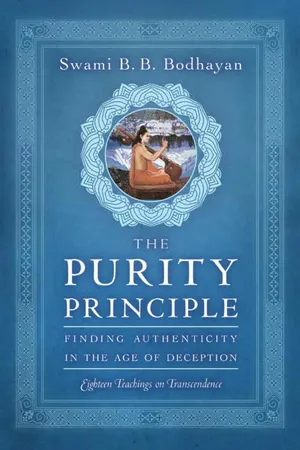
Inspired by the poetry of a great Hindu guru, the acarya of the Gopinath Gaudiya Math discusses the obstacles on the path to pure devotion.
This book was inspired by Vaishnava Ke, the powerful poem of Srila Bhaktisiddhanta Saraswati Thakur Prabhupada, which identifies the mind's myriad deviations and their essential remedies. It includes a translation and commentary on the poem by Swami Bodhayan, president and acarya of the Gopinath Gaudiya Math. Through these writings, the author illuminates the obstacles to pure devotion, and the magnanimous spiritual practices of Vaishnavism.
With sublime qualities like humility and tolerance, one can chant the Lord's holy names purely and live a progressive, joyful life of service. This helps the sincere practitioner to follow a devotional path without distraction. With clarity, humility, and precision, Swami Bodhayan explains the most basic and also profound issues which, when understood, can inspire the student to attain the confidence and focus needed to make steady progress on the path of bhakti.
Trusted by 375,005 students
Access to over 1.5 million titles for a fair monthly price.
Study more efficiently using our study tools.
Information
Topic
Teología y religiónSubtopic
HinduismoVaishnava Ke?
(What Kind of Devotee Are You?)

Srila Prabhupada Bhaktisiddhanta
Saraswati Thakur
TRANSLATION AND COMMENTARY BY
Swami B. B. Bodhayan
Text 1
duṣṭa mana! tumi kisera vaiṣṇava?pratiṣṭhāra tare, nirjanera ghare,tava ‘harināma’ kevala ‘kaitava’jaḍera pratiṣṭhā, śūkarera viṣṭhā,jana nā ki tāhā ‘māyāra vaibhava’
Word-for-word
duṣṭa – wicked; mana – mind; tumi – you; kisera – what type; vaiṣṇava – practitioner of magnanimous spirituality; pratiṣṭhā – material name and fame; tare – for; nirjanera ghare – in a lonely room; tava – your; harināma – chanting of the holy names; kevala – only; kaitava – hypocritical; jaḍera pratiṣṭhā – desire for material name and fame; śūkarera viṣṭhā – stool of a hog; jana nā ki – don’t you know; tāhā – it is; māyāra vaibhava – opulence of illusion.
Translation
O wicked mind! How can you say that you are practicing the path of magnanimous spirituality? You are sitting alone in a room and chanting the holy names, but that is just a show of hypocrisy. Don’t you know that the desire to gain material name and fame is just like the stool of a hog, which is the dirtiest quality in the material world? Don’t you know that it is the opulence of illusion?
Commentary
Practicing magnanimous spirituality cleanses all dirt from the mind, intelligence, consciousness, and heart. Sometimes people make a show of being elevated by dint of renunciation, sitting in a lonely place and chanting while internally desiring material name, fame, and distinction. Most people believe in such pretenders, who outwardly exhibit wonderful qualities and appear attractive. But when we closely examine these so-called spiritual practitioners we see that their hearts are full of dirt, full of selfish motivations. People who become attracted to pretenders eventually lose their faith in the path of magnanimous spirituality. Those who want to practice the genuine path of magnanimous spirituality serve under the guidance of currently living teachers and previous teachers in the line. Isolating ourselves and chanting without the guidance of such teachers in a bona fide line of disciplic succession only increases our material attachments. That chanting does not, then, produce spiritual fruits. But the goal of spiritual practice is to free ourselves from material attachment and to increase our spiritual attachment.
His Divine Grace Srila Bhaktisiddhanta Saraswati Thakur Prabhupada wanted to spread the loving mission of Chaitanya Mahaprabhu according to the instructions of his previous teachers. It takes preparation to embark on such a mission, and this is usually done through intense spiritual practice and austerities. Through his own example Srila Prabhupada taught the world how to attract the mercy and blessings of both his contemporary and his previous teachers. He did this by fulfilling his vow to chant one billion names of the Lord before embarking on his preaching mission. To chant one billion names means chanting 192 rounds of the Hare Krishna maha-mantra every day for nine or ten years. Within one year of each other, between 1914 and 1915, Srila Prabhupada’s teachers, Srila Bhaktivinode Thakur and Srila Gour Kishore Das Babaji Maharaj, both disappeared from the material world. Srila Prabhupada felt he had lost his shelter. He didn’t know how he could deliver others when his own two sources of shelter were gone. He also thought that his two teachers were shelter for others, and now that they had disappeared, he had no one to whom he could bring people for deliverance. Therefore he decided he would sit in Vrindavan for the rest of his life and chant.
Then one day, while he was chanting early in the morning, Srila Prabhupada had a divine vision in which he saw all of his previous teachers, including Bhaktivinode Thakur, Gour Kishore Das Babaji Maharaj, the Six Goswamis, and the Panca-tattva. They instructed Srila Prabhupada not to simply chant for the rest of his life. They conveyed to him instead that he was to spread the message of divine love throughout the world. At that time, Srila Prabhupada expressed a concern: “If I am to spread the loving message of the Lord, I need manpower.” His teachers replied as one: “We will send you manpower. Don’t worry.”
And Srila Prabhupada was sent many associates to assist him in spreading the mission of Lord Chaitanya. Therefore, we consider all of Srila Prabhupada’s disciples to be spiritual descendants of Lord Chaitanya. Some of Srila Prabhupada’s associates were Bhakti Vilas Tirtha Goswami Thakur (previously known as Kunja Babu), Bhakti Prajnan Keshav Goswami Thakur (previously known as Vinod Da), Bhakti Pramode Puri Goswami Thakur, Bhakti Dayita Madhav Goswami Thakur, Bhakti Rakshak Sridhar Goswami Thakur, Bhaktivedanta Swami Goswami Thakur, Bhakti Gaurav Vaikhanas Goswami Thakur, Bhakti Hrday Bon Goswami Thakur, Bhakti Kusum Sraman Goswami Thakur, Bhakti Kumud Sant Goswami Thakur, Bhakti Vaibhav Puri Goswami Thakur, Bhakti Saranga Goswami Thakur, Bhakti Pradip Tirtha Goswami Thakur, and Bhakti Keval Audulomi Thakur. Each of them was an exemplary person, showing us how to practice the path of magnanimous spirituality under the guidance of the previous teachers.
Before propagating the message of the Bhagavat, our purpose is to first develop Vaishnava qualities by chanting the holy names. Instead of serving others, if we ourselves expect to be served because we have made a show of austerity and renunciation, this is hypocrisy. Genuine renunciation attracts the attention of the Supreme Lord, but deceptive renunciation attracts only the attention of ignorant people. It will never bring divine love, the supreme goal of life, to fruition. Deceptive renunciation – renunciation practiced only to gain material name and fame – is only pretense. Once we become attached to name and fame it’s very difficult to remove that desire from the heart and consciousness. Instead, such attachment drags us deeper into the dark, dry well of material existence. This verse compares this attachment to the stool of a hog. Hogs eat all types of dirt, so one can imagine what kind of stool they produce. When we run after material name and fame and win the opulence they generate, we may think ourselves fortunate, but such achievements only drag us deeper into material existence. It’s not the goal of human life to be dragged into a deep, dark, dry well of material existence. Rather, the goal is to climb out of the well and ascend to the divine realm of service to the Divine Couple in a life of eternal and blissful seva.
To become qualified to serve the Divine Couple in this age of quarrel and hypocrisy we have to chant the holy name and simultaneously serve under the guidance of a guru and the previous teachers. I’m sure if one practices spirituality under the guidance of the previous teachers, serving Vaishnavas as prescribed by Lord Chaitanya, one will definitely gain the ability to fix the mind, intelligence, consciousness, and heart on chanting. Prabhu kahe vaiṣṇava sevana āra nāma saṅkīrtana / ei dui kara pābe kṛṣṇera caraṇa. Here the word vaiṣṇava indicates guru and the previous teachers. By serving the guru and Vaishnavas, we receive their blessings and so can chant the Lord’s names with purity. These two things – Vaishnava blessings and pure chanting – will allow us to enter into the Supreme Lord’s eternal abode and render service to Him, which is the eternal function and identity of all living entities.
Text 2
kanaka-kāminī divasa-yāminībhāviyā ki kāja, anitya se sabatomāra kanaka, bhogera janaka,kanakera dvāre sevaha ‘mādhava’
Word-for-word
kanaka – material wealth; kāminī – women or sensual desires; divasa – day; yāminī – night; bhāviyā – thinking; ki – what; kāja – utility; anitya – temporary; se saba – all that; tomāra – your; kanaka – material wealth; bhogera janaka – father of enjoyment; kanaker dvāre – through material wealth; sevaha – serve; mādhava – the Supreme Lord (Krishna).
Translation
What is the point of thinking about material wealth, women, and sensual desires all day and night? They are all temporary. Your material wealth is the source of your desire for material sense enjoyment. It is better for you to serve the Supreme Lord, Madhava, with your material wealth.
Commentary
Nowadays, people are unable to realize the consequences of engaging with the material energy. The material energy makes us think what is untrue to be true. The material energy’s influence is increasing day by day and, because they are influenced by it most people choose to use their wealth to fulfill their sense desires. Like donkeys, they work busily day and night. They live like hyenas. It may make you uneasy to hear me say this, but hyenas are known to be very territorial animals. During the day, for their survival they tend to roam a large amount of land, but at night they occupy only as much ground as their bodies can sleep on. Similarly, in order to fulfill their desires for sense gratification, people build big, beautiful residences, taking up much space for their living arrangements, but when it comes to sleeping, they are just like hyenas, except instead of sleeping on the ground they sleep on a bed that usually only occupies about 1.5–2 meters. What’s the use, then, of their vast living arrangements?
It’s now normal for people to work hard day and night in order to earn the money to construct these palatial residences, built for the sole purpose of maximizing their sense gratification. This is the way of modern materialistic civilization. People then arrange parties in these homes, serving wine and performing various other mode-of-ignorance activities harmful to the soul. They also destroy the innocence of their impressionable children. Due to their infatuation with material enjoyment and in order to support their unlimited desires, these materialists constantly develop and modify technology. They want to make others mad after their products. But we can see that people aren’t happy despite the most advanced technological products. Rather, they are becoming more and more distressed.
All the distress we experience in our human lives is because we aren’t engaging our abilities in thinking about the Lord’s satisfaction and pleasure, which is supposed to be the main purpose of our existence. If we carefully analyze the material creation, we’ll understand that it has been created by the Lord and that He is its owner. By the influence of the material energy, we always think that whatever we occupy belongs to us and is meant for our sense gratification.
Let me give an example. Someone owns a beautiful house in Paris, one of the most artistic cities in the world. Now, if we ask the owner of that house, “Who owns this house?” the owner will typically say, “It’s my house.” But is it really his house? Even though the owner may have all the documents that prove ownership, if we look carefully, we’ll see that the house is in Paris. Where is Paris? It’s in France. Where is France? In Europe. Where is Europe? It’s on Earth. Who owns the Earth? Since we have already established that the Lord is the creator, then naturally, He is the owner of the Earth. Therefore, in all respects the house really belongs to the Lord. When the so-called deeded owner finally leaves his body at death, the house remains with everything else the deeded owner possessed. Everything in the material world is temporary, but we, the spirit soul, are an eternal tiny existential form of the Lord, created by the Lord. The conclusion is that the Lord is the ultimate owner and creator of everything.
Somehow, due to our ignorance, we think ourselves the owners of everything we see, and because of this misconception we engage ourselves in enjoying the Lord’s creation without respecting His ownership of it. The result of doing anything without honoring the Lord is that we inevitably accrue karma. This karmic activity binds us to the material world. If we think about the goal of our actions – the results we are after when performing them – we’ll find that we’re looking for an eternal outcome. Aiming for eternal happiness is natural to us because our origin is eternal and happy. But our happiness is constantly being interrupted by the material energy. This is due to our entanglement in karma caused by our attempts to enjoy the Lord’s property.
Running after material opulence in order to achieve that happiness is fruitless because matter is not eternal; its temporality can lead only to dissatisfaction. In reality, chasing after wealth is the root cause of why we are driven to engage with the material energy. What is the outcome? We are snared by the material, illusory energy. However, if we want to apply our talents to making our lives real – free from material illusion – then we should use our material wealth for the service of the Supreme Lord Madhava (Krishna). Lord Madhava, is complete and self-satisfied. He does not want to take anything from us, nor does he need anything from us; He is, after all, the owner of the entire material universe. Yet if somehow we engage whatever wealth we have in His service, we can become free from karmic entanglement.
In this human form, instead of instinct as our only driving force, we also have great talent, intelligence, and free...
Table of contents
- Cover
- Title Page
- Dedication
- Introduction
- A Note About This Book
- Vaishnava Ke?
- Pronunciation Guide
- About the Author
- Copyright
Frequently asked questions
Yes, you can cancel anytime from the Subscription tab in your account settings on the Perlego website. Your subscription will stay active until the end of your current billing period. Learn how to cancel your subscription
No, books cannot be downloaded as external files, such as PDFs, for use outside of Perlego. However, you can download books within the Perlego app for offline reading on mobile or tablet. Learn how to download books offline
Perlego offers two plans: Essential and Complete
- Essential is ideal for learners and professionals who enjoy exploring a wide range of subjects. Access the Essential Library with 800,000+ trusted titles and best-sellers across business, personal growth, and the humanities. Includes unlimited reading time and Standard Read Aloud voice.
- Complete: Perfect for advanced learners and researchers needing full, unrestricted access. Unlock 1.5M+ books across hundreds of subjects, including academic and specialized titles. The Complete Plan also includes advanced features like Premium Read Aloud and Research Assistant.
We are an online textbook subscription service, where you can get access to an entire online library for less than the price of a single book per month. With over 1.5 million books across 990+ topics, we’ve got you covered! Learn about our mission
Look out for the read-aloud symbol on your next book to see if you can listen to it. The read-aloud tool reads text aloud for you, highlighting the text as it is being read. You can pause it, speed it up and slow it down. Learn more about Read Aloud
Yes! You can use the Perlego app on both iOS and Android devices to read anytime, anywhere — even offline. Perfect for commutes or when you’re on the go.
Please note we cannot support devices running on iOS 13 and Android 7 or earlier. Learn more about using the app
Please note we cannot support devices running on iOS 13 and Android 7 or earlier. Learn more about using the app
Yes, you can access The Purity Principle by B. B. Bodhayan in PDF and/or ePUB format, as well as other popular books in Teología y religión & Hinduismo. We have over 1.5 million books available in our catalogue for you to explore.