This book provides a comprehensive history of the modern Chinese navy from 1840 to the present. Beginning with a survey of naval developments in earlier imperial times, the book goes on to show how China has since the mid-19th century four times built or rebuilt its navy: after the Opium Wars, a navy which was sunk or captured by the Japanese in the war of 1894–1895; during the 1920s and 1930s, a navy again sunk or lost to Japan, in the war of 1937–1945; in the 1950s, a navy built with Soviet help, which stagnated following the Sino-Soviet split in the early 1960s; and finally the present navy which absorbed its predecessor, but with the most modern sections dating from the 1990s—a navy which continues to grow and prosper. The book also shows how the underlying strategic imperative for the Chinese navy has been the defense of China's coasts and major rivers; how naval mutiny was a key factor in the overthrow of the Qing and the Nationalist regimes; and how successive Chinese governments, aware of the potent threat of naval mutiny, have restricted the growth, independence, and capabilities of the navy. Overall, the book provides—at a time when many people in the West view China and its navy as a threat—a rich, detailed, and realistic assessment of the true nature of the Chinese navy and the contemporary factors that affect its development.
- 294 pages
- English
- ePUB (mobile friendly)
- Available on iOS & Android
eBook - ePub
A History of the Modern Chinese Navy, 1840–2020
Part I
The origins of the "modern" navy under the Qing dynasty
1 The first Opium War and Chinese naval modernization
For thousands of years, the Chinese empire’s greatest fear was barbarian invasion by land from the North and the West. This fear led to the building of the Great Wall, and to the founding of the capital in Beijing, where possible military threats along the border could be carefully monitored and rapid action could be taken.1 Because of China’s uniquely mountainous geography, which gave limited access to the ocean over much of its coastline, threats from the sea had been relatively few and far between; when threats did arise China’s traditional coastal defense had been adequate to defeat them.
Following the building of the Grand Canal linking the Yangzi River commercial centers with the northern plains, the bulk of North–South trade could be conducted exclusively inland along an extensive canal system. Prior to the arrival of the Western powers, therefore, the greatest maritime threat to China had come from the infrequent but worrisome attacks by Japanese wokou, or “midget pirates,” who were ill equipped to exert military force over the innermost layer of China’s maritime defenses.
Similar to the 16th-century piracy, the origin of the Opium War revolved around Chinese restrictions on international trade, and especially British trade of foreign-made opium from India. The main problem with foreign opium was not its narcotic effect, since domestic opium was widely available throughout China at the time of the conflict, but the rapidly growing trade deficit that drained much-needed silver out of China; China’s fiscal dilemma was exacerbated by a series of Moslem uprisings in the far west, which required enormous outlays of silver to pay the military.2
The Daoguang (Tao-kuang) emperor was also concerned about the growing power of the southern merchant class, who were becoming increasingly independent from Beijing’s control. During 1838, the emperor appointed Lin Zexu (Lin Tse-hsü), a loyal Han Chinese official, as the Guangdong Imperial Commissioner. In 1839, Lin outlawed all foreign trade in opium, confiscated the foreign opium, pushed the British merchants out of Guangzhou, and denied foreign trading ships access to food and water. Lin also used the resulting confusion to crack down on the Hong merchants. Stopping the opium trade temporarily halted the silver drain and restored control over the Hong merchants. From Beijing’s point of view, its primary policy objectives appear to have been achieved.
But the strategy that China chose—halting all foreign trade with Great Britain and banning British opium merchants—eventually backfired. The Chinese grossly underestimated the value of the China trade to Britain, not to mention the sensitivity that European nations felt about unequal diplomatic treatment. Lin failed to realize that trade tensions could lead to war. On 25 August 1839, the British representative, Captain Charles Elliot, protested the Chinese decision to halt all trade.
Once the foreign merchants were ousted from Guangzhou, the British trade ships did not go home as China expected, but instead gathered near a small, waterless, and almost completely barren offshore island called Hong Kong. The sea-going British ships could already dominate the blue- and green-water zones around China. By using Hong Kong as a base, British naval forces were soon able to focus their attention on invading brown waters, China’s rivers, and eventually even the well-protected canal system, the three innermost layers of China’s coastal defense.
Understandably, the Chinese did their best to push the foreigners from the offshore island zone. Of most immediate concern was fresh water, since Hong Kong did not have a natural spring. Lin’s strategy was to deny the British all provisions. Lin did not understand the possible long-term consequences of this food and water stoppage on the British, who were particularly sensitive to blockades ever since the continental blockade during the Napoleonic wars. This strategy led to the first naval battle between a modern European ship and Chinese junks called the “Battle of Kowloon.”
In this “brown water” encounter the British ships easily out-maneuvered and defeated the Chinese junks. Later that same year, they scored similar naval successes at the first “Battle of Chuanbi.” Misunderstanding the reasons for the British tactical retreats, the Chinese recorded these defeats as victories, since Chinese forces had successfully defended the river deltas and access to the canals. As this chapter will discuss, only when British ships broke through into China’s river system and British troops conquered the cities that controlled access to the canal zone—in the process threatening to cut off crucial southern grain supplies to the North—did the Qing emperor finally admit defeat and agree to negotiate a settlement.
In addition to studying the outcome of these naval battles, there are other important reasons why these early Sino-British encounters are an appropriate place to begin a history of the modern Chinese navy. Focused for centuries mainly with defensive and largely passive coastal defense strategies, the Qing navy proved to be no match for a modern ocean-going fleet that combined speed, maneuver, and overwhelming firepower. China’s poor showing in the first naval encounter and those that followed resulted in Qing officials’ dawning realization that its largely defensive coastal navy was no match for the British blue-water navy, even in its own internal waters.
Thus, China’s defeat in the first Opium War led to its first faltering and largely unsuccessful efforts to adopt naval reforms along lines set earlier by Zheng Ruozeng. A number of naval theorists even began to argue that China’s maritime threat now equaled or even exceeded the more traditional continental threat from the North and West. Some, like Lin Zexu, even advocated that China acquire Western ships and build a blue-water navy. The Manchus, fearing internal reform, and in line with Qi Jiguang’s thinking, focused their efforts on overcoming the foreign threat. Although the impact of such naval theorists was initially small, over time Chinese resistance toward modernizing the navy would gradually decrease as the need for a modern fleet became more apparent.
Chinese maritime geography and the North–South trade
China’s geography—especially its maritime geography—was to have a tremendous impact on the origins of the Opium War and on future Sino-British naval conflicts. This impact was best shown by disruption of the traditional North-South trade via the Grand Canal and correspondingly greater seaborne trade. The Manchus tried to stop this shift from canal to sea trade, quite rightly realizing that it would weaken their control over China’s domestic trade.
From time immemorial China had been mainly a continental power. For thousands of years, strong governments in the north had tended to spread their authority southward by land, not by sea. Weak regimes were traditionally overthrown by barbarian invasions from the northwest, north, or northeast, rarely from the south or southeast. Not even once in China’s thousands of years of recorded history was a dynasty overthrown from a military force that came from the sea. Even when Asian maritime powers like Japan had occasionally invaded China, its military actions were primarily land campaigns based in Korea and Manchuria to the northeast of Beijing, far from the commercial center of China. Japanese pirates had long roamed China’s coastline, pillaging and looting, but large-scale naval invasions inland were rare.
For all of these reasons, the Chinese navy was largely defensive in nature. Its focus was on guarding China’s inner coastal defense zones from foreign intrusion. Prior to the Industrial Revolution, Chinese naval forces were more than adequate to do the job. However, as a result of the massive technological changes that came with industrialization, China proved to be ill prepared for the arrival of the more aggressive and capable British naval forces.
China’s maritime geography can be divided into nine zones (see Map 2). Working from inland toward the sea, the first zone includes the intricate North–South river and canal system that allows for inland travel and trade from Guangzhou to Beijing.
The second zone includes China’s major East–West rivers, like the Hai, Yellow, Yangzi, and Pearl Rivers, which link the canals to the sea. The third zone includes coastal waters—called brown water—immediately off China’s rivers and coastline. The fourth zone includes the long and narrow chain of more than 5,000 offshore islands, including Hong Kong, Jinmen, and Mazu, running North–South along much of China’s coastline. The fifth zone is relatively shallow water—generally called green water—that lay on the continental shelf. The sixth zone includes major volcanic islands—usually called the first island chain—that extends from the Philippines to Taiwan to Okinawa and all the way to Northern
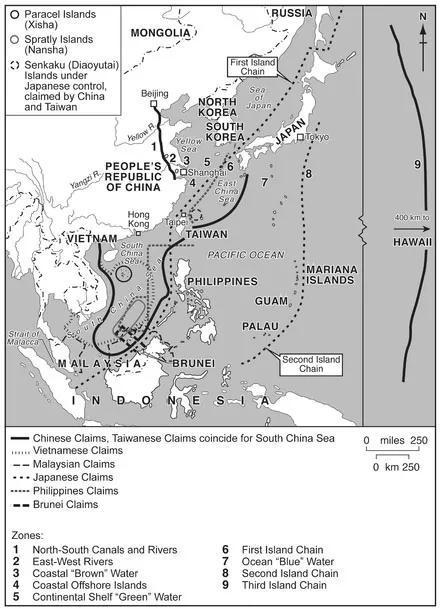
Map 2 China’s Nine Coastal Defense Zones
Japan and the Kurils. The seventh zone is deep water—referred to here as “blue water.” Finally, the eighth and ninth zones are of much more recent 20th-century origin, and include islands ranging from Guam northward toward Japan, the so-called “second island chain,” as well as the island chain running from Alaska south to Midway and Hawaii, the so-called “third island chain.”
In order to trade with China, most European ships came by way of the Malacca Strait, through the South China Sea, and along China’s coast to the mouth of the Pearl River, which accessed the city of Guangzhou (Canton). Sailing further north would allow direct access to Xiamen (Amoy) and Fuzhou (Fuchow) on the coast of Fujian. Although these towns were commercial centers, mountain chains largely cut them off from trade with China’s interior, making Guangzhou the most valuable trade center. Only when a ship reached as far north as the mouth of the Yangzi River would it be capable of reacquiring full access to China’s inland maritime trade network. Moving even further to the north, ships would round Shandong peninsula and enter the Gulf of Bohai, which was dominated by the city of Tianjin on the Hai River, just north of the Yellow River. Tianjin was not only the northernmost terminus of the Grand Canal, but was also the main seaport for Beijing, making its strategic location doubly important.
Since the 16th century, sea-going foreign merchants wishing to trade with China had uniformly been isolated in the south. Most foreign ships docked at Guangzhou at the convergence of the West River (Xi Jiang), the North River (Bei Jiang), and the East River...
Table of contents
- Cover
- Half Title
- Series Page
- Title Page
- Copyright Page
- Dedication
- Contents
- Preface: four periods of modern Chinese naval development
- Introduction: China's modern navy in historical perspective: the importance of coastal defense strategies
- PART I The origins of the "modern" navy under the Qing dynasty
- PART II The Chinese navy's incomplete modernization and Westernization
- PART III The founding of the People's Republic of China and the early history of the PLAN
- PART IV The Nationalist navy and China's PLAN as an emerging regional navy
- Bibliography
- Timeline of South China Sea dispute
- Index
Trusted by 375,005 students
Access to over 1.5 million titles for a fair monthly price.
Study more efficiently using our study tools.
Frequently asked questions
Yes, you can cancel anytime from the Subscription tab in your account settings on the Perlego website. Your subscription will stay active until the end of your current billing period. Learn how to cancel your subscription
No, books cannot be downloaded as external files, such as PDFs, for use outside of Perlego. However, you can download books within the Perlego app for offline reading on mobile or tablet. Learn how to download books offline
Perlego offers two plans: Essential and Complete
- Essential is ideal for learners and professionals who enjoy exploring a wide range of subjects. Access the Essential Library with 800,000+ trusted titles and best-sellers across business, personal growth, and the humanities. Includes unlimited reading time and Standard Read Aloud voice.
- Complete: Perfect for advanced learners and researchers needing full, unrestricted access. Unlock 1.5M+ books across hundreds of subjects, including academic and specialized titles. The Complete Plan also includes advanced features like Premium Read Aloud and Research Assistant.
We are an online textbook subscription service, where you can get access to an entire online library for less than the price of a single book per month. With over 1.5 million books across 990+ topics, we’ve got you covered! Learn about our mission
Look out for the read-aloud symbol on your next book to see if you can listen to it. The read-aloud tool reads text aloud for you, highlighting the text as it is being read. You can pause it, speed it up and slow it down. Learn more about Read Aloud
Yes! You can use the Perlego app on both iOS and Android devices to read anytime, anywhere — even offline. Perfect for commutes or when you’re on the go.
Please note we cannot support devices running on iOS 13 and Android 7 or earlier. Learn more about using the app
Please note we cannot support devices running on iOS 13 and Android 7 or earlier. Learn more about using the app
Yes, you can access A History of the Modern Chinese Navy, 1840–2020 by Bruce A. Elleman in PDF and/or ePUB format, as well as other popular books in History & Chinese History. We have over 1.5 million books available in our catalogue for you to explore.