Vivid accounts of the dangers that miners faced on a daily basis in the northern, southern, and middle coal fields of eastern Pennsylvania.
Since 1870, mining disasters have claimed the lives of over 30,000 men and boys who toiled underground in the anthracite mines of Pennsylvania. Sometimes they survived; many times they did not. The constant threat of fire, explosion, collapsed rock and deadly gas brought miners face to face with death on a daily basis. Through original journal and newspaper accounts, J. Stuart Richards's
Death in the Mines revisits Pennsylvania's most notorious mining accidents and rescue attempts from 1869 to 1943. From the fire at Avondale Colliery that resulted in the first law for regulation and inspection of mines, to the gas explosion at Lytle Mine in Primrose that killed fourteen men, Richards reveals multiple facets of Pennsylvania's most perilous profession. Richards, whose family has worked in the mines since 1870, offers a startling yet sensitive tribute to an industry and occupation that is often overlooked and underappreciated.
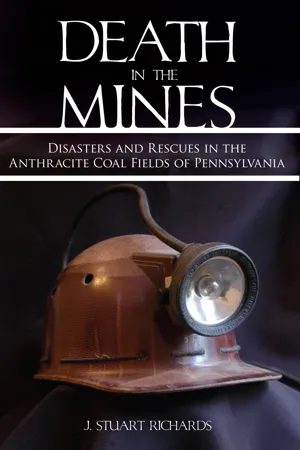
eBook - ePub
Death in the Mines
Disasters and Rescues in the Anthracite Coal Fields of Pennsylvania
- 128 pages
- English
- ePUB (mobile friendly)
- Available on iOS & Android
eBook - ePub
Death in the Mines
Disasters and Rescues in the Anthracite Coal Fields of Pennsylvania
About this book
Information
1.
FIRE IN THE MINES
AVONDALE “AN APPALLING ACCIDENT”
AVONDALE, PENNSYLVANIA SEPTEMBER 6, 1869
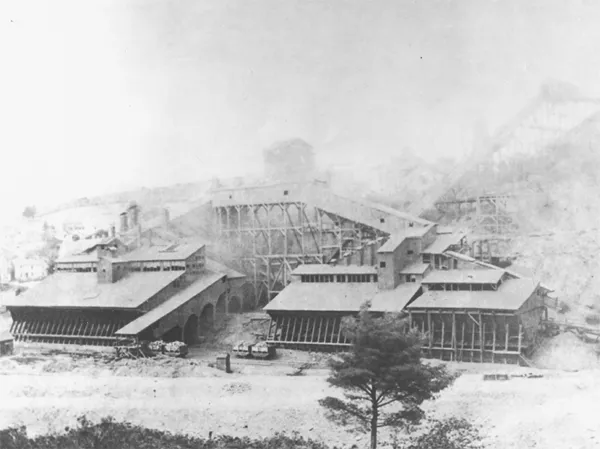
On September 6, 1869, at Avondale, Pennsylvania, a large wooden coal breaker that covered the mouth of the shaft, which was the only entrance and exit into the mine, caught fire and trapped and asphyxiated 108 men and boys who were at work deep in the mine. The fire was caused by the use of an open-flame furnace deep in the mine near the shaft. It was used to create an updraft of heat, which in turn caused a downdraft of fresh air. This disaster brought widespread attention to the appalling conditions of the coal mines of this country.
On March 3, 1870, the legislature of Pennsylvania passed the first law in the United States for the regulation and inspection of coal mines. This law applied only to the anthracite coal mines. The law stated that all accidents would be investigated and that an accurate and systematic mapping of mine workings would be instituted. At least two openings would be used in a mine, and both would be equipped so that they could be used as an escape passage during any type of accident. There was also a provision for a certain quantity of air for each person employed in the mine.
The Avondale disaster was reported on September 11, 1869, in the Pottsville Miners Journal.
On Monday last, the engine house, breakers, attached to the Avondale colliery situated at Plymouth, in Luzerne County, and about twenty miles from Scranton, was totally destroyed by fire. The most appalling fact of the accident was, that through the destruction of buildings was brought about one of the most terrible and lamentable mining catastrophes that has ever occurred in this state. At the time of the fire—which appears to have been caused by the flames from a ventilating furnace at the bottom of the shaft setting fire to the woodwork dividing the shaft, and thereby communicating it to the buildings immediately above it—about one hundred and fifteen or twenty persons, as near as we can learn, were working in the mines. Having no means of egress other than through the shaft, and all communication being cut off, before aid could reach them all perished by suffocation. At first the wildest rumors prevailed in reference to the loss of life, the estimate being that over two hundred miners had perished; but the latest accounts state that all the bodies have been recovered, and number 108. There are 50 widows and 109 orphans made by this disaster.
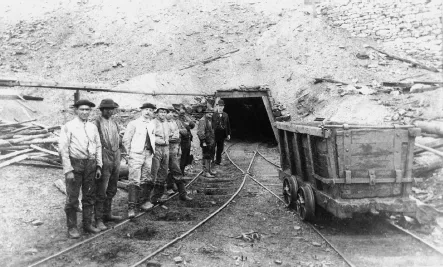
Miners stand at the entrance to a drift in this nineteenth-century photograph. Note the early style coal car. Courtesy of the Historical Society of Schuylkill County.
Many of the scenes and incidents are of a most touching and soul harrowing description. On Wednesday morning, the first door of the gangway was broken in, and sixty bodies were found there. Their situation was awful; fathers lay stiff in death with arms about their sons. Some were kneeling as though in prayer, strong men were hand in hand with their fellows. The pickaxes and shovels, which they had used in making an embankment to prevent the entrance of foul air, lay on one side. It seemed, then, that they had fled a few steps, when in an agony they fell in one another’s arms, suffocated by the deadly smoke. In another chamber every man was without a shirt. They had stripped themselves of clothes to use them in filling up crevices and crannies. One man had pushed a part of his garment into an aperture, when a gust of the gas rushed through and strangled him to death. Wagon loads of coffins line the road, and litters filled with sheeted dead pass along the line every few minutes.
A correspondent says that the scene at night was a strange one. For many miles up and down this beautiful valley the glare of thousand lights were seen. The vast quantities of burning coal at the breaker were covered with sheets of colored flame. Great brawny men worked silently and constantly, and often in tears. At intervals a mothers wail came in on the night air, as it did years ago when death once reigned in the valley of the Wyoming. Long lines of men guarded the hoisting rope on either side, while those at their posts attended to the duties assigned them.
Every fifteen minutes a dead body was hoisted. The volunteer miners who went down to rescue the bodies were in many cases overcome by the noxious gases. In almost every instance it was necessary to apply restoratives, so great was the exhaustion. The bodies all, as a general thing, presented a horrible appearance; yet they did not seem to give much expression of pain in the faces of some, but rather a look of resignation to an inevitable fate, which gives to some a calm and undisturbed appearance.
Much sympathy is felt and expressed for the victims of the Avondale catastrophe and steps are now being taken to raise a fund to procure each of the families a homestead. It is to be hoped sincerely, that the effort will be successful.
We trust that Schuylkill county will not be behind in the good work of subscribing for the relief of the Avondale sufferers. We would suggest the calling of a public meeting or some other mode for the purpose of giving effect to the philanthropic work. In the meantime, those wishing to contribute to the relief of the widows and orphans at Avondale, can forward the same to W.S. Wilson First National Bank, Plymouth. It has been suggested that collections for the purpose be taken up in the churches of this borough, to-morrow. We hope that it will be done, not only in the borough but throughout the county.
An interesting editorial followed the first day’s stories concerning the accident. It dealt with the need for some kind of legislature for the safe operation of the mines.
The Avondale disaster has opened the eyes of the people of some of our neighboring counties to the want of adequate legislation for the better protection of the life of miners in their respective localities. Our mind has long been impressed with this idea, and about eight years ago, was assisted in the preparation of a bill having for its object the supplying of this want. That bill, drawn up with much careful solicitude and thoughtful consideration, and which we think was well calculated to cover the desired grounds, was forwarded to Harrisburg but, through a combination of circumstances, never acted upon. Last winter, through the instrumentality of our members, a bill of a similar character, defective in some points, but in the main satisfactory, was acted upon and passed. This bill, so far as this county is concerned, makes some wise provisions for the better ventilation of the mines, and protects, to a certain degree, the lives of the miners. By it we have an inspector of the mines whose duty it is, among others, to see that the mines are properly ventilated, and to see that the workmen have the proper means of application for egress in case of accidents. Now, had this law been extended to Luzerne county, and placed in practical operation, through competent and skilled inspector, the community might have been spared the harrowing recital of the recent horrible disaster.
Now the best thing the people of our sister counties can do in this matter, is to have a bill framed in such a way as to meet the present exigencies, or have the provisions of the Schuylkill county act extended to them, and insist on their legislation having it done.
In the days following the accident the Miners Journal published articles concerning the testimony of some of the witnesses in the accident and some of the speculation that would follow a major accident.
The Scranton Republican seems to create the impression that the Avondale colliery was set on fire, from the testimony taken. We of course are not sufficiently acquainted with the position of the colliery and the furnace to express an opinion on the subject. But we see nothing in the testimony as far as we have read it, to confirm such an opinion. If combustibles had been placed in the air shaft, it must have been done at night, as the fire in the furnace was made with wood at 6 o’clock, which would create a great blaze in the up current, it would have occurred very shortly after, but the testimony says it did not occur until 10 o’clock—four hours after. Making up a fire with wood in a furnace to give draft to the up current of air, without putting on coal almost immediately to check the flame, would carry it a great distance from the furnace.
One of the witnesses testified before the Coroner’s Jury that he first saw the fire at the head of the flue about the mouth of the shaft, and he supposed it was caused by the NEW FIREMAN WHO DID NOT KNOW EXACTLY HOW TO BUILD THE FIRE. The lower portion of the wooden flue was, of course damp, as the fire had been out from Saturday to Monday, and the upper end and dryer portion of the brattice work would be more likely to take fire from the flame extending upward, and afterward was gradually fanned in a flame.
There is so much feeling on this subject, between the men and also the company, that all such testimony must be sifted very closely, and but little credit attached unless their [sic] is positive evidence. The Republican during the suspension made a number of false charges against those who were in favor of the basis, and also against the people of Schuylkill county.
During the investigation much controversy arose concerning the cause of the fire. The Miners Union denied all charges of the Delaware, Lackawanna and Western Railroad Company that the fire was intentionally set. The miners published their own response to these charges. The following article was published in the Pottsville Miners Journal of September 18, 1869.
The Miners Union desire that the following statement on their part be given to the public:
The dispatches which are being constantly transmitted from Scranton in relation to the Avondale disaster are in many instances entirely unfounded in fact. That the fire which occurred at the mines was the work of an incendiary no one believes. It is one of the subterfuges resorted to by the Delaware and Lackawanna and Western Railroad Company to turn the mind of the public from the real responsibility resting upon the company. The reporters who furnish principally the particulars taken before the jury of inquest on Saturday last have, in many instances, suppressed the testimony material to the miners, and published that favorable to the company. The object can only be conjectured. The company is powerful; the miners are weak. Simple justice is the demand of many citizens.
The final out come to this tragic disaster was that the ventilating furnace set fire to the woodwork in the main shaft. The fire was discovered in the morning by the stable boss. He had just entered the mine with hay for the mules. Within minutes the flames rose in the up draft and reached the breaker above setting it and the engine house on fire. The hoisting engineer had to flee the engine house stranding all those below who died from the effects of the mine gasses and smoke. After the fire was extinguished, a dog enclosed in a box with a lighted lantern placed on top, was lowered into the depths of the mine to test the quality of the air. The dog survived but the lamp was blown out. This indicated the presence of black damp, or carbonic acid gas. Thinking that some of the miners might still be alive, two brave Welshmen volunteered to be lowered into the mine, Thomas W. Williams of Plymouth and David Jones, of Grand Tunnel. When they reached the bottom of the shaft, both men began digging, but were soon overcome by the dreaded gas and suffocated. Waiting until the early morning hours of Tuesday, the rescuers finally reached the place where some of the miners had built a barricade in the hopes of saving themselves from the smoke and gas. Beyond the barricade lay the bodies of over sixty miners huddled together. The final death toll was 110 men.
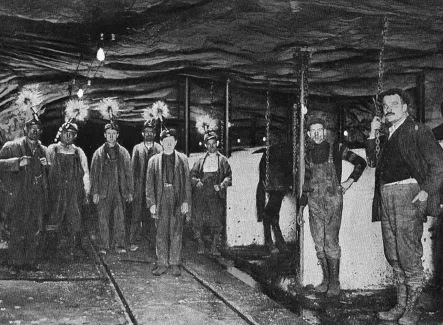
A good view of an underground mule stable. The mules were well taken care of in the mine. Courtesy of the author.
On September 9, 1869, the New York Tribune ran a list of those killed in the Avondale Catastrophe:
Two Hundred Miners Suffocated in the Avondale Colliery Fire
The list of the dead miners, labors and driver boys.
Steele, Palmer, stable boss, Plymouth
Slocum, Dennis, driver, Plymouth
Bowen, John, formerly of Providence. He leaves a wife and one child.
Powell, William, wife and seven children in the old country; one daughter lives in Plymouth and one son was in the mine.
Williams, Wm., Hyde Park, 14 yrs of age, who had only worked there one day.
Evans, Matthew, of Steuben Colliery.
Evans, William, a brother of Matthew, of Steuben Colliery.
Mosier, Matthew, Plymouth, leaves wife and child.
Clark, John, Jersey Hill, Plymouth, leaves wife and seven children.
Evans, Wm. J., Turkey Hill, leaves wife and two or three children.
Stackhouse, George, Avondale, driver, aged 17, unmarried.
Jones, Edwin Hanover, leaves a wife.
Conklin, Peter, of Plymouth, has a wife and three children in England.
Watkins, Morgan, Plymouth, unmarried.
Frothingham, Andrew, Avondale, leaves a wife.
Allen, Wm., Hanover, leaves a wife, soon to be a mother.
Jones, T.E., formerly of Providence, leaves a wife and widowed mothe...
Table of contents
- Front Cover
- Half Title
- Title Page
- Copyright
- Dedication
- Contents
- Preface
- Introduction: Anthracite Coal Mining
- 1. Fire in the Mines
- 2. Explosion in the Mines
- 3. Cave-Ins, Roof Collapse, Inrush of Water
- Epilogue
Trusted by 375,005 students
Access to over 1.5 million titles for a fair monthly price.
Study more efficiently using our study tools.
Frequently asked questions
Yes, you can cancel anytime from the Subscription tab in your account settings on the Perlego website. Your subscription will stay active until the end of your current billing period. Learn how to cancel your subscription
No, books cannot be downloaded as external files, such as PDFs, for use outside of Perlego. However, you can download books within the Perlego app for offline reading on mobile or tablet. Learn how to download books offline
Perlego offers two plans: Essential and Complete
- Essential is ideal for learners and professionals who enjoy exploring a wide range of subjects. Access the Essential Library with 800,000+ trusted titles and best-sellers across business, personal growth, and the humanities. Includes unlimited reading time and Standard Read Aloud voice.
- Complete: Perfect for advanced learners and researchers needing full, unrestricted access. Unlock 1.5M+ books across hundreds of subjects, including academic and specialized titles. The Complete Plan also includes advanced features like Premium Read Aloud and Research Assistant.
We are an online textbook subscription service, where you can get access to an entire online library for less than the price of a single book per month. With over 1.5 million books across 990+ topics, we’ve got you covered! Learn about our mission
Look out for the read-aloud symbol on your next book to see if you can listen to it. The read-aloud tool reads text aloud for you, highlighting the text as it is being read. You can pause it, speed it up and slow it down. Learn more about Read Aloud
Yes! You can use the Perlego app on both iOS and Android devices to read anytime, anywhere — even offline. Perfect for commutes or when you’re on the go.
Please note we cannot support devices running on iOS 13 and Android 7 or earlier. Learn more about using the app
Please note we cannot support devices running on iOS 13 and Android 7 or earlier. Learn more about using the app
Yes, you can access Death in the Mines by John Stuart Richards in PDF and/or ePUB format, as well as other popular books in History & North American History. We have over 1.5 million books available in our catalogue for you to explore.