Entering God's presence is an awesome privilege—does it feel that way? Tour seven biblical mountains where God met his people, and discover spiritual realities true for corporate worship today.
- English
- ePUB (mobile friendly)
- Available on iOS & Android
eBook - ePub
About this book
Information
Topic
Theology & ReligionSubtopic
Christian Rituals & Practice Part 1
GETTING READY FOR THE CLIMB

1
UMBRELLA NEEDED
Beginnings of Edenic Worship
The Presence of God in our midst—bringing a sense of godly fear and reverence—this is largely missing today. You cannot induce it by soft organ music and light streaming through beautifully designed windows.
—A. W. Tozer, Whatever Happened to Worship?
—A. W. Tozer, Whatever Happened to Worship?
A young boy sat next to his mother in a Sunday morning church service. He was restless and bored stiff. His mom had insisted that he leave his Nintendo at home lest he be distracted or, worse yet, irritate the people sitting behind him. Suddenly the boy’s wandering eyes spotted a bronze plaque on the side wall of the church that showed letters, stars, and the outline of a flag. “What’s that?” he asked his mother, and she whispered in reply, “Oh, those are the names of people from our church who died in the service.” There was a long pause, as the boy was obviously upset with that answer. Panicking, he nudged his mother again. “Mom, Mom—did they die in the first or the second service?”
I recognize that story is not likely to cause you to roll in the aisles with laughter. It might even elicit a groan. But I tell it because it makes a point.
To all too many people, a worship service is boring—something to be endured until they exit the church building and life goes back to normal. Perhaps this is part of the reason why there has been much experimentation in corporate worship in North America during the past couple of decades. In an attempt to connect with people, many churches have made seismic changes in how they conduct Sunday morning worship. Perhaps more changes have been made in the structure, style, and format of worship services in the last twenty years than in the past two hundred years combined.
A few years ago, the wife of a well-known megachurch pastor and popular author offered a controversial view of the goal of worship. A YouTube video, which is now removed and unavailable, showed her making the following statement before an overflow crowd of worshippers in their arena-like meeting place: “When you come to church, when you worship him, you’re not doing it for God really. You’re doing it for yourself!”
I suspect that many would take exception to this human-centered view of worship and might blink in incredulity. “Did I hear her correctly?”
Why Bother?
Why should you take the time and exert the energy to explore the subject of worship? Is it really that important to devote a whole book to this subject? Allow me to highlight several reasons why I believe that the central gathering of the church in worship is indispensable to a healthy Christian life.
- You and I have been summoned. Sunday worship fulfills Scripture’s clear command that we meet together on the first day of each week. Our Lord actively looks for our worship. “True worshipers will worship the Father in the Spirit and in truth, for they are the kind of worshipers the Father seeks” ( John 4:23). Amazing. The Father seeks your worship and mine. Let us draw near.
- The experience of corporate worship shapes and reflects our view of God. It’s the setting in which our appetite for God and our understanding of his acts and attributes are stimulated and stretched.
- Sunday worship is the best way to prepare for what will engage us for eternity. William Nicholls wisely asserts that “worship is the supreme and only indispensable activity of the Christian Church. It alone will endure . . . into heaven, when all other activities of the Church will have passed away.”1
Many churches engage in worthwhile activities such as counseling ministries, food banks for the hungry, marriage-preparation training, evangelistic outreaches, and many others you could likely name from your own church. Yet in the new heaven and earth, these programs and ministries will be unnecessary and will fade away. The one activity that will not disappear is worship. That’s how important it is to get it correct, here and now, in preparation for what’s coming. Our focus on worship in this life will reap eternal dividends.
I have long been captivated by a claim that author and Cambridge scholar C. S. Lewis made: “If I find in myself a desire which no experience in this world can satisfy, the most probable explanation is that I was made for another world.”2 Or, as Ecclesiastes 3:11 expresses it, “He has also set eternity in the human heart.” You and I long for a way to connect with the eternal world. To explore the dimension3 of worship is to satisfy that longing.
Overarching Umbrella
Far too many people approach worship without an umbrella, and that’s exactly what I hope to provide in this book.
What do I mean? I’m referring to an overarching theme or metanarrative that ties Scripture together—that extends from eternity past to eternity future—arching from Genesis to Revelation. And what is that big-picture umbrella that helps us make sense of worship? It’s this dominant theme: “the presence of God” (or, in Latin, Coram Deo)—God’s plan to dwell with his people.
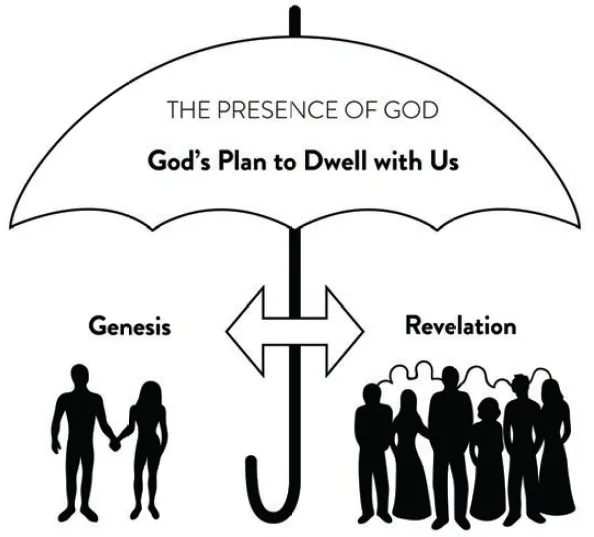
Fig. 1.1. Umbrella: God’s Plan to Dwell with Us
You may be thinking, What’s the big deal here? Isn’t “presence of God” just another one of those obvious evangelical clichés? Isn’t it just another buzzword that we hear in prayers, sing in the lyrics of Christian songs, and read on PowerPoint slides? No—a thousand times no. We need to dig deeper.
The theme of divine presence is a bright thread that is woven through the entire Bible. It’s a beautiful melody that plays from Genesis to Revelation for those who have ears tuned to hear. Like mountain peaks rising above the mist, the stories from Genesis to Revelation provide us with elevated views of the divine presence.
The place to begin an examination of worship is not the book of Acts, as some would suppose, but rather the book of Genesis and the earliest experience of worship. Our setting is the garden of Eden.
Worship before the Fall in the Edenic Garden
In eternity past, out of darkness and emptiness, a personal God chose to speak and to bring the world into ordered being. God created Adam and Eve in his image and gave them the capacity to know and worship him. Just as plants in the garden needed sunlight in order to flourish, so humans would not flourish without spending time in the light of God’s presence. God situated Adam and Eve in a perfect garden that was a sacred place or temple filled with his presence. Some scholars have concluded that the garden was located on a mountain. “The elevated location of the garden of Eden is indicated by the fact that a single river flows out of Eden, before dividing to become four rivers.”4 The prophet Ezekiel reinforces this idea by referring to “Eden, the garden of God” on “the holy mount of God” (28:13–14). The Greek Old Testament describes the garden’s geographical area with the word paradeisos—a term used to describe an enclosed garden or walled park.
My wife and I have always enjoyed being together, walking and talking—especially at the end of a long day. Our neighborhood is blessed with an abundance of brilliant-colored Knock Out roses, crepe myrtle trees, camellia bushes, and Clematis vines that climb up mailbox posts, trellises, gas lantern posts, and everything vertical. We sometimes imagine what Adam and Eve experienced in their tropical paradise as they walked and talked with their transcendent creator God. Worship for them was natural and immediate. Communion was pure and open. Original worship, prior to the fall, was not hindered by the barrier of sin.
What was God’s plan for Adam and Eve? “God blessed them and said to them, ‘Be fruitful and increase in number; fill the earth and subdue it’” (Gen. 1:28). From the start, God planned to expand the original garden of Eden beyond its borders. His plan was that the whole earth would become a dwelling place for his descendants. But something went horribly wrong. The expansion of Edenic perfection never happened.
Effects of the Fall on Worship
The story is a familiar one. God commanded Adam to fast from one tree in order that he might feast at the other trees and enjoy communion with his Creator.5 But Adam and Eve deliberately disobeyed God—with dire consequences. The fellowship between God and his creatures was ruptured. “Then the man and his wife heard the sound of the LORD God as he was walking in the garden in the cool of the day, and they hid from the LORD God among the trees of the garden” (Gen. 3:8). Instead of choosing to obey and worship God, Adam and Eve chose to hide from his presence. From that moment on, their worship of God was no longer pure and undefiled.
How did things change after the fall? In lots of ways. For starters, God pronounced a triple curse on his creation (see Gen. 3:14–19):
- The curse of the ground. The growth of thorns and thistles would necessitate hard work on Adam’s part in order for him to produce food for his family. Thus, Adam’s mission to expand the borders of Eden geographically was made more difficult. His environment became his enemy. From here on out, cultivation of the land would be toilsome for him—and for u...
Table of contents
- Cover Page
- Title Page
- Copyright Page
- Contents
- List of Illustrations
- Preface
- Part 1: Getting Ready for the Climb
- Part 2: Climbing Summits in the Old Covenant
- Part 3: Climbing Summits in the New Covenant
- Appendix: Suggestions for Preparing to Attend Sunday Worship
- Suggestions for Further Reading
Trusted by 375,005 students
Access to over 1.5 million titles for a fair monthly price.
Study more efficiently using our study tools.
Frequently asked questions
Yes, you can cancel anytime from the Subscription tab in your account settings on the Perlego website. Your subscription will stay active until the end of your current billing period. Learn how to cancel your subscription
No, books cannot be downloaded as external files, such as PDFs, for use outside of Perlego. However, you can download books within the Perlego app for offline reading on mobile or tablet. Learn how to download books offline
Perlego offers two plans: Essential and Complete
- Essential is ideal for learners and professionals who enjoy exploring a wide range of subjects. Access the Essential Library with 800,000+ trusted titles and best-sellers across business, personal growth, and the humanities. Includes unlimited reading time and Standard Read Aloud voice.
- Complete: Perfect for advanced learners and researchers needing full, unrestricted access. Unlock 1.5M+ books across hundreds of subjects, including academic and specialized titles. The Complete Plan also includes advanced features like Premium Read Aloud and Research Assistant.
We are an online textbook subscription service, where you can get access to an entire online library for less than the price of a single book per month. With over 1.5 million books across 990+ topics, we’ve got you covered! Learn about our mission
Look out for the read-aloud symbol on your next book to see if you can listen to it. The read-aloud tool reads text aloud for you, highlighting the text as it is being read. You can pause it, speed it up and slow it down. Learn more about Read Aloud
Yes! You can use the Perlego app on both iOS and Android devices to read anytime, anywhere — even offline. Perfect for commutes or when you’re on the go.
Please note we cannot support devices running on iOS 13 and Android 7 or earlier. Learn more about using the app
Please note we cannot support devices running on iOS 13 and Android 7 or earlier. Learn more about using the app
Yes, you can access When God Draws Near by Paul E. Engle in PDF and/or ePUB format, as well as other popular books in Theology & Religion & Christian Rituals & Practice. We have over 1.5 million books available in our catalogue for you to explore.