This book is a down to earth, practical guide which provides ten simple steps for success for anyone responsible for recruiting a winning veterinary practice team: whether they are recruiting employees and building their team, or changing culture and creating a supportive environment where employees are engaged and motivated. It is ideal for small business owners who can't afford to employ any human resource support. Intensely practical, it delivers key facts for veterinary staff starting out in business. The book: · Details how you can attract, recruit and retain the right people for a winning team· Guides you on creating a well organised, supportive practice in which employees can flourish· Provides you with a basic introduction to building a strategy and improving your marketing campaigns· Covers the basics of sound financial planning and how to win clients and increase your revenues· Looks at how to manage common pitfalls With a wealth of practical templates and forms to use, this book adopts a straight-talking approach which will be welcomed by anyone starting their own veterinary practice.

- 96 pages
- English
- ePUB (mobile friendly)
- Available on iOS & Android
eBook - ePub
Ten Steps to Building a Successful Veterinary Practice
About this book
Information
Topic
MedicineSubtopic
Veterinary Medicine1 Step 1: Why?
Knowing your why is what will get you out of bed in the morning, and on those days when everything is going wrong, will keep you going. What’s your purpose in your life, and in your business?
Simon Sinek (2009, p. 42), a successful motivational speaker, says, ‘People don’t buy what you do, they buy why you do it.’
Every veterinary practice around the world knows what they do, which is why it’s the first thing they tell people about. Only when we know why we do things, will we feel a sense of belonging, that’s because emotions come first every time. When we make a decision based on a strong why, we own it.
Simon Sinek (2009) describes the ‘golden circle’, with why at the centre (Fig. 1.1).
Great leaders and companies get this right by starting all communication with why they do things, followed by how they do things until finally revealing what it is they actually do.
Apple is a great example. First, they tell us why they’re here to shake things up, then they tell us how (with easy-to-use, beautifully designed products) and finally we find out what they make: computers, phones, tablets and MP3 players. By the time they get to their what, we’re long sold on their cause and are ready to support them in every way we can.
If you want to inspire others, start by telling them why you do what you do, instead of what you do, and you’ll see an increase in engagement.
The best businesses are built by excited employees.
The way you do this is by building your business around your why, and then bringing together a team who share your why. Look for the people who are already motivated by the same reasons as you are and inspire them even more.
Who would you rather have working for you?
Hire people for their why, not just their skills, and watch your business thrive.
When you start with your why there’s no need for underhand sales tactics. When you start with why and communicate from the inside out, you’ll build a group of clients that trust you and become true fans.
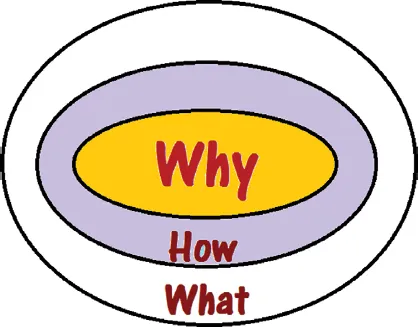
Fig. 1.1. Simon Sinek’s ‘golden circle’. From Wikimedia Commons, undated.
For further information from Simon Sinek, visit www.simonsinek.com (accessed 3 January 2020) or watch his Ted Talk ‘Start With Why’ (available at: https://www.youtube.com/watch?v=u4ZoJKF_VuA (accessed 3 March 2021)).
Do you ever take time out to think about whether you’re satisfied with your life?
Do you think about what your future might hold?
These are questions that might not be easily answered. The job that you found challenging and satisfying 10 years ago may no longer be as fulfilling.
Before you can start to make the changes you need to bring satisfaction and balance back into your life, you have to understand what drives you; what makes you want to get up in the morning.
Finding clarity about what motivates you can help you plan for the future. If you ever ask yourself ‘Is this it?’, take the time to know what led you to ‘this’ in the first place. Only then can you start to build your future.
There are also times when life can seem overwhelming. Stress, too few hours in the day, too many commitments, pressure …
What led you to become a veterinary professional? Generally this choice fulfilled certain needs; these same needs continue to motivate you now. Recognizing what these needs are can inform the decisions you’re taking now for your future.
Quite often, the seeds of our career choice go back to our childhood. Growing up with a family pet teaches us the responsibility of having another living being who is relying on us for food, shelter and care.
Professor Lance Workman, a psychologist from the University of South Wales, has said:
I firmly believe that pets provide an invaluable taster for adult life. If you care for a pet, this helps you to develop compassion, and to realise that you have a responsibility towards others. And later on in life, we can transfer those skills to our relationships with friends and partners.
(Workman, cited in Pets at Home, 2015)
For a lucky few of us, that interest in animals and concern for their welfare leads naturally to a career in veterinary practice. We want to improve the lives of animals and, by extension, their owners.
An interest in the science is also a significant factor in choosing this career. Discovery, problem solving, research, evaluation, observation, knowledge and progression – all of these things float our boat.
We want a career where every day’s a school day. We enjoy learning and honing our skills. We never want to be bored by what we do.
A few years ago, I met a veterinary surgeon who had shown an interest in joining our group of practices. She had excellent qualifications, wide-ranging skills and very relevant experience. In truth, she stood head and shoulders above most of our vets.
My colleague and I struggled to understand why she would want to join our business. We didn’t offer exceptional salaries, the hours were terrible and there was little career progression.
We took the time to understand her motivation. She was first and foremost an educator. Her passion was to pass on her knowledge and skills to other veterinary surgeons.
We quickly stopped looking this particular gift horse in the mouth and offered her a job. The value she brought to our practices is immeasurable; her knowledge, skills and training have enriched a generation of veterinary surgeons.
For a lot of people in the profession, these are all the reasons they need. They are brilliant clinicians, amazing nurses, caring receptionists. They are the people who make our profession worthwhile.
Then there are those of us who are looking for more. We want to be in control of our destiny.
‘The best way to predict the future is to create it.’
(Peter Drucker, management consultant, cited in Cohen, 2009, p. 4)
We want to understand how business works. We have an appreciation of the mechanics of running a practice that is successful in business terms, as well as providing a service to animals and their owners.
We recognize that success can be measured by a number of factors: (i) animal welfare; (ii) client satisfaction; (iii) client/database growth; (iv) stable and motivated employees; (v) market share; (vi) professional standards; or even (vii) personal income.
We also relish some of the challenges facing veterinary practices, including a demanding marketplace, a downward pressure on veterinary salaries, more regulation, the growth of the corporate sector, declining profits and growing stress.
We want to see the spreadsheets; cashflow, margins and overheads are fascinating! Making loads of money may not be the main motivation for creating a business, but profits are essential for building a successful practice.
It’s not all about the money, of course. There has to be an appreciation of the limits of medicines combined with taking on board the ethics that underpin our profession.
In an era of corporate responsibility, clients recognize the importance of ethics. A survey by VetFutures shows that 94% of those surveyed trust veterinary surgeons generally or completely (VetFutures, 2015). Find out more at https://www.vetfutures.org.uk/resource/public-trust-in-the-professions-may-2015/ (accessed 3 January 2021).
We owe this high recognition to generations of veterinary practices. The reputation of the profession has grown through dealing with animal welfare challenges, while delivering a professional, caring and compassionate service to our clients.
The practices of today have a responsibility to continue the standards set by our predecessors.
Then there are the people. A vital part of any veterinary practice is the people. We are committed to managing, training and communicating with vets, nurses, receptionists and technicians. They’re our team.
I was recently chatting to the Finance Director of a multinational company with offices in Europe, North America and Asia. It may be self-deprecating, but he believes that the secret to his success is the ability to find and retain the people who can do the things he can’t.
Your practice can only be successful if you manage to combine your commitment to the profession with your passion for business. This isn’t as easy as you may have at first thought. Of course, if it were that easy, we’d all do it!
‘There’s a fire in your belly’ may be a cliché, but it is there. You have to believe that your practice can push the quality of care and experience of both your fellow professionals and your clients to new heights.
Can you see, smell and touch your future? Have you spent time visualizing exactly what you want to create?
It’s fair to say that our imagination is a powerful tool. Sports people routinely use mental imagery to improve their performance. Sports scientists believe that imaginary actions are experienced in similar ways to actual actions; we can activate many of the same neural networks.
Imagining doing a series of movements can make us better at executing them in real life. Jack Nicklaus, the professional golfer, would practise a shot in his mind before taking the shot in reality.
The same principles apply with mental challenges. Imagining success can enhance motivation and confidence.
I described this earlier as ‘visualization’, but imagination involves all five senses. Immersing yourself fully in a mental image can make it seem like it’s really happening. What do you see, smell, hear and feel?
Like all things worthwhile in life, practice makes perfect. Rather than spending a few moments imagining arriving at your goal, consider all the challenges you are going to face to reach whatever success you are striving for. Revisit your vision regularly. Think about writing down how you imagine arriving at your goal.
Strategies you can use to improve how you imagine meeting the challenges you may be fac...
Table of contents
- Cover
- Title page
- Copyright
- Contents
- Testimonials
- About the Author
- Preface
- Acknowledgements
- 1. Step 1: Why?
- 2. Step 2: Your First Time?
- 3. Step 3: Vision, Mission, Values and Culture
- 4. Step 4: How to Define What and Who You Need
- 5. Step 5: Recruitment and Induction
- 6. Step 6: Performance Management and Employee Engagement
- 7. Step 7: Employee Health and Wellbeing
- 8. Step 8: How to Build a Loyal Client Database and Marketing Your Practice
- 9. Step 9: Financial Management
- 10. Step 10: Three Key Strategies to Increase Your Revenue by 25%
- Appendix 1: Organization Plan
- Appendix 2: Values Worksheet
- Appendix 3: Job Description Template
- Appendix 4: Person Specification Template
- Appendix 5: Advert Template
- Appendix 6: Template Application Form
- Appendix 7: Applicant Screening Form
- Appendix 8: Suggested Interview Questionnaire
- Appendix 9: Telephone Interview Questionnaire
- Appendix 10: Reference Request Form
- Appendix 11: Example Induction Checklist
- Appendix 12: Example Appraisal Form
- Appendix 13: Example Performance Development Plan
- Appendix 14: Case Study: How Not to Treat Your People
- Back Cover
Trusted by 375,005 students
Access to over 1.5 million titles for a fair monthly price.
Study more efficiently using our study tools.
Frequently asked questions
Yes, you can cancel anytime from the Subscription tab in your account settings on the Perlego website. Your subscription will stay active until the end of your current billing period. Learn how to cancel your subscription
No, books cannot be downloaded as external files, such as PDFs, for use outside of Perlego. However, you can download books within the Perlego app for offline reading on mobile or tablet. Learn how to download books offline
Perlego offers two plans: Essential and Complete
- Essential is ideal for learners and professionals who enjoy exploring a wide range of subjects. Access the Essential Library with 800,000+ trusted titles and best-sellers across business, personal growth, and the humanities. Includes unlimited reading time and Standard Read Aloud voice.
- Complete: Perfect for advanced learners and researchers needing full, unrestricted access. Unlock 1.5M+ books across hundreds of subjects, including academic and specialized titles. The Complete Plan also includes advanced features like Premium Read Aloud and Research Assistant.
We are an online textbook subscription service, where you can get access to an entire online library for less than the price of a single book per month. With over 1.5 million books across 990+ topics, we’ve got you covered! Learn about our mission
Look out for the read-aloud symbol on your next book to see if you can listen to it. The read-aloud tool reads text aloud for you, highlighting the text as it is being read. You can pause it, speed it up and slow it down. Learn more about Read Aloud
Yes! You can use the Perlego app on both iOS and Android devices to read anytime, anywhere — even offline. Perfect for commutes or when you’re on the go.
Please note we cannot support devices running on iOS 13 and Android 7 or earlier. Learn more about using the app
Please note we cannot support devices running on iOS 13 and Android 7 or earlier. Learn more about using the app
Yes, you can access Ten Steps to Building a Successful Veterinary Practice by Wendy Sneddon in PDF and/or ePUB format, as well as other popular books in Medicine & Veterinary Medicine. We have over 1.5 million books available in our catalogue for you to explore.