Public in Public History presents international research on the role of the public in public history: the ways people perceive, respond to and influence history-related institutions, events, services and products that deal with the past.
The book addresses theoretical reflections on the public, or multiple publics, and their role in public history, and empirical analyses of the publics' active responses to and impact on existing forms of public history. Special attention is also paid to digital public history, which facilitates the double role of the public—as both recipient and creator of public history. With a multinational author team, the book is based on various national, but also international, experiences and academic traditions; each chapter goes beyond national cases to look transnationally. The narratives built around their cases deal with issues such as arranging a museum exhibition, managing a history-related website, analyzing readers' comments or involving non-professional public as oral history researchers.
With sections focusing on research, commemorations, museums and the digital world, this is the perfect collection for anyone interested in what the public means in public history.
1 Publics, Public Historians and Participatory Public History
David Dean
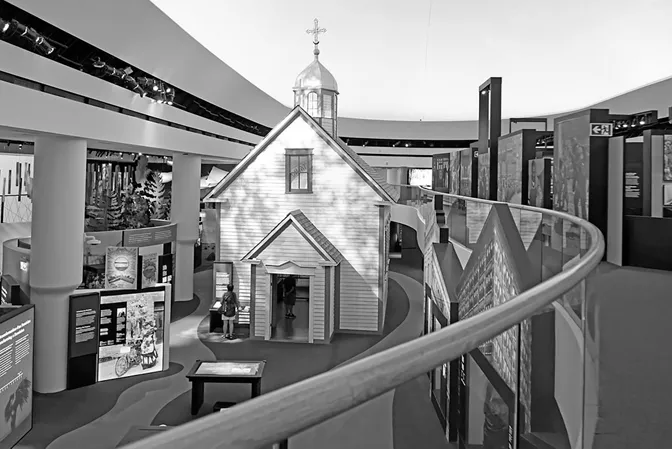
Public history, as the call for papers for the 2019 conference on The Public in Public and Applied History which inspired this collection of essays conveniently set out, is about history in the public realm. It is, to quote the organizers, “history for the public, by the public, with the public, about the public or in the public sphere.”1 But who is or who are “the public”? In this chapter, I will consider what public historians have in mind when they speak about “the public” and briefly discuss debates surrounding the notion of publics and the public sphere. A case study will be offered demonstrating how a major public history institution in Canada, the Canadian Museum of History, sought to operationalize publics during a vital moment of transition (Figure 1.1). My discussion will draw on the work of scholars working in the fields of public pedagogy and participatory performance which may prove instructive for public historians, and concludes with the proposition that thinking about “publics” rather than a single, unitary public is a useful step forward in our understanding of what we mean by putting the word “public” in front of “history.”
What do we have in mind when we speak of history for, by, with or about the public? The various prepositions employed signal both the range of approaches adopted by public historians in their analyses and creations of representations of the past and raise a number of theoretical and methodological issues. Is the public (or are publics) passive consumers of the historical representations created by public historians? This is what history for the public implies. The public receives history curated in whatever form (books, exhibits, films, podcasts, walking-tours, etc.) by recognized (and certainly self-identified) authorities or experts who have been professionally trained as historians or in an allied field and are usually working in institutions (government departments, museums, universities, etc.). This is history in the public realm functioning as discipline and knowledge, where historical productions are generated for the public and which sees the public as needing information and instruction. This can take the form of official state narratives or, conversely, counter-narratives: both see publics as passive consumers of the historical representations that are produced. Unpacking history for the public in this way resonates with the first of Gert Biesta’s threefold typology of public pedagogy: “pedagogy for the public that is aimed at the public.”2
To be sure, and particularly in the past few decades, such “top-down” public histories have involved varying degrees of public consultation. This can take place prior to the final production—often, to be rather cynical about it, designed to anticipate problems that might render the professional institution vulnerable to criticism—or afterward by way of evaluation and feedback to assist in shaping the next production. Representations—particularly those in museums and galleries, living history performances and reenactments—might even involve degrees of audience participation and interaction, but here too the public act as participants in representations firmly controlled and established by the professionals. The public may in such instances be active rather than passive consumers, but they are consumers, nonetheless.
Such a position is also implied in talking of history about the public. Here, the public serves as both the subject and object of the historical production in question. As in history for the public, the expert historian or specialist in an allied discipline or professional field is seen, by themselves and by others, as existing outside the public they are addressing. Indeed, these specialists claim that their training and experiences enable them to distance themselves from both the past they seek to represent “objectively” and the public for whom their representations of the past are intended.
History with the public on the other hand recognizes that the public has a role to play in producing representations of the past. The preposition “with” suggests a moving away from the public playing the role of a consumer who might (if they are fortunate) be consulted or invited to participate, to one where they play a significant role in shaping historical representation. History with the public means that the public helps to shape the subject and nature of the production and to set the research agenda and is involved in the development and enactment process. The public works toward determining the storylines and narratives and is involved in strategies and technologies of representation and reception. Public histories in these instances are truly collaborative exercises, where the professional is just one contributor to the historical production and may not even play the most significant role in determining outcomes. Public historians in histories with the public often find themselves playing the role of facilitator and cheerleader, and this involves often complex processes of sharing and shared authority.
History by the public, which to a degree mirrors Biesta’s second type of public pedagogy (“pedagogy of the public that is done by the public itself”),3 suggests histories that are created without the involvement of such professionals altogether—particularly professionally trained historians—or at the very least that they play a very supplementary role as sources (perhaps even as consultants) for historical representations initiated by others. This reverses the role of the public in histories for and about the public and firmly places experts as a constituent part of the public. To put it another way, this is “bottom-up” history, often generated outside official institutional structures, and they might be supportive of, or in harmony with, “top-down” histories or antagonistic and resistant to them.
Whether history is produced for, about, with or by the public, public historians tend to conceptualize the audiences of historical representations as a single, unitary public. This is captured in the phrase “the public,” sometimes qualified as “the general public,” or even the elitist phrase “the ordinary public,” which explicitly marks the public historian, and perhaps others—such as curators, filmmakers, and actors participating in the process of historical creation—as existing outside the public she or he has in mind. This is another frequent sense of the word: public history practitioners talk about needing to find “an audience” as if there is a public “out there” that somehow needs to be accessed.
Publics, Counter-Publics and the Public Sphere
Where is this public to be found? Although the call for papers evoked Jürgen Habermas’s concept of the public sphere, it is surprising how absent his work has been from discussions by public historians seeking to offer a definition of public history. Habermas saw the public sphere as “a realm of our social life in which something approaching public opinion can be formed […] Citizens behave as a public body when they confer in an unrestricted fashion […] about matters of general interest.”4 Habermas located the emergence of the public sphere in conversations taking place in clubs, societies, newspapers and periodicals of the eighteenth century. The concept of the public sphere generated much debate over issues such as to what degree elements of the public sphere could be detected earlier than the eighteenth century, how inclusive the liberal public sphere really was, how there were alternative means of civic engagement and how well it served as a mode of analysis for non-European cultures.
One of the most frequently cited critiques was that offered by Nancy Fraser who supported the position that it was more useful to think about “a multiplicity of publics” rather than “a single public sphere.”5 Habermas’s unitary comprehensive public sphere may have been dominated by the bourgeois, male, educated and well-off elite, but they were not wholly constitutive of it. Subordinate groups formed alternative publics which Fraser called “subaltern counterpublics” (italics in original), parallel “discursive arenas where members of subordinate social groups invent and circulate counter discourses to formulate oppositional interpretations of their identities, interests, and needs.”6 These counter-publics might function “as bases and training grounds for agitational activities directed towards wider publics.”7 Whatever form their activities took, alternative publics expanded the public sphere.8
Who were these alternative publics and counter-publics? Most were associated with subaltern groups and can be characterized as social movements such as those working for workers’ rights, women’s rights, civil rights and so on. Such “emergent publics,” as Ian Angus helpfully calls them, sometimes succeed in challenging dominant publics, achieving an expansion of the public sphere.9 As Fraser pointed out, subaltern, counter or alternative publics were not necessarily socially progressive; as Michael Warner has recently observed, contemporary alt-right activists are also “publics in waiting.”10
Warner’s work on counter-publics takes as a given that publics are constructed through discourse. He notes several “senses” of the (English) noun “public” that are often “intermixed.” There is the sense of the public as “a kind of social totality,” of “people in general.”11 Whether framed as the nation, a city, a community or a group, the assumption is that it includes everyone within its compass and there is no real alternative English word for this sense of public: “crowd” or “audience,” for example, do not capture the same degree of social totality. On the other hand, when we think of “concrete” publics, these words do work as substitutes because a public in this sense is brought together to experience itself in a specific place, bounded by space, place, and event, “assembled in common visibility and common action.”12 A third sense of public is the one “that comes into being only in relation to texts and their circulation,” and this is Warner’s primary concern as he proceeds to explore print cultures and “broadcast publications” from the eighteenth century onward.13
Warner illuminates our understanding by identifying seven aspects to our understanding of a public. First, he argues that a “public is self-organized.” It is “a space of discourse organized by nothing other than discourse itself,” existing only for the purpose for which it is organized. “It exists by virtue of being addressed.”14 To paraphrase Warner’s argument, a ...
Table of contents
Cover
Half Title
Series Page
Title Page
Copyright Page
Table of Contents
List of Contributors
1 Publics, Public Historians and Participatory Public History
Part I Museums and Their Publics
Part II Publics in Commemorations
Part III Digital Publics
Part IV Publics in Public History Research
Part V Conclusion
Index
Trusted by 375,005 students
Access to over 1.5 million titles for a fair monthly price.
Study more efficiently using our study tools.
Frequently asked questions
Yes, you can cancel anytime from the Subscription tab in your account settings on the Perlego website. Your subscription will stay active until the end of your current billing period. Learn how to cancel your subscription
No, books cannot be downloaded as external files, such as PDFs, for use outside of Perlego. However, you can download books within the Perlego app for offline reading on mobile or tablet. Learn how to download books offline
Perlego offers two plans: Essential and Complete
Essential is ideal for learners and professionals who enjoy exploring a wide range of subjects. Access the Essential Library with 800,000+ trusted titles and best-sellers across business, personal growth, and the humanities. Includes unlimited reading time and Standard Read Aloud voice.
Complete: Perfect for advanced learners and researchers needing full, unrestricted access. Unlock 1.5M+ books across hundreds of subjects, including academic and specialized titles. The Complete Plan also includes advanced features like Premium Read Aloud and Research Assistant.
Both plans are available with monthly, semester, or annual billing cycles.
We are an online textbook subscription service, where you can get access to an entire online library for less than the price of a single book per month. With over 1.5 million books across 990+ topics, we’ve got you covered! Learn about our mission
Look out for the read-aloud symbol on your next book to see if you can listen to it. The read-aloud tool reads text aloud for you, highlighting the text as it is being read. You can pause it, speed it up and slow it down. Learn more about Read Aloud
Yes! You can use the Perlego app on both iOS and Android devices to read anytime, anywhere — even offline. Perfect for commutes or when you’re on the go. Please note we cannot support devices running on iOS 13 and Android 7 or earlier. Learn more about using the app
Yes, you can access Public in Public History by Joanna Wojdon, Dorota Wiśniewska, Joanna Wojdon,Dorota Wiśniewska in PDF and/or ePUB format, as well as other popular books in History & Historiography. We have over 1.5 million books available in our catalogue for you to explore.