As the second book in the Routledge Journalism Insights series, this edited collection explores the possibilities and challenges involved in contemporary reporting of peace and conflict.
Featuring 16 expert contributing authors, the collection maps the field of peace and conflict reporting in a digital world, in a context where the financial prospects of the news industry are challenged and professional authority, credibility and autonomy are decaying. The contributors, ranging from prominent scholars to the Head of Newsgathering at the BBC, discuss a diverse range of key case studies, including the role of Bellingcat in conflict journalism; war and peace journalism in Bangladesh; visual storytelling in conflict zones; and rampant cyber-misogyny confronting women journalists in Finland, India, the Philippines and South Africa. Bringing together theory and practice, the collection offers an in-depth examination of the changes taking place in the working practices of journalists as ongoing, strategic assaults against them increase.
Insights on Peace and Conflict Reporting is a powerful resource for students and academics in the fields of global journalism, foreign news reporting, conflict reporting, globalisation, media and international communication.
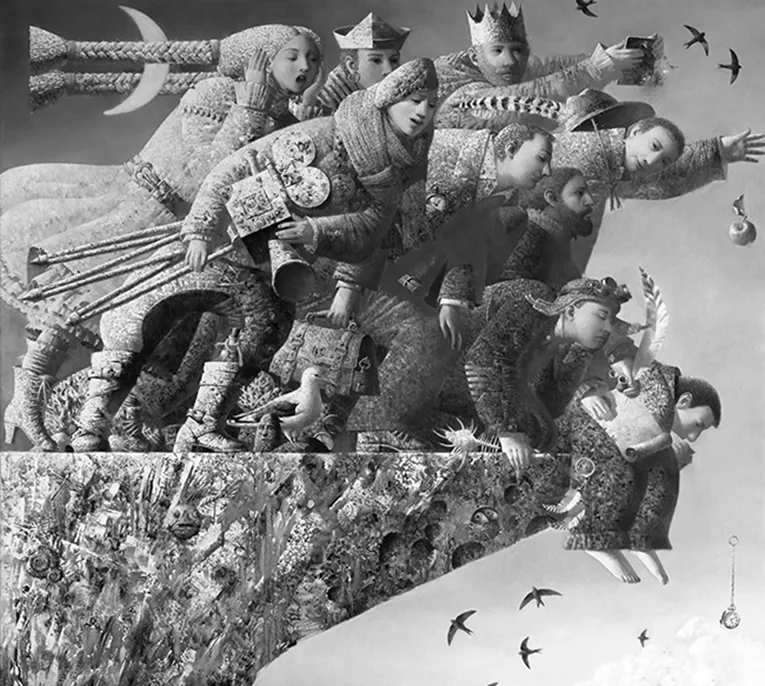
Figure 1.1 “Edge of the World”, Anna Berezovskaya (2015).
This opening chapter was written in the midst of the global Covid-19 pandemic and a world-in-crisis. A time in human history that growing numbers of people, myself included, see as presaging world civilisational collapse. It is in this context that we must now begin to rethink, along with so much else, our critical stance to peace and conflict reporting. An image for our times helps. “Edge of the World”, by the Russian artist Anna Berezovskaya, is a wonderful painting rendered in the artist’s unique style of poetic realism. I first came across it when thinking about what I wanted to say in this chapter. “Edge of the World”, to my mind, depicts the multiple strata and dispositions of humanity now standing on the encrusted fossils of millennia and peering over the edge into the abyss of its own destruction. Amongst the fascinated voyeurs pushing forward to see over the edge, we see a cameraman – a figure symbolising perhaps today’s news media and its worryingly dislocated and detached reporting stance to a world-in-crisis.
This painting helps, then, to symbolise the perilous response of humanity to a world now in compound and probable terminal civilisational collapse. It is time to recognise how processes of peace and the waging of conflicts are not only often enmeshed in global relationships and power dynamics but also within the multiple global crises spawned by late-modern, globalised world society. Global crises such as Covid-19 (as well as earlier zoonotic pandemics such as MERS, Ebola and Avian Flu), climate change, ecological despoliation, mass extinction, biodiversity loss, financial crashes, forced migration, food and water insecurity, humanitarian disasters and numerous conflicts and new wars are not adequately conceived for the most part as “isolated” or “one-off” events, even if the truncations of the news media would have us believe that they are. They are, in fact, the endemic outcomes and, collectively, presage the likely endgame of a globalised world-in-crisis.
How global crises are defined, dramatised and deliberated on the media stage, how they are signalled, symbolised and sensationalised, and how they are denied and dissimulated or simply ignored and rendered invisible, proves critical. The stakes could not be higher given the catastrophic consequences of combined global crises now impacting on the world’s ecology and all life forms on planet earth, including human society. Media and communications, as we shall explore, are intimately involved in the conflicts and divisions produced or exacerbated by global crises as well as the enactments and demands for peace, including those for social and environmental justice.
Today’s news media, for example, can signal to the world the known signs of inter-communal and imminent atrocity (whether increased human rights abuses and killings or the rise of political and media hate speech) (Cottle, 2019b), and they variously represent conflicts, legitimise wars and demonise enemies (Allan and Zelizer, 2004; Cottle, 2006; Tumber and Webster, 2006; Hawkins, 2008; Robinson et al., 2017). And they do so through the established prisms of mainstream “war journalism” or, sometimes at least, inflected by the growing advocacy for “peace journalism” (McGoldrick and Lynch, 2005). So too can media and journalism perform and enact peace when helping to publicise peace initiatives, perhaps modulating between media silence when conflict protagonists confer behind closed doors and then media scrutiny when peace proposals and plans are announced and debated in the media sphere (Spencer, 2004; Wolfsfeld, 2004).
The different genres of media and forms of journalism also potentially provide a cultural and political forum for post-conflict reconciliation in traumatised societies and the necessary deliberation of societal priorities and policies for civil-society reconstruction and peace building. How news media serve to recognise identities and issues and build and maintain peaceful relations within and between complex, culturally diverse, and always conflicted societies also proves critical in increasingly mediated societies (Hoffmann and Hawkins, 2015; Hamelink, 2020). These and the myriad other ways in which media and communications enter into the world’s conflicts and desires and demands for peace, now need I suggest, to be situated in the global contexts of today’s world-in-crisis and global media ecology. This is the subject of this chapter.
When writing for a new book, it is a usual expectation that the author desists from making too many remarks that would confine the book’s interest to the time of writing and publication. Such is the fear of dating books too early and thereby compromising future sales – a practice well understood it seems by both publishers and academics. As I write this in the midst of the 2020 Covid-19 global pandemic however, it is necessary I feel to challenge this convention by situating what I have to say firmly in the present – albeit a present that is now peculiarly pregnant with the future of how things will be. A future, moreover, that threatens to generate and exacerbate conflicts around the world, and which will demand enhanced communications for peace.
As I submit this chapter, the global pandemic has given rise to over 123 million cases and officially caused over 2,716,275 registered deaths around the world (Johns Hopkins Coronavirus Resource Center, 2021). Given the different counting systems in different countries, inaccuracies and distortions of data collection and the invisibility of so many deaths, including those in remote places, these figures are destined to remain a gross under-estimate of the true number of deaths and cases. As well as deaths and illness, however, Covid-19 has brought economic devastation and financial hardship to millions of people and impacted markets and jobs worldwide (as well as creating new economic opportunities for a few). It has changed everyday lives and life-chances, including restricted access to medical provision for serious non-Covid medical conditions and affecting people’s sense of wellbeing. For many it has fundamentally altered how they work, travel and socially interact. And for those in precarious forms of employment such as the arts, music and creative industries more broadly, it threatens their long-term viability as public forms of cultural expression. Sporting events and recreational pursuits have also been impacted. And so too has Covid-19 led to changes in governance, spawned political crises and become the vector for various longstanding struggles and conflicts surrounding issues of inequality, racism and social exclusion.
Covid-19, with all its multiple impacts and ramifications for human society in the twenty-first century, cannot, however, only be interrogated in its own parameters. As the spread and trajectory of Covid-19 unfolds globally so it also becomes entangled in other pressing global crises, and indeed there is evidence to suggest, as we shall hear later, that its origins and subsequent trajectory are both expressive of and now exacerbating our world-in-crisis. Covid-19 is emblematic of a global order in serious disarray and it is a wakeup call to recognise the now interacting and devastating impacts of human civilisation on the planet, its eco-systems and conditions of human life. This fundamental recognition of the compound nature of global crises that renders today’s world a world-in-crisis challenges us to renew our thinking about the nature of many contemporary conflicts and peace processes in the twenty-first century, as well as how news media and communications enter into and condition their unfolding over time and space. In order to better understand the roles and responsibilities, the discourses and deficiencies of today’s news media, and what is problematic as well as productive in respect of peace and conflict reporting, we will need to situate such processes in a global context, a context characterised by accelerating, mutually compounding global crises and a world economic system that rapaciously pursues environmentally unsustainable economic growth.
Of course, global crises play out differently in different countries and in and through different political and media systems, including those countries now experiencing democratically retrogressive and repugnant assertions of national authoritarianism and populism. But there should be no mistaking the fundamentally globalised nature of the risks and catastrophes engendered by contemporary human society, and which are now consequentially bound up in processes of peace and conflict. We live on a globalised planet, a planet where human society for the most part appears to be economically embarked on an unsustainable path of downward ecological despoliation and destruction and which is destined to generate accelerating, deepening and mutually enfolding global crises – a fertile ground for the exacerbation of social inequality, political division and violent conflicts. As students and scholars of conflict and peace reporting we need to broaden our field of vision and recalibrate our research foci if we are to keep pace with the changing world realities that condition both life-chances and indeed the chance of collective life itself on our negatively inflected, globalised planet.
In the rest of this chapter, I elaborate on these claims and seek to explicate what this means for the study of conflict and peace reporting more specifically. First, we consider the nature of today’s global crises, their conceptualisation and theorisation, and how compounded they constitute a world-in-crisis. This needs to inform our understanding of conflicts and peace processes in the contemporary world as well as how they become reported in the world news ecology. Second, we turn to this global media ecology and examine how it variously constitutes and enacts global crises on the media stage and, with the help of previous studies, we reflect on some of the contingencies and complexities of global crisis reporting, including its representational deficits and communicative possibilities. An argument is made for thinking through both the ontology and epistemology of global crises and how these dimensions of what is, and how we know what is by news media, can become mutually entwined and conditioning when enacted on the news stage, including the prosecution of wars and conflicts and the pursuit of peace. Finally, we conclude by returning to the global crisis of Covid-19 and reflect on how and why this is paradigmatic of our world-in-crisis. Here we consider research agendas that can help to critically illuminate both reporting deficits as well as journalism’s communicative and democratising promise in a world of human-induced and compounded global crises. The world of journalism I suggest, is positioned to perform a crucial, possibly pivotal role in wider processes of public recognition and political mobilisation in respect of the accelerating and intensifying global crises that now confront humanity and threaten the world’s ecosystems. It is, therefore, imperative that communication and media researchers better understand how journalism not only represents our world-in-crisis but also enacts it and could yet constitute it as an object for political engagement and urgent world-wide response.
From global crises to a world-in-crisis
We can only begin to properly understand some of the most devastating conflicts and catastrophes spawned by the contemporary world when these are seen as manifestations of the endemic problems generated by world society. It is incumbent on us, as researchers and students of media and communications, therefore, to try to better understand both the ontology of global crises today and their epistemological rendition in the news media, as well as how both mutually condition each other over time and across space (Cottle, 2009a, 2011a, 2019a). This approach has informed my studies of different conflicts and disasters over recent years including, amongst others, (un)natural disasters (Cottle, 2009b, 2014), humanitarian emergencies (Cottle and Cooper, 2015), new wars (Cottle, 2009b), a...
Table of contents
Cover
Half Title
Series Page
Title Page
Copyright Page
Table of Contents
List of contributors
Acknowledgements
Introduction: Reporting on processes of peace and conflict
1. Peace and conflict reporting in a world-in-crisis
2. Obstacles for critical journalism in the security policy sector: Revisiting peace journalism
3. Peace and conflict journalism: An African perspective
4. Resolution, resistance, resilience: Covering the conflict in South Sudan
5. The Rohingya refugee in the Bangladeshi press
6. How our rage is represented: Acts of resistance among women photographers of the Global South
7. Citizen journalism: Is Bellingcat revolutionising conflict journalism?
8. The new frontline: Women journalists at the intersection of converging digital age threats
9. Creating capacity for peace: The power of news and civil norm building
10. Covering conflict: Safety, sanity and responsibility
Index
Trusted by 375,005 students
Access to over 1.5 million titles for a fair monthly price.
Study more efficiently using our study tools.
Frequently asked questions
Yes, you can cancel anytime from the Subscription tab in your account settings on the Perlego website. Your subscription will stay active until the end of your current billing period. Learn how to cancel your subscription
No, books cannot be downloaded as external files, such as PDFs, for use outside of Perlego. However, you can download books within the Perlego app for offline reading on mobile or tablet. Learn how to download books offline
We are an online textbook subscription service, where you can get access to an entire online library for less than the price of a single book per month. With over 1.5 million books across 990+ topics, we’ve got you covered! Learn about our mission
Look out for the read-aloud symbol on your next book to see if you can listen to it. The read-aloud tool reads text aloud for you, highlighting the text as it is being read. You can pause it, speed it up and slow it down. Learn more about Read Aloud
Yes! You can use the Perlego app on both iOS and Android devices to read anytime, anywhere — even offline. Perfect for commutes or when you’re on the go. Please note we cannot support devices running on iOS 13 and Android 7 or earlier. Learn more about using the app
Yes, you can access Insights on Peace and Conflict Reporting by Kristin Skare Orgeret in PDF and/or ePUB format, as well as other popular books in Languages & Linguistics & Journalism. We have over 1.5 million books available in our catalogue for you to explore.