The second edition of this well-regarded volume explores the societies of the Middle East and North Africa. Presenting original studies written by the world's leading MENA scholars, it sheds light upon the organizing structures, human vulnerabilities, and dynamic forces that propel social change among the peoples of the Arab world, as well as Israel, Turkey, and Iran. The volume can be used in conjunction with The Government and Politics of the Middle East and North Africa textbook for a comprehensive overview of the region.
Carrying over from the previous edition, among the rich topics covered are agriculture, urbanization, development, identity, citizenship, gender, religion, civil society, the environment, and youths. This second edition adds two new chapters on refugees and public opinion, as each constitutes a crucial part of the region's social and cultural context. This edition also updates existing chapters to account for the latest events and trends, including the COVID-19 pandemic, popular protests, and demographic growth.
Written in an accessible way, the chapters are clearly structured and contain insightful analysis, memorable case studies, illustrative photographs, and visualized data that illuminate the contours of social life across this diverse region. Each chapter also ends with curated questions for discussion, followed by annotated bibliographies to help spark further research to encourage seamless adoption into classrooms.
In 2020–21, the Middle East and North Africa (MENA) was struck by the COVID-19 pandemic, which in the region infected millions and contributed to over 100,000 deaths. Understandably, global news about this crisis focused upon politics, with an endless stream of virtual workshops and press conferences wondering whether governments and leaders were enacting effective containment measures and if they could distribute treatments and vaccines in a timely fashion. Yet often overlooked was how the crisis also upended the daily routines of many people, forcing many to find new coping strategies amidst pressing circumstances. As economic growth halted and poverty worsened, people faced the heroic task of how to navigate public life incapacitated by draconian lockdowns in some places and ongoing conflicts in others.
Like all crises, the COVID-19 pandemic will fade over time. However, it leaves behind a crucial lesson. The ordinary pursuit of dignified livelihoods was, and remains, a resounding theme of social life in the MENA. And in historical perspective, it is a never-ending story, one whose twists and turns invite closer inspection. For much of the region, the Arab Spring of 2011–12 represented a watershed moment in recent memory, when popular uprisings shook the bulwarks of authoritarian order; its aftershock produced another unexpected cascade of mass mobilization during 2018–19.
It is this human terrain that forms the subject of this book. This volume emphasizes not the governments and rulers of the MENA but rather how regional societies are changing, adapting, surviving, and thriving amidst a context of eclectic challenges. Dismounting from the throne of politics, it engages the ideational and material currents that swirl across the communities and populations of the region. It explores those societies through their constraining structures, human vulnerabilities, and forces for change.
Three vignettes
Before introducing the topics of this volume, consider three windows illuminating social life within very different communities in the contemporary MENA.
In September 2015, hundreds of Lebanese youths converged upon the Ministry of the Environment. Dozens occupied the offices inside, while the rest congregated outside demanding the resignation of its officials. The flashpoint culminated months of protests and remonstrations among those living in Beirut and Mount Lebanon, due to a massive pile-up of garbage and waste – the result of inadequate disposal facilities, overpaid collection contracts, and the lack of any regulatory framework. Led by the #YouStink campaign and bolstered by other networks of activists, lawyers, and environmentalists, the new movement soon directed its energies upon the slew of new problems that arose in reaction to the rubbish overflow, among them proposed incinerators trading ground rubbish for air pollution, moribund recycling projects, and endemic corruption. While this upswell would be subsumed by the larger anti-government protests that began in 2019, this curious episode puzzled outsiders at the time. In a country grappling with a million Syrian refugees, the painful legacy of internecine war, and political paralysis between Hizbullah and other sectarian forces, why the concern over beach litter and landfills?
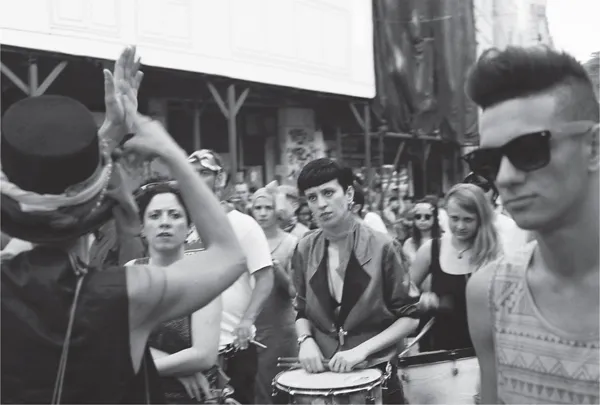
In summer 2019, authorities in Istanbul cancelled the city’s LGBT parade for the fifth consecutive year. LGBT orientation was never a crime in Turkey, and Istanbul had for some time hosted the largest pride march in the Muslim world (Photo 1.1). Yet hundreds nonetheless rallied to the street, their efforts to highlight discrimination against the LGBT community triggering suppression and intolerance by the police. The struggle to redefine the boundaries of morality for Turkish youths extended also to women. Years earlier, Turkish women’s rights movements captured public attention by critiquing a new marriage law which allowed Muslim clerics to conduct civil ceremonies. Some argued this would open the door for child marriages and polygamy, while defenders noted that Turkey was joining other countries in allowing faith-based communities to oversee marriages – including Israel, where legal marriages can only be performed by religious authorities. Much like the LGBT community, women’s bodies and rights became battlegrounds for social contestation; different ideological and social currents, from Islamists and conservatives to liberals and secularists, all contributed to vociferous debates. How would society ever find consensus on such divisive issues?
Photo 1.1 Istanbul’s LGBT pride march, 2015.
Source: Photo by Kiro Potkin, Flickr; licensed under CC BY-SA 2.0.
In March 2020, authorities in Jordan began an emergency lockdown in response to the COVID-19 pandemic. Well throughout the next year, the government and army enforced various decrees to shelter at home, halt all travel, and restrict public activities. These measures disrupted lives and threw the economy into a lurch, with more than a third of Jordanians losing their jobs or significant income. Yet they most acutely upended the lives of the nearly 750,000 Syrian refugees residing in the kingdom. Displaced from the neighboring Syrian civil war, most refugees had long left their camps to settle in urban areas like Amman. Well before the pandemic, they faced steep challenges in accessing health care, secure housing, and stable incomes. The lockdowns added new difficulties. Most refugees could not work remotely for jobs in construction, hospitality, and retail; neither could their children fully participate in remote learning after schools closed, as not all had steady electricity or computers. However, travel restrictions meant that leaving Jordan was impossible – and even if they could, the ongoing violence and repression of Syria made returning there unpalatable. Already on the edge of precarity, how could the refugees of Jordan endure this latest crisis?
The stories embodied in these illustrations of social life are meaningful. Lebanese youths became impassioned about pollution on their beachfront, despite the geopolitical chaos unfolding around their country; for them, the environment and urban planning became a flashpoint of absurdity, desire, and struggle. In Turkey, LGBT groups and women demanded greater equity and protections amid economic difficulties and political controversy; for them, triumph was measured by whether they subjectively felt free and safe over their own corporeal existence. In Jordan, citizens and refugees alike wondered about how they would fare as much of the country ground to a standstill, with refugees in particular caught in dire straits. For them, the pandemic exacerbated an overall sense of powerlessness, one that magnified preexisting problems of unemployment, mobility, and participation.
These vignettes, and thousands of other stories that could be taken from among the well over 500 million people living among the region’s nearly two dozen countries, are vivid slices of social life. They are no less authentic to the Middle East than what usually crowds global headlines: a terrorist group declares a caliphate, civil wars consume battlefields, mass protests fill teeming streets, political leaders sign peace treaties or declare war, and so forth. Occasionally, human interest stories enter the Western media stream – the opulent decadence of kings and sultans, for instance, or the pastel dunes of a touristic locale. But frustratingly, audiences around the world are more likely to gaze upon morbid snapshots and geopolitical earthquakes, not the social undercurrents that shape how most people live.
This is problematic for several reasons. First, it gives a distorted lens to curious readers who wish to explore the MENA. The problem is not that we should ignore headline-grabbing events; it is that they make us forget how there are other things happening to communities, too, and those other things are worthy of engagement. Most residents of the region, after all, are not politicians, soldiers, militants, ideologues, and revolutionaries. These are focal categories that tell us much about the rise and fall of governments and states, but they do not represent the mosaic overlaying the region’s societies. That mosaic is filled not just with the declaratives of governments but also with the mundane actions of individuals and groups that are seldom glorified: the seasonal olive harvest for Jordan Valley farmers, the daily production benchmark at a Kuwaiti oil well, queuing for ticket releases at Morocco’s music festi...
Table of contents
Cover
Half Title
Title
Copyright
Dedication
Contents
List of maps, figures, tables, boxes, and photos
List of contributors
Preface
Chapter 1 Bringing society back in
Part I Societal structures: the rural–urban divide, social mobilization, and identities of the region
Part II Societal vulnerabilities: economic development, rentierist legacies, environmental challenges, and refugees
Part III Societal forces: religion and faith, women and gender, the youth generation, and public opinion
Index
Trusted by 375,005 students
Access to over 1.5 million titles for a fair monthly price.
Study more efficiently using our study tools.
Frequently asked questions
Yes, you can cancel anytime from the Subscription tab in your account settings on the Perlego website. Your subscription will stay active until the end of your current billing period. Learn how to cancel your subscription
No, books cannot be downloaded as external files, such as PDFs, for use outside of Perlego. However, you can download books within the Perlego app for offline reading on mobile or tablet. Learn how to download books offline
Perlego offers two plans: Essential and Complete
Essential is ideal for learners and professionals who enjoy exploring a wide range of subjects. Access the Essential Library with 800,000+ trusted titles and best-sellers across business, personal growth, and the humanities. Includes unlimited reading time and Standard Read Aloud voice.
Complete: Perfect for advanced learners and researchers needing full, unrestricted access. Unlock 1.5M+ books across hundreds of subjects, including academic and specialized titles. The Complete Plan also includes advanced features like Premium Read Aloud and Research Assistant.
Both plans are available with monthly, semester, or annual billing cycles.
We are an online textbook subscription service, where you can get access to an entire online library for less than the price of a single book per month. With over 1.5 million books across 990+ topics, we’ve got you covered! Learn about our mission
Look out for the read-aloud symbol on your next book to see if you can listen to it. The read-aloud tool reads text aloud for you, highlighting the text as it is being read. You can pause it, speed it up and slow it down. Learn more about Read Aloud
Yes! You can use the Perlego app on both iOS and Android devices to read anytime, anywhere — even offline. Perfect for commutes or when you’re on the go. Please note we cannot support devices running on iOS 13 and Android 7 or earlier. Learn more about using the app
Yes, you can access The Societies of the Middle East and North Africa by Sean Yom in PDF and/or ePUB format, as well as other popular books in Social Sciences & Middle Eastern Politics. We have over 1.5 million books available in our catalogue for you to explore.