![]()
Chapter One
Political motivation…The influence of Debord, Vaneigem…
The Strasbourg scandal…Nanterre, the May events
IN HIS STRUGGLE to make some sense of the Carr bomb attack Habershon had the Special Branch to help him, to point him in the right direction. He had a lot of questions: just what kind of person would want to let off a bomb outside the home of a Cabinet minister? Where were they from? What were their politics? The Special Branch had very few of the answers. They did know of the existence of something called the Angry Brigade through communiqués the group had sent to the underground press in the previous month. But they had tended to dismiss them as cranks. Not any more though. The Carr bombs had made sure of that.
So, again, who were they? Was this the beginning of something big: the Revolution, perhaps, that some people had been predicting for so long? The Angry Brigade were certainly no part of the traditional trade union movement, despite the timing of their attack on the Employment Minister. Nor did they belong to any of the known political groupings. Special Branch informants right and left came up with nothing. If anything, the answer seemed to lie somewhere in a youthful, vaguely anarchistic circle so far unfamiliar to the security authorities. But how to identify it? The only slight clue was in an Angry Brigade communiqué already in the possession of the police which appeared to be a list of targets: “High Pigs, Judges, Embassies, Spectacles, Property.” It was the word “Spectacles” that took the eye of one Special Branch Sergeant in particular. He decided to find out precisely what it meant, and to try to put it into its social and political context.
Through reading pamphlets, articles and by talking to his contacts in the anarchist world, the Sergeant soon discovered that the word “Spectacle” was a concept, emblem almost, of a group who called themselves Situationists. Two men were largely responsible for the ideas behind “Situationism”—Raoul Vaneigem and Guy Debord. They took as a starting point the belief that the traditional working-class movement started by Marx and Bakunin in the nineteenth century had been defeated over the years, in the East by the Bolsheviks and in the West by the bourgeoisie. Organisations that were supposed to act on behalf of the workers—thetrade unions and political parties had sold out to world capitalism. More than that: capitalism could now take over, “appropriate”, even the most radical ideas and “return” them safely against the workers in the shape of harmless ideologies, like socialism or communism.
To remedy all this, in 1957 a group called the Situationist International, mainly artists, architects, intellectuals, set out to develop a new way of looking at, of interpreting, society. It was as part of this process that Debord developed his theory of the Spectacle. He argued that through computers, television, transport and other forms of advanced technology capitalism could control the very conditions of existence. This led to what Debord called the Society of the Spectacle. The world we see is not the real world, it is the world we have been conditioned to see. Life itself has become a show contemplated by an audience and that audience is the proletariat, whom he defined as anyone who had no control over the conditions of his existence. Reality was now something we merely looked at and thought about, not something we experienced.
Anarchist specialist: Detective Sergeant Roy Cremer, Metropolitan Police Special Branch.
The net effect of all this, because we have been brainwashed into substituting material things for real experience, was alienation, the separation of person from person. But Debord observed that sometimes the various methods used by the Spectacle to keep people apart—mass culture, commodities, advanced consumer goods—did not work. On the West Coast of the United States for example, thousands of young Americans had questioned the roles allotted to them by society.
They had run away from middle class, middle morality, middle America and hidden in the anonymous tenements of Haight Ashbury in San Francisco. Another unconscious revolt against the Spectacle came with the riots in the Los Angeles suburb of Watts in 1965. Thousands of coloured Americans burnt down their own homes and smashed local shops and factories. To Debord these two incidents were evidence of the Spectacle’s vulnerability. It could be defeated, but not without real difficulty because it had yet another weapon at its disposal, “Recuperation.”
To survive, the Spectacle had to have social control. Recuperation was the way it attained it. Bourgeois society was able to “recuperate” a situation, or resist any challenge to itself, by shifting its ground, by creating new roles and cultural forms. One way of doing this was by encouraging “participation.” People were to be allowed a greater say in “the construction of the world of their own alienation.” Experimental life-styles were turned into a commodity. Even supposedly rebellious ways of living like the hippies in San Francisco were eventually packaged for cultural consumption. Another method the recuperators used was to deliberately inculcate a nostalgic yearning for the past, keeping people happy by encouraging them to follow the fashions of the twenties, the thirties or the fifties.
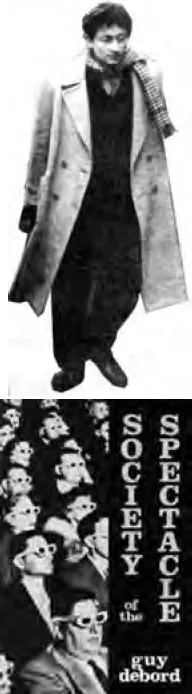
Situationist: Guy Debord and his book Society of the Spectacle.
But if this sort of measure failed and anyone decided to reject the materialist values offered by the recuperators, then they had a way of coping with that, too. People bored with the mere possession of things were encouraged to possess experiences, through carefully controlled leisure industries and package tours.
The Spectacle not only filled people’s time, though, it occupied their environment as well, with something the Situationists defined as “urbanism.” That had come about when the recuperators realised that people would no longer accept, and were beginning to resist, the damage the growth of the Spectacle, industry, was doing to their physical surroundings. Haphazard, disordered urban sprawl was replaced by more “manageable” structures—the factory town, the supermarket. Huge tracts of land were developed solely for the purpose of work and profit, with no regard for the real needs of the people forced to live there.
Urbanism also maintained the class system, and class power, by deliberately keeping the workers apart in “little boxes,” in isolation. “New architecture, traditionally reserved to satisfy the ruling class, is, for the first time, directly aimed at the poor…the mass character of housing leads to formal misery.”
The answer to urbanism specifically was the reconstruction of the entire territory according to the needs of the people. The answer to modern society generally was to be nothing less than The Revolution of Everyday Life— the title of one of Vaneigem’s books.
Unlike most leftist groups, the Situationists were not interested in improving society as it exists at the moment, but in putting something new, and better, in its place:
To make the world a sensuous extension of man rather than have man remain an instrument of an alien world, is the goal of the Situationist revolution. For us the reconstruction of life and the rebuilding of the world are one and the same desire. To achieve this the tactics of subversion have to be extended from school, factories, universities, to confront the “Spectacle” directly. Rapid transport systems, shopping centres, museums, as well as the various new forms of culture and the media must be considered as targets, areas for scandalous activity.
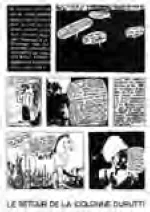
The Return of the Durruti Column: First published by Strasbourg students in October 1966 and later distributed in Nanterre.
So without political parties, hierarchies of any sort, or the mere transfer of power from one ruling elite to another, the Situationist revolution held out the prospect of the total transformation of the world just when capitalism and communism seemed to have carved it up between them. By taking for themselves a bit of Marxist theory, anarchist practice, by “appropriating” the ideas of modern sociology, and by refusing absolutely to compromise with the ideologies and organisational forms of the old world, the Situationists offered thousands of young people brought up in the affluence of Western societies an attractive cause, and an opportunity to get out and do something about it.
By 1966, with The Society of the Spectacle and The Revolution of Everyday Life behind them, the Situationists were ready to become a social force. They began to look round for opportunities to “intervene” in existing radical situations, with the idea of speeding up the revolutionary process. The first chance they got was at Strasbourg University late that same year.
Few students in Europe were more apathetic than the seventeen thousand or so at Strasbourg. They were largely middle class, destined forjobs in the professions, science and technology, not much interested in politics, though the student union was controlled by a committee of conventional left-wingers.
At the start of the autumn term, five Situationists got themselves elected to the union leadership and immediately started to “scandalise” the authorities. They founded a Society for the Rehabilitation of Karl Marx and Ravachol, the nineteenth century anarchist. They plastered the walls in the streets with a Marxist comic strip, and eventually announced that they were going to dissolve the union itself once and for all. But what angered the city fathers and the university authorities most was their “misuse” of union funds. They spent £500 on the printing and distribution of ten thousand Situationist pamphlets: its full title was: Of student poverty considered in its economic, political, psychological, sexual, and particularly intellectual aspects, and a modest proposal for its remedy.
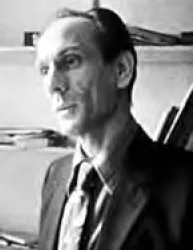
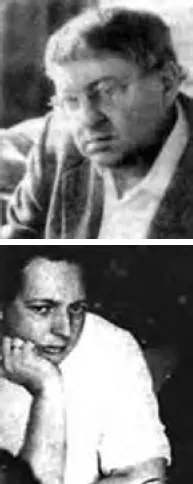
Situationists: An older Guy Debord (top) and Raoul Vaneigem (bottom).
The pamphlet, which amounted to a Situationist manifesto, began with a slashing attack on present student attitudes. Students, it claimed, were directly subservient to the two most powerful systems of social control—the family and the State. “He is their well-behaved and grateful child, and like the submissive child he is over eager to please. He celebrates all the values and mystifications of the system, devouring them with all the anxiety of an infant at the breast.”
The student’s whole life, the pamphlet continued, is beyond his control, and for all he saw of the world he might as well be on another planet:
Every student likes to feel he is a bohemian at heart, but he clings to a false and degraded version of individual revolt. His rent-a-crowd militancy for the latest good cause is an aspect of his real impotence. He does have marginal freedom, a small area of liberty which has escaped the totalitarian control of the spectacle. His flexible workinghours give time for adventure and experiment. But he is a sucker for punishment, and freedom scares him to death. He feels safer in the strait-jacketed space-time of the lecture hall and the weekly essay. He is quite happy with the open prison organised for his benefit. The real poverty of his everyday life finds its immediate compensation in the opium of cultural commodities. He is obliged to discover modern culture as an admiring spectator. He thinks he is avant garde if he’s seen the latest Godard or “participated” in the latest happening. He discovers modernity as fast as the market can provide it. For him every rehash of ideas is a cultured revolution. His principal concern is status and he eagerly snaps up all paperback editions of important and difficult texts which mass culture has filled the book store with. Unfortunately he can’t read, so he devours them with...