- English
- ePUB (mobile friendly)
- Available on iOS & Android
Dental Trauma at a Glance
About this book
The market?leading at a Glance series is popular among students and newly qualified practitioners for its concise and simple approach and excellent illustrations.
Each bite?sized chapter is covered in a double?page spread with clear, easy?to?follow diagrams, supported by succinct explanatory text.
Covering a wide range of topics, books in the at a Glance series are ideal as introductory texts for teaching, learning and revision and are useful throughout university and beyond.
Everything you need to know about Dental Trauma ⌠at a Glance!
Written in a short and concise manner, Dental Trauma at a Glance is a practical reference that contains essential information on the safe and effective clinical management of acute adult dental trauma injuries.
The book addresses the numerous types of adult dental injuries and contains guidance on how the correct identification and treatment of these injuries can be time sensitive. Filled with helpful illustrations and photographs, the text is formatted in a step-by-step manner for the reader to arrive at the correct diagnosis and the most up-to-date management for safe and optimum patient care.
- Provides the most contemporary must-have information for the clinical management of acute adult dental trauma
- Its format is quick and easy to use
- Offers a highly illustrated text with quality clinical photographs to aid with learning and revision
- Provides an understanding of traumatic adult dental injuries, their healing and an insight into their longer-term sequelae
A new addition to the popular at a Glance series, Dental Trauma at a Glance is an indispensable hands-on guide for dental students and general dental practitioners.
Accompanied by a companion website at www.wiley.com/go/alani/dental_trauma featuring:
- Multiple-choice questions to aid learning
- All figures from the book as downloadable PowerPoint slides
Frequently asked questions
- Essential is ideal for learners and professionals who enjoy exploring a wide range of subjects. Access the Essential Library with 800,000+ trusted titles and best-sellers across business, personal growth, and the humanities. Includes unlimited reading time and Standard Read Aloud voice.
- Complete: Perfect for advanced learners and researchers needing full, unrestricted access. Unlock 1.4M+ books across hundreds of subjects, including academic and specialized titles. The Complete Plan also includes advanced features like Premium Read Aloud and Research Assistant.
Please note we cannot support devices running on iOS 13 and Android 7 or earlier. Learn more about using the app.
Information
1
Risk factors for dental trauma


Introduction
Oral predisposing factors
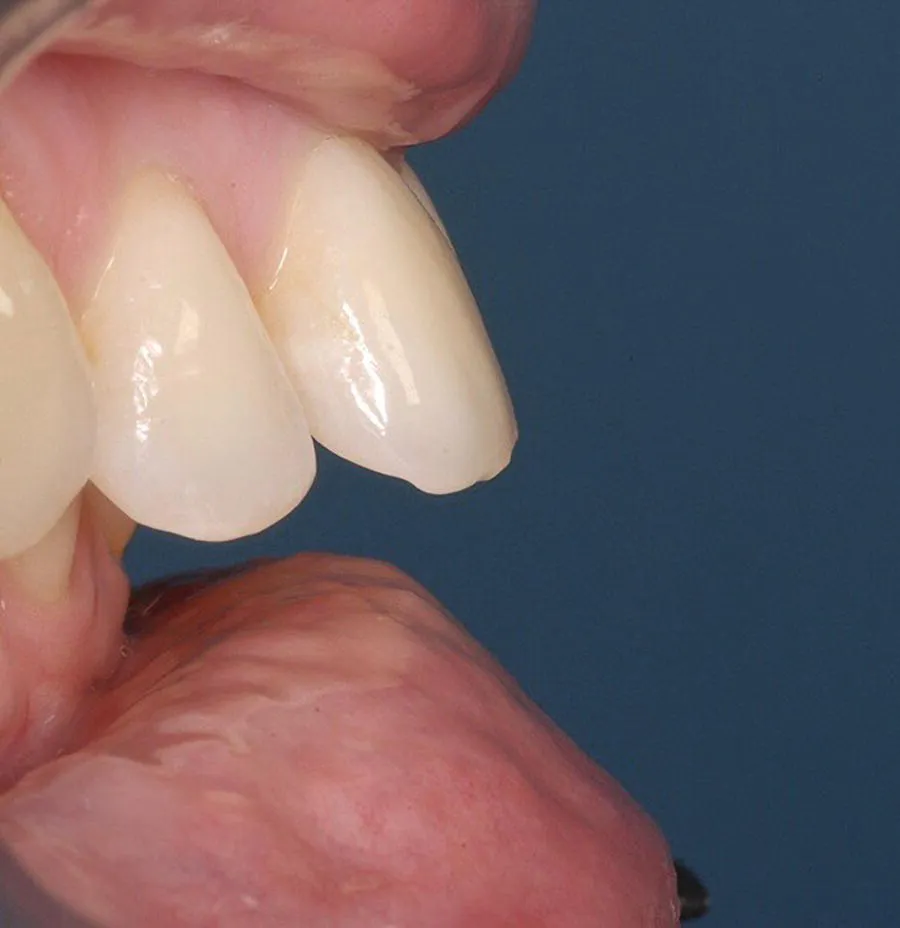
- Patients with an overjet of 6 mm or greater (Figure 1.1).
- Lip incompetence (Figure 1.2).
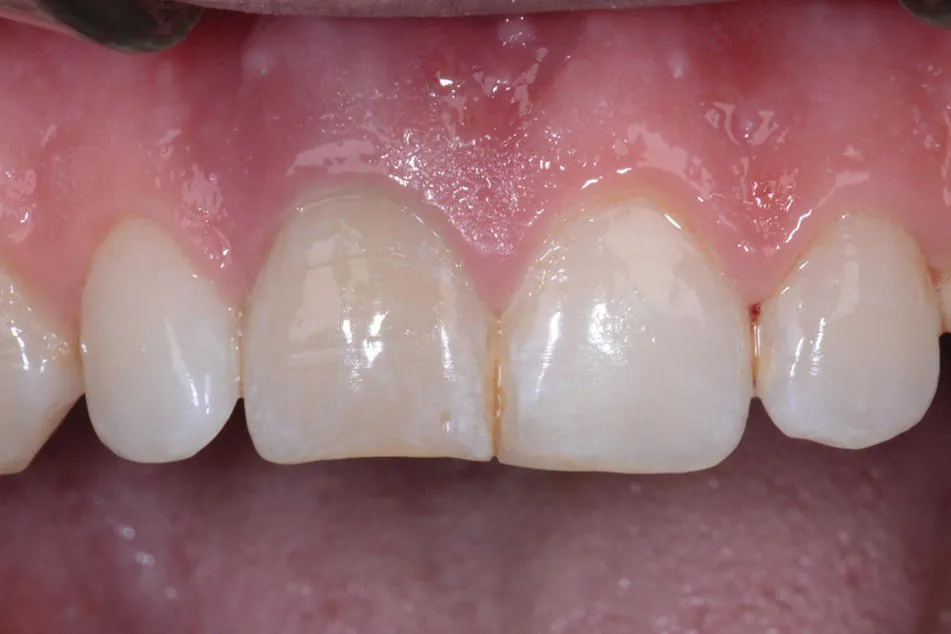
- Protruding upper anterior teeth.
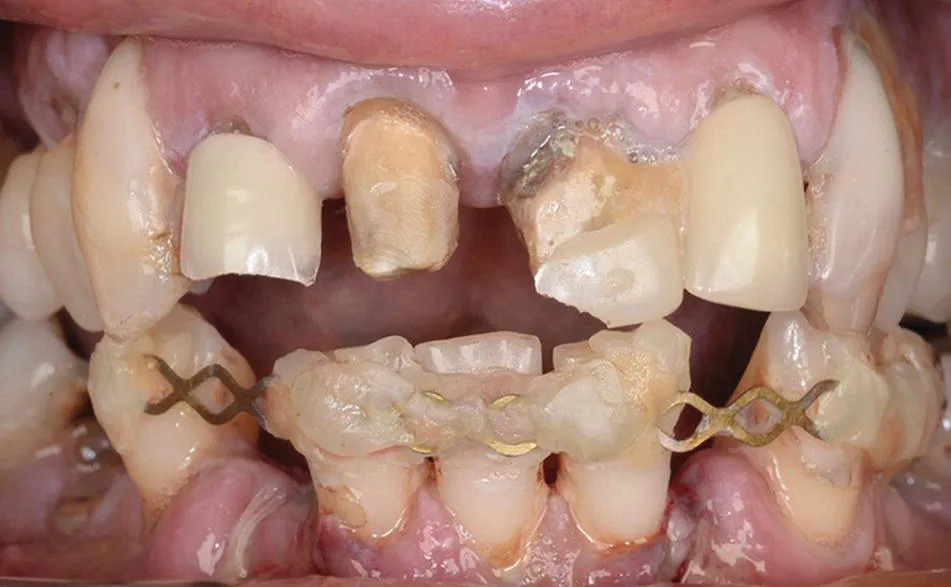
- Patients with residual dental disease, such as heavily restored teeth or periodontitis, are more likely to suffer greater consequences of trauma than those with otherwise intact healthy dentitions (Figure 1.3).
Unintentional traumatic dental injuries
- Formulates a large cohort of dental injuries.
- Patients prone to falling over due to medical conditions or those that may be at a greater risk due to seizures such as epilepsy may present multiple times throughout their lives.
- Sports that involve projectile equipment such as hockey, cricket, or football are also at a greater risk. Ice hockey has been shown to have the highest prevalence of all sports.
- Contact sports such as boxing and martial arts also carry an increased risk. Nonâcontact sports such as gymnastics, horse riding, and athletics also represent a risk.
Socioeconomic factors
- There is some evidence that shows areas with greater deprivation have a higher prevalence of trauma.
- Densely populated areas also show a greater prevalence.
Human behaviour
- Patients who take risks with their physical safety are at a greater risk of dental trauma (Figure 1.4).
- Situations of greater interpersonal difficulty such as being bullied have a higher risk of dental trauma.
- Patients who are hyperactive, such as those with Attention deficit hyperactivity disorder or ADHD, are at a greater risk of dental trauma.
- Inappropriate use of teeth such as the opening of bottles or beverages also has a higher risk of dental trauma.
Learning difficulties or physical...
Table of contents
- Cover
- Table of Contents
- Title Page
- Copyright Page
- Dedication Page
- Foreword
- Preface
- About the companion website
- 1 Risk factors for dental trauma
- 2 Prevention of dental trauma
- 3Essential armamentarium
- 4Examination of dental trauma
- 5Infraction
- 6Enamel fracture
- 7Enamelâdentine fracture
- 8Enamelâdentineâpulp fracture
- 9Crownâroot fracture
- 10Crownâroot fracture with pulp involvement
- 11Root fracture
- 12Alveolar process fracture
- 13Concussion
- 14Subluxation
- 15 Extrusive luxation
- 16 Intrusive luxation
- 17 Lateral luxation
- 18 Features of luxation injuries and principles of repositioning
- 19 Avulsion of a tooth with a closed apex
- 20 Principles of splinting
- 21 Postâoperative instructions
- 22 Followâup and splint removal
- 23 Indications for endodontic treatment
- 24 Sclerosis
- 25 Discolouration
- 26 Management of the immature root
- 27 Root resorption â external replacement
- 28 Root resorption â external cervical
- 29 Root resorption â internal inflammatory
- 30 Tooth replacement options
- 31 Autotransplantation
- 32 The role of orthodontics
- Appendix A: Appendix ASplinting times and follow up intervals for fracture and displacement injuries in the adult dentition
- Appendix B: Management of dental trauma in the primary dentition
- References
- Index
- End User License Agreement