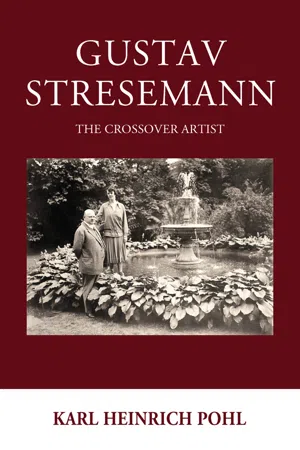
As a foreign minister and chancellor of Weimar Germany, Gustav Stresemann is a familiar figure for students of German history – one who, for many, embodied the best qualities of German interwar liberalism. However, a more nuanced and ambivalent picture emerges in this award-winning biography, which draws on extensive research and new archival material to enrich our understanding of Stresmann's public image and political career. It memorably explores the personality of a brilliant but flawed politician who endured class anxiety and social marginalization, and who died on the eve of Germany's descent into economic and political upheaval.
- 326 pages
- English
- ePUB (mobile friendly)
- Available on iOS & Android
eBook - ePub
About this book
Trusted by 375,005 students
Access to over 1.5 million titles for a fair monthly price.
Study more efficiently using our study tools.
Information
Chapter 1
A LIFE
Autobiography as Composition
My parents got married on October 20, 1903. The wedding took place in the Kaiser Wilhelm Memorial Church built in the late nineteenth century. It was followed by a most opulent reception in the “English House” of the restaurant A. Huster, 49 Mohrenstraße. . . . [The wedding meal] consisted of five courses with a choice between poultry broth and consommé, turbot and Rhine salmon, beef filet and saddle of mutton, lobster and goose liver pâté, pheasant and saddle of venison. There were also vegetables, salads, and preserved fruits in abundance. The culinary potential of our ancestors must have been impressive. After the fish and meat courses, “various ice creams in figures,” cheese rolls, and Chester cake as well as fruit and dessert followed. Beverages included sherry, Port, German and French wines from 1891, ’92, and ’93. There was also an entertainment program . . ., apart from dancing, the skit “The First Lunch” was performed.1
This might have been how the wedding of Dr. Gustav Stresemann and his wife Käte, née Kleefeld, looked in Berlin on 20 October 1903: a cheerful reception with an opulent meal and fine wines, celebrated by people from high society, with dancing and performances. In the center: Gustav S., an ambitious, intelligent, popular, and endearing young man and Käte Kleefeld, now Dr. Käte S., a young and beautiful woman with considerable private means.
This describes the image of successful festivities, documented for the private memory of family and friends, but also for contemporaries and future generations.2 There is no sign of potential discord, no hint of the insecurity of a young social climber. Bourgeois soundness, sociability, and joy dominate the narrative. It seems almost as if Wolfgang, the son, who describes the wedding of his parents with great affection, had been with them at their celebration, and had anticipated his father’s wishes, echoing them in his biography.3 To this extent, the image depicts the incarnation of the dream of a beautiful family.
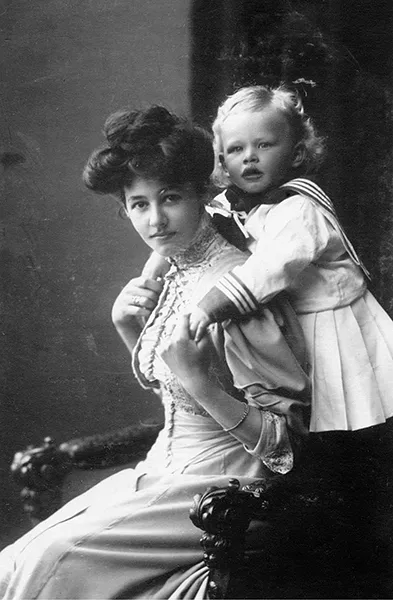
Figure 1.1. Käte Stresemann (1883–1979) with the eldest son Wolfgang (1904–1998). Photo from ca. 1907. Courtesy Politisches Archiv, Auswärtiges Amt, Berlin (PA AA).
However, Wolfgang Stresemann only used oral reports for his description,4 some information provided by Rudolf Schneider,5 Stresemann’s old confidant, as well as an invitation to his parents’ wedding. His main source was probably his parents, and primarily his father Gustav.
Therefore, many questions remain unanswered. Why did the wedding take place in Berlin rather than in Stresemann’s new home of Dresden, where he had just established himself? Who were the guests? Who paid for the reception?6 How did the two families get on, the “beer seller” and the wealthy Jewish merchant family that had converted to Protestantism? Were Stresemann’s siblings among the guests? How did Richard, the alcoholic brother, act surrounded by fine wines?7
Was everything truly rosy between the two spouses? Had the husband not been desperately in love recently, at least according to his own account—not with his wife, but with a school friend who had rejected his proposal?8 Was marrying the sister of a fraternity brother really a case of true love as conveyed at the time and later? How did the 20-year-old bride feel when she was mocked in a skit at the wedding reception for her lack of cooking skills?
The depiction raises question upon question, which clearly cannot all be answered. At any rate, an odd mixture of facts and fiction, of density and openness comes to light in their place. It can therefore be hoped that the comprehensive estate of Stresemann’s papers may be of help. Let us have a look.
Private estates are a very special kind of source material. Extreme caution is necessary because they never reflect the entire life of the protagonist, but only individual and selected aspects. This can be due to gaps in the chronology of the sources or the loss of documents. Not everything that historians today consider interesting was deemed worth keeping by the one who left the estate. Personal reasons might also play a role since the estate owner would usually only leave material behind which he wished to be known. Often, historians find only little evidence that would compromise the protagonist. It must therefore always be assumed that important events have been obscured; the way this is done perhaps provides some hints as to how the protagonist wanted to present himself to future generations.
At first glance, the estate of Stresemann’s papers does not look like a work of deliberate composition,9 seeming instead to be virtually inexhaustible and dense. The documents are meticulously organized for business and office purposes. This is no surprise given that at times three private assistants worked for Stresemann. Everything, ranging from children’s photographs to reflections made during his old age, from business letters to diplomatic secret documents, from “begging letters” to complaints lodged with authorities, seems to have been kept. Stresemann thus seems like an open book that one only has to read in order to get to know and understand everything about him.10
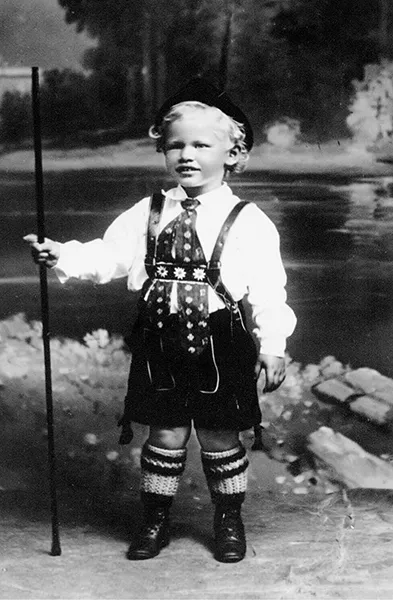
Figure 1.2. Gustav Stresemann at the age of three. Courtesy PA AA.
It is, however, a fact that large parts of this seemingly open book were written by Stresemann himself. With his estate of private documents, Stresemann left a composition of his life that aligned with his ideas and wishes: the image of a stunning rise in economics, politics, and culture.
The fact that Stresemann never wanted to keep a large number of these papers secret fuels some skepticism. From the mid-1920s, he knew his death was approaching, and his faithful secretary, Henry Bernhard, fulfilled his wish to publish important documents immediately afterwards—an extraordinary event. These documents were therefore meant for posterity and to illustrate a skillful composition.11
The estate is, first and foremost, not complete. Stresemann himself pointed out that politicians must not write down, let alone document, every important incident. For example, he criticized the Vienna central bank for documenting and even archiving discrediting and discriminating financial transactions by pointing out: “The gentlemen seem to be beginners in this area [to obfuscate matters in written remarks].” Half-ironically, he added: “Please do not put this remark on file.”12
And yet, it is difficult to substantiate that Stresemann arranged and selected certain materials for his estate because deliberately not documenting, omitting, or even suppressing written archival material can hardly be proved. To deduce an intentional strategy from blank areas is almost impossible. Nevertheless, let us try.
At first glance, it is already striking that documents about certain aspects of Stresemann’s life are missing: almost all of the archival material on Stresemann’s activities for the Association of Saxon Industrialists (Verband Sächsischer Industrieller, VSI), including his work as a legal advisor, only exists in rudimentary form.13 The comprehensive estate of the Saxon entrepreneurial dynasty of Niethammer14 can serve as a counternarrative. It shows that during this period Stresemann conducted intensive correspondence. Its analysis brings a different Stresemann into view than the one we know from his own estate: a restless and very politically and economically active man who was not always very likeable,15 an extremely ambitious young manager and politician who did not shy away from anything to climb the social ladder.16 But first and foremost, in the documents of the Niethammer estate an almost intolerable “self-opinionated brawler” comes to the fore.
There is not only a lack of source material on Stresemann as an economic manager and regional politician, but the private correspondence is also almost completely missing.17 Some of it is stored in closed stacks appeared later in his private estate. In the “official” estate, large parts of his early correspondence, family documents, various documents from his student life and his activities in the fraternity are missing, as well as those on his financial situation. In short, there is almost nothing beyond the official version of the young man, the later family father, the husband, and the wealthy bourgeois citizen, and most notably nothing on his illnesses during his adolescence.
The fact that Kurt Koszyk discovered Stresemann’s correspondence with his childhood friend Kurt Himer, which is now accessible, shows that source material of his early years does exist and thus has been deliberately omitted.18 The same is true for the letters to his wife and various other private documents that were made accessible to scholarship only later. Nevertheless, source material from the private realm is still fragmented in comparison to official documents on Stresemann the politician.19
But why is this source material missing? One might assume that Stresemann thought private documents had no place in a politician’s estate. However, the fact that fragments from his private life do in fact exist contradicts this view. Did Stresemann deliberately want to omit certain aspects of his childhood and adolescence and highlight others? What sort of image did he want to paint of himself that could have been darkened by the unpublished sources?20
It would appear—and this is one of the main theses of this account—that Stresemann wanted to create the image of a beautiful, educated, bourgeois adolescence, a straightforward life trajectory. His aim was to present the life of a sentimental, well-educated young man, eager for...
Table of contents
- Cover
- Title Page
- Copyright Page
- Contents
- Figures and Tables
- Abbreviations
- Chronology
- Introduction
- Chapter 1. A Life
- Chapter 2. The Will to Rise
- Chapter 3. Economic and Social Capital
- Chapter 4. Political Capital
- Chapter 5. A Life in Turmoil
- Chapter 6. German and European POLITICS
- Chapter 7. Afterlife
- Conclusion. The Crossover Artist
- Selected Works by Gustav Stresemann
- Bibliography
- Index
Frequently asked questions
Yes, you can cancel anytime from the Subscription tab in your account settings on the Perlego website. Your subscription will stay active until the end of your current billing period. Learn how to cancel your subscription
No, books cannot be downloaded as external files, such as PDFs, for use outside of Perlego. However, you can download books within the Perlego app for offline reading on mobile or tablet. Learn how to download books offline
Perlego offers two plans: Essential and Complete
- Essential is ideal for learners and professionals who enjoy exploring a wide range of subjects. Access the Essential Library with 800,000+ trusted titles and best-sellers across business, personal growth, and the humanities. Includes unlimited reading time and Standard Read Aloud voice.
- Complete: Perfect for advanced learners and researchers needing full, unrestricted access. Unlock 1.5M+ books across hundreds of subjects, including academic and specialized titles. The Complete Plan also includes advanced features like Premium Read Aloud and Research Assistant.
We are an online textbook subscription service, where you can get access to an entire online library for less than the price of a single book per month. With over 1.5 million books across 990+ topics, we’ve got you covered! Learn about our mission
Look out for the read-aloud symbol on your next book to see if you can listen to it. The read-aloud tool reads text aloud for you, highlighting the text as it is being read. You can pause it, speed it up and slow it down. Learn more about Read Aloud
Yes! You can use the Perlego app on both iOS and Android devices to read anytime, anywhere — even offline. Perfect for commutes or when you’re on the go.
Please note we cannot support devices running on iOS 13 and Android 7 or earlier. Learn more about using the app
Please note we cannot support devices running on iOS 13 and Android 7 or earlier. Learn more about using the app
Yes, you can access Gustav Stresemann by Karl Heinrich Pohl in PDF and/or ePUB format, as well as other popular books in Historia & Biografías históricas. We have over 1.5 million books available in our catalogue for you to explore.