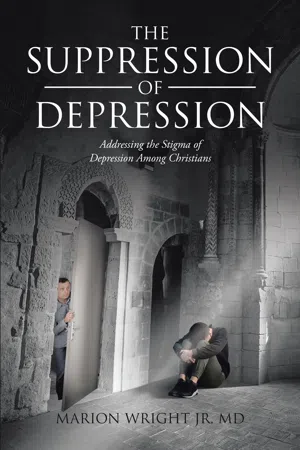
Some Christians experience a degree of internal conflict when it comes to seeking help for medical issues. On one hand, they believe in God for their healing. On the other, they acknowledge that they are dealing with symptoms and conditions that could be treated by medical professionals. The challenge then becomes reconciling their faith with their efforts to be well and healthy. From my observations, there have been great strides in Christian thinking regarding seeking help for physical health problems. However, this does not seem to be the case when it comes to mental health issues including depression. From my professional experiences as a psychiatrist and in my personal walk as a Christian, I have observed what appears to be a stigma when it comes to depression. Some Christians may believe that they should never be depressed, and if they are, it indicates some failure of their faith or weakness thereof. Some feel embarrassed about having depression and, therefore, are reluctant to seek help for it, if they do at all. They may feel that the very act of seeking professional help also indicates weakness in their faith. Therefore, they resolve to deal with depression strictly by spiritual means e.g. prayer and Bible reading. In this book, I address this stigma that exists among Christians when it comes to depression. My intention is to dispel myths about depression and to get people to understand that it is a condition to which we are all vulnerable. I also hope to increase people's understanding of God's will that we have healthy minds as well as healthy bodies. Depression need not be a condition that people deal with in silence given that there is help available for it.
eBook - ePub
The Suppression of Depression
Addressing the Stigma of Depression Among Christians
- 56 pages
- English
- ePUB (mobile friendly)
- Available on iOS & Android
eBook - ePub
The Suppression of Depression
Addressing the Stigma of Depression Among Christians
About this book
Trusted by 375,005 students
Access to over 1.5 million titles for a fair monthly price.
Study more efficiently using our study tools.
Information
Chapter 1
The Origin of Illness (An Overview)
Before attempting to discuss any specific type of illness be it physical or mental, let us first discuss some fundamentals. The word illness is defined as “an unhealthy condition; poor health” (dictionary.com). Other related terms include disease, ailment, sickness, and disorder.
If the Bible is read cover to cover, one of the first references to illness occurs in Genesis where it speaks of Pharaoh and his household being plagued as a result of him taking Sarah, Abraham’s wife, unto himself. Going back even further, we read about the punishment God imposed upon Eve after man sinned in Eden. God told Eve, “I will greatly multiply thy sorrow and thy conception; in sorrow thou shalt bring forth children” (Genesis 3:16). This implies that in creation, although God intended for man to “be fruitful and multiply,” he did not intend for the birthing process to be painful. Also, along the lines of reproduction, we read that prior to the birth of Isaac, Sarah was barren, i.e. she “bare him [Abraham] no children” (Genesis 16:1). Although some may not view this as an illness per se, it certainly can be considered a disorder in the sense that her body was not functioning normally.
Likely, the most extensive account of illness in the Bible is found in the book of Job. In these passages, there is no mention of Job’s specific diagnosis. We do know that his condition adversely affected his skin. (He had “sore boils from the sole of his foot unto his crown” (Job 2:7)). We also know that these skin lesions were so severe that they disfigured Job to the point that he was initially unrecognizable by his friends. We can also conclude that this disease was most likely fatal as Job’s wife at one point suggested that he “curse God and die.” The implication here is that she realized that God was keeping Job alive because of his loyalty. Therefore, cursing God would lead him to suffer the same fate as others who had this condition i.e. death.
One thing we can conclude from all of these examples is that illness, in general, began after the original sin occurred. Hence, we know that man’s susceptibility to disease resulted from sin into which we were all born. (In David’s prayer of repentance in Psalm 51:5, he wrote: “Behold I was shapen in iniquity; and in sin did my mother conceive me.”)
In his original state, man was physically perfect without any flaws. All of his body’s cells, tissues, and organs functioned perfectly. We also know that sin brought on death. In giving Adam the commandment not to eat of the tree of the knowledge of good and evil, God said: “…for in the day you eat thereof, ye shall surely die.”
Although we read that Adam lived to be 930 years old, his sin started a series of processes that ultimately ended in his (physical) death. Looking at death as the end of all human life, it can be thought of as a slowly progressive disease. However, a counterargument may be that since it is an inevitable part of life, death is not a disease at all but rather a natural occurrence. Many of us may know people who died of natural causes or of old age, meaning without any known diseases or health problems.
Chapter 2
What Causes Illness? (Spiritual Perspective)
To reiterate, we are all vulnerable to becoming sick because we were all born into sin. On a very basic level, this has nothing to do with actual sins committed. Even if it were possible for a person to go through life without committing a single sinful act, he/she would still have some type of illness at some point in time. We can use the very simple example of the common cold. Although I cannot prove it, I would venture to say that every human being that lives beyond its neonatal period will have at least one episode of the common cold in his/her lifetime. We know that children contract colds even before they understand the concept of sin or doing anything wrong.
The common cold is caused by the transmission of viruses that trigger responses in the body that produce symptoms such as cough, nasal congestion, and a runny nose. A person need not sin or do anything morally wrong to catch a cold as it is brought on by direct contact with others who transmit these viruses or by contact with surfaces upon which these viruses live. The basic idea is that being born into sin puts us all at risk of getting sick because this risk is present at birth.
I would be remiss not to mention that there are occasions when illness does result directly from a sinful act or actions. Again, I will use an example to illustrate. The Bible clearly labels adultery as a sin. It is listed among the Ten Commandments as something the Israelites were forbidden to do. (“Thou shalt not commit adultery,” (Exodus 20:14).) If someone were to commit adultery i.e. engage in an extramarital affair involving sexual intercourse, he/she would be at increased risk for contracting certain sexually transmitted infections (STIs).
Using human papillomavirus (HPV) as an example, it is a medical fact that women with a greater number of sexual partners are more at risk of contracting this virus than those in a monogamous relationship. Certain subtypes of this virus are believed to cause cervical cancer. Expanding our example, if a woman committed adultery, became infected with HPV, and subsequently developed cervical cancer, we could say that her disease (cancer) resulted from her sin. Of course there are other examples that could be discussed, but I will move on.
The other aspect to the spiritual cause(s) of disease or sickness is the question of who ultimately causes sickness. I contend that Satan is the culprit. If we revisit the story of Job, we see that God did not personally afflict Job. Rather, he permitted Satan to do so. Yet Satan was limited because he could not take Job’s life. We also know that in the end, God was responsible for Job’s healing (“…the Lord turned the captivity of Job when he prayed for his friends…” (Job 42:10)).
We discussed earlier that human sickness began after sin was initiated by Adam, making sin a cause of sickness. I do not contradict myself by naming Satan as the culprit because his efforts led to the downfall of man. This is not to relieve man of any personal responsibility or accountability. Indeed, God made man to have a freewill. However, those that commit sins act under the influence of Satan. Therefore, it is fitting to include Satan as a cause of sickness.
The reason to talk about Satan in this context is to answer a question that some may have: Does God ever inflict disease on people or make them sick? The simple answer is no. However, let me first discuss exceptions to this.
The earliest biblical example, chronologically speaking, has been mentioned already i.e. Eve suffering the consequence of painful childbirth. Another aforementioned example was the Old Testament account of Pharaoh’s household being plagued—the implication here being that God imposed sickness on this family, indicating his disapproval of Pharaoh taking Abraham’s wife. Perhaps one of the most extensive examples in the Old Testament is the account of the Ten Plagues sent by God upon the Egyptians whose leader refused to release the Israelites from slavery. Some of these plagues were boils and lice.
Later in the Old Testament history, God gave the Israelites commandments through Moses detailing how they were to conduct themselves: “If thou wilt diligently hearken to the voice of the Lord thy God, and wilt do that which is right in his sight, and wilt give ear to his commandments, and keep all his statutes, I will put none of these diseases upon thee which I have brought upon the Egyptians: for I am the Lord that healeth thee” (Exodus 15:26).
Perhaps one of the most interesting examples is that of King Nebuchadnezzar who was stricken with mental illness because of his arrogance and failure to glorify God for his achievements. There is no mention of a diagnosis, but for a period of seven years, Nebuchadnezzar “did eat grass as oxen” (Daniel 4:33). In modern terms, this could be considered a type of delusional disorder i.e. he actually believed that he was an animal. In Nebuchadnezzar’s words recorded in this same chapter, he later said: “…mine understanding returned unto me, and I blessed the most High…” indicating that his right mind was restored.
The common factor in most of these examples is that the afflicted individuals were not among God’s people or those with whom he had established covenants. When one of God’s people was affected in such a manner, it was a means of discipline. Contrasting this to passages in the New Testament, we see where Jesus devoted a great deal of his ministry to performing miracles of healing. With this in mind, it sounds conflicting to think of sickness and healing as coming from the same source. In accordance with the concept of sickness at times resulting directly from sin, there is the example of the impotent/lame man who had his infirmity thirty-eight years.
After Jesus healed him, he saw him in the temple and warned him: “…sin no more lest a worse thing come unto thee” (Mark 5:14). We can infer here that this man’s debilitating condition was indeed due to some sin he had committed. In contrast, there was an occasion when Jesus dispelled the notion that sickness always meant that someone had sinned. In John 9, Jesus healed a man that was born blind. Some of the spectators asked the question: “Who did sin, this man or his parents, that he was born blind?”
Jesus responded: “Neither hath this man sinned, nor his parents: but that the works of God should be made manifest in him” (John 9:2–3). This example goes a little further. It makes the point that there are times when suffering or sickness may serve some underlying spiritual purpose, in this case that others would give glory to God. Some who heard about or witnessed this miracle undoubtedly came to believe in God’s healing power. As it pertains to the present day, being healed by God can indeed help strengthen the faith of believers and generate faith in nonbelievers. However, this should not be mistaken to mean that God would “make someone sick” for the purpose of healing him and bringing glory to himself.
(In medicine, this would be comparable to a physician intentionally recommending a medication or treatment that would worsen someone’s health only s...
Table of contents
- Chapter 1
- Chapter 2
- Chapter 3
- Chapter 4
- Chapter 5
- Chapter 6
- Chapter 7
- Chapter 8
- Chapter 9
- Chapter 10
Frequently asked questions
Yes, you can cancel anytime from the Subscription tab in your account settings on the Perlego website. Your subscription will stay active until the end of your current billing period. Learn how to cancel your subscription
No, books cannot be downloaded as external files, such as PDFs, for use outside of Perlego. However, you can download books within the Perlego app for offline reading on mobile or tablet. Learn how to download books offline
Perlego offers two plans: Essential and Complete
- Essential is ideal for learners and professionals who enjoy exploring a wide range of subjects. Access the Essential Library with 800,000+ trusted titles and best-sellers across business, personal growth, and the humanities. Includes unlimited reading time and Standard Read Aloud voice.
- Complete: Perfect for advanced learners and researchers needing full, unrestricted access. Unlock 1.5M+ books across hundreds of subjects, including academic and specialized titles. The Complete Plan also includes advanced features like Premium Read Aloud and Research Assistant.
We are an online textbook subscription service, where you can get access to an entire online library for less than the price of a single book per month. With over 1.5 million books across 990+ topics, we’ve got you covered! Learn about our mission
Look out for the read-aloud symbol on your next book to see if you can listen to it. The read-aloud tool reads text aloud for you, highlighting the text as it is being read. You can pause it, speed it up and slow it down. Learn more about Read Aloud
Yes! You can use the Perlego app on both iOS and Android devices to read anytime, anywhere — even offline. Perfect for commutes or when you’re on the go.
Please note we cannot support devices running on iOS 13 and Android 7 or earlier. Learn more about using the app
Please note we cannot support devices running on iOS 13 and Android 7 or earlier. Learn more about using the app
Yes, you can access The Suppression of Depression by Marion Wright Jr MD in PDF and/or ePUB format, as well as other popular books in Psychology & Mental Health in Psychology. We have over 1.5 million books available in our catalogue for you to explore.