Atheism is all over the world. One of the key reasons is the universal acceptance of the theory of evolution. Evolution implies that life on earth is a product of chance, i.e., a random process. This is the opposite of what the Bible teaches that God created life.For decades, the theory of evolution has been taught in high schools, colleges, and universities as the explanation for the origin of life. This has caused many people to depart from the belief in the existence of God. This issue was at the heart of a landmark US federal case in 2005, where scientists on both sides argued their positions. At the center of the debate is a microscopic molecular nanomachine found inside the bacteria, the flagellum.Intelligent design scientists argued that the bacterial flagellum could not have been a product of evolution because of its irreducible complexity. Evolutionist scientists argued on the contrary. The judge decided in favor of evolution.This book is written in an easy-to-understand, step-by-step manner so that even high school students and their parents can grasp the complex issues involved. Mr. Meimban demonstrated that the theory of evolution is the result of the erroneous use of correlation and extrapolating it to justify assertions of cause and effect. At the core of his exposition is a mathematical demonstration that the flagellum could not have been a product of random process. There is a creator. God exists."The fool says in his heart, 'There is no God.' They are corrupt, their deeds are vile; there is no one who does good."-Psalm 14: 1 (NIV)
- 62 pages
- English
- ePUB (mobile friendly)
- Available on iOS & Android
eBook - ePub
The Theory of Evolution is a Result of Erroneous Extrapolation
About this book
Information
Chapter 1
Critical Thinking
Consider the following data derived from a 1991 record of flight arrivals. In 1987, the Department of Transportation required all US airlines to report data on whether the arrival is late or on time. For now, let’s look at the comparison between Alaska Airlines and America West.

Given this table, which airline do you think has the worse performance? Most people would conclude and say, “The probability of Alaska Airline being late, as indicated by the percent Late column, is higher, so it has the worse performance.” Let’s see if you’re right.
Take a look at the more detailed tables below. The data is now broken down by airport.

Now what can you notice? America West has the worse performance than Alaska Airlines on every airport. It’s the reverse of what you derived from the earlier table not broken down by airport. As you can notice, America West flies mostly out of Phoenix which has sunny days (most of the time) while Alaska Airlines flies mostly out of Seattle which experiences more rainy and cloudy days.
The above is a classic example of Simpson’s paradox. There are many real-life examples of this occurrence whenever data are aggregated. The conclusion you might get is the reverse of what could be derived when you look at the data in more detail. Actual data in test scores, school admission rates, sports, etc., have been used as classic examples as well. Simpson’s paradox is named after Edward Simpson who wrote about it in 1951. Although a British statistician, G. Udny Yule, first described it in early 1900s.
Making conclusions—the right conclusions—is not as easy as one might think. It requires critical thinking, attention to detail, understanding of the data, and many other things.
Consider this next example.
Given that x and y are any real numbers, and y is a function of x, i.e., y = f(x). I know the function f(x) but you don’t. I want you to figure it out.
The only clue I will give you is a table of sample values of x and the corresponding values of y below. Now, can you determine the function f(x)?

If you answered yes, it is f(x) = 1, you are wrong. Your hypothesis is wrong. As you can see below, the function y = sin(x) also fits the data.
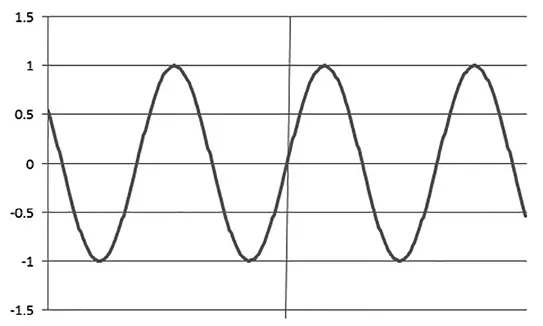
The point I am making here is even if your hypothesis fits all the given data points, it doesn’t mean that your hypothesis is correct. There are many other possible hypotheses that will fit the data. This is a key concept you have to understand. Evolutionists would claim that “all” the observed data fit the predictions from the theory of evolution.
First, they provide you of the only data that fit their theory. There are many data points that do not fit their theory. I will touch on those in later parts of this book.
Second, even if the data points they provide fit their theory, it does not follow that their theory is correct.
Let me repeat one sentence in the preceding paragraph. Evolutionists would claim that “all” the observed data fit the predictions from the theory of evolution. Now given this, they would conclude that their theory must be correct. Whatever happened to “substituting facts for appearances and demonstrations for impressions”?
Evolutionists would point to gradual changes in fossil records. They would say, “Look, this fossil of an antelope-like animal has short neck. Then we found another one. We carbon-dated it, and we detected that it lived millions of years after the first one we found, and its neck is longer.” Then they will conclude that the giraffe “evolved” this way.
First, evolutionists assume that the giraffes’ long necks “evolved” to help them feed. They call this the high-feeding hypothesis. I’m putting quotes around “evolve” because evolutionists are assuming that their theory is true. So whenever they write their scientific articles, they use the word “evolve” as if it was true.
Now, they’re finding out that the high-feeding hypothesis is weak. There are parts in Africa where giraffes really like to eat by reaching up to the top of trees. But there are also parts in Africa where even when food is scarce, the giraffes don’t reach up. In the July 7, 2010, issue of Zoologger, Michael Marshall mentioned a new hypothesis. Biologists are now saying that the giraffe’s long neck is a result of sexual selection. Male giraffes fight for females using their necks, swinging it against the other male giraffes, as if in a duel. So those with long necks win. They survive. They mate and pass on that trait to their offspring.
Whoa! Wait! Stop!
Show us the proof! Don’t extrapolate!
For a neck to significantly “grow,” according to evolutionists, there has to be a series of mutations over long periods of time. I put quotes around “grow” because evolutionists assume the necks “grew” through gradual series of mutations. They say this is “proven” by fossil records. Whoa! Wait! Stop!
Do you even know the chance of a mutation? Most mutations are bad, like sickle cells. Instead of surviving, you die. Random mutations are rare. And even by lucky chance of a good mutation leading gradually to the desired outcome (e.g., longer neck), it could take millions and millions of lucky chances.
By all probability, it is most likely not possible due to the complexity of the DNA. Again, the giraffe thing is a data point that they claim fits their theory. But it doesn’t follow that their theory is correct! We will get back to the time element and mutation rate later. It requires some basic probability theory.
Perhaps, after more data is observed in the future, they, the evolutionists, would determine that their sexual selection hypothesis is weak. They will come up with new hypotheses for sure. I got one for them. How about, well, the giraffes have long necks because that is how they were created. And all the animal fossils that the scientists have seen that have varying neck lengths? Those animals were also created that way. It just seemed to their naked eyes that there were “gradual changes” since the necks have varying lengths. They arranged the fossils in carbon dating-produced times, and they “correlate” the necks’ length pattern with the passage of time. In statistics, we know that correlation does not imply causation.
The evolutionists simply extrapolated again! But take note, the creation hypothesis also fits the data.
Now you see, as in the y = f(x) example, two possib...
Table of contents
- Chapter 1
- Chapter 2
- Chapter 3
- Chapter 4
Trusted by 375,005 students
Access to over 1.5 million titles for a fair monthly price.
Study more efficiently using our study tools.
Frequently asked questions
Yes, you can cancel anytime from the Subscription tab in your account settings on the Perlego website. Your subscription will stay active until the end of your current billing period. Learn how to cancel your subscription
No, books cannot be downloaded as external files, such as PDFs, for use outside of Perlego. However, you can download books within the Perlego app for offline reading on mobile or tablet. Learn how to download books offline
Perlego offers two plans: Essential and Complete
- Essential is ideal for learners and professionals who enjoy exploring a wide range of subjects. Access the Essential Library with 800,000+ trusted titles and best-sellers across business, personal growth, and the humanities. Includes unlimited reading time and Standard Read Aloud voice.
- Complete: Perfect for advanced learners and researchers needing full, unrestricted access. Unlock 1.5M+ books across hundreds of subjects, including academic and specialized titles. The Complete Plan also includes advanced features like Premium Read Aloud and Research Assistant.
We are an online textbook subscription service, where you can get access to an entire online library for less than the price of a single book per month. With over 1.5 million books across 990+ topics, we’ve got you covered! Learn about our mission
Look out for the read-aloud symbol on your next book to see if you can listen to it. The read-aloud tool reads text aloud for you, highlighting the text as it is being read. You can pause it, speed it up and slow it down. Learn more about Read Aloud
Yes! You can use the Perlego app on both iOS and Android devices to read anytime, anywhere — even offline. Perfect for commutes or when you’re on the go.
Please note we cannot support devices running on iOS 13 and Android 7 or earlier. Learn more about using the app
Please note we cannot support devices running on iOS 13 and Android 7 or earlier. Learn more about using the app
Yes, you can access The Theory of Evolution is a Result of Erroneous Extrapolation by June Meimban in PDF and/or ePUB format, as well as other popular books in Biological Sciences & Evolution. We have over 1.5 million books available in our catalogue for you to explore.