PART ONE
The Magic Square Metre Plots
The square-metre plots are graded according to the ease with which the plants grow in parts of Britain. Salad Plots start the list because lettuces, chives and radishes are quick and easy to grow. These are followed by the Broadbean Plot in autumn to give copious results for little work, while putting nitrogen back into the soil. Gradually the plots get a little more complex and varied. Please yourself to add or delete vegetables as you go.
If you have any outdoor space, a few boxes on the balcony or patio will allow you to plant most plots in this book on an even smaller scale. A square-metre plot translates into approximately 4–5 boxes. Boxes dry out quickly so push them together and pack wet towels or newspapers around their sunny side in hot weather. Or put a water tray under the plants during days of blazing sunshine to ensure a healthy harvest of fresh greens.
While your Salad Plot is growing, read How to Use this Book if you skipped it and make yourself familiar with the essential list of abbreviations.
The Salad Plots
All mentioned salad vegetables and herbs are discussed individually in the List of Common Vegetables and the List of Common Herbs in Part Four. Varieties of lettuce are discussed under Lettuce; Radicchio and Endive have separate entries; see also Salad Greens.
Salad Plots are discussed in detail, because they are probably the ones you grow most often. Almost all green leaf vegetables mentioned are pick-and-come-again plants until they bolt to seed. If you want the easiest of all salad plots, buy a packet of mesclun seed, a mixture of up to a dozen salad greens. Sow half the packet, rake in and water well. Sow pinches of seed through the season as space becomes available.
Home-grown salads can contain a dozen vegetables without a leaf of lettuce. Leaves of amaranth, beetroot, endive, giant red mustard, yellow mustard, radicchio, rocket, sorrel, spinach, bok choy and mizuna, as well as cucumber, peas, swedes, nasturtium leaves and flowers, carrot, radish, salad onion, tomato, chives, bronze fennel, cauliflower and broccoli florets, borage, marigold, and courgettes, all mix in the salad bowl. If fresh dandelion grows in your garden, use the leaves to add a delicious bitter twang and lots of nutriments. Then there are beans, beetroot (raw, boiled or pickled) and cabbage for coleslaw. These take a little longer to grow.
Try adding sprouting mung beans (which take up to a week to sprout depending on temperatures), or succulent brown or lima beans to add bulk to winter salads. Or toast croutons with crushed garlic and olive oil in a skillet and toss over the greens.
Herby salads are achieved by adding basil, chives, coriander, fennel, mints, marigold petals, pennyroyal, salad burnet, and tarragon. Look around a herb nursery and sniff the leaves. Small leafy herbs, e.g. coriander, basil, dill and caraway, grow well between vegetables. Make a separate plot for herbs that sprawl – e.g. rocket – in a border or under a tree with at least half a day’s sun. Later in the season take cuttings or seed from there to grow on as companion plants for vegetables, in the ground or in mobile pots.
A square-metre plot can produce enough to provide 3–4 people with a small daily salad if you feed and water it well and keep plugging in seeds or seedlings. If artistically inclined, you could even paint with your vegetables by dividing the plot into triangles and growing different coloured vegetables in each with a marigold in the centre.
Read the chapter Seeds & Seedlings on raising seedlings and the unexpected benefits of toilet rolls. And don’t forget about seed-saving.
Seed-saving: Let one of each variety go to seed. Stake tall plants.
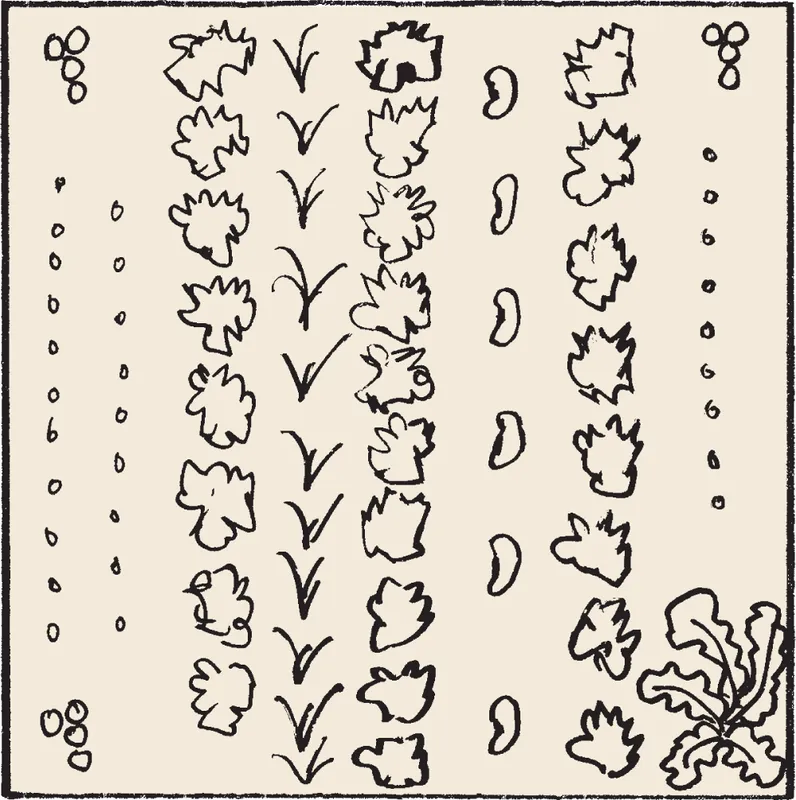
Salad Plot A
LATE WINTER, SPRING & SUMMER
6 varieties of lettuce
10–12 spring onions in bunches of 3
2–3 cherry tomatoes on corners (staked)
radishes on the sidelines
1 rocket on the last corner
In mid winter, dig the square with well-rotted manure and compost. In late winter rake in B&B and lime if soil is acidic. Mix six pinches of lettuce seed varieties in a cup (cos, butter head, green oakleaf, red Lollo, mignonette, chicory). No need to keep these separate. Sow a row. If the weather is vile, or you want to protect seedlings from wildlife, sow in a deep box – e.g. a wine casket with a few drainage holes – that can be kept in a protected place until plants are large enough to be planted out. Sow 1–2 rocket seeds in one corner of the square.
Sow 2–3 cherry tomato seeds and 12 spring onion seeds in separate seed trays (a seed tray can be a margarine tub with drainage holes). Plant six bush beans in toilet rolls stacked in a tub, and two cucumber seeds in two toilet rolls standing in between seed trays. Choose dependable Lebanese, striped or heat-tolerant Chinese cucumber. Place all in a warm, protected place. Water daily, twice if temperatures rise above 30 degrees, and thrice if it gets awful. Seedlings should never dry out.
When seedlings are 5 cm high, transplant lettuces 10 cm apart, in three short rows 20 cm apart. When soil has warmed up and all danger of frost is over, plant tomato seedlings on the corners where they can be staked. Plant spring onions in bunches of three, between lettuces. Plant bush beans between the lettuce rows. Plug in a dozen radish seeds here and there. When cucumber plants have four leaves, replant them in a large pot with plenty of CMC, next to the square where they can sprawl.
As plants grow, plug in compost where there is space. Pick outside leaves of lettuces regularly. Pick onion greens when young and they will keep growing. Pick rocket all the time and, when it grows large, use leaves in stir-fries. Tomatoes take longer to ripen, so start picking as soon as the fruit gets a blush and ripen it on a sunny window sill. Late, unripe tomatoes can still ripen inside or make green chutney. Freeze cherry tomatoes for sauce. Pick cucumbers young to keep plants producing.
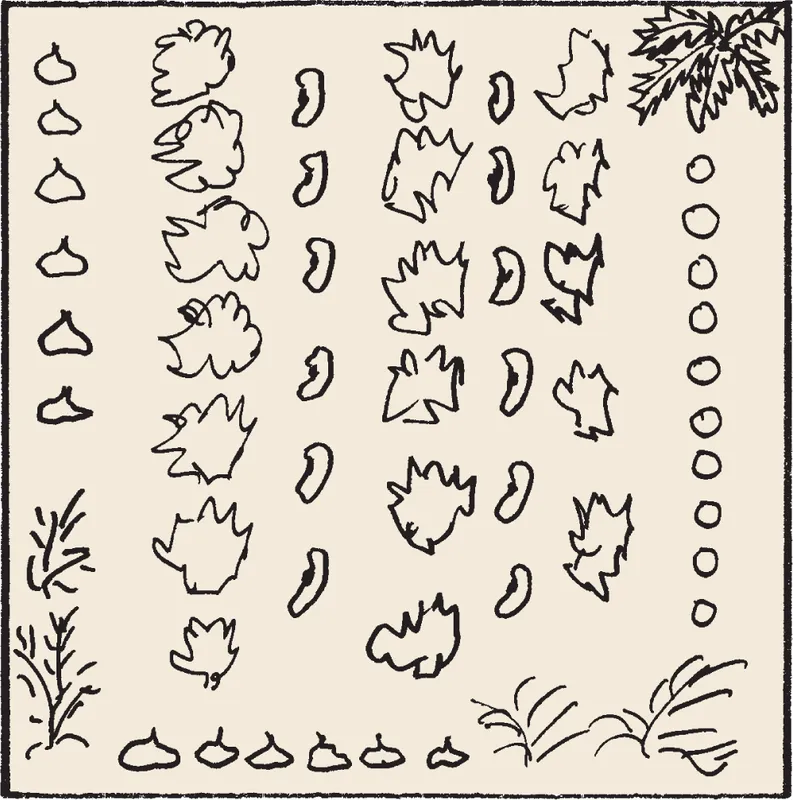
Salad Plot B
LATE WINTER, SPRING & SUMMER
3 lettuce varieties (oakleaf, butterhead, red Lollo)
2 x 6 bush beans in two pla...