Nitroxides are versatile small organic molecules possessing a stabilised free radical. With their unpaired electron spin they display a unique reactivity towards various environmental factors, enabling a diverse range of applications. They have uses as synthetic tools, such as catalysts or building blocks; imaging agents and probes in biomedicine and materials science; for medicinal antioxidant applications; and in energy storage. Polynitroxides (polymers bearing pendant nitroxide sidechains) have been used in organic radical batteries, oxidation catalysts and in exchange reactions for constructing complex architectures. Chapters in this book cover the synthesis of nitroxides, EPR studies and magnetic resonance applications, physiochemical studies, and applications including in batteries, imaging and organic synthesis. With contributions from leaders in the field, Nitroxides will be of interest to graduate students and researchers across chemistry, physics, biology and materials science.
eBook - ePub
Nitroxides
Synthesis, Properties and Applications
- 592 pages
- English
- ePUB (mobile friendly)
- Available on iOS & Android
eBook - ePub
Nitroxides
Synthesis, Properties and Applications
About this book
Information
Publisher
Royal Society of ChemistryYear
2021Print ISBN
9781788017527
9781788017527
eBook ISBN
9781788019668
Chapter 1
A Brief History and Outlook of Nitroxides
* Aix Marseille Univ, CNRS, ICR UMR7273, Marseille, France Emails: [email protected]; [email protected]
1.1 Brief History
Nitroxides, also named aminoxyl or nitroxyl radicals, constitute a family of versatile organic radical species with rich and diverse properties and reactivity.1,2 Nitroxides belong to an important class of compounds finding a wide range of applications related to the fields of organic chemistry, physical-chemistry, material science, biology and medicine. Nitroxide compounds have a long history that started in 1845 with the first nitroxide prepared by E. Frémy.3 Known as Frémy's salt (Scheme 1.1), this radical was initially obtained by oxidation of potassium disulfonate hydroxylamine with lead dioxide and then by reaction of sodium nitrite with sodium bisulfite. The first organic nitroxide, so-called porphyrexide, was then prepared in 1901 by Piloty and Schwerin (Scheme 1.1).4 Later, in 1914, a nitroxide bearing two aryl groups on the nitrogen atom was obtained for the first time (Scheme 1.1) by Wieland et al.5 In 1959, the synthesis of the first cyclic N,N-di-alkyl nitroxide, namely 2,2,6,6-tetramethylpiperidinyl-1-oxyl, better known under the name of TEMPO, was described by Lebedev and Kazarnovskii (Scheme 1.1).6 Since this report, N,N-dialkyl nitroxides have taken on increasing importance over the years. In 1961, the synthesis of non-cyclic di-tert-butylnitroxide was described by Hoffmann and Henderson (Scheme 1.1).7
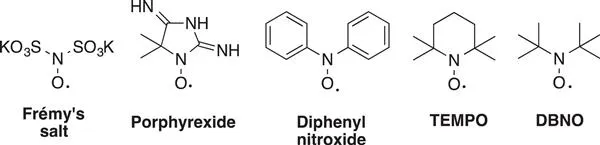
Scheme 1.1 Structures of the early nitroxides.
It has to be mentioned that since the 1960s the development of both efficient methodologies in organic chemistry and electron spin resonance (EPR) spectroscopy has been extremely beneficial for the development of the nitroxide field (Scheme 1.2).8 Several nitroxide structures such as TEMPO, TOAC, PROXYL, MTSL, DBN, TMIO, AZADO, ABNO and DOXYL are now commercially available and many more have been already described.2,9,10
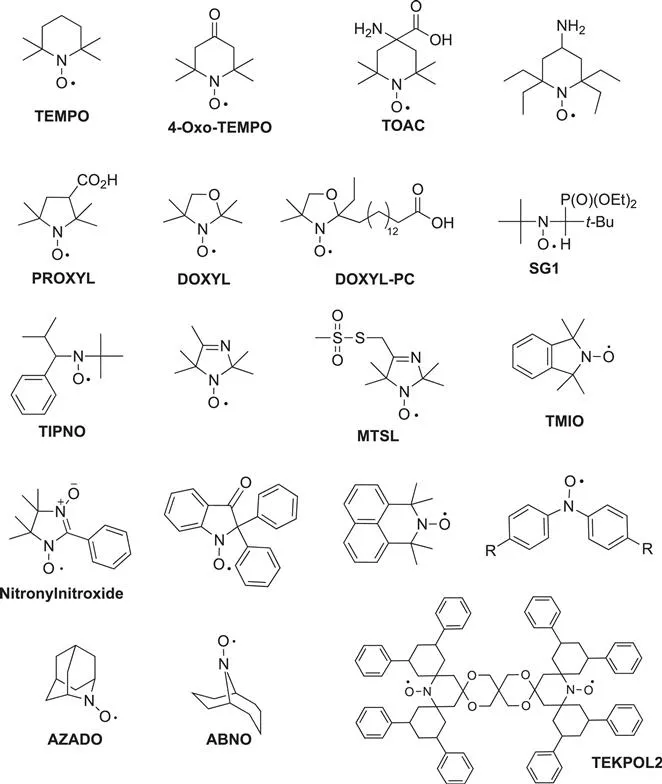
Scheme 1.2 Some examples of the most common nitroxide structures.
The term stable radical11 implies that the nitroxide compounds can be safely handled and stored under ambient conditions, without any precaution of temperature, dioxygen (O2) or moisture exposition. The unusual radical stability and the possible reactions proceeding on the their structure with conservation of the radical properties were early recognized to be a key feature of nitroxide compounds12–14 explaining the widespread research attention on their reactivity and applications.
1.2 Nitroxide Reactivity
The exceptional properties of nitroxides result from the presence of a three-electron π bond in the aminoxyl group (N–O˙). This bond consists in the overlapping of the 2pz orbitals of the nitrogen and oxygen atoms. Hence, the electronic structure of the N–O˙ group is represented by the contribution of two resonance forms A and B (Scheme 1.3).
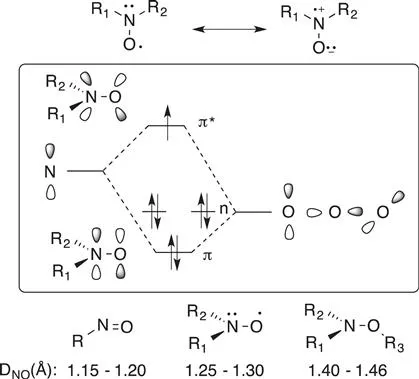
Scheme 1.3 Representation of two resonance structures of nitroxides, a schematic representation of the n, π, π* orbitals on the NO˙ group and the bond length of nitroso, nitroxide and alkoxyamine compounds.
Due to the presence of a single electron in the π* orbital (SOMO), the bond index of the N–O bond is 1.5. In addition, the value of the bond energy (≈418 kJ mol−1) and the bond length (1.25 Å<dNO<1.30 Å) are between those of a single NO bond of an hydroxylamine or alkoxyamine (N–OH≈222 kJ mol−1 and 1.43 Å, respectively) and those of a NO double bond of a nitroso compound (≈606 kJ mol−1 and 1.20 Å, respectively).
In dialkylnitroxides (R1=R2=alkyl) the spin density is essentially distributed between the nitrogen and oxygen atoms with a slightly larger value on the oxygen atom. The delocalization of the single electron of an aminoxyl group corresponds to an energy gain of approximately 100 kJ mol−1. However, the formation of an O–O bond leads to an energy gain of 170 kJ mol−1. Consequently, the dimerization of nitroxides is not thermodynamically favored because it does not correspond to a gain in bonding electrons. Typically, nitroxides having one or more hydrogen atoms on the α-carbons (Cα) of the nitrogen atom are not stable due to a disproportionation reaction that leads to the formation of the corresponding nitrones and hydroxylamines (Scheme 1.4).15 It should be mentioned that very large steric constraints in α-position cause potentially the spontaneous homolytic decomposition of dialkylnitroxides to afford the corresponding nitroso compound and the alkyl radials (Scheme 1.4).16,17
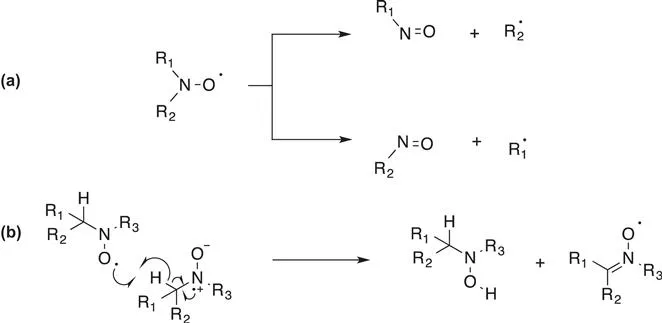
Scheme 1.4 Possible decomposition pathways for nitroxide: (a) fragmentation (b) disproportionation.
However, a few exceptions of stable nitroxides bearing hydrogen atoms on the α-carbons have been reported. For example, due to Bredt's rule we can cite nitroxides containing polycycles (ABNO, AZADO) where the abstraction of the hydrogen in the alpha position atom is forbidden.17 Other examples are related to crowded molecules around the hydrogen to be abstracted or to conformationally constrained nitroxides (TIPNO, SG1, Scheme 1.5) limiting the disproportion reaction to occur.

Scheme 1.5 Examples of stable nitroxides bearing hydrogen atom(s) in the α-position.
Interestingly, nitroxides behave as redox amphoters (Scheme 1.6). They can be reversibly oxidized to the corresponding N-oxoammonium salt or reduced to the corresponding hydroxylamine in a one-electron process. This property and the tunable redox potentials enable the development of redox probes for biological systems or organic electrodes for lithium batteries or catalytic oxidation reagent in organic synthesis.
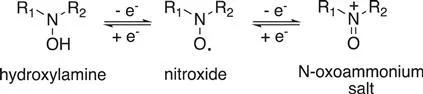
Scheme 1.6 Redox properties of nitroxides.
N,N-Dialkyl nitroxides such as TEMPO are usually poorly efficient for C–H activation and H-atom abstraction due to the low OH-bond dissociation energy (BDE, 290 kJ mol−1). Nitroxide bearing electron-withdrawing groups such as α,α-diacyl nitroxides are usually employed for reaction with unactivated positions. For comparison, the BDE of NHPI is much larger (367 kJ mol−1) and the corresponding radical is good H-abstracting reagents. In contrast, the reverse process of converting hydroxylamine to nitroxide is usually thermodynamically favorable and the TEMPO hydroxylamine can be used as an antioxidant.
Therefore, the three-electron bond in nitroxides modifies the usual reactivity of the unpaired electron, notably relative to alkyl or peroxyl radicals, e.g. with no dimerization, limited H-atom abstraction and no reactivity with air and moisture. Moreov...
Table of contents
- Cover
- Title
- Copyright
- Contents
- Chapter 1 A Brief History and Outlook of Nitroxides
- Chapter 2 General Approaches to Synthesis of Nitroxides
- Chapter 3 The Application of Nitroxides in Organic Synthesis
- Chapter 4 Spin Probes and Imaging Using Nitroxides
- Chapter 5 Nitroxides in Battery-related Applications
- Chapter 6 Computational Tools for Nitroxide Design
- Chapter 7 Nitroxide-mediated Polymerization
- Chapter 8 Nitroxides in Supramolecular Chemistry
- Chapter 9 Magnetism of Nitroxides
- Chapter 10 Applications of Nitroxide Spin Labels to Structural Biology
- Chapter 11 Nitroxides in Liquid Crystals
- Chapter 12 Nitroxide Intervention in Oxidative and Free Radical Damage in Biology and Disease
- Chapter 13 Spin Trapping
- Chapter 14 Biological Applications of Nitroxide Stable Free Radicals
- Chapter 15 Introduction to Electron Paramagnetic Resonance (EPR) of Nitroxides
- Subject Index
Trusted by 375,005 students
Access to over 1.5 million titles for a fair monthly price.
Study more efficiently using our study tools.
Frequently asked questions
Yes, you can cancel anytime from the Subscription tab in your account settings on the Perlego website. Your subscription will stay active until the end of your current billing period. Learn how to cancel your subscription
No, books cannot be downloaded as external files, such as PDFs, for use outside of Perlego. However, you can download books within the Perlego app for offline reading on mobile or tablet. Learn how to download books offline
Perlego offers two plans: Essential and Complete
- Essential is ideal for learners and professionals who enjoy exploring a wide range of subjects. Access the Essential Library with 800,000+ trusted titles and best-sellers across business, personal growth, and the humanities. Includes unlimited reading time and Standard Read Aloud voice.
- Complete: Perfect for advanced learners and researchers needing full, unrestricted access. Unlock 1.5M+ books across hundreds of subjects, including academic and specialized titles. The Complete Plan also includes advanced features like Premium Read Aloud and Research Assistant.
We are an online textbook subscription service, where you can get access to an entire online library for less than the price of a single book per month. With over 1.5 million books across 990+ topics, we’ve got you covered! Learn about our mission
Look out for the read-aloud symbol on your next book to see if you can listen to it. The read-aloud tool reads text aloud for you, highlighting the text as it is being read. You can pause it, speed it up and slow it down. Learn more about Read Aloud
Yes! You can use the Perlego app on both iOS and Android devices to read anytime, anywhere — even offline. Perfect for commutes or when you’re on the go.
Please note we cannot support devices running on iOS 13 and Android 7 or earlier. Learn more about using the app
Please note we cannot support devices running on iOS 13 and Android 7 or earlier. Learn more about using the app
Yes, you can access Nitroxides by Olivier Ouari, Didier Gigmes, Olivier Ouari,Didier Gigmes in PDF and/or ePUB format, as well as other popular books in Physical Sciences & Organic Chemistry. We have over 1.5 million books available in our catalogue for you to explore.