Mountain Witches is a comprehensive guide to the complex figure of yamauba—female y?kai often translated as mountain witches, who are commonly described as tall, enigmatic women with long hair, piercing eyes, and large mouths that open from ear to ear and who live in the mountains—and the evolution of their roles and significance in Japanese culture and society from the premodern era to the present. In recent years yamauba have attracted much attention among scholars of women's literature as women unconstrained by conformative norms or social expectations, but this is the first book to demonstrate how these figures contribute to folklore, Japanese studies, cultural studies, and gender studies.
Situating the yamauba within the construct of y?kai and archetypes, Noriko T. Reider investigates the yamauba attributes through the examination of narratives including folktales, literary works, legends, modern fiction, manga, and anime. She traces the lineage of a yamauba image from the seventh-century text Kojiki to the streets of Shibuya, Tokyo, and explores its emergence as well as its various, often conflicting, characteristics. Reider also examines the adaptation and re-creation of the prototype in diverse media such as modern fiction, film, manga, anime, and fashion in relation to the changing status of women in Japanese society.
Offering a comprehensive overview of the development of the yamauba as a literary and mythic trope, Mountain Witches is a study of an archetype that endures in Japanese media and folklore. It will be valuable to students, scholars, and the general reader interested in folklore, Japanese literature, demonology, history, anthropology, cultural studies, gender studies, and the visual and performing arts.
- English
- ePUB (mobile friendly)
- Available on iOS & Android
eBook - ePub
About this book
Information
1
Man-Eating, Helping, Shape-Shifting Yamauba
Yamauba’s Duality
THE DISTINCTIVE FEATURES OF THE YAMAUBA are that she is often said to be an anthropophagous woman living in the mountains; to possess the duality of good and evil, bringing death and destruction as well as wealth and fertility; and to have the power of transformation, manifesting herself alternately as an ugly crone or a young beauty (see Takashima 2014, 116; Murakami 2000, 345). Yanagita Kunio writes that the yamauba described in setsuwa are atrocious and cannibalistic like oni-women (female demons/ogres/monsters), and they are cruelly punished, but that when yamauba are talked about as local beings in legends—for instance, when a villager references “a yamauba living in a certain mountain a long time ago”—they are thought of fondly (Yanagita 1978–1979, 1:248; 2014, 167). That yamauba possess a good side, such as when they are portrayed as mountain deities helping human beings, and an evil side, such as when they resemble oni-women, is especially evident in mukashibanashi (SNKBZ 1994–2002, 58:565).
When one looks at the above characteristics, however, one notices that it is actually the yamauba’s most conspicuous trait, anthropophagy, that is the evil part of her duality. This chapter discusses the yamauba’s familiar traits and how her opposing characteristics can be reconciled. Special attention is paid to the yamauba and oni/oni-women paradigm, because I believe the man-eating destructive yamauba and the helping, gift-giving yamauba are two sides of the same coin, and that the complementary nature of good and evil exists through the intermediary of oni. Further, the chapter addresses how and why the yamauba’s traits came into being and what makes the yamauba distinct from oni-women.
The noh plays Yamanba and Kurozuka are the crucial texts for understanding the medieval yamauba and the formation of the yamauba’s image. In addition, the “do not look” taboo that appears in both mukashibanashi and Kurozuka will be investigated as one of the contiguous threads between the yamauba and the oni-woman.
Yamauba versus Oni/Oni-Women
As written in the introduction, the first appearance of the term yamauba in literary materials occurred in the Muromachi period (Komatsu K. 2000, 428; Orikuchi 2000, 300). In earlier literature, the enigmatic witch-like female one encountered in the mountains was often described as an oni or oni-woman (Foster 2015, 147).1 Komatsu Kazuhiko explains that supernatural deities worshipped by Japanese are known as kami, while those that are not worshipped are called yōkai, and those yōkai with a strong negative association are known as oni (Komatsu K. 1979, 337). Likewise, Michael Dylan Foster writes that when malicious emotions, intentions, or actions are “antisociety and antimoral,” they are associated with oni (Foster 2015, 118).
It is no surprise, then, that such an abhorrent antisocial act as cannibalism is considered a major trait of oni (see Reider 2010, 14–29). An oni can eat a person in a single gulp, as the phrase “oni hitokuchi” (oni in one gulp) suggests (see Gorai 1984). The sixth episode of Ise monogatari (Tales of Ise, ca. 945) tells of a man who falls hopelessly in love with a woman well above his social status. The man decides to elope with her. On the night they run away, a severe thunderstorm forces them to shelter in a ruined storehouse. The man stands on guard at the entrance of the shelter, but the lady is eaten by an oni in one gulp (SNKBZ 1994–2002, 12:117–18; McCullough 1968, 72–73). Stories of oni’s cannibalism are frequently recorded in Japan’s official history, too. According to Nihon sandai jitsuroku (True records of three generations in Japan, 901), on the seventeenth of the eighth month of 887 three beautiful women walking near Butokuden, one of the buildings in the imperial palace compound, see a good-looking man under a pine tree. The man approaches one of the women and begins talking with her. When the other two women look back in the direction of the pine tree, they are horrified to see the woman has been dismembered, her limbs strewn on the ground, her head missing. At the time, people believed that an oni had transformed into a handsome man in order to eat the woman (for a text of the episode, see Fujiwara T. et al. 1941, 464). I believe that yamauba inherited this anthropophagous nature of oni when the term yamauba emerged.
While showing the oni’s cannibalistic side, this episode in Nihon sandai jitsuroku also illustrates the oni’s exceptional metamorphic abilities. Changing from its grotesque form to a handsome man allows the cunning oni to gain the trust and interest of his victim so that he can easily devour her. Oni are capable of transforming into both male and female forms at will. Yamauba perhaps acquired the transformation ability from oni as well, though as far as I know, a yamauba does not change her appearance to a man to lure her victim—who is usually male. As described later, she shape-shifts to a young woman to attract a man.
Although there are many overlapping qualities between yamauba and oni-women, they are not exactly the same. Michael Dylan Foster explains: “It is important not to conflate all female demon figures. The female oni is often characterized by her jealous rage—in fact, this rage is sometimes the very thing that turns a regular woman into a demon in the first place. This is, for example, one characteristic of the demonic female hannya mask used in many a noh play. Akin to male oni, the female oni is distinguished by horns sprouting from her head. In contrast, most descriptions of yamamba do not include horns; nor generally is her monstrousness attributed to jealousy or sexual passion” (Foster 2015, 147; see also Li 2012, 173–96; Tanaka T. 1992, 256.).
The distinction is true, although there are exceptions. In a number of folktales oni-women do not express jealousy or anger. The yamauba portrayed in Hanayo no hime (Blossom Princess) has horns on her head, as do yamauba in some other literary works.2 I would add that the major differences are, as described in the introduction, that yamauba’s topos is the mountains, whereas a female oni does not require a mountainous setting: a field, village, city, or palace are as good. Further, yamauba remain female, whereas an oni-woman can transform into a male oni, because oni’s gender is equivocally ambiguous or situational.
Cannibalism, the Destructive Side of Yamauba’s Duality, and the Power of Transformation
Cannibalism shows the demonic side of yamauba’s dual nature. Cannibalism is probably the strongest element connecting yamauba to oni, or I should say continuing from oni to yamauba. Indeed, in mukashibanashi when the yamauba is perceived as a man-eater, the appellations oni-baba or oni are used interchangeably with yamauba for the main character. Since the cannibalistic yamauba character is almost always found in mukashibanashi, I describe below the three major folktale story types in which cannibalistic yamauba appear and examine which name—yamauba, oni-baba, or oni—is most often used. I have used Seki Keigo’s Nihon mukashibanashi taisei (Complete works of Japanese folktales; hereafter NMT 1978–1980).
“Kuwazu nyōbō” (“The Wife Who Does Not Eat”)
The folktale “Kuwazu nyōbō,” which is known all over Japan, is often used as an exemplar of the human-eating yamauba.3 The story opens with a man muttering to himself (in some versions he mutters to a friend) about how he wants a wife who does not eat. Soon afterward a beautiful young woman appears at his house and declares that since she does not eat, she would like to be his wife.4 The man marries her. But this seemingly ideal wife turns out to be a monstrous woman who has a second mouth at the back of her head. While she does not eat anything when the man is at home, as soon as he goes out she prepares food and eats ravenously with this mouth.5 When the man finds out the truth, she reveals her true yamauba appearance. She throws him into a tub, which she carries on her head as she runs toward the mountains. The man narrowly escapes, hiding himself in mugwort and iris. The yamauba finds the man but cannot reach him—mugwort and iris are poisonous to her. The man kills her by throwing mugwort and iris at her. This story was widely known by the early modern period. In Kokon hyakumonogatari hyōban (An evaluation of one hundred strange and weird tales of past and present, 1686), written by Yamaoka Genrin (1631–1672), a well-known intellectual of his day, his student asks, “People say, ‘a yamauba takes human life, and there are stories about a yamauba transforming herself into a wife.’ Is she a real woman?” (Yamaoka 1993, 46).6 The story must have roused the curiosity of seventeenth-century urban folks. Significantly, Yamaoka Genrin’s student’s question, like the story itself, reveals yamauba’s other distinctive feature, the power of transformation, for she first appears as a young woman. Equally important, while the yamauba does not tell her husband not to watch, the story has the theme of “taboo of looking,” which I will discuss in detail later.7
Although “Kuwazu nyōbō” is the representative story depicting yamauba, oni appear as main characters more frequently than yamauba. Oni appear in twenty-eight stories of this type, while yamauba appear in eighteen. Nine stories feature an oni-baba as the protagonist. In one story the character is written as an oni-wife. Oni-wife could mean she is an oni but not old enough to be called oni-baba, or she could be a human being who became an oni’s wife. Therefore, even if this oni-wife is excluded because of her ambiguous status, there are thirty-seven stories in which the anthropophagous character is an oni (either oni or oni-baba), in contrast to eighteen where the character is yamauba. Interestingly, the spider appears most frequently as the main character, in forty-three stories.8 Kawai Hayao, Jungian psychologist, notes that a yamauba transforms herself into a spider in many versions of “Kuwazu nyōbō,” either when her clandestine eating is revealed or during her chase after the man (Kawai 1996, 30).9 While the issue as to why a yamauba changes to a spider or vice versa will be studied in chapter 2, this changeability brings the shape-shifting ability of yamauba to the fore.10
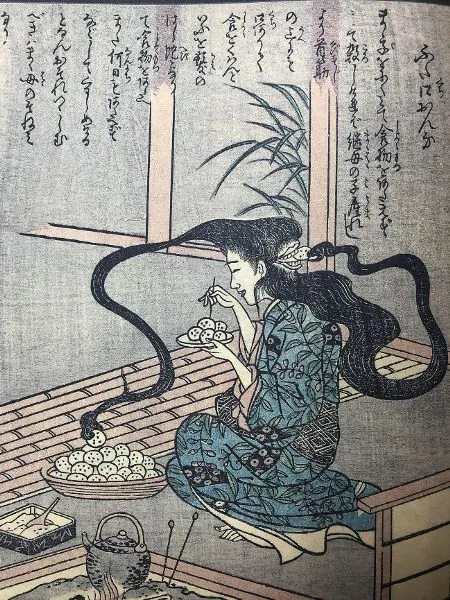
Figure 1.1. “Futakuchi onna” (The woman with two mouths) from Tōsanjin yawa. (Courtesy of the Iwase Bunko Library of Nishio City.)
“Kuwazu nyōbō” is fascinating in that the seemingly ideal wife becomes demonic after her husband sees her secret—that is, her unsightly appearance—reminding one of the story of Izanagi encountering Izanami in the nether land. In Japan’s creation myth in the Kojiki, after the death of Izanami, the female creator of Japan, Izanagi, her husband and male counterpart, misses her so much that he goes to the underworld to retrieve her. But Izanami says that she has already eaten the food of that realm and so cannot return. It was believed that eating food cooked at the nether land’s hearth would turn one into a full-fledged being of that world, preventing one from returning to the living world (NKBT 1957–1967, 1:64n2).11 She tells him to wait, but not to look. The taboo against looking is a familiar folkloric motif—unable to resist temptation, a protagonist often breaks that taboo. Sure enough, Izanagi breaks his promise not to look at Izanami—just as Orpheus does on his journey to bring Eurydice back to the world of the living in the Greek myth. When Orpheus looks to see if she is following, beautiful Eurydice slips forever into the world of the dead. When Izanagi looks at Izanami, she is ugly, with maggots squirming and eight thunder deities growing around her entire body. Izanami, furious because he broke the promise/taboo, attacks Izanagi, saying he has caused her “undying shame.” Terrified, Izanagi quickly makes his way back to this world, whereupon Izanami dispatches Yomotsu-shikome (literally, ugly woman in the underworld) from the underworld to avenge her shame.12
Interestingly, Kawai Hayao considers that the shame Izanami feels reveals the formative experience (gentaiken) of the shame of the Japanese race, and further, he notes that the remarkable feature of Japanese stories about the “don’t look” taboo is their emphasis upon the shame of being seen, not the guilt of breaking the taboo (Kawai 1975, 683; 1996, 23). Citing eighteenth-century Japanese Nativist scholar Motoori Norinaga (1730–1801), Ishibashi Gaha considers Yomotsu-shikome as an origin of the Japanese oni (Ishibashi 1998, 4). This precursor of Japanese oni was a female born from a g...
Table of contents
- Cover
- Title Page
- Copyright Page
- Dedication
- Contents
- List of Figures
- Acknowledgments
- Introduction: Yamauba’s Topos, Archetype, and Gender
- 1. Man-Eating, Helping, Shape-Shifting Yamauba: Yamauba’s Duality
- 2. Mother Yamauba and Weaving: Childbirth and Bloodsucking, Spinning and Spiders
- 3. Reading Minds and Telling Futures: “Yamauba and the Cooper,” “The Smile of a Mountain Witch,” and Throne of Blood
- 4. Yamauba, Yasaburō Basa, Datsueba: Images of Premodern Crones, Yamauba’s Flying Ability, and Re-creation of a Prototype
- 5. Aging, Dementia, and Abandoned Women: An Interpretation of Yamauba
- 6. Yamamba Mumbo Jumbo: Yamauba in Contemporary Society
- Conclusion
- Japanese and Chinese Names and Terms
- Notes
- References
- About the Author
- Index
Trusted by 375,005 students
Access to over 1.5 million titles for a fair monthly price.
Study more efficiently using our study tools.
Frequently asked questions
Yes, you can cancel anytime from the Subscription tab in your account settings on the Perlego website. Your subscription will stay active until the end of your current billing period. Learn how to cancel your subscription
No, books cannot be downloaded as external files, such as PDFs, for use outside of Perlego. However, you can download books within the Perlego app for offline reading on mobile or tablet. Learn how to download books offline
Perlego offers two plans: Essential and Complete
- Essential is ideal for learners and professionals who enjoy exploring a wide range of subjects. Access the Essential Library with 800,000+ trusted titles and best-sellers across business, personal growth, and the humanities. Includes unlimited reading time and Standard Read Aloud voice.
- Complete: Perfect for advanced learners and researchers needing full, unrestricted access. Unlock 1.5M+ books across hundreds of subjects, including academic and specialized titles. The Complete Plan also includes advanced features like Premium Read Aloud and Research Assistant.
We are an online textbook subscription service, where you can get access to an entire online library for less than the price of a single book per month. With over 1.5 million books across 990+ topics, we’ve got you covered! Learn about our mission
Look out for the read-aloud symbol on your next book to see if you can listen to it. The read-aloud tool reads text aloud for you, highlighting the text as it is being read. You can pause it, speed it up and slow it down. Learn more about Read Aloud
Yes! You can use the Perlego app on both iOS and Android devices to read anytime, anywhere — even offline. Perfect for commutes or when you’re on the go.
Please note we cannot support devices running on iOS 13 and Android 7 or earlier. Learn more about using the app
Please note we cannot support devices running on iOS 13 and Android 7 or earlier. Learn more about using the app
Yes, you can access Mountain Witches by Noriko T. Reider in PDF and/or ePUB format, as well as other popular books in Social Sciences & Japanese History. We have over 1.5 million books available in our catalogue for you to explore.