Basic Core Python Programming
A Complete Reference Book to Master Python with Practical Applications (English Edition)
- English
- ePUB (mobile friendly)
- Available on iOS & Android
Basic Core Python Programming
A Complete Reference Book to Master Python with Practical Applications (English Edition)
About this book
Learn the most popular software programming language in easy steps
Key Features
? Extensive coverage on fundamentals and core concepts of Python programming.
? A complete reference guide to crack Python Interviews and exams.
? Includes ample MCQs and solved examples to prepare you for theory and practical exams.
? Easy-to-understand text with explanatory illustrations.
Description
Basic Core Python Programming is an absolute beginners book. It focuses on the fundamentals of Python programming and simplifies coding concepts. This book makes it easy to learn the concepts of Python variables, Expressions, Decision structures, and Iteration.Equipped with a lot of exercises and Q&As, you don't just practice the programming but also gain an in-depth understanding of the basic concepts of Python. You will start your journey right from how to go about Python installation and start using its interactive development environment and go on to learn how to build logic and implement it with coding. You will explore different types of data, operators, and in-built functions. This book covers numerous coding examples that will help you understand the importance of each data type, how to work with each one of them, and when to use them. You can learn some more practical useful concepts like how to implement control structures and use them for decision making and controlling the program flow.
What you will learn
? Stronghold on Python variables, expressions, decision structures, and iterations.
? Practical knowledge on how to work with various data types, operators, and in-built functions.
? Learn to implement strings, lists, arrays, and control structures.
? Learn how to control the program flow and how to use it for decision-making.
? A great reference book on Python basics for software programmers.
Who this book is for
This book is highly appealing to all tech-savvy students, programming enthusiasts, IT undergraduates, and computer science students. You do not need any prior knowledge of programming to begin with this book as long as you have the interest to learn to program.
Table of Contents
1. Introduction
2. Python Basics
3. Numbers, Operators, and In-built Functions
4. Strings
5. Lists and Arrays
6. Tuples and Dictionaries
7. Sets and Frozen Sets
8. Program Flow Control in Python
About the Authors
Mrs Meenu Kohli, author of 'Python Interview Questions - Ultimate Guide to Success' has authored another book 'Python Programming for Graduates'. She has written this book for college students with the aim of making the concepts of Python programming easier for them. She holds a degree in BE (Electronics) from D.Y. Patil College of Engineering, Pune University. She has worked as a developer, tester, and trainer with some reputed MNCs and has a lot of experience in software development and testing. She has worked on projects related to Python, Java, EJB, C, C++, PHP, JSP, JavaScript, HTML, .NET, R, MySQL, Oracle, DB2, and Software Testing LinkedIn profile: https://www.linkedin.com/in/meenukohli78/
Frequently asked questions
- Essential is ideal for learners and professionals who enjoy exploring a wide range of subjects. Access the Essential Library with 800,000+ trusted titles and best-sellers across business, personal growth, and the humanities. Includes unlimited reading time and Standard Read Aloud voice.
- Complete: Perfect for advanced learners and researchers needing full, unrestricted access. Unlock 1.4M+ books across hundreds of subjects, including academic and specialized titles. The Complete Plan also includes advanced features like Premium Read Aloud and Research Assistant.
Please note we cannot support devices running on iOS 13 and Android 7 or earlier. Learn more about using the app.
Information
CHAPTER 1
Introduction
Introduction
Structure
- Overview of programming languages
- High-level programming languages
- Low-level programming languages
- Machine language
- Assembly language
- Language processors
- Assembler
- Compiler
- Interpreter
- Generations of programming languages
- Programming paradigms
- History of Python
- Features of Python
- Future of Python
- Installing Python in 5 simple steps
- Memory management in Python
- Python versus Java
Objectives
- Understand the difference between low-level and high-level programming languages
- Know the difference between different types of language processors
- Learn about generations of programming languages
- Know about the history of Python
- Learn about the features of Python
- Understand the future of Python
- Learn how to install Python on to your machine
- Understand Python memory management
- Understand the difference between Python and Java
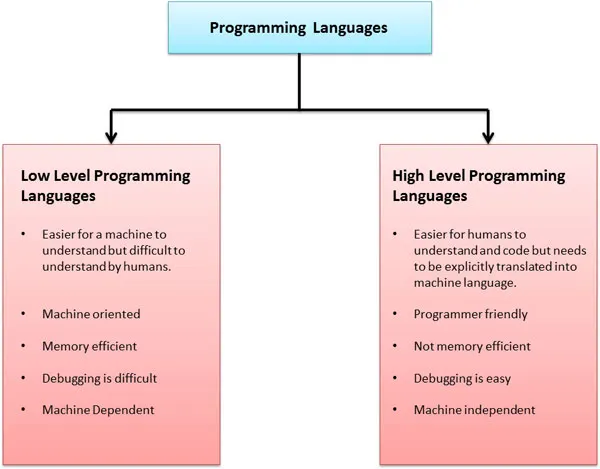
1.1 Overview of programming languages
- High-level programming languages
- Low-level programming languages

1.1.1 High-level programming languages
1.1.2 Low-level programming languages
- Machine language
- Assembly language
1.1.2.1 Machine language
1100011100010101000011 can be a computer instruction. Software programmers never need to look at the machine language code. It is only viewed by those who build software compilers and operating systems. Machine languages used for programming in first-generation computers are called First Generation Language (1GL). CPU directly executes machine language program instructions; translation is not required. Hence, it is fast and efficient. However, fixing an error in machine language can be a very tedious job.1.1.2.2 Assembly language
1.2 Language processors
- Assembler
- Compiler
- Interpreter
Table of contents
- Cover Page
- Title Page
- Copyright Page
- Dedication Page
- About the Author
- About the Reviewer
- Acknowledgement
- Preface
- Errata
- Table of Contents
- 1. Introduction
- 2. Python Basics
- 3. Numbers, Operators and In-built Functions
- 4. Strings
- 5. Lists and Arrays
- 6. Tuples and Dictionaries
- 7. Sets and Frozen Sets
- 8. Program Flow Control in Python
- Index