Arise And Go
eBook - ePub

Arise And Go

W.B. Yeats and the people and places that inspired him

  1. 256 pages
  2. English
  3. ePUB (mobile friendly)
  4. Available on iOS & Android
eBook - ePub

Arise And Go

W.B. Yeats and the people and places that inspired him

About this book

The idea of place runs like a river through the life and works of the poet and playwright W.B. Yeats. This book focuses on his time in Dublin, London, Sligo and elsewhere in the west of Ireland, embracing the homes, landscapes and people that impacted his life and stimulated his vast body of work.

Meet the poet's father, the struggling artist John Butler Yeats; his mother Susan, the well-to-do Sligo girl who had no choice but to follow her husband's path; his five siblings: Lily and Lolly, guiding lights in the Irish Arts and Crafts movement; Jack, the renowned painter; and Bobbie and Jane Grace, who died in infancy. Meet William Morris, John O'Leary, Katharine Tynan, George Moore, Oscar Wilde, Lady Gregory, Douglas Hyde, George Hyde-Lees, and, of course, Maud Gonne, as well as countless others who helped weave the cloth of Yeats's poetic gift.

Frequently asked questions

Yes, you can cancel anytime from the Subscription tab in your account settings on the Perlego website. Your subscription will stay active until the end of your current billing period. Learn how to cancel your subscription.
At the moment all of our mobile-responsive ePub books are available to download via the app. Most of our PDFs are also available to download and we're working on making the final remaining ones downloadable now. Learn more here.
Perlego offers two plans: Essential and Complete
  • Essential is ideal for learners and professionals who enjoy exploring a wide range of subjects. Access the Essential Library with 800,000+ trusted titles and best-sellers across business, personal growth, and the humanities. Includes unlimited reading time and Standard Read Aloud voice.
  • Complete: Perfect for advanced learners and researchers needing full, unrestricted access. Unlock 1.4M+ books across hundreds of subjects, including academic and specialized titles. The Complete Plan also includes advanced features like Premium Read Aloud and Research Assistant.
Both plans are available with monthly, semester, or annual billing cycles.
We are an online textbook subscription service, where you can get access to an entire online library for less than the price of a single book per month. With over 1 million books across 1000+ topics, we’ve got you covered! Learn more here.
Look out for the read-aloud symbol on your next book to see if you can listen to it. The read-aloud tool reads text aloud for you, highlighting the text as it is being read. You can pause it, speed it up and slow it down. Learn more here.
Yes! You can use the Perlego app on both iOS or Android devices to read anytime, anywhere — even offline. Perfect for commutes or when you’re on the go.
Please note we cannot support devices running on iOS 13 and Android 7 or earlier. Learn more about using the app.
Yes, you can access Arise And Go by Kevin Connolly in PDF and/or ePUB format, as well as other popular books in Literature & Literary Biographies. We have over one million books available in our catalogue for you to explore.

Information

Dublin

Howth: a view of the Baily Lighthouse, with Ireland’s Eye in the distance
Come near, come near, come near – Ah, leave me still
A little space for the rose-breath to fill!
Lest I no more hear common things that crave;
The weak worm hiding down in its small cave,
The field-mouse running by me in the grass,
And heavy mortal hopes that toil and pass;
But seek alone to hear the strange things said
By God to the bright hearts of those long dead,
And learn to chaunt a tongue men do not know.
Come near; I would, before my time to go,
Sing of old Eire and the ancient ways:
Red Rose, proud Rose, sad Rose of all my days.
– from ‘To the Rose upon the Rood of Time’ (Poems, 1895)
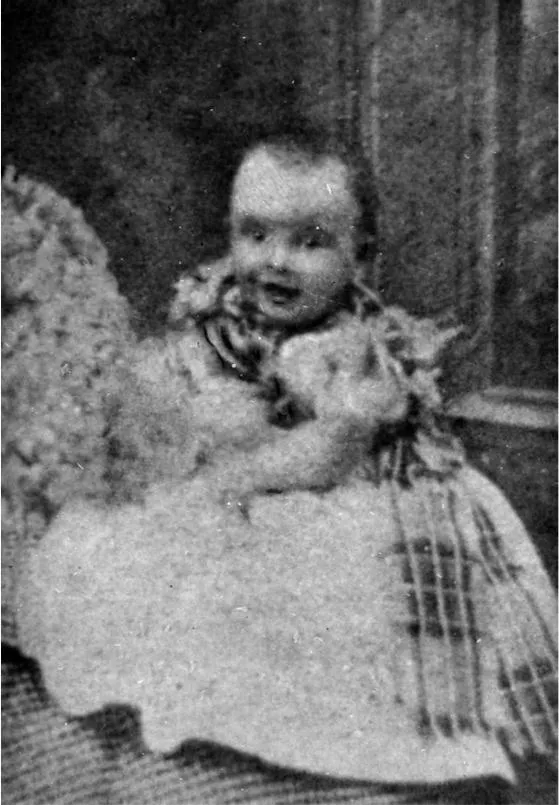
W.B. Yeats’s birthplace, Georgeville on Sandymount Avenue, and the poet as a baby
The poet William Butler Yeats was born on June 13th, 1865, at a two-storey semi-detached brick house called Georgeville at 5 Sandymount Avenue, Dublin. This was the first home that the poet’s parents, John Butler Yeats (JBY) and Susan Pollexfen, shared after they were married in St. John’s Church of Ireland church in Sligo, in 1863. JBY, twenty-four years old at that time, was still pursuing a career as a barrister that seemed to promise all the respectability and, more importantly, the financial and social security that Susan’s successful Sligo business family desired and expected for their daughter. In January of 1866 he was indeed called to the Irish Bar. However, by the spring of 1867, with a second child, Susan Mary (Lily), and much to the consternation of the Pollexfens, John Butler Yeats had given up the law and decided instead to become an artist. With this decision began JBY’s life of impecuniousness that was to exasperate those who knew and admired him, no one so much as his wife.
The Yeats family already had a connection to Sandymount through the poet’s grandfather, also named William Butler Yeats, whose brother-in-law Robert Corbet was then a successful stockbroker and a representative for the Royal Exchange Assurance Company. The Corbets lived in Sandymount Castle, an eighteenth-century turreted mansion to which battlements, a clock-tower and other neo-Gothic modifications had been added. Now absorbed into the south Dublin suburb and overlooking the village green, in Yeats’s childhood it was still a walled, secluded estate with maintained gardens where fruit and vegetables were grown for the house. JBY, in his memoirs, describes the building and its occupants:
Of business [Corbet] knew little or nothing, and probably neglected it. But he did not neglect his gardens … He employed four or five gardeners, and as long as I knew Sandymount Castle none of these men ever left him and no one interfered with them. So treated, they were gentle, pleasant and diligent, and the gardens were lovely. There was a piece of water called the ‘pond’ on which we boys did much boating, and there were plenty of wild ducks and swans, and there was also an island on which was a one-roomed cottage in which was a collection of souvenirs and relics brought back from India and the Colonies by my uncle’s brothers who had been soldiers. Outside the cottage were two chained eagles.
– Early Memories by John Butler Yeats, 1923
William Butler Yeats, the poet’s grandfather, retired to a pretty house on the estate that was separated from the castle grounds by a wicket gate. This house later became a Presbyterian college.
Robert Corbet’s own story ended tragically when, in 1870 and mired in bankruptcy, he threw himself into the Irish Sea from the Holyhead mailboat. On his death the house was sold, and the eagles were donated to the Zoological Gardens.
* * *
In 1867, when W.B. Yeats was two, he, his mother and sister Lily followed JBY to London to support him in his efforts to become a successful artist. Willie’s childhood was spent between London and Sligo, where they would stay with Susan’s relations, the Pollexfens and Middletons. Then in the summer of 1881, John Butler Yeats’s precarious financial circumstances forced the family to return to Dublin. He believed he could get work as an artist and found a studio to rent at 44 York Street, just off St. Stephen’s Green. The family were able to stay at a cottage in Howth, then a small fishing village at the northern end of Dublin Bay. (Younger brother Jack stayed on in Sligo.) Balscadden House is a long, high-walled cottage on Balscadden Road with views across Howth Harbour towards Ireland’s Eye, a small island just off the coast. The sixteen-year-old described the family’s new lodgings:
Our house for the first year or so was at the top of a cliff, so that in stormy weather the spray would soak my bed at night, for I had taken the glass out of the window, sash and all. Then for another year or two, we had a house overlooking the harbour where the one great sight was the going and coming of the fishing fleet.
– Reveries, 1915
In the spring of 1882, no doubt escaping the ravages of the sea at Balscadden House, which had been intended as a summer holiday home for its owners, the Yeatses moved down to Island View on the Harbour Road. Susan felt at home among the people of Howth, who reminded her of those of her youth in Sligo, as Yeats reveals in Reveries:
I have no doubt that we lived at the harbour for my mother’s sake … When I think of her, I almost always see her talking over a cup of tea in the kitchen with our servant, the fisherman’s wife, on the only theme outside our house that seemed of interest – the fishing people of Howth, or the pilots and fishing people of Rosses Point. She read no books, but she and the fisherman’s wife would tell each other stories that Homer might have told, pleased with any moment of sudden intensity and laughing together over any point of satire.
In his essay ‘Village Ghosts’ (The Celtic Twilight, 1893), Yeats investigates the streets and ghostly lore of Howth:
My ghosts inhabit the village of H—, in Leinster. History has in no manner been burdened by this ancient village, with its crooked lanes, its old abbey churchyard full of long grass, its green background of small firtrees, and its quay, where lie a few tarry fishing-luggers. In the annals of entomology it is well known. For a small bay lies westward a little, where he who watches night after night may see a certain rare moth fluttering along the edge of the tide, just at the end of evening or the beginning of dawn. A hundred years ago it was carried here from Italy by...

Table of contents

  1. Cover
  2. Title Page
  3. Dedication
  4. Acknowledgments
  5. Contents
  6. Introduction
  7. Dublin
  8. Sligo
  9. The West
  10. London
  11. Afterword
  12. References
  13. Illustrations
  14. Index
  15. About the Author
  16. Copyright